40 Satellites Lost Overnight: Why Are the Rockets Amazon Bought So Unreliable?
 11/16 2026
 416
Amazon has already manufactured more than 1,000 satellites, but only about 400 have successfully reached space. In the early hours of this morning, a rocket launch cost it another 40 satellites.
At 1:40 a.m. Beijing time on November 16, United Launch Alliance's (ULA) Vulcan Centaur launch vehicle lifted off from Cape Canaveral. About 10 minutes later, the rocket experienced an anomaly, and the 40 Amazon Leo broadband internet satellites it carried failed to enter orbit.
This marks ULA's first complete mission failure in its 20-year history. The Vulcan rocket returned to the launch pad after a nine-month hiatus but failed to complete its intended mission, and the cause of the accident remains under investigation.
For Amazon, which is trying to challenge SpaceX's Starlink, the loss goes far beyond 40 satellites.
Since 2022, Amazon has procured more than 100 launch services in total and invested over $200 million to help ULA expand launch facilities. But the Vulcan rocket, which holds contracts for 38 launches, had not successfully delivered a single satellite for Amazon before this failure.
Satellite manufacturing has entered a phase of mass production, but launch capacity cannot keep pace with production speed. The large volume of launch services Amazon locked in early has now become a major variable in constellation construction.
01 The Dilemma of a Hundred Orders
Amazon recognized early on that rocket launch capacity could determine the pace of satellite internet construction, but underestimated how long it would take for new rockets to achieve stable delivery capability.
In April 2022, Amazon procured up to 83 heavy-lift rocket launch services from ULA, Blue Origin, and Europe's Arianespace, setting a record at the time for commercial launch procurement scale. Since then, Amazon has continued to expand its procurement, locking in more than 100 launch opportunities in total.
Among these, the Vulcan rocket received 38 orders, planned to carry more than 1,500 first-generation Leo satellites—nearly half of the entire constellation's planned number.
Amazon also provided funding to support ULA's expansion of launch facilities at Cape Canaveral. The addition of a new assembly building and mobile launch platform allows two Vulcan rockets to be prepared simultaneously, shortening mission turnaround time. On November 9 this year, when Amazon announced the first Vulcan mission, the second rocket had already entered the preparation phase, with another launch originally planned just weeks later.
SpaceX has a mature Falcon 9 launch system and also operates Starlink, Amazon Leo's biggest future competitor. Amazon hoped to lock in more launch capacity through long-term contracts, establish a diversified supply system, and reduce dependence on its direct competitor SpaceX.
But when the contracts were signed in 2022, Vulcan, New Glenn, and Ariane 6 had all yet to complete their maiden flights. Amazon handed a large portion of its constellation deployment needs to several new rockets still awaiting verification, effectively betting in advance on their future technical maturity and operational capability.

Four years later, Vulcan has encountered multiple technical anomalies, and New Glenn has also experienced flight and ground test accidents. Although Ariane 6 has already undertaken Leo deployment missions, it is still ramping up its launch frequency.
Facing continued constellation deployment pressure, Amazon began procuring Falcon 9 launches in 2023 and placed additional orders in 2025, handing more launch missions to its own competitor.
Amazon tried to lock in future launch capacity through long-term contracts, only to find that diversified procurement cannot guarantee that several new rockets will achieve stable delivery capability on schedule.
02 The Challenge After Mass Production
Amazon's satellite factory can already measure output by the day, yet the Vulcan rocket is still striving to increase its annual launch count.
In October this year, Amazon disclosed that its satellite factory in Kirkland, USA, had completed manufacturing more than 1,000 satellites and has the capacity to produce up to 5 satellites per day. Manufactured satellites continue to be shipped to launch sites, and hundreds are already awaiting launch.
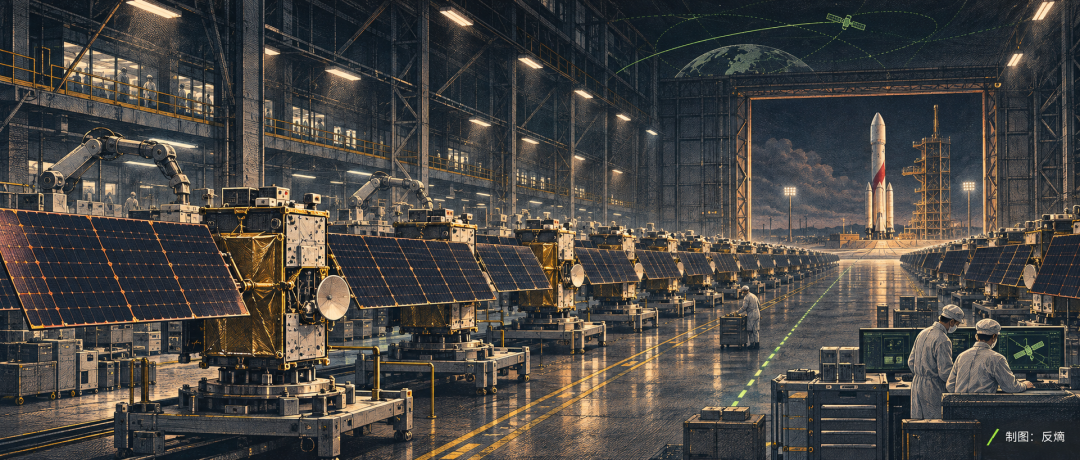
The Vulcan rocket's progress has been much slower.
Since its maiden flight in January 2024, this rocket has flown 5 times in total. In October 2024 and February 2026, both missions experienced solid booster nozzle anomalies. Although orbital insertion was ultimately completed, subsequent investigations and corrective actions affected the launch schedule.
Once satellites are verified, they can be produced in advance, stockpiled, and await launch opportunities. Rockets can also be manufactured in batches, but once a major flight failure occurs, subsequent missions of the same model often must wait for investigation, and products that have already completed final assembly may also need to undergo re-inspection and corrective modifications.
Even with the manufacturing capacity to produce dozens of rockets per year, as long as reliability issues remain unresolved, added production capacity will be difficult to convert into actual launch counts.
SpaceX's Falcon 9, after years of intensive launches and continuous iteration, has established a mature manufacturing, testing, and operational system. The reuse of first-stage boosters further reduces the dependence of high-frequency launches on the production of entirely new rocket bodies.
By contrast, Vulcan is still accumulating flight experience. For ULA, what is more urgent than expanding production capacity right now is to determine the cause of the accident and restore reliable launches.
What determines a rocket's commercial delivery capability is not only manufacturing scale but also flight reliability, launch frequency, and failure recovery capability. These capabilities require long-term accumulation, and Amazon no longer has much time to wait.
03 A Constellation That Cannot Wait
The direct loss of 40 satellites can be assigned a value, but missed deployment opportunities are hard to measure in manufacturing costs.
Amazon Leo's first-generation constellation is planned to have 3,232 satellites. Before this accident, about 400 had been launched in total—only about 12% of the planned scale.
Low-orbit satellite internet is highly dependent on scale. Satellites orbit the Earth at high speed, and operators need to deploy enough satellites to gradually form continuous coverage and expand network capacity and user scale. Only after entering orbit and beginning operation can manufactured satellites be converted into network capability.
Amazon plans to launch initial Leo commercial service in 2026, but launch delays have already affected regulatory requirements.
Under the previous license requirements of the U.S. Federal Communications Commission (FCC), Amazon needs to complete the deployment of at least 1,616 satellites by July 30, 2026, and build the first-generation constellation by July 30, 2029.
In June this year, the FCC, taking into account factors such as launch supply delays, granted a conditional waiver of the interim deployment requirement but retained the final 2029 deadline. Under the additional conditions, satellites deployed after July 30, 2026, will temporarily lose their original priority status in the spectrum application round.
Market competition will not wait either.
SpaceX has already established the world's leading low-orbit broadband satellite network, continuously expanding coverage and user scale. Continued launch delays are slowing Amazon's network expansion and may also affect its commercial service plans.
Continuing to support an independent supply chain helps reduce long-term dependence on SpaceX; but waiting for new rockets to mature may mean missing an important phase of satellite internet market expansion.
SpaceX continuously deploys Starlink satellites through its own rockets, allowing it to coordinate satellite production and launch resources more directly. Amazon, by contrast, needs to coordinate multiple external suppliers, and its constellation deployment progress is constrained by supplier reliability and launch schedules.
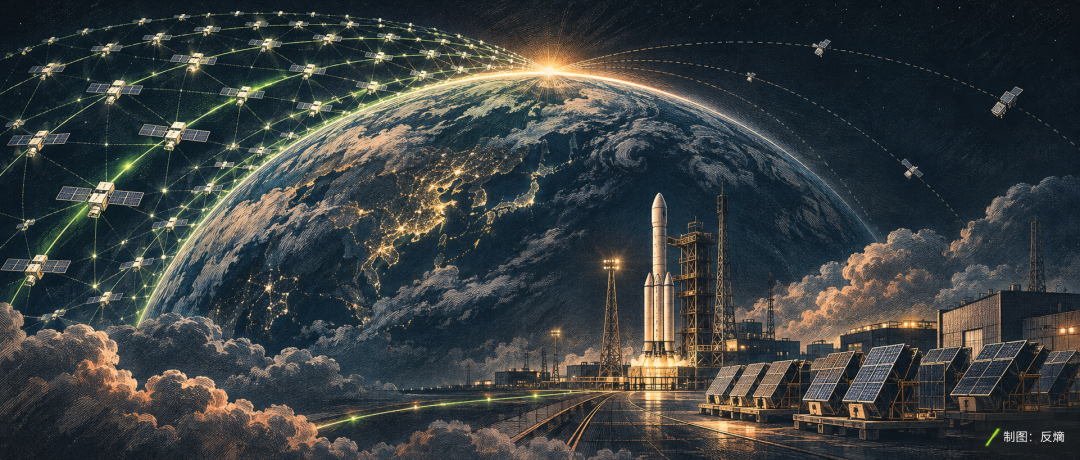
In the low-orbit constellation competition, securing stable launch capacity is becoming an industrial capability as important as satellite manufacturing and network operations.
04 How Launch Capacity Is Delivered
China's commercial space sector is also undergoing a transition from technical verification to scale delivery.
On November 3, CAS Space's Lijian-2 successfully executed a mission carrying 18 satellites, bringing the Qianfan constellation's cumulative deployment to 274 satellites. As low-orbit constellations accelerate construction, commercial rockets need to undertake increasingly dense constellation deployment missions.
In 2025, Yuanxin Satellite, the operator of the Qianfan constellation, publicly procured 7 launch services involving 94 satellites, with a total budget of 1.336 billion yuan. The procurement documents specified target orbits, unit prices, and delivery conditions, and some launch services had previously failed to attract bids.
Large constellations are already procuring launch capacity according to continuous deployment needs, but China's domestic commercial rocket supply is still in the capacity-building stage.
Companies such as LandSpace, Space Pioneer, and CAS Space are advancing high-capacity liquid rockets and investing in the construction of batch manufacturing facilities, hoping to secure long-term constellation deployment orders.
For domestic commercial rocket companies, success in the maiden flight must be followed by continuous verification of reliability through subsequent missions. A major failure may affect the launch schedule for the entire model, temporarily preventing products that have already been manufactured from being delivered and making it difficult for early investment to generate revenue in a timely manner.
Rocket development, test facilities, and production lines require substantial upfront investment. Only by maintaining sufficient launch frequency can fixed costs be spread across more missions and unit launch costs be gradually reduced.
Reusable technology is expected to further improve the cost structure, but its economic value still depends on post-recovery inspection, reflight efficiency, and actual number of uses.
A single successful launch can win customer trust, but a sustained and stable launch record is the foundation for commercial rockets to obtain long-term orders, improve capacity utilization, and enhance profitability.
Conclusion
Four years ago, Amazon procured launch services on a record scale, hoping to secure a path to space in advance for thousands of satellites. Four years later, it already has a factory capable of manufacturing several satellites per day, yet it still cannot ensure that the rockets it purchased will lift off according to the planned rhythm.
For Amazon, the loss of 40 satellites will ultimately become a setback that can be made up for; what is harder to recover is the delayed deployment opportunities.
This also reveals a contradiction in the scaled development of commercial space. Low-orbit satellite internet is expanding production capacity with the efficiency of modern industry, while new rockets still need to accumulate reliability through flight after flight. Capital can support capacity expansion, and long-term orders can be locked in advance, but the time required for technological maturity is difficult to fully compress.
Space is entering an era of scaled development, but the launch capacity supporting this expansion is still far from keeping up with the industry's ambitions.
-
![]()
One Car, Two Smart Driving Systems: Are Automakers Developing In-House Technology or Keeping Their Options Open?
-
Trends | Divergence Emerges in the HBF Race as a Giant Takes a Different Technology Path
-
Analysis | AI Data Centers: Qualcomm's Next Strategic High Ground?
-
Industry | China's Software Sector Grew Amid Divergence in the First Three Quarters, With Deep Adjustments Underway in Industrial Structure
-
![]()
40 Satellites Lost Overnight: Why Are the Rockets Amazon Bought So Unreliable?
-
![]()
129,900 Yuan Is Not a Price War—the NX7 Is a Ruthless Move
-
![]()
SAIC Volkswagen Goes on the Offensive: The ID. ERA 5X Feels Remarkably Like a "New Force"
-
![]()
Final word: This year may be a low point not seen in over a decade—how big is China's domestic passenger car market, really?