Final word: This year may be a low point not seen in over a decade—how big is China's domestic passenger car market, really?
 11/16 2026
 535
Last Wednesday, Chen Shihua, deputy secretary-general of the China Association of Automobile Manufacturers, acknowledged at CAAM's monthly press conference that domestic auto sales (including commercial vehicles) have seen year-on-year declines of more than 20% for seven consecutive months this year, and full-year domestic passenger car sales are expected to fall below 19 million units, dropping below that threshold for the first time since 2014.
The lowest domestic sales year in over a decade
The 19 million units Chen Shihua mentioned should refer to retail auto sales, that is, what everyone calls registration volumes. 2026 will become the year with the lowest domestic passenger car retail sales in more than a decade.
First, two statistical concepts need to be clarified. The auto sales statistics published by CAAM are actually wholesale volumes. When automakers wholesale vehicles to dealers, they are counted as sales. This volume includes both vehicles wholesaled to auto dealers and vehicles exported overseas.
Retail sales, that is, registration data, refer to vehicles actually sold to ordinary people in China.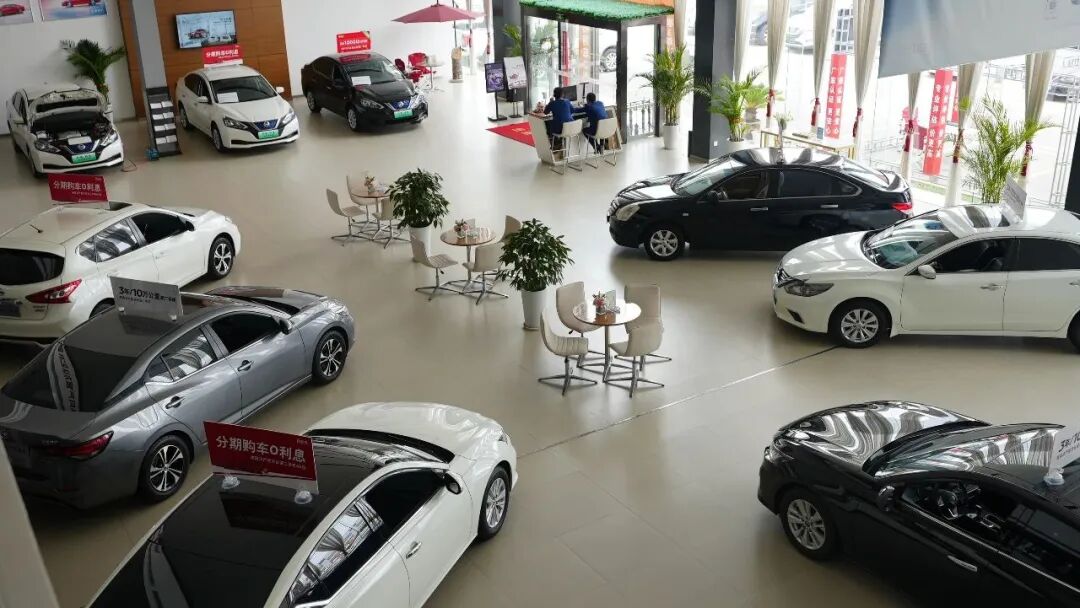
According to CAAM statistics, in the first 10 months of this year, domestic passenger car sales were 14.528 million units, down 25.2% year on year. Among them, domestic sales of conventional fuel passenger cars were 5.64 million units, 3.516 million fewer than the same period last year, down 38.4% year on year. At present, domestic automakers generally do not push inventory onto dealers, so CAAM's wholesale and retail data do not differ much.
In the last two months of this year, monthly sales would need to reach 2.236 million units for the full year to reach 19 million. However, domestic passenger car sales in October were only 1.734 million units, and exceeding 2 million in November and December will be very difficult. Therefore, full-year domestic passenger car sales are very likely to be in the 18 million range. That is more than 5 million fewer than 2025's 23.74 million units. This year, China's auto exports have maintained rapid growth, reaching 9.271 million units in the first 10 months, up 65.1% year on year. Full-year auto exports are expected to exceed 11 million units, a net increase of more than 4 million compared with last year's 7.098 million, offsetting the decline in domestic sales.
Some analyses believe that total full-year auto sales (including exports) will still exceed 30 million units. Passenger cars will account for about 84%, and commercial vehicles 16%.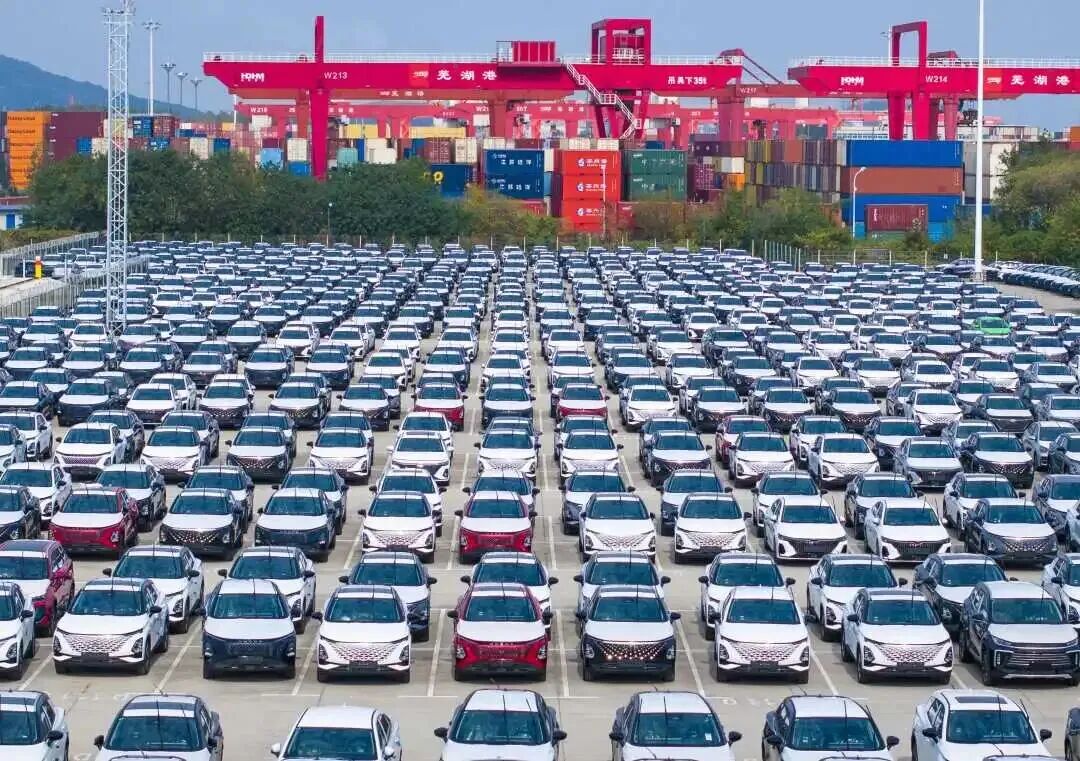
The scale of the domestic auto market should not be overestimated
At the TEDA Auto Forum held in Tianjin last month, Chen Bin, former director of the Industrial Development Department of the National Development and Reform Commission, pointed out that China's domestic auto market is only around 25 million units and should not be overestimated.
According to CAAM statistics, domestic commercial vehicle sales in the first 10 months of this year were less than 2.5 million units, and the full-year figure will be around 3 million. Adding domestic passenger car sales of 19 million, full-year domestic auto sales this year will be around 22 million units, below the average level.
Some analyses suggest that such an obvious contraction in the domestic passenger car market this year is the result of multiple factors combined.
First, earlier vehicle purchase demand was continuously pulled forward. In the past few years, the explosive growth of new energy vehicles, combined with local purchase subsidies and trade-in policies, released a large amount of first-time and replacement demand ahead of schedule. China's vehicle ownership has already reached a very high level, the number of first-time buyers continues to shrink, and the market has completely shifted from an incremental market to a stock replacement market. Replacement decisions are more cautious, consumers do not change cars easily, and the replacement cycle has clearly lengthened.
Second, consumer confidence is weak, and willingness to make major purchases is insufficient. Cars are big-ticket purchases, and in an environment of unstable income expectations, many families postpone their car-buying plans. At the same time, years of fierce price wars have created among consumers the expectation that buying early means losing early and waiting longer means cheaper prices, so sentiment of holding cash and waiting is strong.
Third, changes in mobility patterns have diverted part of vehicle purchase demand. Urban public transport continues to improve, ride-hailing and shared mobility have become widespread, and short-distance travel options are abundant, so some urban groups no longer regard private cars as a necessity. Young people in particular are changing their views on car ownership and no longer treat buying a car as a mandatory life choice.
At the same time, it should also be noted that stable replacement demand still exists in China's stock auto market. Vehicle age continues to rise, and in the coming years a large number of old vehicles will enter the replacement cycle, which is the fundamental base supporting long-term market demand. At the same time, policies to stabilize auto consumption, such as trade-ins and new energy vehicles going rural, can be strengthened at any time according to market conditions to shore up the bottom line of domestic demand. In addition, vehicle penetration space in third- and fourth-tier cities and county-level markets has not yet been fully tapped, and incremental opportunities still exist.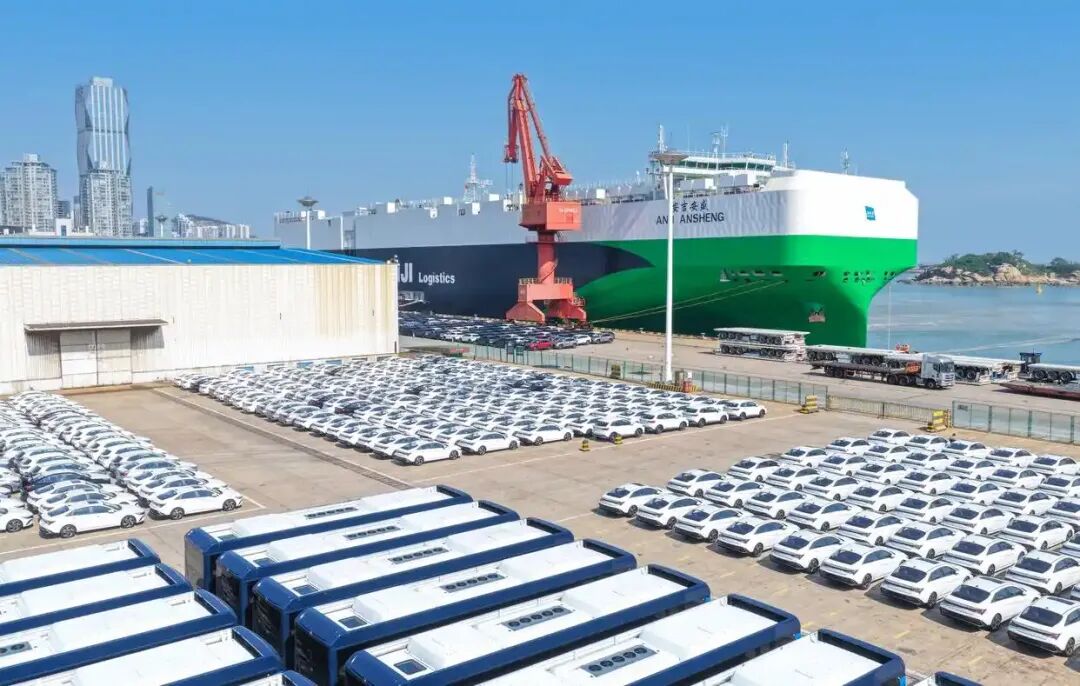
The role of auto exports should also be viewed rationally. Exports are an important way out for domestic automakers, but they cannot fully make up for the gap caused by falling domestic demand. Overseas markets also face uncertainties such as geopolitical barriers, trade protection, and competition from local automakers. The road of going global has both opportunities and risks, and all hopes cannot be placed overseas.
For domestic automakers, the era when growth could be achieved simply through scale expansion has ended. Future industry competition will no longer be about who ships more, but about cost control, product differentiation, profit quality, and operational capability in overseas markets.
For the auto industry, the pain is also a reshuffle that can eliminate inefficient capacity and force the industry to shift from scale expansion to high-quality development. A short-term bottoming out of the market does not mean there are no long-term opportunities; it is just that the golden era of universal auto market growth has gone forever. (End)
-
![]()
One Car, Two Smart Driving Systems: Are Automakers Developing In-House Technology or Keeping Their Options Open?
-
Trends | Divergence Emerges in the HBF Race as a Giant Takes a Different Technology Path
-
Analysis | AI Data Centers: Qualcomm's Next Strategic High Ground?
-
Industry | China's Software Sector Grew Amid Divergence in the First Three Quarters, With Deep Adjustments Underway in Industrial Structure
-
![]()
40 Satellites Lost Overnight: Why Are the Rockets Amazon Bought So Unreliable?
-
![]()
129,900 Yuan Is Not a Price War—the NX7 Is a Ruthless Move
-
![]()
SAIC Volkswagen Goes on the Offensive: The ID. ERA 5X Feels Remarkably Like a "New Force"
-
![]()
Final word: This year may be a low point not seen in over a decade—how big is China's domestic passenger car market, really?