SAIC Volkswagen Goes on the Offensive: The ID. ERA 5X Feels Remarkably Like a "New Force"
 11/16 2026
 564

Text / Wan Yanbo
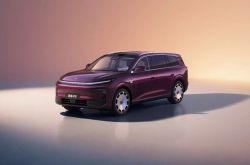
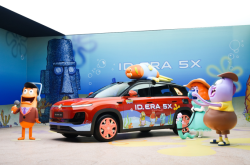
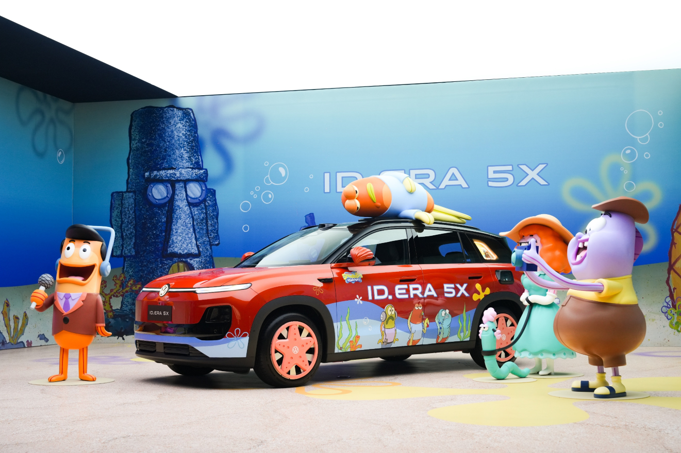
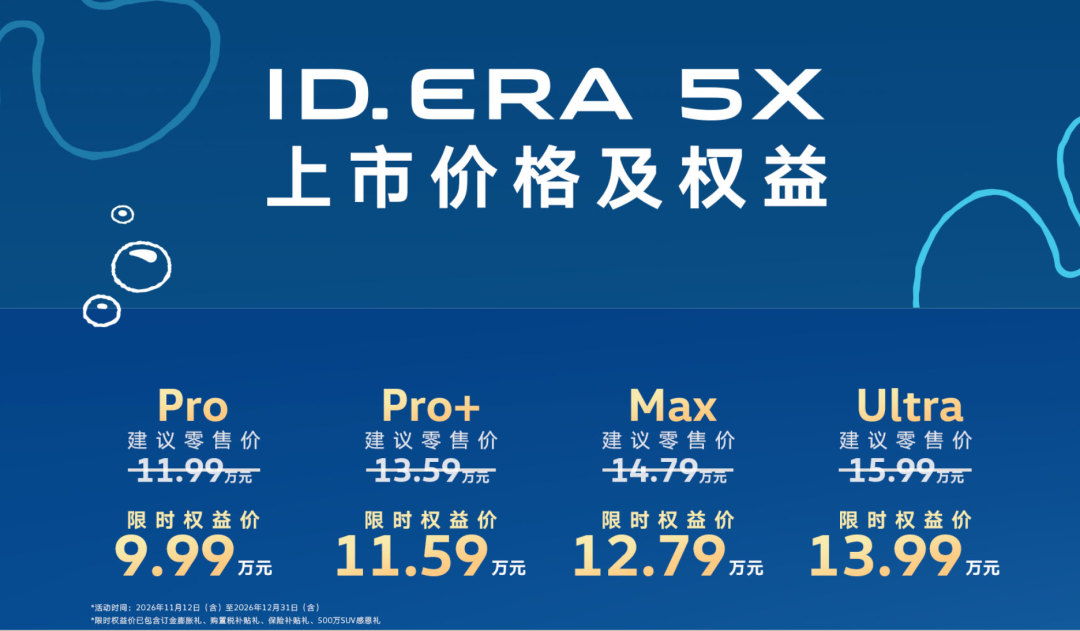
On the evening of November 12, at Beijing Langyuan Station, SAIC Volkswagen turned the launch of the ID. ERA 5X into a stand-up comedy party, with Fu Hang and Li Xueqin taking the stage in turn and no traditional PowerPoint presentation. But what really caught the industry's attention was not the density of the comedy bits, but that string of numbers—a limited-time promotional price of 99,900 to 139,900 yuan. When a Volkswagen all-electric SUV equipped with lidar, urban NOA, a 2815mm wheelbase, and CATL batteries pushes its entry threshold below 100,000 yuan, the value yardstick for this segment has been recalibrated yet again.
To understand the industry significance of this car, we first have to place it back into the coordinate system of China's auto market in 2026.
In October, national passenger car retail sales stood at 1.643 million units, down 27.1% year-on-year; new energy retail sales reached 1.109 million units, with penetration rising to a historic high of 67.5%. Against this picture of overall volume retreat and structural track switching, three contrasting trends emerged: self-owned brand new energy fell 15% year-on-year, luxury brands fell 45%, and mainstream joint venture new energy grew 69% year-on-year—the only one of the three major segments to maintain positive growth. SAIC Volkswagen sold 17,975 new energy vehicles that month, up 253.1% year-on-year; cumulative sales from January to October reached 74,000 units, up 49.1% year-on-year; new energy accounted for more than a quarter of its own sales, nearly 6 percentage points higher than the average penetration rate of 20.7% for mainstream joint ventures. Only by stacking these numbers together does the real industry divide begin to emerge: this is not the wish-fulfillment narrative of "joint ventures turning the tables," but the fact of "joint ventures getting back to the table."
The position of the ID. ERA 5X in this chess game is the closing piece—and also the hinge of the shift between offense and defense.
In April, the ID. ERA 9X locked in more than 10,000 orders within one hour of launch, and cumulative deliveries have now exceeded 13,000 units; in August, the ID. ERA 5S entered the plug-in hybrid sedan market at 89,900 yuan, and in October retail sales of 7,100 units won it the sales crown for two consecutive months, pushing the Qin PLUS DM and Seal 06 DM into second and third place; in October, the ID. ERA 8X delivered 3,500 units within 20 days of launch, charging into the top three of the 200,000–250,000 yuan extended-range mid-to-large SUV segment. With the 5X launched this time, all seven new energy products planned by SAIC Volkswagen for 2026 have now appeared, covering the full 100,000–300,000 yuan price range, with all three routes—extended range, plug-in hybrid, and pure electric—in place. This matrix, internally called "985," has the 9X setting the benchmark, the 8X creating differentiation, the 5S rooted in the mainstream, and the 5X aimed at young people's first new energy vehicle—flagship first, then volume downward, and single-point breakthroughs have finally reached matrix synergy.
But what should truly alert decision-makers is not the sales data, but the organizational mechanism changes behind this car.
The ID. ERA 5X is the world's first production vehicle built on the Volkswagen CMP platform, CEA electronic and electrical architecture, and ADAS technology matrix. CMP was led in development by Volkswagen China VCTC, and through modular design and coordination with local supply chains, it reduced development costs by about 40% and shortened the R&D cycle by about 30%; CEA was jointly developed by Volkswagen China, CARIAD China, and XPeng, and took only 18 months from concept to production—the fastest record for a brand-new Volkswagen electronic and electrical architecture. The summary by Han Sanchu, chief architect of CEA, is sharp—the century-old development order of "mechanics first, then electronics, and finally software" has been completely overturned to "software first," with vehicle control units reduced by about 30%. Fu Qiang puts the accounting more plainly: "In the past, it took 52 months for a car to go from concept to launch. If you ask the market team to tell the R&D team what products users will need more than four years later, that is almost impossible. Now we are already developing models for 2028." This "52 months versus 18 months" comparison is the most profound metaphor for the joint venture model over the past three decades—and the sharpest footnote to Joint Venture 2.0.

The extension line of this capability has already been written into Europe.
At the end of October, Germany's Manager Magazin disclosed that Schaefer, CEO of the Volkswagen passenger car brand, plans to use the CEA architecture jointly developed with China's XPeng for about three-quarters of the next-generation models of Volkswagen, Skoda, and Cupra, with the ID. Golf, ID. Passat, and Skoda Enyaq all on the candidate list. German media estimate that if deployed across volume-selling cars in Europe, the group could save 4 billion to 5 billion euros in development costs; the labor-hour math is even more direct—Volkswagen's Hefei R&D center costs about 60 euros/hour, Germany 120 euros, and Palo Alto, the joint venture with Rivian, 174 euros. In the same week, German President Steinmeier's first stop on his visit to China was not Beijing, but Hefei, to see an ID. AURA T6 with zero disengagement throughout an intelligent driving demonstration. Obolmu's statement that "China is becoming an important product and technology hub for Volkswagen in the global market," together with Brandstätter's statement of "deepening in China and winning globally together," have rewritten the script of the past decades in which technology flowed one-way from Wolfsburg to China.
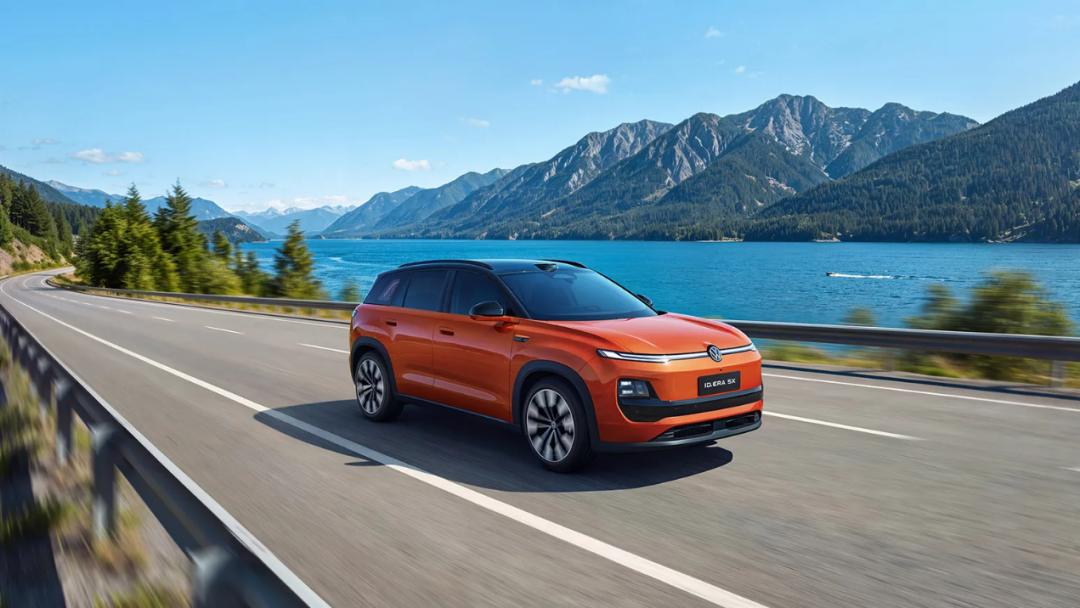
The sincerity on the product side is shown by handing over the industry's two sharpest knives at the same time.
The first is "no downgrade at the entry level." The 99,900 yuan Pro version offers more than 130 standard features—4nm MTK8676 automotive-grade chip, 15.6-inch 2.5K central control screen, Doubao large model 2.0, APA automatic parking, 540° panoramic surround view, sentry mode, 7 airbags, front MacPherson and rear multi-link independent suspension, heat pump air conditioning, and external discharge—none missing. The 139,900 yuan Ultra version directly installs a 192-line lidar, Horizon Journey 6H chip (420TOPS computing power), and the HS8 end-to-end physical AI large model jointly developed by Volkswagen and Horizon, connecting the full chain of urban, highway, and parking scenarios. The joint venture brand's past specialty of "cutting features on the stripped-down version to make a low price" has been actively abandoned on this car.
The second knife is "no double standards in quality"—an 83% high-strength steel cage body, battery bottom impact resistance of 2000J (13 times the national standard), high-voltage cutoff within 2 milliseconds in a collision, and lifetime maintenance-free electric drive, following the same set of more than 8,000 Volkswagen global standards, more than 10 million kilometers of road testing, and two winters and two summers of extreme validation as the 9X and 8X. Fan Biou's statement that "development can be fast, but certification and testing cannot take shortcuts" carries weight beyond the product category—especially as the Ministry of Industry and Information Technology and three other departments jointly tighten regulation of "quickly built cars."
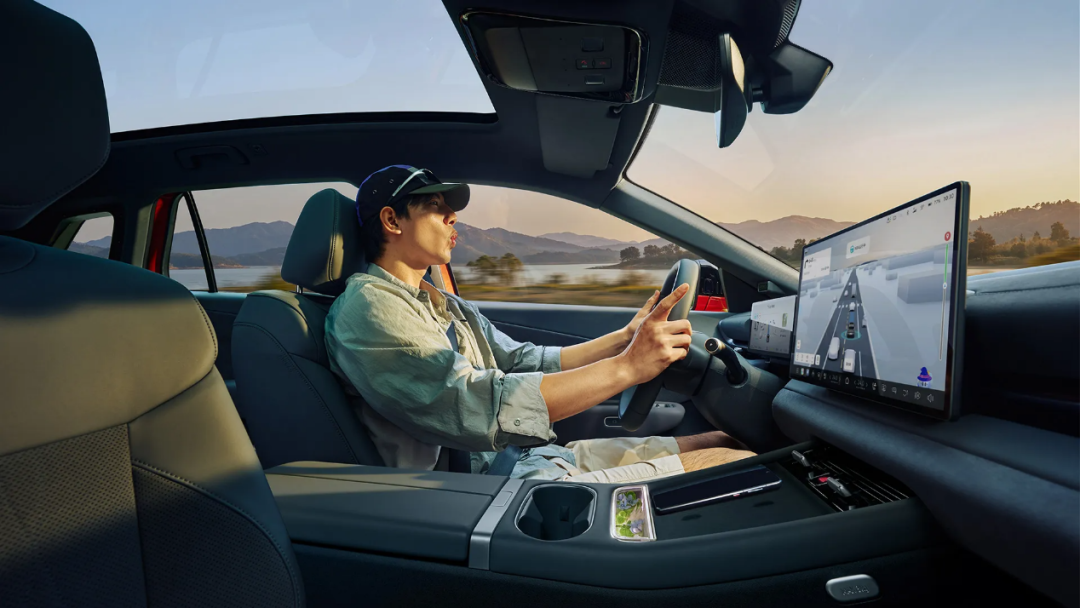
What truly pulls the competitive dimension from "who has the lower launch price" to "who has the higher three-year ownership value" is the guaranteed buyback of 80% after 2 years and 70% after 3 years.
According to statistics from the China Automobile Dealers Association, the average three-year residual value rate of pure electric vehicles still hovers around 45%, and "value halved after three years of driving" is a thorn in the side of family users. The ID. ERA 5X writes the buyback clause into the purchase contract. Taking the Ultra version as an example, its residual value after two years can reach 111,900 yuan. Based on the average two-year residual value rate of pure electric cars in the same price range, it can retain 37,200 yuan more than competitors. The buyback is limited to trade-ins for new SAIC Volkswagen and SAIC Audi vehicles, which is equivalent to keeping users within its own product ecosystem—this is both a commitment and a stress test of the system's capacity to absorb it: when users change cars in two or three years, SAIC Volkswagen's new products must catch this residual value. Putting "residual value" on the table means that SAIC Volkswagen has actively steered the end of the price war onto the track of value war.
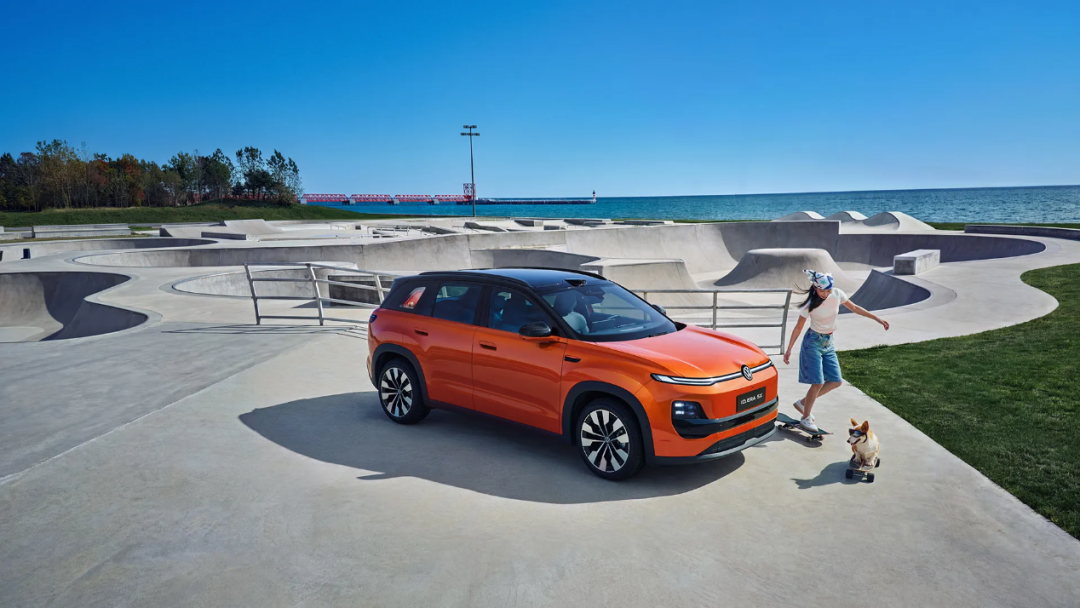
The inspiration for the industry is hidden in three inconspicuous details.
First, the success or failure of Joint Venture 2.0 does not depend on who between China and Germany has the final say, but on whether product definition power truly shifts to the Chinese team. Wu Yun's statement that "cost is not the result of operations, but core competitiveness," and the position of "participating in competition, but refusing disorderly involution," point to the underlying logic of using German-style quality control as the foundation, Chinese efficiency for product definition, and sustainable profitability rather than burning money for rankings. Second, when the eastward shift of the R&D power center becomes an established fact, what overseas headquarters need to rethink is not "how to control the Chinese team," but "how to absorb the capabilities fed back by the Chinese team"—this matter is worth the whole industry thinking about more than whether CEA can eventually enter Europe. Third, in the era of stock competition in the new energy market, the shift of share is scarcer than total growth. Only those companies that can provide systemic answers at both ends of "product definition" and "residual value backstop" truly hold the discourse power of the next stage.
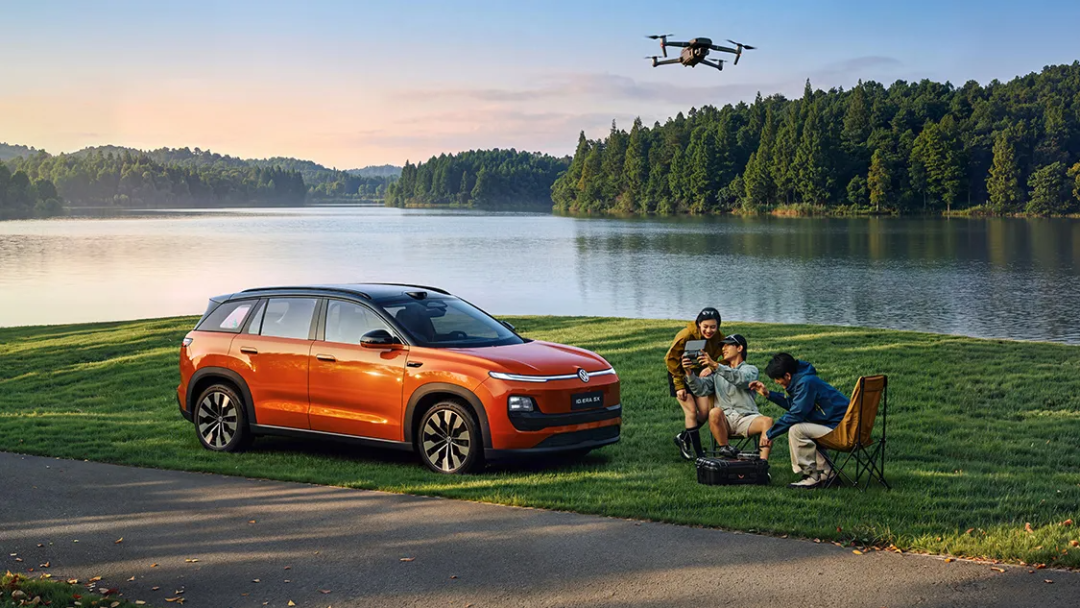
Of course, the ID. ERA 5X starting at 99,900 yuan is still far from a moment when victory or defeat can be lightly discussed. It needs to prove the reliability of the CMP platform in real scenarios, the actual performance of Xingyun Zhixing's urban NOA, and the sincerity of the guaranteed buyback in execution.
But one thing is already clear—when joint venture brands begin to use the playbook of self-owned brands to fight self-owned brands while retaining their own trump cards in engineering and quality control, the one-way narrative of "self-owned brands moving up and joint ventures retreating" in China's auto market over the past few years now has a question that needs to be answered anew.
-
![]()
One Car, Two Smart Driving Systems: Are Automakers Developing In-House Technology or Keeping Their Options Open?
-
Trends | Divergence Emerges in the HBF Race as a Giant Takes a Different Technology Path
-
Analysis | AI Data Centers: Qualcomm's Next Strategic High Ground?
-
Industry | China's Software Sector Grew Amid Divergence in the First Three Quarters, With Deep Adjustments Underway in Industrial Structure
-
![]()
40 Satellites Lost Overnight: Why Are the Rockets Amazon Bought So Unreliable?
-
![]()
129,900 Yuan Is Not a Price War—the NX7 Is a Ruthless Move
-
![]()
SAIC Volkswagen Goes on the Offensive: The ID. ERA 5X Feels Remarkably Like a "New Force"
-
![]()
Final word: This year may be a low point not seen in over a decade—how big is China's domestic passenger car market, really?