129,900 Yuan Is Not a Price War—the NX7 Is a Ruthless Move
 11/16 2026
 394

By Wan Yanbo
At 129,900 yuan, this is not a price war—it is Dongfeng Nissan plugging a structural gap.
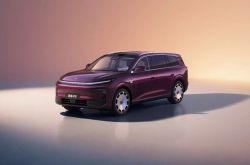
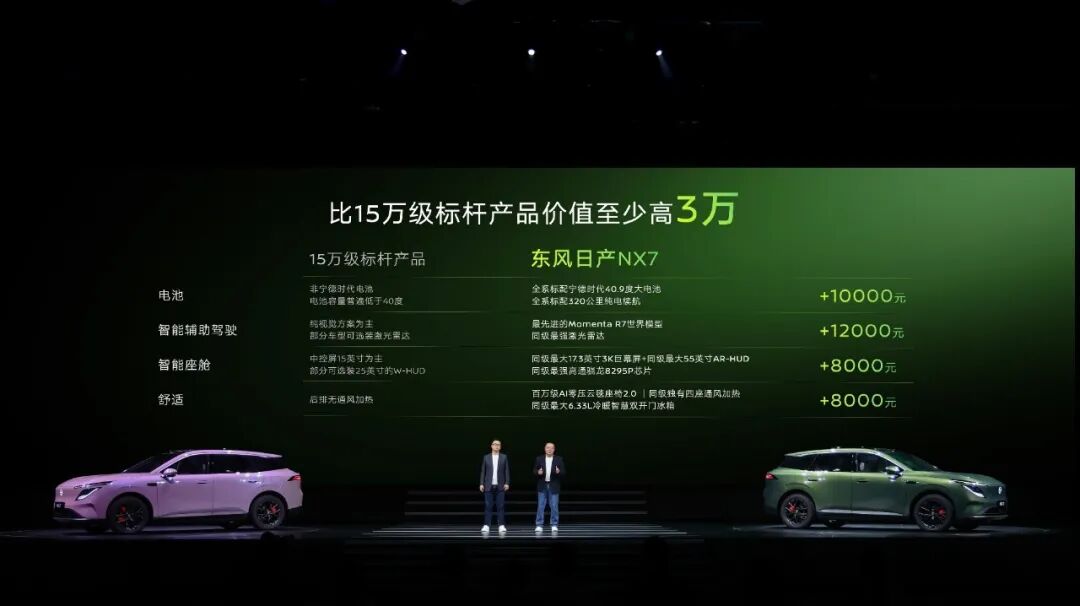
When the NX7 presale price came out, many people's first reaction was, almost uniformly, "about 30,000 lower than expected." Before the Zhuhai NISSAN DAY on November 13, the industry's price anchor for this car sat basically above 150,000 yuan: a 40.9 kWh CATL battery, Momenta R7 plus lidar, and the dimensions of a mid-size SUV. By any normal cost model for a joint venture, a starting price of 150,000 yuan was logical. Gasgoo's pre-presale analysis likewise put the forecast range at 159,900 to 209,900 yuan.
The result: 129,900 yuan. But to read this only as "Dongfeng Nissan has started rolling up its prices too" is to miss what is truly worth pondering. Behind this price lies not a product decision but a shift in an entire system—one that Dongfeng Nissan has been pushing internally for more than a year, with the NX7 merely the first time it has been put on the table for all to see.
Start with a structural fact that is easy to overlook. Dongfeng Nissan's N series is not short on products. The N7, N6, and NX8 cover sedans and SUVs across all three routes—pure electric, plug-in hybrid, and extended range. From January to October, the N series posted year-on-year growth of 37%. The direction is sound. The problem lies in the distribution of price bands: the NX8 starts above 150,000 yuan, and the N series' incremental volume is concentrated in a relatively high range, while the 120,000 to 150,000 yuan band—where plug-in hybrid SUVs have the largest capacity—has long sat empty for Dongfeng Nissan.
This is not a question of "whether it wants to do it" but of "whether it can do it." The 120,000 to 150,000 yuan range is the most fiercely contested territory for Chinese-brand plug-in hybrid SUVs. The Song L DM-i's main transaction price falls in this range, with retail volume of four to five thousand units a month steadily holding a base. Joint venture brands have previously had almost no decent presence at this price point, for no complicated reason: the procurement costs of the global supplier system, the lengthy approval chain at headquarters, and the compounding of imported parts and cross-border logistics made it impossible for a joint venture plug-in hybrid SUV to achieve a competitive BOM at this price. It was not that they did not want to set a low price; the system did not support it.
The precondition for the NX7's 129,900 yuan price, then, was not that "Dongfeng Nissan had a change of heart" but that "Dongfeng Nissan moved the decision-making table to Huadu." In an interview during this year's Beijing Auto Show, Zhou Feng put it bluntly: after the two shareholders reached consensus, the Chinese team obtained full-process leadership over product R&D, product planning, and styling design, with "zero delay in decision-making." That sentence is easily dismissed as boilerplate in a PR release, but applied to the NX7, it translates into a configuration table you can actually calculate. Wang Qian revealed a detail in post-presale communication: in the past, core components were prioritized through Nissan's global supplier system, some assemblies were imported, and headquarters approval was required, making it difficult to directly use CATL and Momenta. After the Chinese team took the lead, high-value components such as batteries, intelligent driving, cockpits, and domain controllers directly used domestic market quotations, and BOM costs fell substantially. At the same time, there was no forced binding to globally unified parts, avoiding unnecessary import and cross-border costs.
The 129,900 yuan figure is the result after this chain ran through, not a number shouted out on a whim. That the 40.9 kWh CATL battery is standard across the entire lineup also speaks volumes: when voices in the industry calling for "de-CATLization" are growing louder, Dongfeng Nissan instead doubled down. Wang Qian's explanation was very pragmatic—in their user research, CATL itself is an important factor in purchase decisions. This is not technical romanticism but trading supply chain capability for user trust. At a stage when a joint venture brand's new energy perception needs to be rebuilt, this pragmatism is more useful than any brand slogan.
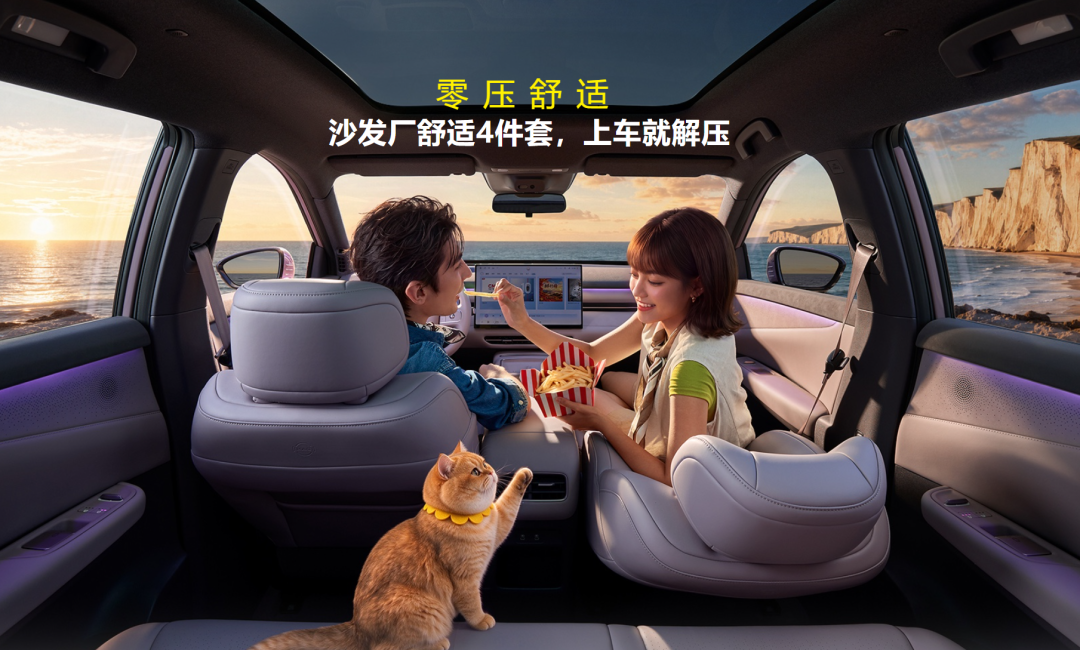
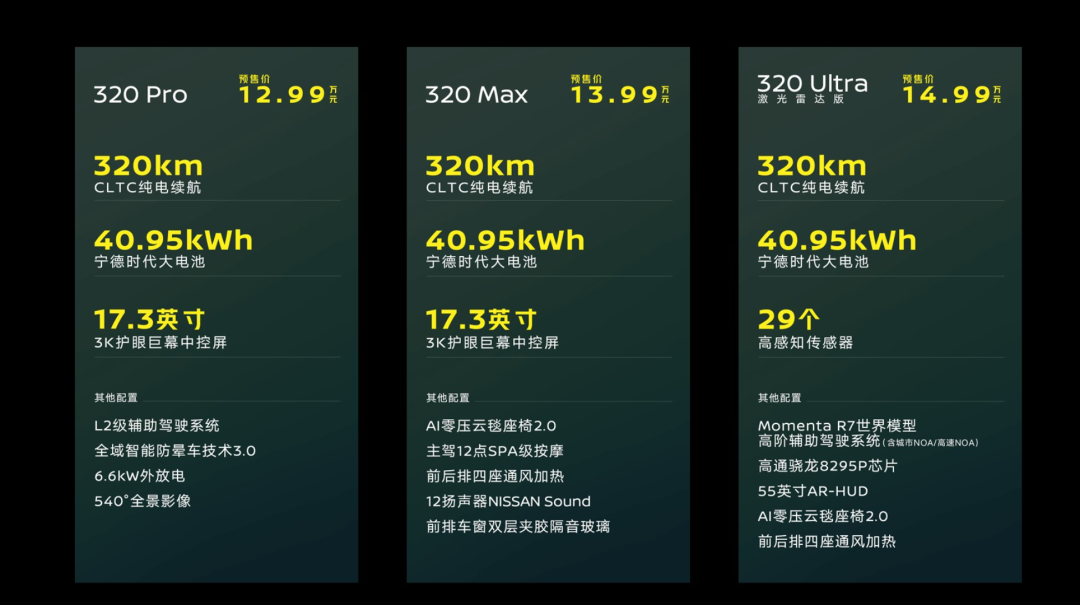
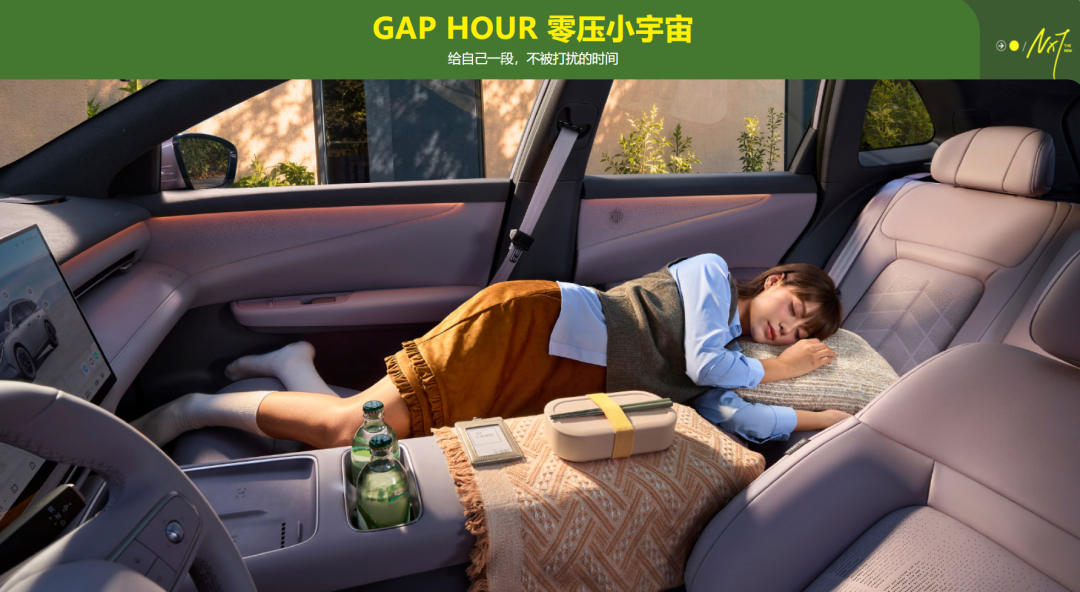
But what truly gives Dongfeng Nissan internal confidence about the NX7, beyond the price itself, is that after the previous models in the N series, the new car's product definition is more mature. SKUs were cut to three, with the same battery and the same powertrain across the entire lineup, differing only in seats and intelligent driving hardware. For 129,900 yuan, you buy "solid driving"; for 139,900 yuan, "comfortable driving"; for 149,900 yuan, "smart driving." This minimalist configuration ladder is rare among joint venture brands, but it solves a very specific problem: making the volume version itself have enough reason to buy, rather than forcing users toward higher trims. The lesson from the N7 entry version, which lacked even L2 and front and rear radar, was filled in on the NX7's 129,900 yuan version with the 40.9 kWh battery, the 8295P cockpit, and NISSAN OS 3.0. Dongfeng Nissan did not fall down twice in the same place.
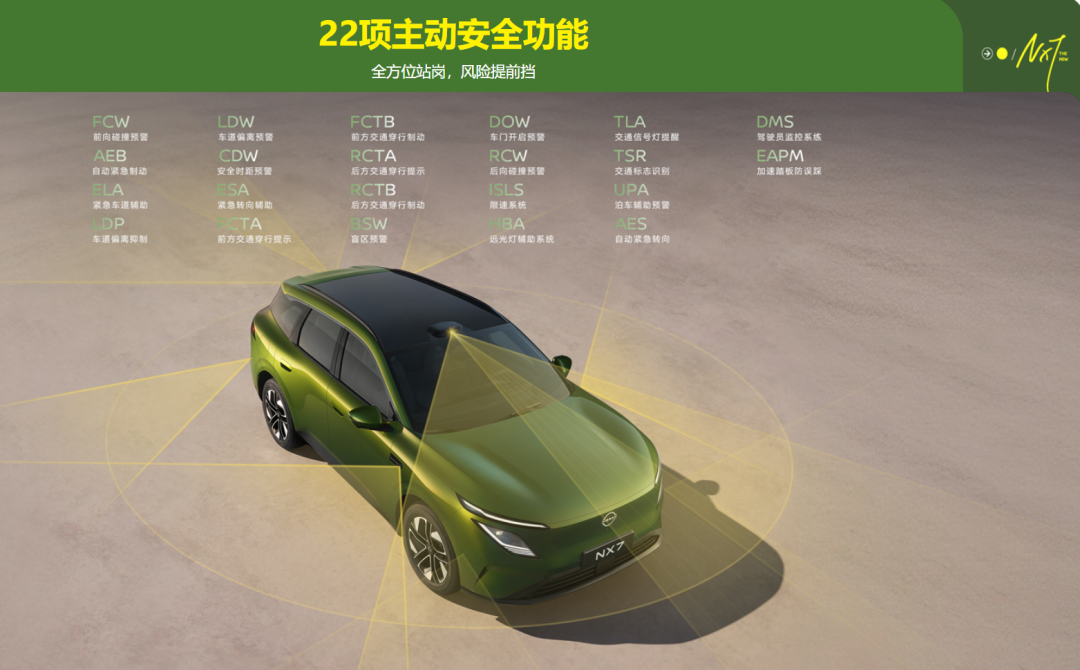
The handling of intelligent driving is also worth mentioning. On the 149,900 yuan Ultra version, Momenta R7 plus lidar and 29 sensors—within 150,000 yuan, indeed no second production vehicle can match this hardware list. But hardware is the easiest thing to copy. Wang Qian clarified the real differentiator in communication: what the supplier provides is capability and algorithms, while what the automaker brings is "feel"—whether braking is natural, whether rear passengers are nervous during lane changes, whether body roll is large in corners. This sounds like product talk, but it points to an undervalued capability in the joint venture system: depth of calibration. Momenta's solution has run on several rounds of Chinese-brand cars, but chassis tuning, brake linearity, and the linkage between seats and intelligent driving strategies are not things a supplier can deliver as a package. Nissan's accumulated chassis calibration experience on the Tianyan architecture and the ergonomic data of a "sofa factory" are precisely the part Momenta cannot provide. Whether the NX7's intelligent driving can create a gap in experience ultimately depends on the integration quality of this "feel," not the line of text about lidar on the configuration table. This is the most noteworthy variable after the NX7's official delivery—and where Dongfeng Nissan truly needs to prove itself in the intelligentization narrative.
Look one layer deeper, and placing the NX7's pricing and Dongfeng Nissan's export rhythm on the same timetable makes the logic complete. Ma Zhixin said at the same day's launch event that this year the joint venture company's products are exported to more than 30 countries, and next year the number may double. Zhou Feng put the positioning even more clearly in an earlier interview: shifting from "Global to China" to "in China, for China, to the world." This means the Chinese market is taking on a role in Dongfeng Nissan's system that it had not taken on before—no longer just a source of profit, but also a cost center and a capability validation ground. Using Chinese batteries, Chinese intelligent driving solutions, and a product rhythm defined by the Chinese team, the cost of a mid-size plug-in hybrid SUV is pressed to a level previously unimaginable within the joint venture system—and then this proven capability is exported to overseas markets. Seen within this framework, the NX7's 129,900 yuan is not a defensive price move but an externalized signal of system capability.
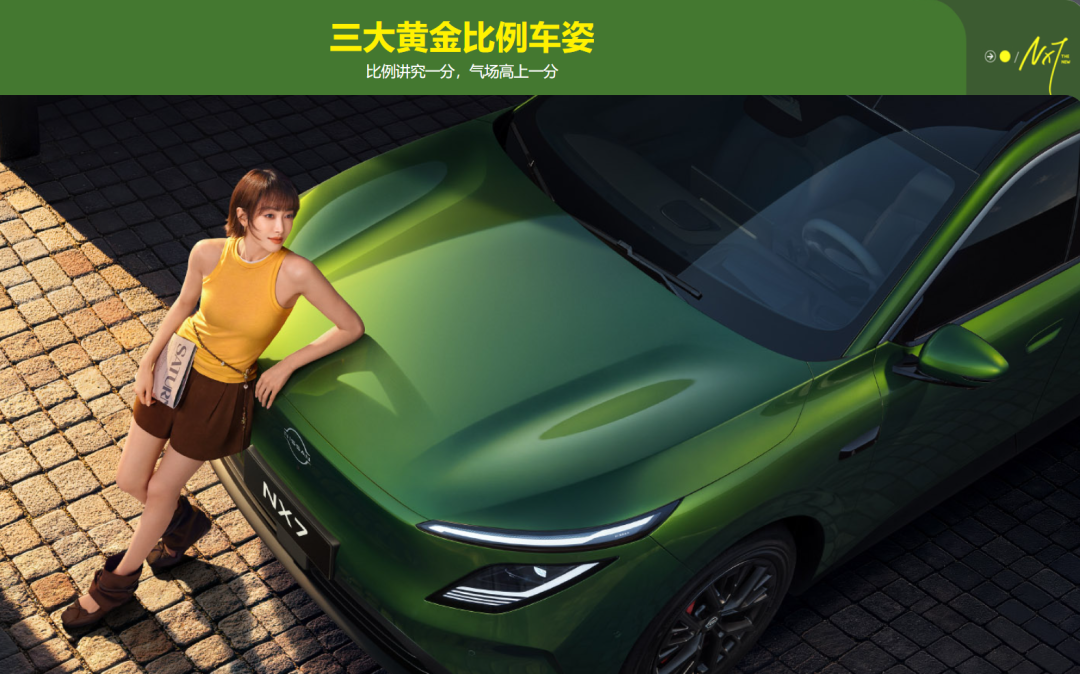
Of course, presale is only the beginning; the Guangzhou Auto Show on November 27 is the real starting gun. The NX7's competitor list is long—Leapmotor C11 Extended Range, Deepal S07, Geely Galaxy Starship 7, Song PLUS DM-i, AITO M5—none of them pushovers. But the differentiated path the NX7 offers is clear: joint venture quality plus segment-leading hardware, not relying on the logo to sell, nor competing with new forces on gimmicks in the spec sheet, but delivering in one go the things family plug-in hybrid users care about most—big enough battery, long enough range, comfortable seating, worry-free driving, and peace of mind in use.

But one thing was already settled on the day of presale. The number 129,900 yuan is not a move Dongfeng Nissan followed in a price war, but an account calculated after a joint venture system reorganized product definition rights, supply chain choices, and cost structure. Whether this account is correct will ultimately be decided by the market. But being able to calculate this account to this number already shows that what has happened inside Dongfeng Nissan is far bigger than one NX7.
-
![]()
One Car, Two Smart Driving Systems: Are Automakers Developing In-House Technology or Keeping Their Options Open?
-
Trends | Divergence Emerges in the HBF Race as a Giant Takes a Different Technology Path
-
Analysis | AI Data Centers: Qualcomm's Next Strategic High Ground?
-
Industry | China's Software Sector Grew Amid Divergence in the First Three Quarters, With Deep Adjustments Underway in Industrial Structure
-
![]()
40 Satellites Lost Overnight: Why Are the Rockets Amazon Bought So Unreliable?
-
![]()
129,900 Yuan Is Not a Price War—the NX7 Is a Ruthless Move
-
![]()
SAIC Volkswagen Goes on the Offensive: The ID. ERA 5X Feels Remarkably Like a "New Force"
-
![]()
Final word: This year may be a low point not seen in over a decade—how big is China's domestic passenger car market, really?