One Car, Two Smart Driving Systems: Are Automakers Developing In-House Technology or Keeping Their Options Open?
 11/16 2026
 547
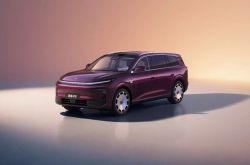
On November 3, Dongfeng Yipai M8 added the Tianyuan Laser Edition, equipped with Dongfeng's in-house-developed Tianyuan Smart Driving solution.
Previously, the same vehicle series had already launched a version equipped with Huawei Qiankun Smart Driving. One vehicle model, two smart driving solutions from different sources.
Similar product lineups also appear on models such as Voyah Dreamer and GAC Trumpchi Xiangwang M8.
The former offers two major series, Kunpeng Smart Driving and Huawei Qiankun, while the latter includes both the Qiankun series equipped with Huawei Qiankun Smart Driving and the Zongshi LiDAR Edition, which adopts GAC's Xingling Zhixing ADiGO GSD driving assistance system and introduces the Momenta large model.
In the past, automakers mostly chose a single technology route—either in-house development or suppliers.
Now, some companies have begun retaining both solutions at the same time, letting consumers choose based on vehicle configuration and needs.
On the surface, this enriches product configurations; but from an industry perspective, it is actually clear that automakers are unwilling to give up the technical advantages brought by mature suppliers, nor are they willing to hand over the long-term development of smart driving entirely to external companies.
Is this strategy of running two routes in parallel a more mature technology layout, or a way out that automakers are preserving for themselves in the smart driving competition?
01 Why Have Automakers Begun Retaining Two Smart Driving Systems at the Same Time?
Previously, the Yipai M8 entered the market with Huawei Qiankun Smart Driving. On November 3, Dongfeng launched the Tianyuan Laser Edition, introducing in-house-developed Tianyuan Smart Driving into the same vehicle series.
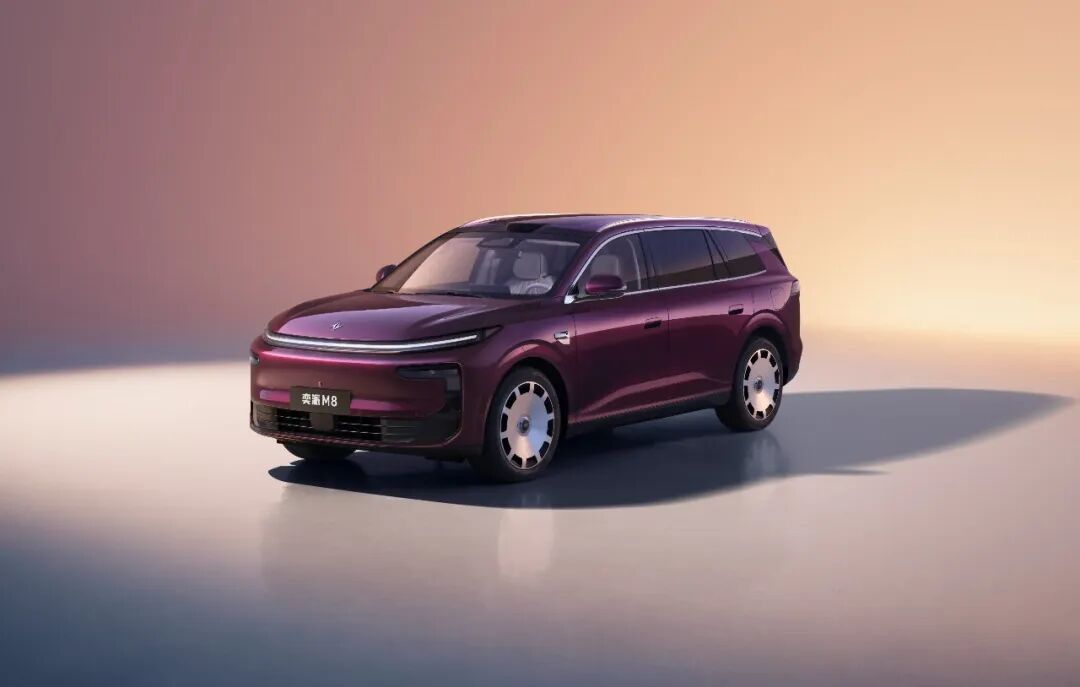
Image source: Internet
The two solutions are not simply differences in software versions, but come from different technical systems.
The Huawei Qiankun solution relies on Huawei's accumulated expertise in perception algorithms, computing platforms, software toolchains, and systems engineering. Automakers can leverage a mature external technology system to accelerate the deployment of high-level assisted driving capabilities.
Tianyuan Smart Driving represents Dongfeng's own intelligent technology layout. Dongfeng hopes to gradually build independent capabilities from algorithm R&D and system development to full-vehicle application through an in-house system.
Why not simply choose one of the routes? The reason is actually simple. If it relies entirely on suppliers, an automaker can quickly obtain mature smart driving capabilities, but it is also easily affected by the external cooperation system in technology iteration, product definition, and supply chain selection.
Especially as Huawei Qiankun gradually becomes a technology solution commonly adopted by multiple automobile brands, automakers also need to consider one question: when competitors can also obtain similar technical capabilities, what can they still rely on to build differentiation?
Suppliers can help automakers quickly acquire technical capabilities, but they may not necessarily enable automakers to form unique technical competitiveness.
Conversely, if an automaker relies entirely on in-house development, it must face problems such as large R&D investment, long technology accumulation cycles, and complex mass-production validation.
Smart driving capabilities require the accumulation of large amounts of real-road data and continuous iteration. It is difficult to form a mature mass-production experience in a short period solely through R&D investment.
Therefore, retaining two solutions at the same time is actually solving two different problems. The supplier solution can help automakers obtain mature smart driving capabilities faster, while in-house development preserves the possibility for automakers to accumulate core technology over the long term and adjust product routes.
In fact, behind this phenomenon there is another easily overlooked change: automakers used to choose only one supplier, but now they have begun managing several sets of smart driving technology resources at the same time.
This is not only a change in technology routes, but also an adjustment in supply chain strategy. Automakers can choose different technical solutions according to the price positioning, product cycle, and target users of different models, and no longer need to bind all models to the same smart driving system.
But this strategy also has a prerequisite: automakers need sufficient product definition and system integration capabilities. Otherwise, the two solutions are merely product configurations provided by different suppliers and cannot truly be transformed into the automaker's own technical advantages.
02 Can Running Two Smart Driving Systems in Parallel Reduce Costs?
From the perspective of product planning, offering two smart driving solutions for the same vehicle series seems able to cover more consumers. Users who value mature technology and brand recognition can choose the supplier solution; users who focus more on price and configuration combinations can choose other technology routes.
But from the perspective of R&D and engineering, running two solutions in parallel does not mean automakers can obtain more technology choices at lower cost.
Taking the Yipai M8 as an example, although the two solutions share the same body platform and chassis foundation, the computing platforms, perception hardware, and software architectures involved in the smart driving systems are not exactly the same.
The Tianyuan Laser Edition uses the Horizon J6M computing platform and is equipped with perception hardware such as Hesai LiDAR; the Huawei Qiankun Edition uses Huawei's corresponding smart driving hardware system.
This shows that even if the two vehicles use the same body structure, the smart driving systems cannot simply be directly transplanted.
A complete smart driving system requires sensor installation and calibration, computing platform deployment, perception algorithm adaptation, vehicle control interface debugging, and full-vehicle scenario validation.
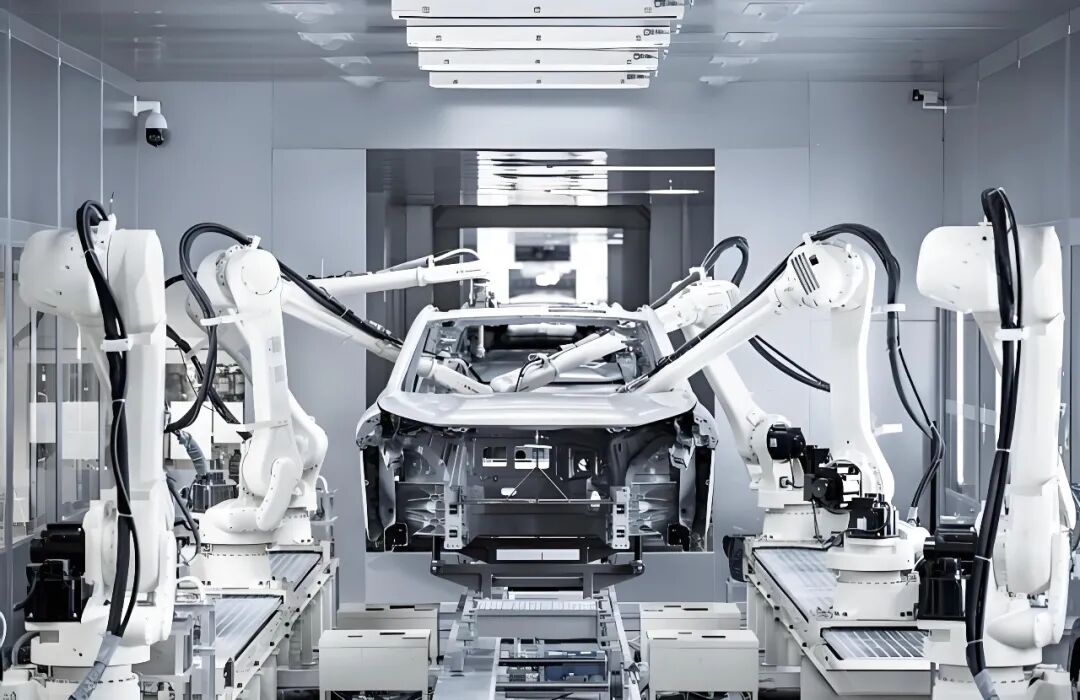 Image source: Internet
Among these, the most easily overlooked is vehicle control. After the smart driving system recognizes the road environment, it needs to further generate driving trajectories and control commands, and ultimately complete steering, braking, and acceleration through the full-vehicle control system.
Different solutions have differences in planning and control algorithms. Even when facing the same road environment, they may output different trajectories and control strategies.
What automakers need to validate is not only whether the system can work normally, but also whether the vehicle can complete actions such as lane changes, turns, following, and emergency avoidance as expected.
Moreover, this work does not end after the model is launched. Algorithm upgrades, sensor adjustments, and function optimization may all involve recalibration, regression testing, and full-vehicle validation.
The two systems need to maintain software versions and testing systems separately, and R&D teams also need to allocate resources among in-house development, supplier coordination, and joint validation.
Therefore, the cost added by dual routes is not just purchasing one more set of hardware or software, but the engineering investment required by two technical solutions from development and integration to continuous iteration.
Only when the full-vehicle architecture, control interfaces, and validation standards can be unified do automakers have the opportunity to reduce duplicate development and maintenance costs.
Conversely, if each solution requires a separately established development and maintenance system, then while product choices increase, long-term costs will also continue to rise.
03 What Problems Do Two Systems Have?
Compared with hardware procurement and R&D costs, Smart Driving Frontier believes that what deserves more attention is the relationship between data and models.
Today's smart driving competition is no longer just a competition of algorithm models, but a system competition composed of data collection, scenario mining, model training, simulation validation, and mass-production iteration.
Whether a smart driving system can continue to improve depends to a large extent on whether it can discover problems, accumulate effective data, and transform that data into model capabilities.
But after the same vehicle series adopts two smart driving systems from different sources, a problem arises: can the data and technical experience generated by the two systems truly be used by each other?
For example, if the Yipai M8 Qiankun Edition encounters a recognition problem in a complex construction scenario, can Dongfeng Tianyuan Smart Driving team use the relevant scenario data to improve its own system?
Conversely, can the handling experience accumulated by Tianyuan Smart Driving in a certain scenario help improve the performance of the Qiankun solution?
This is not entirely impossible. Information such as vehicle operating status, road environment, and traffic participant behavior can, on the premise of satisfying data authorization, privacy protection, and data governance requirements, be uniformly processed to provide reference for different R&D teams.
But this depends on the data authorization, scope of use, and cooperation agreements between automakers and suppliers. It cannot be assumed that because the vehicles belong to the same automaker, the two systems can call each other's data by default.
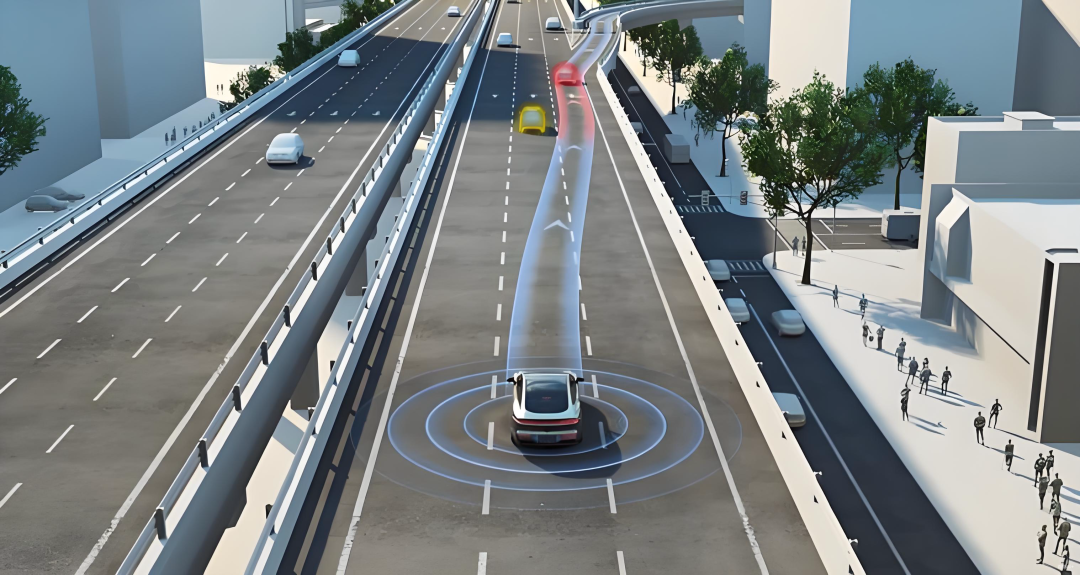
Image source: Internet
More critically, data can be shared, but that does not mean model capabilities can be directly transferred. Different smart driving systems may adopt different sensor configurations, data formats, annotation systems, and model architectures.
The same road scenario may correspond to different perception results and decision-making problems in different systems. Even if the same raw data is obtained, it may need to be reprocessed, annotated, and trained before it can be used for another system.
Even if a certain scenario has been successfully solved by one model, it does not mean that another model can directly obtain the same capability. Because what a model learns is not only the scenario itself, but also the relationship between scenario features and decision results.
Different models differ in training methods, network structures, and decision mechanisms, and the same piece of data may not produce the same learning effect. In other words, even if the two systems can share some data, they may still need to complete model training, testing, and validation separately.
For automakers, this is the real problem they need to face when running dual routes over the long term.
If the installation scale of the in-house solution is limited and the accumulated data and scenario coverage are insufficient, the speed of model iteration may be affected. Even if the supplier solution can provide a mature driving experience, automakers may not necessarily be able to directly master its underlying models and training system.
Ultimately, although the same vehicle series has two smart driving solutions, it may form two relatively independent paths of technology accumulation.
There is another question: can automakers consolidate the experience accumulated from different models and different suppliers into their own system capabilities?
If this cannot be done, then even if an automaker has a large number of vehicles equipped with smart driving systems, it does not mean that the data generated by these vehicles can all become its own core technical assets.
What is truly valuable is not how much vehicle data one possesses, but whether data from different sources can be transformed into technical capabilities that can be sustainably reused.
04 What Results Will Dual Routes Ultimately Lead To?
The product lineups of Dongfeng, Voyah, and GAC show that offering smart driving solutions from different sources for the same vehicle series is becoming another choice for automakers. But dual routes do not mean stronger technical strength, and they may ultimately lead to three different outcomes.
The first is that in-house development gradually matures and begins to undertake smart driving development tasks for more models. As installation scale expands, companies can accumulate more real-road data and gradually improve algorithms, toolchains, and full-vehicle validation systems.
When the technical capabilities and product experience of the in-house solution reach expected levels, automakers may reduce their dependence on external suppliers. The second is that supplier solutions maintain an advantage for a long time, and in-house development never forms economies of scale.
In this case, although automakers retain the in-house route, due to limited installation volume and continuously increasing R&D investment, it remains difficult to build sufficiently strong technical competitiveness.
The in-house solution may remain for a long time in some models or specific configurations, and dual routes ultimately become configuration choices under different product positioning. The third is the formation of long-term specialized division of labor.
Automakers no longer seek to develop all algorithms and hardware themselves, but master key capabilities such as full-vehicle architecture, system integration, product definition, and safety validation, leaving some specialized technologies to suppliers. This does not mean automakers lose autonomy.
Automakers do not necessarily need to develop perception algorithms, train foundation models, or produce smart driving chips themselves, but they at least need to have the ability to define full-vehicle smart driving products, coordinate smart driving systems with vehicle systems such as chassis, carry out full-vehicle-level safety validation, and manage data use and software iteration.
Only by mastering these key links can automakers choose suitable technical solutions based on the needs of different models, without being locked into a particular supplier over the long term.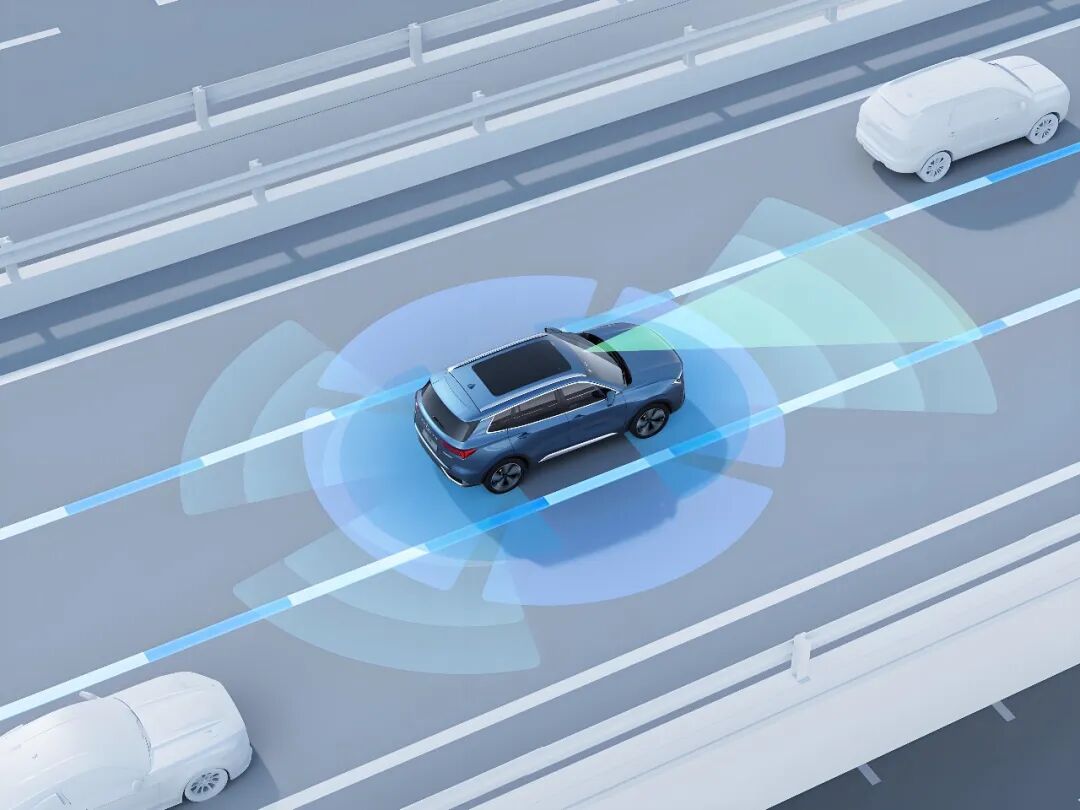 Image source: Internet
These three outcomes have no absolute advantages or disadvantages. What matters is whether automakers clearly understand which capabilities they hope to master.
In the past, automakers' concern was not having sufficiently strong smart driving suppliers; now, as companies such as Huawei and Momenta continue to expand mass-production scale, automakers must also confront the question: as supplier technology becomes increasingly mature, how much irreplaceable capability can they still retain?
Smart Driving Frontier believes that in the future, the real competitiveness of automakers may not lie in whether they have two smart driving systems, and even less in whether all technologies are developed in-house, but in whether they can seize the initiative in system integration, data management, full-vehicle validation, and product definition.
Two smart driving systems appearing in the same vehicle may superficially look like a change in product configuration, but behind it lies automakers' rethinking of their voice in the smart driving industry chain.
The two routes can coexist, but they cannot simply operate in isolation. If in-house development always remains merely a product version and does not form a continuously iterating technical system;
if the supplier solution is mature but the automaker lacks the ability to manage the entire system, then what dual routes ultimately bring may not be technological autonomy, but more complex R&D investment and supply chain dependence.
Automakers do not have to master every technology in smart driving, but they must know what they have mastered and which capabilities cannot be handed over.
#AutonomousDriving #AutonomousDrivingModels
-
![]()
One Car, Two Smart Driving Systems: Are Automakers Developing In-House Technology or Keeping Their Options Open?
-
Trends | Divergence Emerges in the HBF Race as a Giant Takes a Different Technology Path
-
Analysis | AI Data Centers: Qualcomm's Next Strategic High Ground?
-
Industry | China's Software Sector Grew Amid Divergence in the First Three Quarters, With Deep Adjustments Underway in Industrial Structure
-
![]()
40 Satellites Lost Overnight: Why Are the Rockets Amazon Bought So Unreliable?
-
![]()
129,900 Yuan Is Not a Price War—the NX7 Is a Ruthless Move
-
![]()
SAIC Volkswagen Goes on the Offensive: The ID. ERA 5X Feels Remarkably Like a "New Force"
-
![]()
Final word: This year may be a low point not seen in over a decade—how big is China's domestic passenger car market, really?