Blockbuster! Can NIO Auto ‘Rise Like a Phoenix’? Netizens Say: Only Taiyi Can Resurrect Nezha!
 09/14 2026
 458
458
On September 11, Hozon New Energy convened its fourth creditors' meeting.
Over 1,600 creditors participated remotely. Among them were large financial institutions with significant claims, small parts suppliers who had gone unpaid for years, and numerous local state-owned enterprises that had once bet big on the electric vehicle sector.
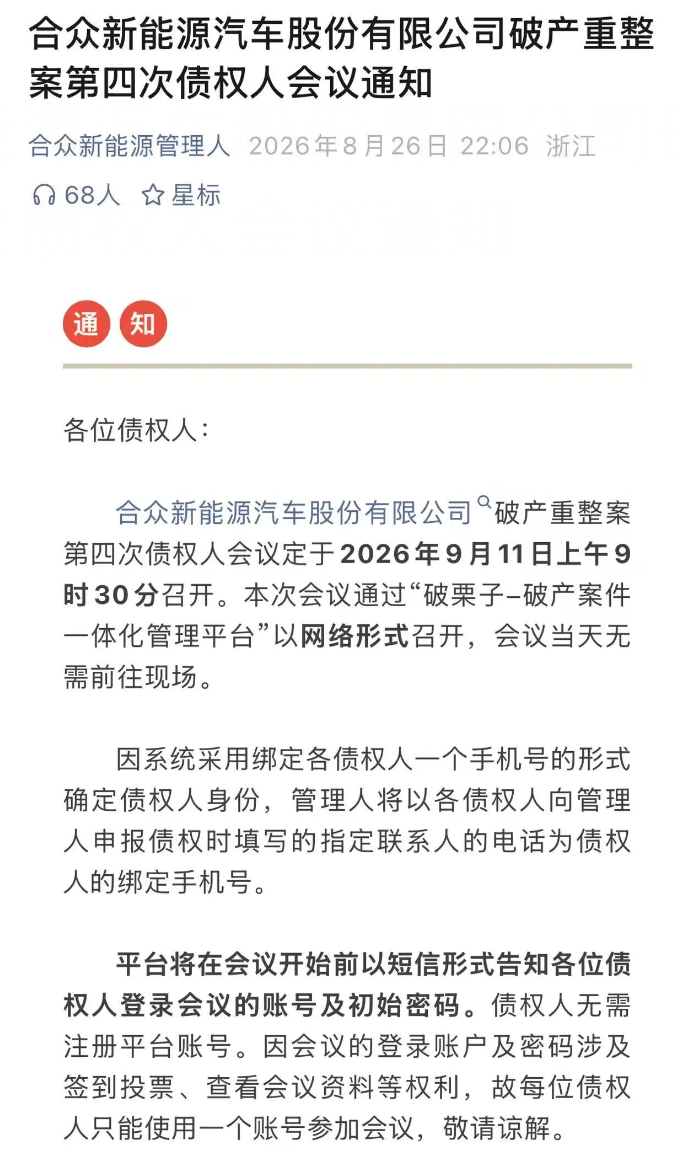 Image Source: Official Account
All eyes were fixed on the restructuring plan laid out on the table, awaiting a verdict on Nezha's fate.
Once the plan was unveiled, the name that immediately captured the internet's attention was Zhejiang Taiyi Holy Lotus. This partnership intends to invest 3 billion yuan to acquire a 70.62% stake in Hozon New Energy, becoming Nezha's new controller.
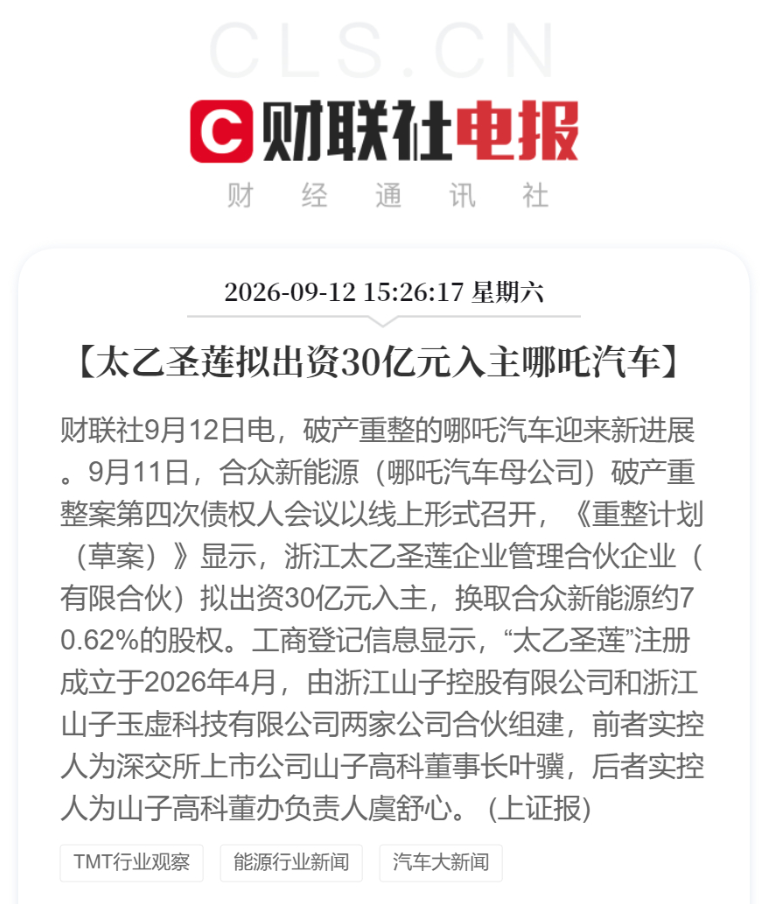 Image Source: Cailian Press
In mythology, Taiyi Zhenren used a lotus to rebuild Nezha's body. The capital market's script eerily mirrors this tale. Netizens joked: To save Nezha, Taiyi himself had to intervene.
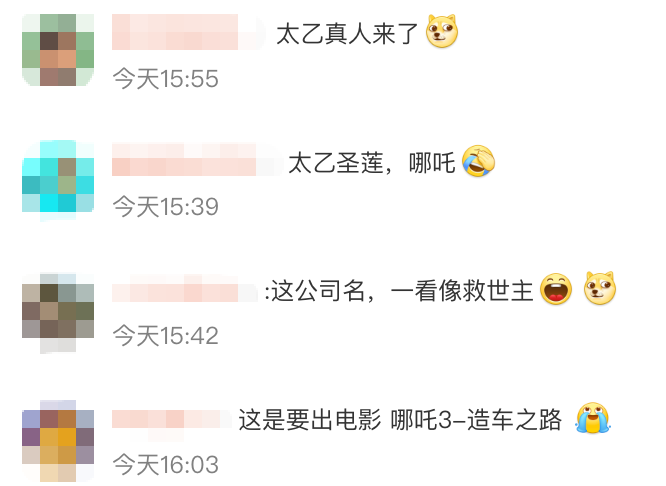 Image Source: Weibo
Jokes aside, the 3 billion yuan is earmarked not for expansion but for survival. The plan clearly states: 1.167 billion yuan will be used to repay debts, cover litigation fees, and pay administrator fees; the remaining 1.833 billion yuan will serve as working capital to resume production and repair the broken supply chain.
Over 30% of the funds will go directly toward filling old debt holes, leaving limited resources for actual vehicle production. To grasp this capital rescue, one must revisit Nezha's tumultuous history.
I. From Sales Champion to Bankruptcy: Nezha's Two Fatal Mistakes
Nezha's journey began with Fang Yunzhou, a seasoned executive from Chery. In 2014, he founded Hozon New Energy in Tongxiang with a team of former Chery colleagues. Initially, Hozon operated in relative obscurity, quietly working on its vehicle production qualifications. In 2018, Zhang Yong from BAIC New Energy joined, and the brand was rebranded as Nezha.
 Image Source: Baijiahao
Many found the name tacky at the time, but Zhang Yong saw its potential: it was memorable. Soon after, the animated film Ne Zha: Birth of the Demon Child became a hit, with the line 'My fate is mine, not heaven's' serving as the perfect slogan for this newcomer.
During those years, NIO, XPeng, and Li Auto focused on the high-end market, competing on smart cockpits and service experiences. Nezha took a different route, targeting lower-tier markets and the B-end ride-hailing sector.
The Nezha V, priced under 60,000 yuan, catered to third- and fourth-tier families and commercial fleets; the Nezha U, positioned around 130,000 yuan, was developed specifically for ride-hailing customization. Factories operated around the clock, with a steady stream of orders.
In 2022, Nezha delivered a stunning performance: 152,100 units sold, surpassing NIO, XPeng, and Li Auto to become the new energy vehicle sales champion for that year.
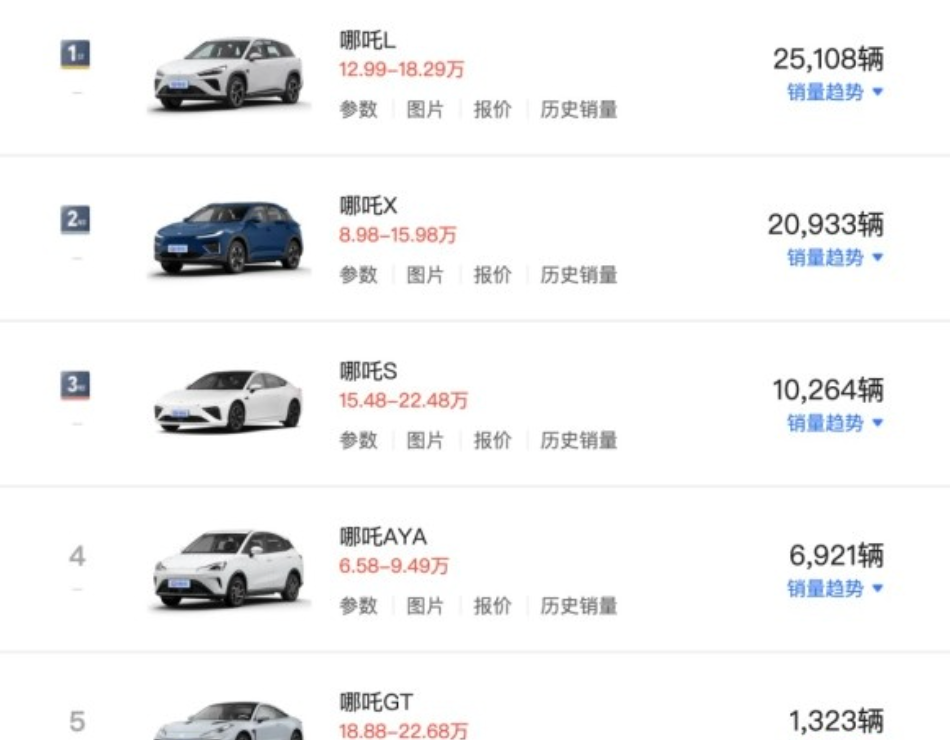 Image Source: Weibo
At its peak, 360 and CATL made significant investments, local state-owned enterprises provided land and funding, and three major bases were established in Tongxiang, Yichun, and Nanning. The Nanning base, with a planned investment of 3.5 billion yuan and an annual capacity of 100,000 units, was seen as a model for industrial upgrading by local governments.
Overseas expansion also progressed, with the Nezha V launching in Thailand and topping local pure electric SUV registration charts for two consecutive months, bringing in a steady stream of overseas orders.
Everyone believed this grassroots dark horse had truly made it. Fang Yunzhou described himself as a seeker in the automotive industry, and the team was busy preparing for a Hong Kong IPO, with grand plans for globalization.
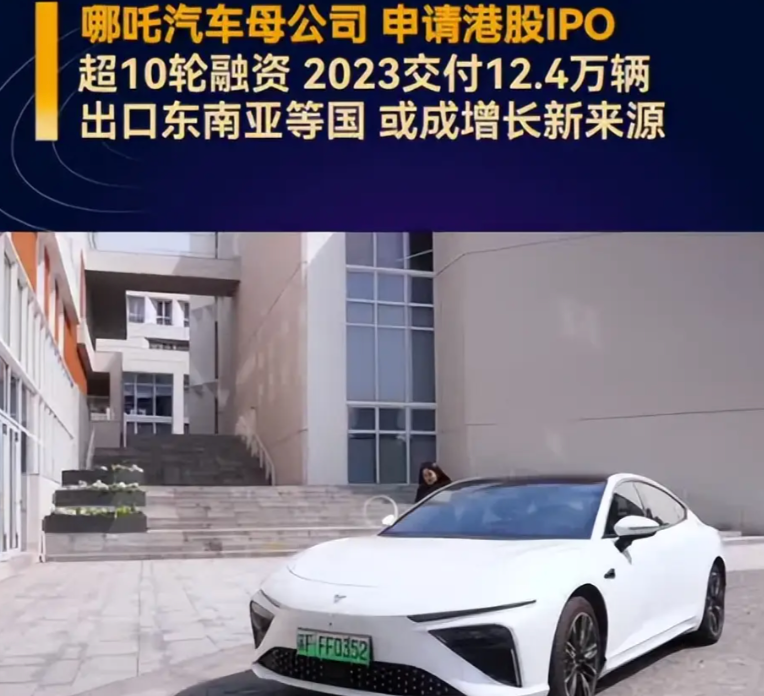 Image Source: Autohome
But beneath the prosperity lay a ticking time bomb. Nezha's sales success was essentially built on sacrificing profits for volume. Its main models were priced too low, with thin profit margins per unit—selling one meant losing money. From 2021 to 2023, Hozon accumulated losses of 18.3 billion yuan, roughly translating to over 80,000 yuan lost per vehicle sold. The higher the sales, the faster the cash burn.
The company managed to cover the gaps through financing and local government support. But once it reached the sales champion position, attitudes shifted. The team, unwilling to be forever labeled as 'ride-hailing specials' or 'cheap commuter cars,' decided to push into the high-end market, targeting the 200,000-yuan segment.
Heavy investments went into the Nezha S and Nezha GT. With coupe styling and impressive specs on paper, the brand's foundation couldn't support the sudden price jump. Consumers rejected a Nezha priced at 200,000 yuan. Both high-end models flopped after launch, with massive R&D, production line upgrades, and marketing expenses going to waste, turning them into money pits.
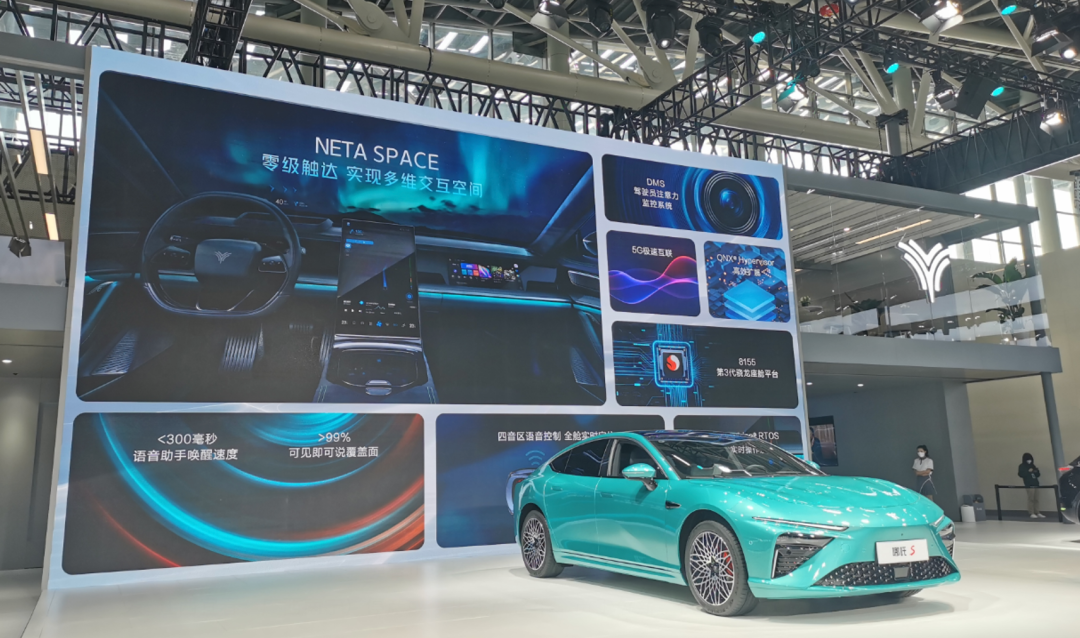 Image Source: Weibo
Internal management flaws also surfaced. Former employees revealed that some core components were sourced from affiliated companies at higher prices than market rates. Even as the company faced cash shortages, these affiliates enjoyed lenient payment terms, while external suppliers had their payment periods extended to over nine months. With high-end models burning cash and the supply chain in uproar, the financial strain reached its limit.
In 2023, as industry price wars erupted, Nezha's growth halted. Annual sales fell to 127,500 units, the only decline among leading new energy brands. By 2024, the situation spiraled out of control. Sales halved, and the Hong Kong IPO application was paused.
The dominoes began to fall.
The three major factories in Tongxiang, Yichun, and Nanning successively shut down. The Nanning base, built with billions in investment, saw its production lines idle, with equipment listed on Alibaba's auction site for over 60 million yuan, failing to attract bidders even after price reductions, leaving the vast facility to decay into an industrial wasteland.
The company laid off staff and delayed salaries. Middle management went unpaid for months, blamed on 'salary structure adjustments,' while frontline employees received partial payments. When word reached suppliers, over a thousand stopped shipments in panic.
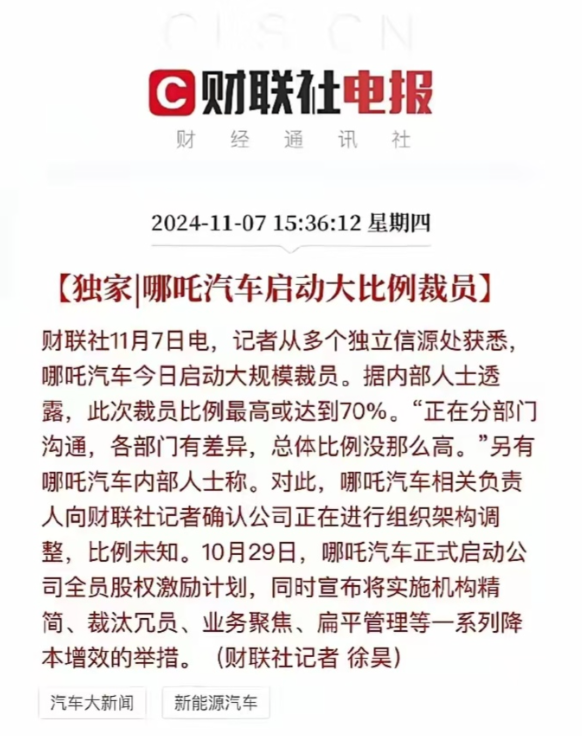 Image Source: Cailian Press
After parts supplies stopped, over 400,000 existing owners became the most vulnerable group, unable to find replacement parts for repairs, with shrinking after-sales networks and plummeting used car values. Online complaints flooded in.
In May 2025, Hozon New Energy faced bankruptcy review petitions from creditors. In June, the Jiaxing Intermediate People's Court formally accepted the restructuring. The former sales champion had fallen into a 10-billion-yuan debt trap.
Ordinary claims alone totaled 11.7 billion yuan, involving over 1,600 creditors, ranging from financial institutions and local state-owned enterprises to parts suppliers of all sizes.
II. Taiyi Holy Lotus's Entry: No Miraculous Salvation, Only Precise Industrial Opportunism
Many thought Nezha's story ended there—until Taiyi Holy Lotus appeared.
Behind the equity structure, Taiyi Holy Lotus is not an established industrial giant but a shell company tailored for this restructuring. Registered in April 2026, its operator is Shanzi Hi-Tech, controlled by Ye Ji.
As early as the 2025 investor recruitment phase, Shanzi Hi-Tech was the only party to submit a complete proposal, paying a 50 million yuan deposit and advancing to this stage.
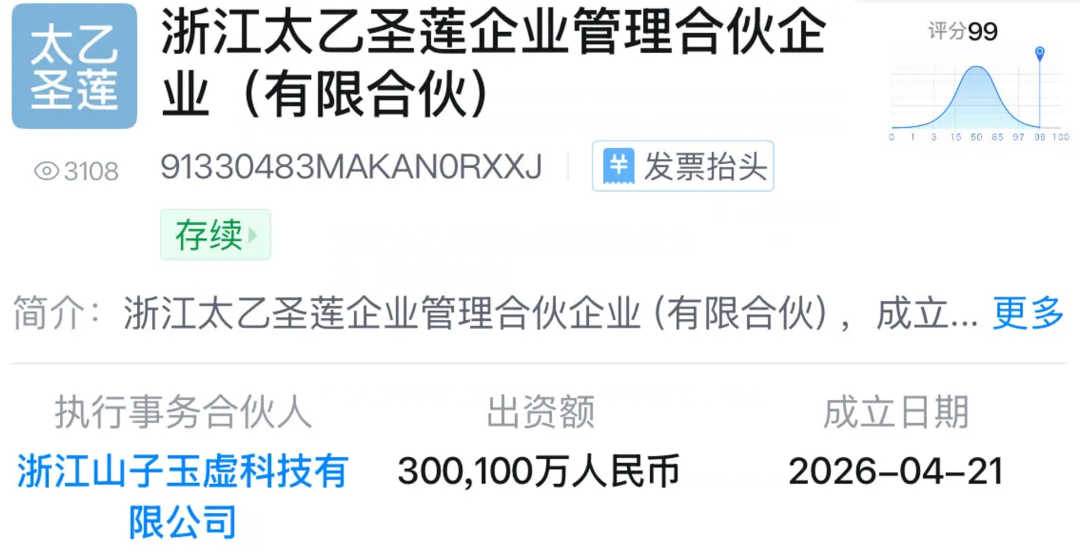
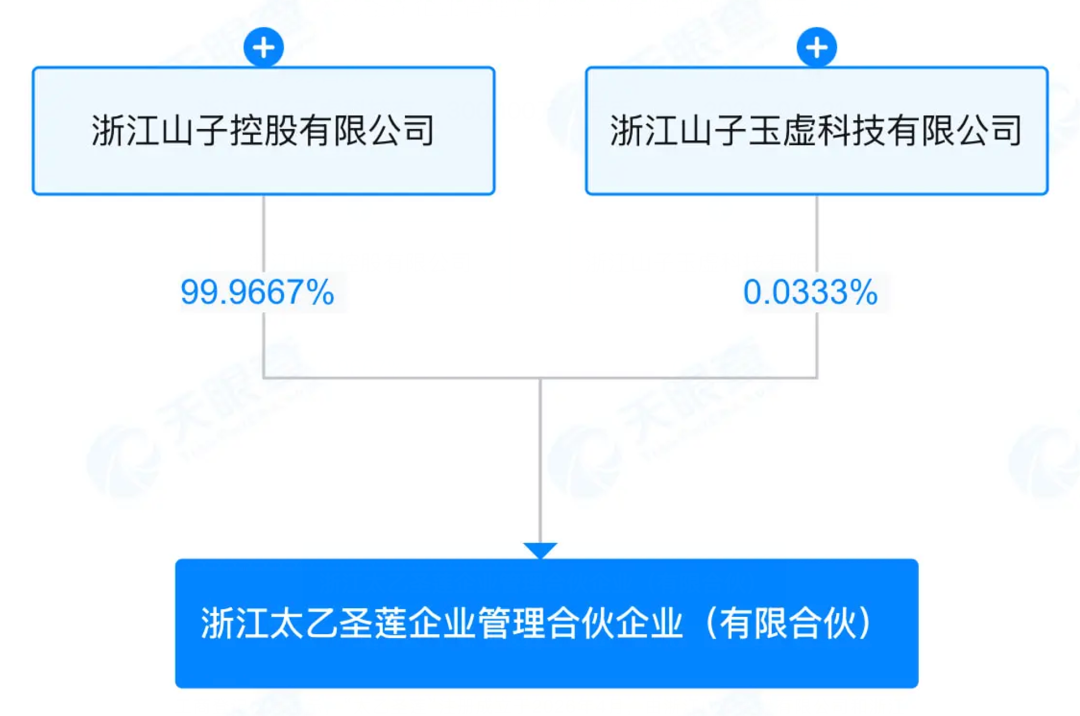
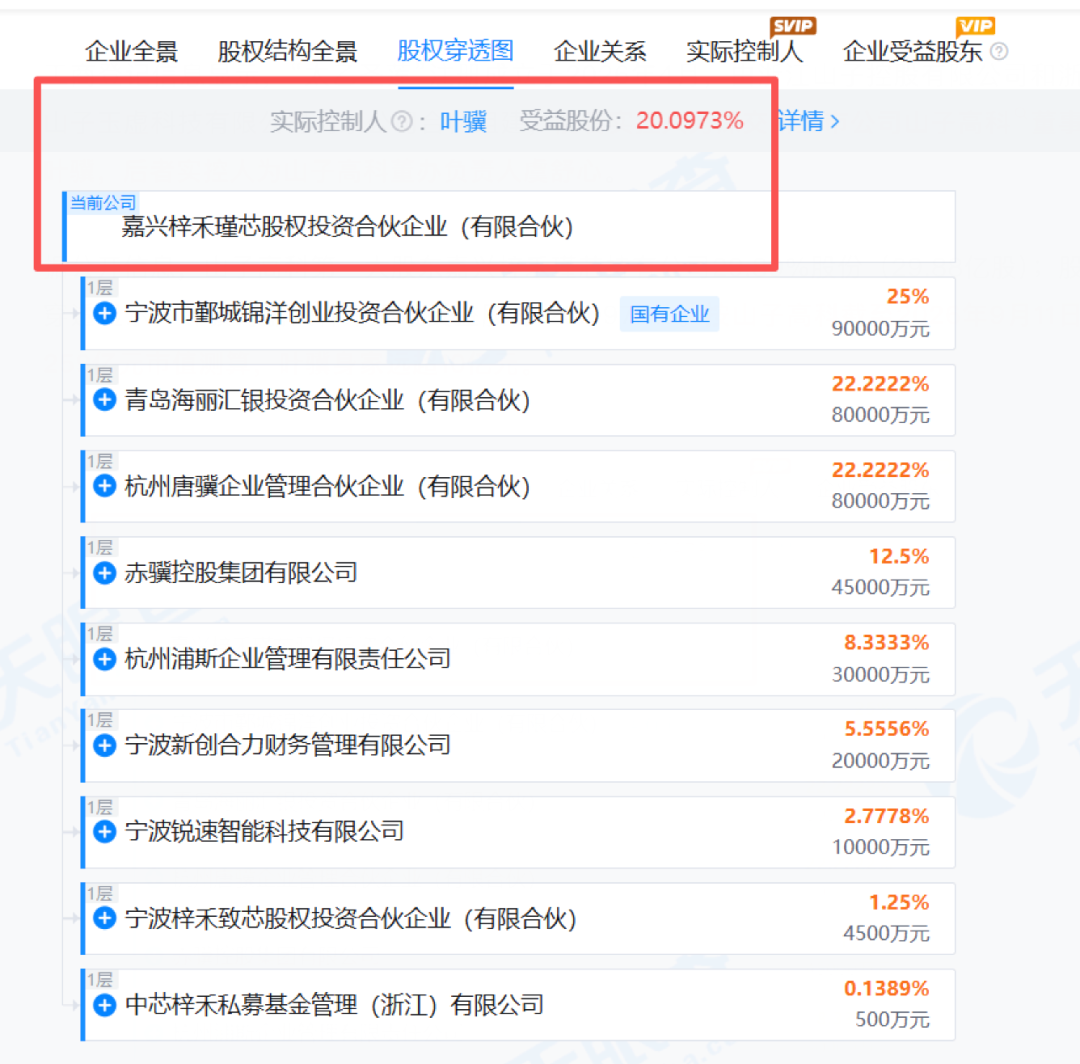 Image Source: Tianyancha
This team is no outsider, with practical experience in automotive parts company restructurings. Shanzi Hi-Tech itself holds vehicle production qualifications and has successfully executed overseas vehicle export projects.
They learned from Nezha's past mistakes, avoiding calls to challenge the domestic high-end market and adopting a pragmatic approach: abandoning fierce domestic competition to focus on overseas affordable electric vehicle markets.
The restructuring plan unfolds in three steps.
First, resume production of the Nezha X, with a minimum annual output of 10,000 units.
This compact SUV is one of the few Nezha models with remaining overseas orders. The 10,000-unit target may seem modest, but it's a survival baseline. MIIT regulations state that if production falls below 2,000 units for two consecutive years, the vehicle production qualifications may be revoked.
Beyond securing qualifications, the plan must restore the after-sales network to address the parts shortage for 400,000 existing owners. Failure here would render everything else meaningless.
Second, leverage existing overseas channels to target Southeast Asia, Africa, and Latin America, aiming for 300,000 units annually.
Instead of engaging in price wars with BYD and Geely in China, the focus shifts to overseas lower-tier markets, using low-cost commuter vehicles to drive volume.
Third, after stabilizing operations, develop global smart vehicle models, target 40 billion yuan in annual revenue, and restart the IPO.
The asset side undergoes drastic streamlining. Factories and production lines for the Nezha X and Nezha L are retained; equipment for the money-losing Nezha S and GT is classified as non-core assets and sold off. This means abandoning high-end ambitions to travel light.
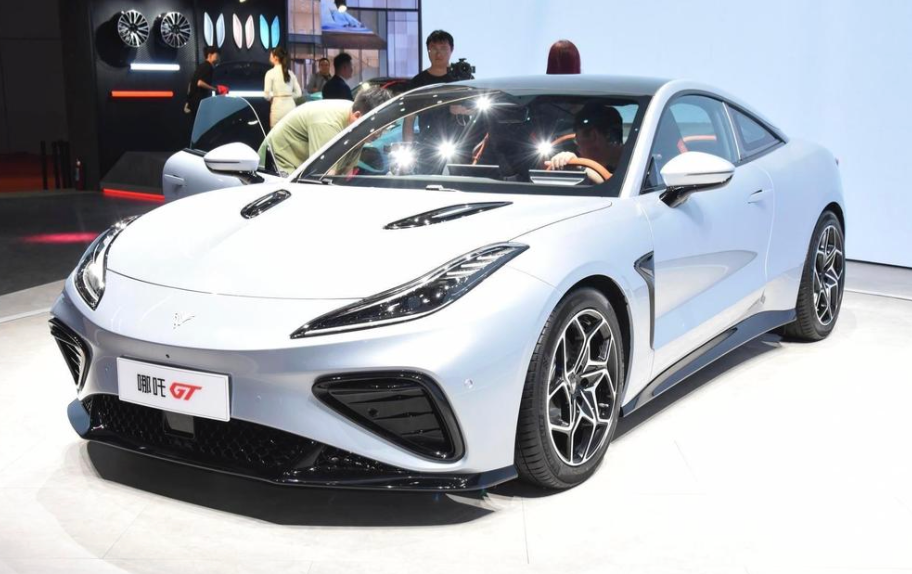 Image Source: Autohome
But the 3 billion yuan entry ticket doesn't guarantee success.
The biggest hurdle is the creditor vote. The draft stipulates that ordinary claims under 800,000 yuan will have a repayment rate of about 12%, with lower rates for larger claims. This means most creditors must accept significant losses.
Whether over a thousand creditors will collectively vote yes is the first life-or-death test. If the vote fails, Hozon will proceed to liquidation, wiping out the brand, qualifications, and overseas channels.
III. Rebirth Remains an Uphill Battle: Qualifications for Survival, Overseas Markets for Growth
Online opinions remain sharply divided.
Optimists argue that Nezha still has a foundation in overseas markets, having gained recognition in Thailand. Abandoning high-end dreams to focus on affordable overseas vehicles is a viable path.
Suppliers are pragmatic: recovering some money is better than nothing in liquidation. They're willing to gamble that the new investor can restart operations.
But existing owners and industry observers remain cautious.
One owner stated bluntly: 'Stop drawing big pictures of 300,000 units and 40 billion yuan in revenue. First, ensure parts supplies and repair networks. A broken car renders all grand plans meaningless.'
Industry insiders see clearer challenges: After two years of shutdown, many suppliers have shifted to other automakers. Rebuilding the supply chain requires renegotiating payment terms and trust, a far tougher task than imagined. Overseas markets are no safe haven, with BYD and Wuling already established, making the affordable electric vehicle sector fiercely competitive.
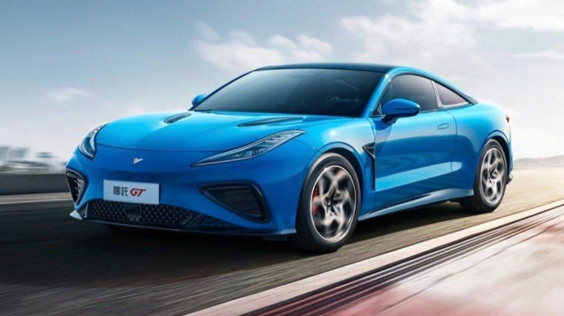 Image Source: Autohome
In mythology, the lotus reshapes the body in an instant. The business world offers no miracles.
Nezha's fall from 2022's sales champion to bankruptcy restructuring wasn't due to a single fluke. The fatal flaws of its low-price volume model, strategic swings toward high-end markets, and strained supply chain finances compounded into tragedy.
Taiyi Holy Lotus's 3 billion yuan merely opens a door
-
![]()
Domestic Computing Power Firms Favoring Private Placements: The New Capital Market Favorites
-
![]()
Blockbuster! Can NIO Auto ‘Rise Like a Phoenix’? Netizens Say: Only Taiyi Can Resurrect Nezha!
-
![]()
Latest Developments on Huawei’s ‘MaJie’ Collaboration? Maserati Announces Official Launch of December Brand Strategy
-
AI Office: The Race Intensifies
-
[Data Microscope] 100 Million Foldable Phones Split the Smartphone Market in Half
-
Every "Hello" to AI Comes with a Price Tag
-
![]()
Why Does a More Mature End-to-End Autonomous Driving System Require More Error-Prone Data?
-
![]()
WeChat is Quietly Making Big Moves! Strengthening the Built-in Browser in the Mac Version, Paving the Way for a Super Agent?