Is It Harder for Automakers to Profit as Car Sales Increase?
 09/15 2026
 336
336
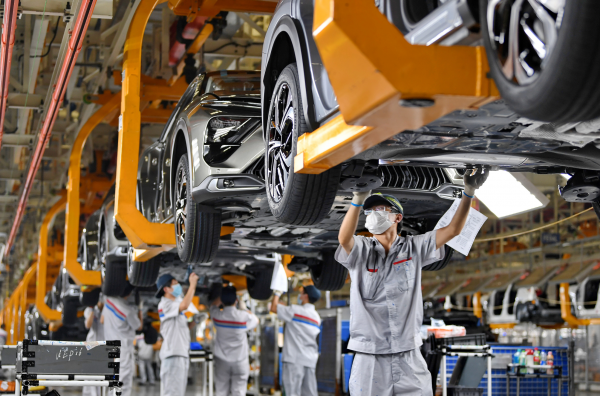
The August sales rankings paint a picture of a seemingly thriving automotive market. BYD, Chery, and Geely continue to ramp up their sales volumes, while among the newcomers, Leapmotor has also managed to exceed 100,000 monthly sales in both July and August.
However, a closer look at the sales rankings alongside the semi-annual reports tells a different story. Despite selling more cars, making profits has become increasingly challenging. Some automakers have seen their revenues climb but their profits decline, while others have maintained decent sales but shifted from profitability to losses. Some, with relatively low average selling prices (ASPs) per vehicle, have managed to achieve profitability early on.
Thus, while monthly sales figures remain crucial for automakers, focusing solely on sales is no longer sufficient. The key question is whether these sales translate into profits, positive cash flow, and lower costs. The true value of scale today lies in transforming "selling more" into "earning more."
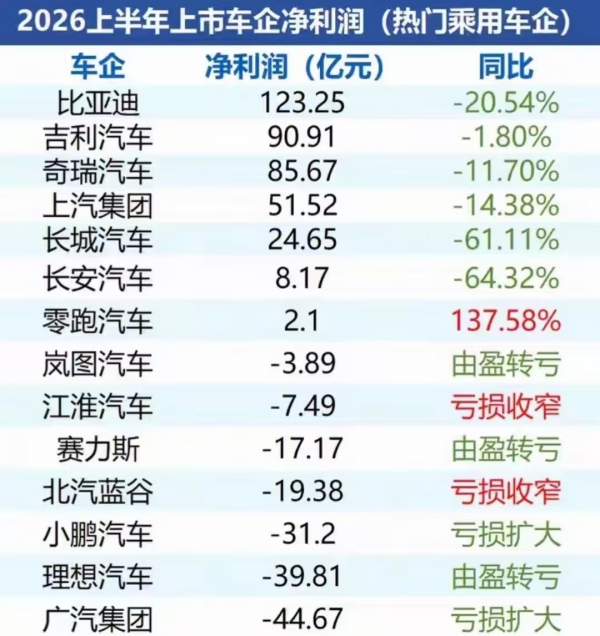
Profitability becomes paramount after reaching 100,000 monthly sales
Scale remains important, but today's scale is not just about topping the sales charts and proving "I sell more"; it's also about whether it can effectively spread out costs such as R&D, distribution, and supply chains.
Leapmotor serves as a prime example. In the first half of the year, it delivered 356,500 vehicles, marking a 60.8% year-on-year increase, and surpassed 100,000 sales in both July and August. More impressive than reaching this milestone is Leapmotor's sustained profitability. Its operating cash flow reached RMB 2.17 billion, and its free cash flow turned positive at RMB 140 million. Although Leapmotor's ASP and gross margin per vehicle are not high, as platformization, cost control, and sales volume advance together, fixed costs like R&D, distribution, and supply chains are diluted more rapidly.
This clarifies a crucial point: high sales volume does not necessarily equate to economies of scale. True economies of scale should be evident in financial statements—improved cash flow, better gross margins, and more stable costs. The old adage "the more sales, the safer" now requires a caveat: it must be effective scale.
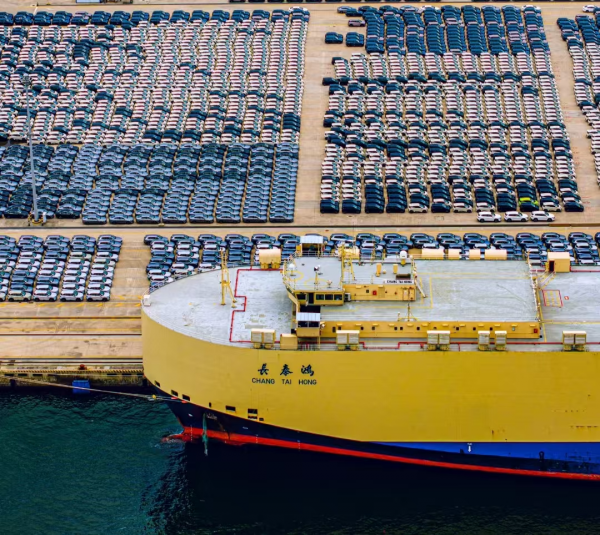
The same holds true for traditional automakers. BYD's revenue exceeded RMB 340 billion in the first half of the year, but its profits faced a decline; Chery exported nearly 940,000 vehicles in the first half, with overseas revenue increasing by 51% year-on-year; Great Wall Motors' overseas sales surpassed its domestic market for the first time in the first half. Domestic sales volume is no longer the sole metric for measuring an automaker's "scale."
Especially amid today's intense domestic price competition, relying solely on price cuts to boost sales may increase market share but erode profits. Thus, the importance of overseas expansion becomes more apparent: it can both absorb production capacity and seek better pricing and profit margins outside the domestic market. Sales volume and profits are beginning to decouple, and overseas markets offer opportunities to reconnect them.
Overseas expansion is no longer just about "selling more"
Several sets of figures illustrate this point clearly: Chery exported around 940,000 vehicles in the first half, accounting for nearly 70% of its total sales; BYD's overseas sales reached RMB 181.3 billion in the first half, accounting for more than half of its total revenue; Great Wall Motors sold 289,000 vehicles overseas, surpassing its domestic sales of 286,700 for the first time; Geely exported 474,000 vehicles in the first half, a 158% year-on-year increase.
Overseas markets now influence not just sales rankings but also directly impact automakers' revenue structures. Domestic consumers are accustomed to low prices and high configurations, making it increasingly difficult for automakers to maintain both sales volume and profits. In some overseas markets, however, Chinese automakers can still command better pricing due to their supply chain and product advantages. Simply put, overseas markets are not just about "boosting volume" but also about helping automakers make money.

Leapmotor represents a different approach to overseas expansion. In the first half, it exported 96,300 vehicles, a 372.6% year-on-year increase, accounting for 27% of its total sales and already surpassing its full-year exports in 2025. Leveraging its partnership with Stellantis, Leapmotor quickly gained access to overseas distribution channels and localized manufacturing resources without immediately investing heavily in building its own complete system. This approach is pragmatic: overseas expansion is not about maximizing sales volume at all costs. If overseas sales rise but investments balloon accordingly, leaving no profits, it merely relocates the domestic scale game. A true second growth curve must be self-sustaining.
New forces have taken four distinct paths
The differences among several new forces are even more pronounced. Everyone recognizes that relying solely on vehicle sales is insufficient, but their directions have diverged completely: Leapmotor continues to deepen cost and efficiency while expanding overseas markets; NIO covers more price ranges with multiple brands while maintaining its premium position; XPENG extends its technological capabilities beyond automobiles; and Li Auto places AI in a more prominent position while transitioning to pure electric vehicles (EVs).
However, the market is pragmatic. Future stories can be told, but today's priority remains selling cars. Without healthy gross margins and cash flow, a shaky core business means even the most appealing "second curve" will struggle to gain market acceptance based on mere imagination.
Leapmotor's path appears the most straightforward: continue to pursue low costs and high efficiency, expand scale, and use overseas markets to boost sales. In the first half, Leapmotor's R&D expenses were RMB 2.32 billion, the lowest among the four new forces, yet it was the only one with positive operating cash flow. This outcome should not be simply interpreted as "less R&D is better." Instead, it serves as a reminder to automakers that technological investments must ultimately translate into product and operational efficiency, especially amid ongoing price competition.
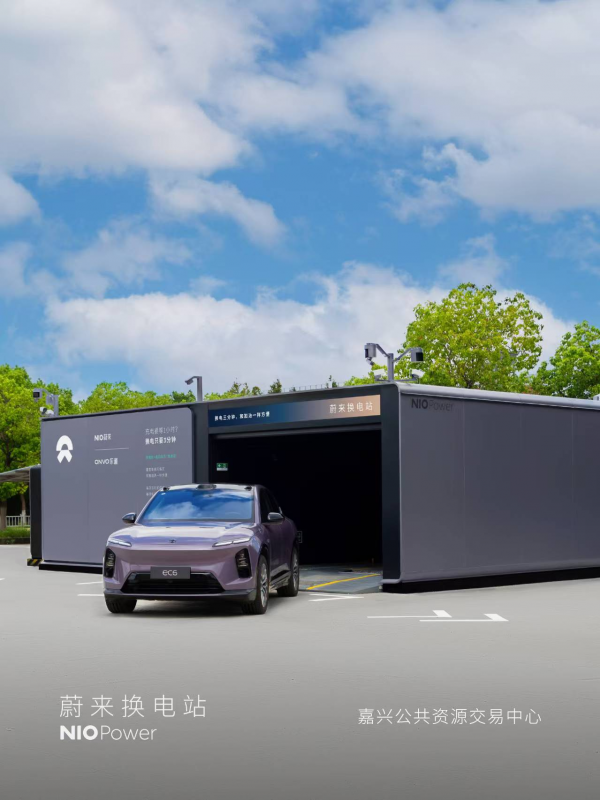
NIO takes a different route. With three brands—NIO, ONVO, and Firefly—covering different price ranges, its main brand continues to target the premium segment. In the first half, NIO's ASP reached RMB 302,000, with a gross margin of RMB 56,000 per vehicle and a vehicle gross margin of 18.5%, the highest among the four new forces. At least from a per-vehicle perspective, the premium brand's premium remains intact. The challenge is straightforward: multiple brands entail higher R&D, marketing, and distribution investments. The key question is whether these costs can be diluted by greater sales volume.

XPENG appears to be transforming its R&D capabilities into a separate business. In the first half, its R&D investment was RMB 5.82 billion, with an R&D expense ratio of 17.8%, the highest among the four. Its overall gross margin reached 20.6%, with a significant portion coming from "service and other" businesses. Traditionally, automakers' software, algorithms, and R&D primarily served their own vehicle models; now, these capabilities are beginning to generate external revenue. In the future, automotive companies' income may not solely come from selling cars.
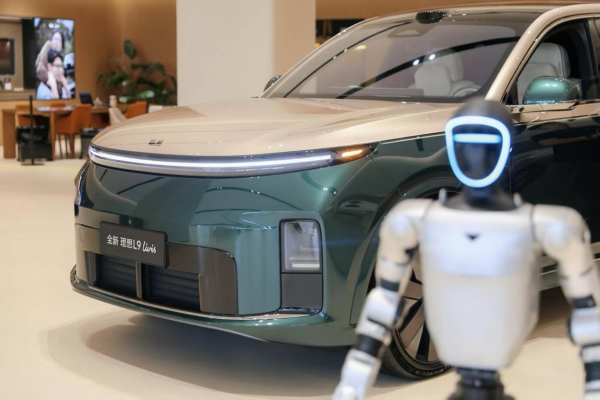
Li Auto's greatest challenge currently lies in product mix transition. Extended-range EVs remain its most critical advantage from the past and present, but the transition to pure EVs is inevitable. As high-margin extended-range models decline in proportion and lower-priced pure EV models increase, compounded by model refresh inventory clearance and rising raw material costs, profits are naturally affected. Thus, while Li Auto talks about AI, the market will listen, but its primary focus remains on vehicle sales. For an automotive company, AI may represent the future, but sales volume, gross margin, and cash flow are the immediate priorities.
In Conclusion
Based on the August sales rankings, we can see that amid a more challenging environment, mainstream automakers have delivered relatively respectable data. However, delving beneath the surface reveals that competition in China's auto market today is no longer just about who sells more.
Reaching 100,000 monthly sales is certainly cause for celebration, and annual sales of one million vehicles remain a threshold. However, with persistent price wars and increasingly rapid product updates, if sales cannot translate into profits and even require continuous price cuts to sustain, this amounts to mere false prosperity.

This is the most noteworthy aspect of this year's semi-annual reports. Leapmotor has gradually converted scale into cash flow, NIO continues to support per-vehicle value through the premium market, XPENG has begun monetizing its technological capabilities, and Li Auto is enduring the growing pains of product mix transition. Meanwhile, larger automakers like BYD, Chery, and Geely are also accelerating their search for growth and profits overseas.
Their paths are increasingly diverging, but ultimately, high sales volume and selling more only prove that cars are being bought. Whether these sales can be retained and transformed into profits, positive cash flow, and the confidence to invest in next-generation products determines how far an automaker can go.
-
![]()
Is It Harder for Automakers to Profit as Car Sales Increase?
-
![]()
After Returning Operating Rights to Seres, How Far Can AITO Progress Post-Huawei's Exit?
-
![]()
Why Build 'Space Towers' When Phones Can Connect Directly to Satellites?
-
![]()
31 Provinces’ Computing Power Integrated into the Grid: Huoshi Industrial Intelligence Unveils Five Regional Competition Trends
-
![]()
Lotus Tech: AR Glasses Split into Two Camps: Lightweight AI HUD and AR Large-Screen Viewing/Spatial Computing Glasses
-
![]()
How Did AI Customer Service, Which Transfers Calls to Human Operators After 660 Seconds, Turn into a ‘Talking Wall’?
-
![]()
Xiaomi Xuanjie O3 Debuts, Qualcomm Reveals Next-Gen Snapdragon Platform, Paving the Way for the Agentic AI Era
-
![]()
Will New Energy Vehicle Prices Climb Following the Introduction of the Battery Tax?