"Taiyi Shenglian": Can It Reforge Nezha’s Golden Form?
 09/16 2026
 379
379
Recently, the fourth creditors' meeting for the bankruptcy restructuring of Hozon New Energy Automobile Co., Ltd. (hereinafter referred to as Hozon New Energy), the parent company of Nezha Auto, took place. The "Restructuring Plan (Draft)" unveiled for the first time the identity of the restructuring investor: Zhejiang Taiyi Shenglian Enterprise Management Partnership (Limited Partnership) (hereinafter referred to as Taiyi Shenglian) plans to invest 3 billion yuan to acquire approximately 70.62% of Hozon New Energy's equity. This news quickly ignited heated discussions among netizens, with the terms "Nezha, Taiyi Shenglian, and Yuxu" trending online.
Netizens swiftly drew parallels, noting that in Chinese mythology, Taiyi Zhenren once used lotus flowers and leaves to reconstruct Nezha's physical form. Now, the real-world "Taiyi Shenglian" is poised to rescue Nezha Auto from the brink of bankruptcy. Coincidentally, one of its shareholders is a company named "Shanzi Yuxu." Thus, netizens have assembled "Taiyi, Yuxu, and Nezha" into a real-world "Fengshen Universe," evoking a sense of mythical tales coming to life. 
From another angle, this may also reflect Shanzi Hi-Tech's strategic intent in participating in Nezha's restructuring—to revive this once-promising new energy vehicle (NEV) manufacturer. However, whether "Taiyi Shenglian" can truly help Nezha forge a new "golden body" remains uncertain. Currently, Hozon New Energy has only released the "Restructuring Plan (Draft)," and subsequent procedures must still be completed. Whether the 3 billion yuan investment will be fully realized is yet to be seen.
Therefore, Nezha Auto has only caught a glimpse of hope and still faces a long journey before resuming actual production. Until the restructuring plan takes effect, these plans remain theoretical. Having an investment plan does not guarantee that funds will definitely arrive; past NEV manufacturers have already fallen into such traps.
HiPhi Motors serves as a cautionary tale: previously, HiPhi had secured a 600 million USD investment plan with EV Electra, including an initial deposit of 100 million USD. However, the funds ultimately failed to materialize, and the restart plan was shelved. For Nezha Auto, the approval of the restructuring plan is merely the first step; whether the 3 billion yuan will ultimately be delivered is the crux. 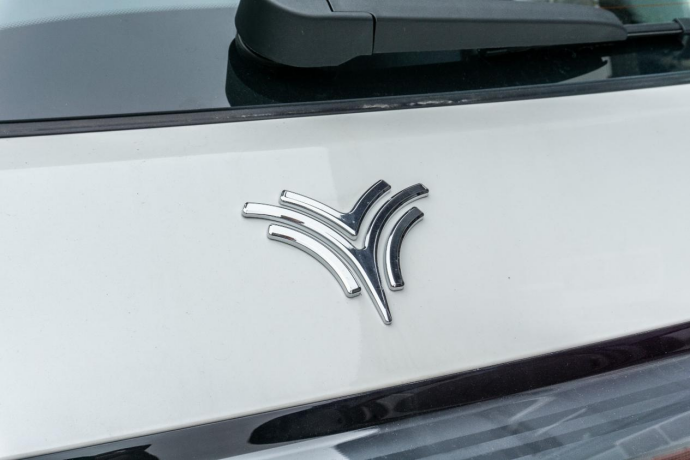
It is reported that Taiyi Shenglian was jointly established by Zhejiang Shanzi Holdings and Zhejiang Shanzi Yuxu Technology. Zhejiang Shanzi Holdings is effectively controlled by Ye Ji, the chairman of Shanzi Hi-Tech, and one of its shareholders is Chiji Holdings, also controlled by Ye Ji. The issue lies in the fact that both the financial strength behind the scenes and the creditworthiness of the actual operator cast a shadow of uncertainty over this 3 billion yuan investment.
Shanzi Hi-Tech's 2026 interim report reveals that the company's net profit attributable to shareholders for the first half of the year was only 30.8296 million yuan, marking an 85.69% year-on-year decline; its net profit after non-recurring items was a loss of 349 million yuan. As of the end of June, its total liabilities stood at approximately 4.48 billion yuan, with a debt-to-asset ratio of 61.28%. Meanwhile, business registration information shows that Chiji Holdings Group has been listed as a dishonest entity subject to high-consumption restrictions, and Ye Ji himself has also faced such restrictions. Against this backdrop, whether the 3 billion yuan can be transferred on time and in full has naturally become a critical hurdle for Nezha's restructuring. If the funds fail to materialize, Nezha Auto's resumption of production and restructuring plans will struggle to advance. 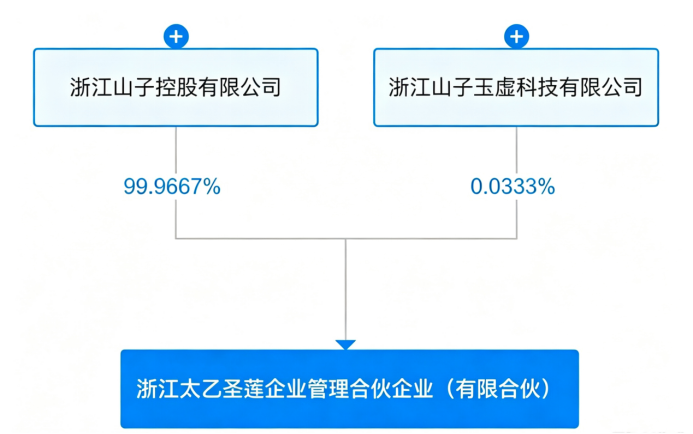
Furthermore, even if the 3 billion yuan arrives smoothly, Nezha Auto's path forward will not be easy. According to the restructuring draft, 1.167 billion yuan of the 3 billion yuan will be used to settle relevant claims and bankruptcy expenses, leaving only 1.833 billion yuan for the company's subsequent operations. This amount must cover expenses for resuming production, rebuilding the supply chain, and restoring after-sales services. In the capital-intensive automotive manufacturing industry, 1.833 billion yuan is hardly sufficient. It is worth noting that new energy vehicle (NEV) startups often require tens of billions of yuan in investment, from platform development and new vehicle development to channel expansion. William Li, the founder of NIO, once disclosed that NIO's cumulative R&D investment has exceeded 60 billion yuan; Li Auto's R&D budget for 2026 is approximately 12 billion yuan.
In comparison, Nezha Auto's 1.833 billion yuan resembles funds for a "system reboot" rather than sufficient ammunition for a full-scale recovery. Moreover, Nezha Auto is burdened with significant debt, with its parent company, Hozon New Energy, reporting total claimed debts exceeding 26 billion yuan. Given the limited funds and persistent debt pressure, while the 3 billion yuan can "reboot" Nezha Auto, relying solely on this amount to achieve a complete turnaround will undoubtedly be challenging. This is precisely why Nezha Auto has adopted a more cautious approach. 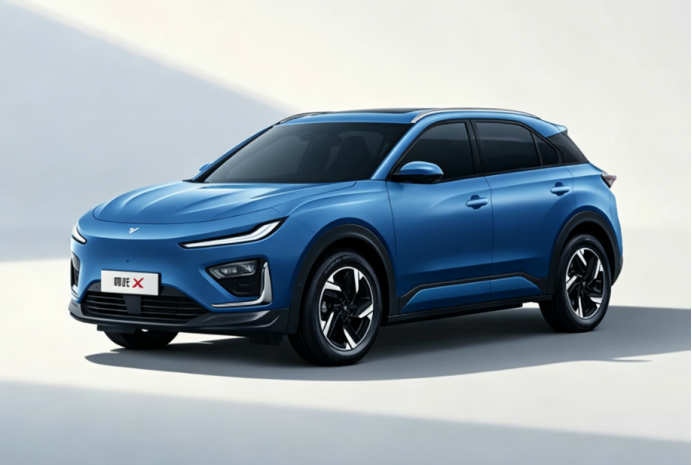
According to the restructuring draft, Nezha Auto will adopt a strategy of "overseas first, domestic later," prioritizing the resumption of production for the Nezha X and targeting markets in Southeast Asia and Latin America. Among these, the Thai market represents a relatively solid foundation for Nezha Auto's overseas expansion. In 2023, Nezha Auto sold 12,777 units in Thailand, once ranking second in the Thai NEV market, and has established local factories and a sales network there.
It is evident that Nezha Auto is avoiding the fierce price wars in the domestic NEV market and instead seeking breakthroughs in overseas markets where it already has a user base and channel foundation. For Nezha Auto at present, this approach is more realistic than re-entering the domestic market for head-on competition. However, breaking through in overseas markets is not as easy as imagined.
Take Thailand as an example: Chinese automakers such as BYD, Great Wall Motors, Chery, and Changan have all established local factories there, reducing costs through localized production and engaging in price competition no less intense than in China. Additionally, Nezha Auto must contend with local regulations, exchange rate fluctuations, and after-sales network issues. Venturing overseas is also a tough battle.
More realistically, Nezha Auto must reconnect its overseas supply chain and sales channels. After the production halt and restructuring, whether overseas suppliers are willing to resume deliveries and whether dealers are willing to restock remains uncertain, requiring the rebuilding of trust. The same applies to overseas consumers: concerns about after-sales service, spare parts availability, and maintenance following the brand's production halt and restructuring will also influence their purchasing decisions. 
Overall, if the restructuring proceeds smoothly, Nezha Auto may have the opportunity to complete the first phase of production resumption and achieve small-scale overseas deliveries. However, returning to its heyday of delivering 152,000 units annually in 2022 and claiming the top spot among new energy vehicle startups is no longer feasible at the same level of difficulty. After all, Nezha Auto has only 1.833 billion yuan available for actual operations, which must support supply chain restarts, overseas channel operations, and the restoration of after-sales services—a sum that is far from sufficient. The ultimate outcome of this restructuring will hinge on Nezha Auto's subsequent production resumption progress and overseas sales performance.
(Image source: Internet. Removal upon infringement.)
-
Apple’s iPhone Duo: Is a Chinese Company the Key to Its Success?
-
![]()
FAW Set to Become GAC’s Second Largest Shareholder
-
![]()
Toyota and Audi Harmonize Structures, Joint Venture Brands Bid Adieu to the 'One Fish, Two Dishes' Era
-
![]()
Volkswagen Group 'Downsizes' in a High-Stakes Gamble for Survival
-
![]()
Official Announcement: Seres Reclaims Leadership of AITO Brand from Huawei!
-
![]()
Only Three Traditional Fuel Models Make the Cut: A Review of SUV Sales in August
-
Hillhouse and Lei Jun Place Their Bets! Jinzhwei Racks Up 640 Million Yuan in Cumulative Losses Over Three and a Half Years—Can It Stage a Turnaround with AI Agents?
-
![]()
"Taiyi Shenglian": Can It Reforge Nezha’s Golden Form?