GAC Group’s Compelling Advantage: Exactly What FAW Seeks
 09/17 2026
 354
354
Source | Yuan Media
The potential merger between GAC Group and FAW has set the domestic automotive industry abuzz.
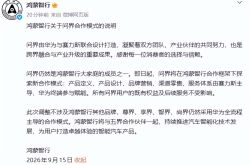
On the evening of September 14, GAC Group announced that it had entered into a Letter of Intent with FAW Group. The plan is to acquire a portion of the equity in a joint-venture automotive company held by FAW Group through share issuance, along with raising matching funds (supporting funds).
Once the deal is finalized, FAW Group will become the second-largest shareholder of GAC Group, wielding strategic influence.
Image source: GAC Group announcement
FAW Group primarily operates two joint-venture companies: FAW-Volkswagen and FAW Toyota. According to Caijing, the target of this transaction is FAW Toyota.
To most observers, the ‘merger of North and South Toyota’ symbolizes a partnership between FAW and GAC Group in the automotive sector. However, they only see the surface and fail to grasp the more imaginative potential behind this transaction.
What FAW may be eyeing is GAC Group's other significant asset—humanoid robots. For GAC Group, FAW brings not just assets but also a vast ‘robot training ground’.
01. GAC Group's Ambitious 'Robot Dream'
In fact, GAC Group's venture into the robotics industry is relatively recent.
In early 2022, GAC Group began strategically planning its humanoid robot sector, unveiling the third-generation GoMate in late 2024. By early 2026, GAC Group's humanoid robot division will operate as an independent industrial entity, establishing Hui Lun Technology, and subsequently launching the fourth-generation wheeled-legged humanoid robot, GoMate Mini.
In just half a year since its inception, Hui Lun Technology swiftly secured over 100 million yuan in angel round financing. Tianyancha data reveals that investors in this round include CRRC Capital, CMB International, Sichuan Science and Technology Innovation, among others. On the same day, XPENG Robotics, a subsidiary of XPENG Motors, also secured $900 million in angel round financing.
Image source: Tianyancha
The cross-border integration and innovation within Guangzhou's automotive industry are accelerating.
The commercialization pace of Hui Lun Technology is even more remarkable.
Currently, nearly 50 GoMate Mini robots have been deployed across seven representative projects, with the longest-running project continuously operating for 12 months, accumulating approximately 63,000 kilometers of inspection mileage, completing about 189,000 on-site anomaly disposals, and securing nearly 10 million yuan in commercial orders.
The capabilities of GoMate Mini have been deeply integrated into automotive industrial parks—performing reception and guidance, item delivery, and emergency response within the parks; executing sorting, handling, and assembly tasks on the production lines.
As anticipated, Hui Lun Technology and GAC Power BU will jointly construct a standardized production line for 10,000 humanoid robots, planning to complete small-batch deliveries this year and achieve large-scale promotion by 2027.
GAC Group's 'robot dream' is ambitious, yet its approach is bold and unconventional—first utilizing automotive production lines to manufacture robots, and then leveraging robots to manufacture robots in the future.
Many robot startups typically follow the path of 'first building a prototype, then conducting testing, and finally scaling up production,' meaning they first create a functional product and then address challenges related to mass production, cost, and stability.
GAC Group adopts a reverse thinking approach, first identifying the core pain points of large-scale mass production and then working backward to conduct targeted research and design. Exploration with a clear direction is bound to yield different results.
The development of Hui Lun Technology exemplifies this. Since its inception, it has focused on three major directions: reliability, cost control, and supply chain stability.
The industry generally faces challenges such as joint lifespan, load-bearing capacity, and consistency in mass production. GAC Group's robots have evolved at an astonishing speed—in four years since its establishment, it completed three generations of updates in the first two years, developed core components in the third year, and moved towards small-batch deliveries in the fourth year, propelling itself into the national first tier.
02. Where Does the Confidence Originate?
Hui Lun Technology has employed a clever strategy: leveraging Guangzhou's 40-year industrial foundation, especially the automotive industry chain represented by GAC Group and XPENG Motors.
As a former leader in China's automotive industry and the city with the largest automotive production scale, Guangzhou's automotive industrial technology foundation, which was instrumental in the new energy vehicle era, is now also being applied in the fields of intelligent connected vehicles and embodied intelligence.
From an overall data perspective, by 2025, the industrial output value of Guangzhou's leading industries in intelligent equipment and robots is projected to reach 156.53 billion yuan, a year-on-year increase of 8%; the output value of intelligent robot complete machine manufacturing will be 2.58 billion yuan, a year-on-year increase of 7.1%.
From an industrial spatial layout perspective, Guangzhou has formed a layout led by Tianhe and Huangpu as dual cores, supported by multiple points in Baiyun, Haizhu, and Panyu.
Delving deeper into the data, it becomes evident that what supports the rapid growth of Hui Lun Technology is Guangzhou's complete upstream and downstream supply chain, such as: upstream core component manufacturers like Haozhi Electromechanical and Xintuo Transmission, midstream complete machine enterprises like Guangzhou CNC, Ligong Industrial, and Blue Ocean Robot, and downstream integrators like Ruisong Technology and Mingluo Equipment.
As of now, Guangzhou has amassed nearly 50,000 robot-related enterprises, including 15 humanoid or humanoid-like complete machine enterprises.
Image source: Zhongshang Industry Research Institute
The development of humanoid robots in Guangzhou has a distinct feature: led by automotive companies, GAC Group and XPENG Motors are deeply involved in humanoid robots as chain leader enterprises, upgrading from automotive manufacturing to the robot industry chain.
As Dongfeng Motor's Zhang Zhenlin puts it, automotive companies venturing into robotics are lying on a 'data gold mine'—they have a large number of factories, parks, and 4S stores, providing rich application scenarios and potential data sources.
With such an industrial foundation, the cooperation between FAW and GAC Group holds even greater imaginative potential.
03. What Does FAW Seek to Gain?
What reactions will occur in the robotics business with the integration of GAC Group and FAW?
First, let's examine the basic situation of FAW's robotics business.
In 2024, FAW Robotics initiated the development of the humanoid robot 'Qi Xiaozhi' and established technology subsidiaries in 2025 for independent development of industrial AI and embodied intelligence. Among them, the FAW Die Intelligent Robot Division was officially formed in October last year, extending to core components.
Compared to GAC Group's robots, FAW's robots started later and mainly focus on heavy industrial applications and intelligent manufacturing scenarios.
Industrial manufacturing and scenarios are FAW's core strengths, with core brands like Hongqi, Besturn, Jiefang, FAW-Volkswagen, and FAW Toyota. Data from China Automotive Data Research Institute shows that FAW Group has at least 30 vehicle factories and component production bases across the country.
However, FAW's robotics business also has obvious shortcomings: the productization of embodied intelligence complete machines and the self-research of core components are relatively lagging.
Currently, GAC Group's robots and Hui Lun Technology focus on two points: large-scale mass production and scenario applications. Relying solely on GAC Group's automotive industry chain and Guangzhou's industrial scenario testing and data accumulation, the expected space exists, but the speed is slow and time-consuming.
Hui Lun Technology's GoMate Mini workshop operation scenario
The imaginative space for the integration of GAC Group and FAW's robotics divisions arises. GAC Group has component and complete machine capabilities, while FAW has industrial scenario applications and data.
This is exactly a complementary relationship. This gives rise to three major conjectures.
First, theoretically, the directions of both sides can form synergies. The testing, implementation, and data training scenarios for GAC Group's robots can be expanded from GAC Group's single system to FAW's entire industrial chain scenarios. FAW's robot 'productization' capabilities can be rapidly strengthened.
Second, supply chain synergy and cost reduction. One of the biggest issues with humanoid robots currently is their high cost.
The price range of mainstream humanoid robots in the industry is vast, with high-end heavy-duty models remaining prohibitively expensive. The natural advantage of automotive companies crossing over into robotics is precisely the highly overlapping industrial supply chain. According to estimates, the overlap between the automotive and robot supply chains reaches 60%-70%.
Third, the core reason why GAC Group's robots and Hui Lun Technology can accelerate is the 'soil' provided by Guangzhou's top-level architectural guidance and support. Although FAW's robotics business is also valued, it tends to be fragmented, with core brands or factories in various regions operating independently, focusing on industrial-grade tools and lacking local industrial policy-driven strategic pillars.
GAC Group's 'robot dream' is extraordinary, but it may be exactly what FAW desires.
Note: The article materials are sourced from official reports and publicly available information, and the views are for reference only. Some images are sourced from the internet. If there is any infringement, please inform us for deletion.
-
The Crux of AI Phones Resides in AI
-
![]()
Burying Yesterday's Expertise: An AI Self-Reflection by a DeepSeek Engineer
-
![]()
The Year's Most Unexpected "Power Couple": Not Sun Yuchen and Jing Tian, but Huawei and Seres?
-
Automotive Industry Major Reshuffle Countdown: Nine Departments Chart the Course for 2030, Weak Contenders Exit, Strong Ones Merge
-
![]()
Insta360: At the Dawn of a New Valuation Era
-
GAC Group’s Compelling Advantage: Exactly What FAW Seeks
-
Insta360: At the Dawn of a New Valuation Era
-
![]()
China’s Autonomous Delivery Vehicles Set Foot in Europe