Can 3 Billion Yuan in Funding Revive Nezha Auto?
 09/18 2026
 328
328
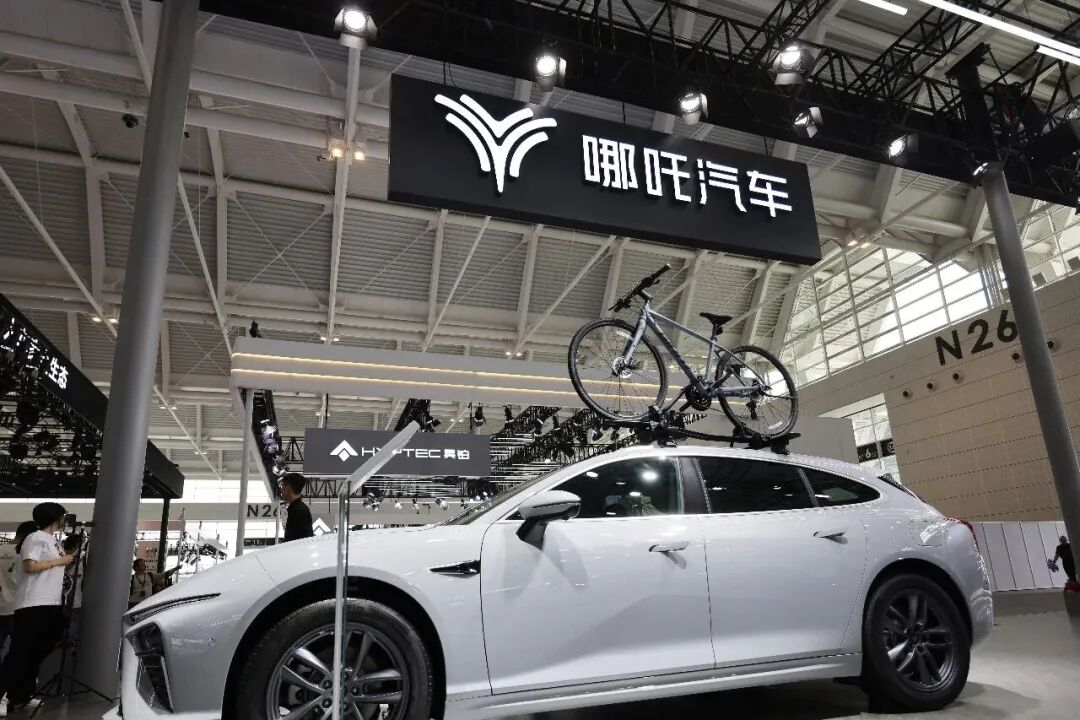

Shenglian Alone Can't Rescue Nezha Auto
Image Source | Internet (Please contact for removal if there is any infringement. Partially AI-generated)
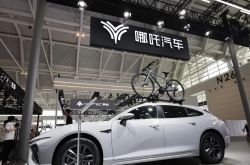
Recently, the automotive industry witnessed a significant development: Hozon New Energy Automobile, the parent company of Nezha Auto, has made new strides in its bankruptcy restructuring. A company named 'Zhejiang Taiyi Shenglian Enterprise Management Partnership' plans to invest 3 billion yuan to acquire approximately 70.62% of Hozon's equity.
This news sent shockwaves throughout the internet. Some netizens joked, 'Taiyi Zhenren has come to the rescue of Nezha,' and 'This is straight out of the Feng Shen Bang.'
While the jokes are entertaining, a harsh reality faces everyone: Nezha Auto has been out of production for nearly two years, with debts exceeding 26 billion yuan and, at one point, having only slightly over 10 million yuan in usable cash on hand.
There's a vast gap between 3 billion yuan and 26 billion yuan.
Is this amount of money truly sufficient?
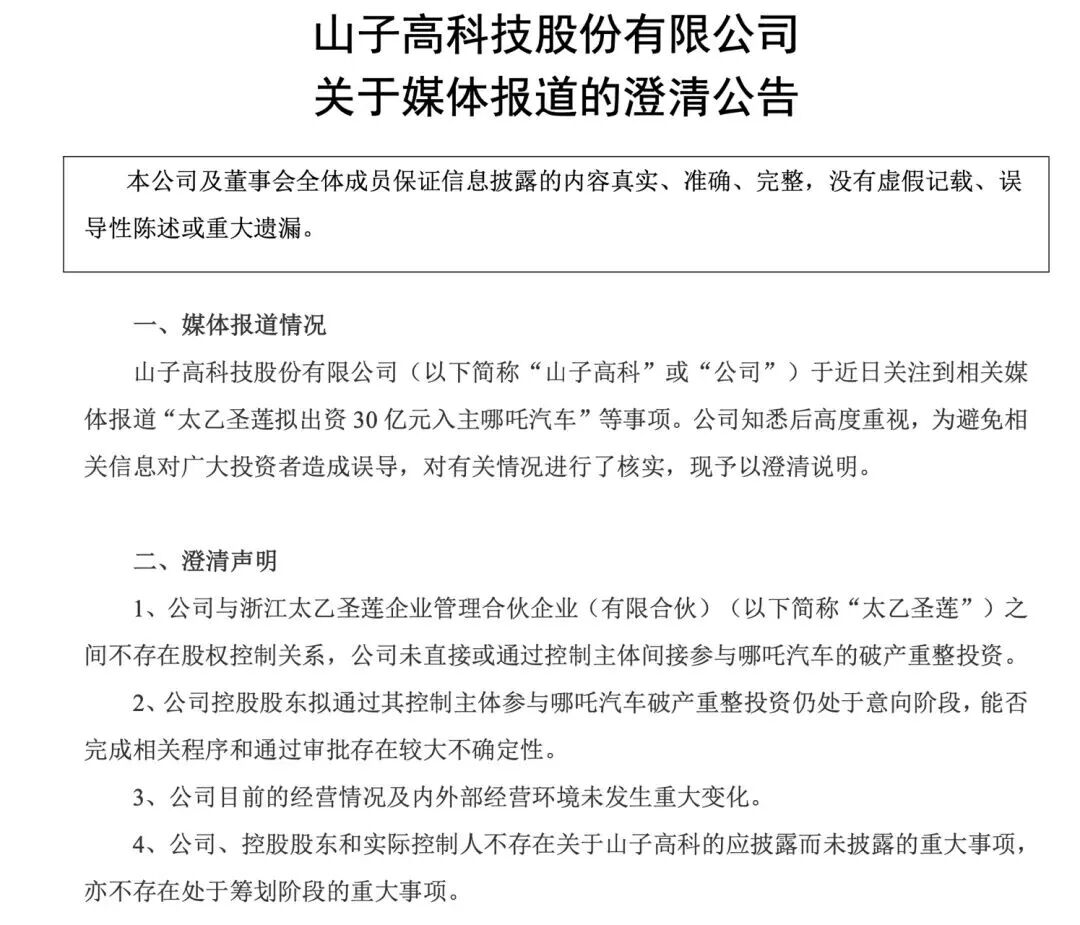

Who Exactly is 'Taiyi Zhenren'?
A closer look at the equity structure of 'Taiyi Shenglian' quickly reveals the answer.
The partners in this company are Zhejiang Shanshi Holdings and Zhejiang Shanshi Yuxu Technology. The de facto controller of the former is Ye Ji, the chairman of Shanshi Hi-Tech, a listed company on the Shenzhen Stock Exchange, while the de facto controller of the latter is Yu Shuxin, the head of Shanshi Hi-Tech's board office.
In other words, Taiyi Shenglian is an investment vehicle specifically established by the 'Shanshi Group' to participate in Nezha's restructuring. It was registered and established in April 2026, just five months ago, created solely for this transaction.
So, who is Shanshi Hi-Tech?
The company was formerly known as Yinyi Co., Ltd. Between 2016 and 2017, it acquired the U.S.-based ARC Group and Belgium's Punch Group, entering the core links of the global automotive parts supply chain.
In 2023, it obtained passenger vehicle production qualifications from Hongxing Auto through public bidding, and in 2025, it teamed up with Tmall to advance custom vehicle projects.
It's evident that Shanshi Hi-Tech has long harbored ambitions in vehicle manufacturing. However, while it has parts, qualifications, and supply chain relationships, what it lacks is an established brand and existing production capacity.
Nezha Auto happens to possess both, even though production has halted internally. Once Shanshi is in place, production can resume at any time.
This investment is actually Shanshi Hi-Tech's 'second attempt.' As early as 2025, when Nezha entered bankruptcy restructuring, Shanshi Hi-Tech was the only potential investor to pay a 50 million yuan deposit, proposing a plan to exchange 4.5 billion yuan for 68% equity. However, creditors rejected it on the grounds of an excessively low recovery rate.
This time, the amount has been reduced from 4.5 billion to 3 billion yuan, but the equity stake has increased from 68% to 70.62%. Shanshi Hi-Tech is offering less but demanding more.
What does Shanshi Hi-Tech aim to achieve with such a substantial investment?
To understand this, we must first analyze what valuable assets Nezha still possesses under the current circumstances.
First is the qualification for new energy vehicle manufacturing. Nezha was one of the earliest new forces to obtain the 'dual qualifications' for vehicle production, and the scarcity of this license is undeniable.
Under current industrial policies, if Nezha, which has been idle for over a year, fails to produce at least 2,000 vehicles by 2026, its qualification faces the risk of revocation.
Although Shanshi Hi-Tech has Hongxing Auto's qualification, Hongxing's brand recognition and production capacity foundation are far inferior to Nezha's, and there is no simple substitution between the two qualifications.
Second is the channel foundation in overseas markets. Nezha has an established sales network in Thailand, Southeast Asia, and other markets. In early 2025, Nezha also secured a 10 billion baht credit line from Thai financial institutions and signed a strategic cooperation agreement with local contract manufacturer BGAC, planning to make Thailand its Southeast Asian export base.
In the restructuring plan, the first-phase production resumption goal is to focus on the Nezha X model for overseas markets, targeting annual sales of 10,000 units. Insiders reveal that some tentative orders have already been secured.
The third key factor is relationships with local governments. Nezha has production bases in Tongxiang, Zhejiang; Yichun, Jiangxi; and Nanning, Guangxi.
In Yichun, when the project was introduced, local state-owned assets and financial bureau-affiliated platform companies invested nearly 2 billion yuan to acquire equity and another nearly 300 million yuan to address land and factory issues. In Nanning, funds were used to purchase and construct land and factories for the production base.
These sunk costs make local state-owned assets the force least eager to see a 'liquidation to zero' in Nezha's restructuring. If Shanshi Hi-Tech can revive production capacity after taking over, it would be the lesser of two evils for local governments.
But the most intriguing aspect lies in the capital market logic. After the restructuring news was announced, Shanshi Hi-Tech's stock price surged continuously, hitting a daily limit on September 14, with its market capitalization once approaching 30 billion yuan.
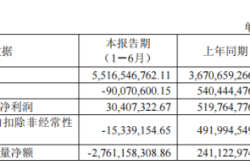
Ye Ji's stake in Shanshi Hi-Tech through Jiaxing Zihe Jinxin corresponds to a market value far exceeding 1 billion yuan. For a company that reported a 349 million yuan net loss attributable to shareholders after deducting non-recurring items in the first half of 2026, the capital market premium brought by the 'Nezha story' may be the real motivation.
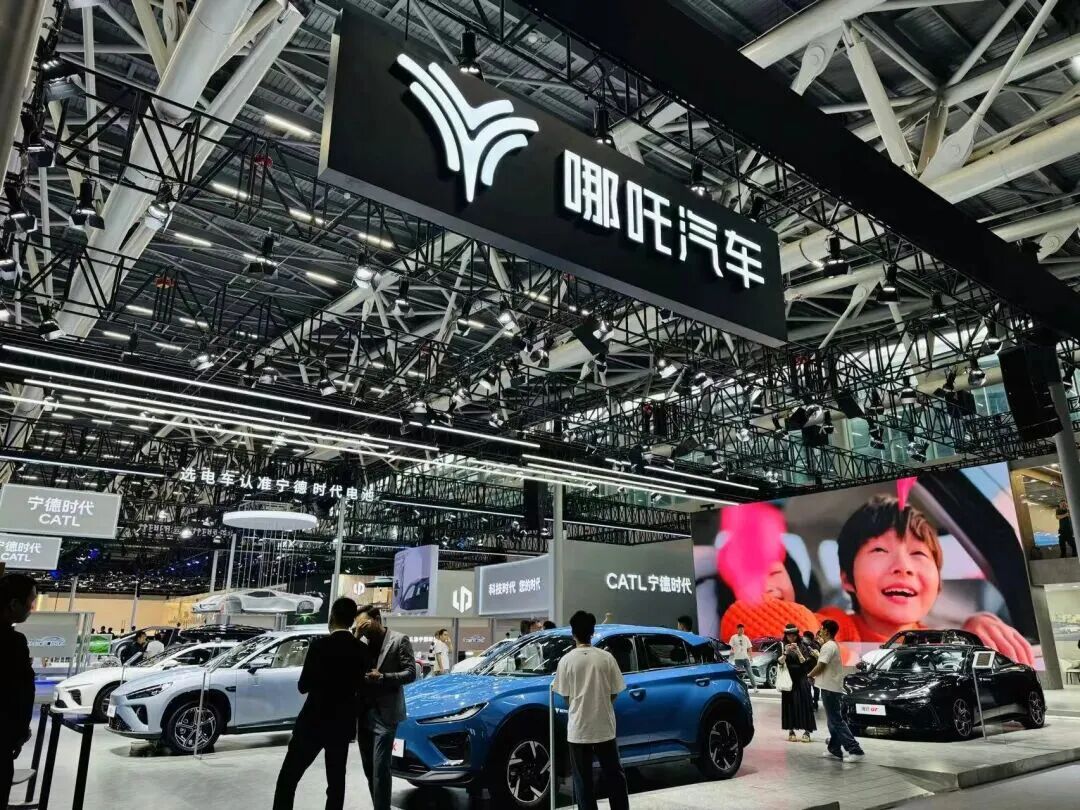

Nezha: Burning 18.3 Billion Yuan in Three Years
To determine whether 3 billion yuan can revive Nezha, we must first understand how it collapsed. Nezha's downfall was astonishingly rapid, from delivering 152,100 vehicles to top the annual sales chart among new forces in 2022 to seeing sales halved to 64,500 units in 2024, and further plummeting to just 110 deliveries in January 2025.
From peak to nadir, it took only two years.
The reasons for the collapse are multifaceted, but tracing their roots, nearly all point to the same path dependency.
Success due to low pricing, failure for the same reason. The Nezha N01 was priced under 60,000 yuan, targeting the ride-hailing market; the Nezha V started at 59,900 yuan, capturing the lower-tier market with extreme cost-effectiveness, rapidly scaling up sales.
However, the fatal flaw in this model was its failure to establish a sustainable profit model. From 2020 to 2022, Nezha accumulated losses of 11.14 billion yuan. In 2022, when it topped the sales chart, it lost 45,000 yuan per vehicle sold.
The high-end transformation became a high-stakes gamble. Management realized early on that the low-price route was unsustainable, investing 2 billion yuan in 2021 to develop the all-new 'Shanhai' vehicle platform, which consumed nearly half of the company's funds. Subsequently, it launched the Nezha S and GT sports cars, entering the 200,000-300,000 yuan market.
The problem was that Nezha lacked both brand accumulation and technological barriers in this price segment. As a result, the Nezha S and GT suffered poor sales due to insufficient technological competitiveness and pricing confusion, with the annual target completion rate only reaching 51%.
Unable to profit at the low end and unable to sell at the high end, Nezha found itself stuck in the middle.
More dangerously, the high-end transformation consumed vast resources, directly squeezing R&D investment. Nezha's R&D expenditure ratio plummeted from 12.3% in 2021 to 3.2% in 2024, far below the industry average of 12%.
While competitors accelerated iterations in intelligent driving and smart cockpits, Nezha remained virtually stagnant.
Supply chain management was equally alarming. A former Nezha mid-level manager responsible for product development revealed that nearly every Nezha model required separate adaptation for its large screens and in-vehicle software, a 'one-vehicle-one-policy' approach that nearly doubled parts procurement costs compared to peers.
Lacking BYD's vertical integration capabilities or Toyota-style lean supply chain systems, Nezha remained at a cost disadvantage.
Internal governance was also in disarray. Strategic disagreements between founder Fang Yunzhou and former CEO Zhang Yong gradually became public, with one emphasizing R&D and the other insisting on 'volume-for-market share,' but neither establishing a clear brand positioning.
After Zhang Yong's departure in 2024 and Fang Yunzhou's takeover, frequent strategic shifts occurred, from B-end focus to overseas plus contract manufacturing models, causing internal chaos. The planned 4.5 billion yuan Series E financing also collapsed due to plummeting valuations and debt issues.
Ultimately, the rupture of the capital chain dealt the fatal blow. In 2024, core suppliers terminated cooperation, all three production bases halted operations, employees went unpaid, suppliers demanded debt repayment, and even the Shanghai headquarters announced remote work for all staff.
As of August 31, 2026, 1,631 creditors had filed claims totaling over 26 billion yuan with the court, while the administrator confirmed only about 5.1 billion yuan in claims.
To some extent, Nezha's collapse has trapped multiple parties, reflecting the harsh reality that the industry cannot afford to stand idly by. Employees, suppliers, local state-owned assets, and others have all borne the consequences of this high-stakes gamble in vehicle manufacturing.

The Gap Between 3 Billion and 26 Billion Yuan
Returning to the core question: Can 3 billion yuan revive Nezha?
First, let's examine how the 3 billion yuan will be spent. According to the restructuring plan, 1.167 billion yuan will be used to settle related claims and bankruptcy expenses, with the remaining 1.833 billion yuan supplementing working capital.
Faced with over 26 billion yuan in declared debts, what does 1.167 billion yuan in settlement funds mean? The recovery rate for ordinary claims below 800,000 yuan is only about 12%, while amounts exceeding 800,000 yuan are directly converted into equity.
For priority claims, only interest is repaid in the first three years, with principal repayment beginning in the fourth year. Some analyses roughly calculate that each yuan of ordinary claims will only receive less than 0.63 yuan in cash repayment.
This is not a 'revival'; it's a 'discounted liquidation.'
Meanwhile, the 1.833 billion yuan earmarked for production resumption must support the restart of a production line idle for two years, rebuild a ruptured supply chain, restore after-sales service networks, and develop new models for overseas markets—the pressure is immense.
Referring to industry norms, a vehicle manufacturer typically requires two to three years of sustained investment from production resumption to reaching break-even.
The 1.833 billion yuan can barely cover the first-phase production resumption, with no clear answer in the restructuring plan on where subsequent funds will come from.
Another detail that cannot be overlooked: The 3 billion yuan registered capital of Taiyi Shenglian is currently subscribed, with the paid-in capital column empty, and the restructuring investment will be paid in three installments.
Moreover, Taiyi Shenglian's backer, Shanshi Hi-Tech, is not financially robust itself. In the first half of 2026, its total operating revenue declined by over 20% year-on-year, with a net loss attributable to shareholders after deducting non-recurring items of 349 million yuan.
More notably, Shanshi Hi-Tech has repeatedly clarified in announcements that the listed company itself is not participating in this restructuring, with investment funds and operational entities outside the listed company's framework.
This means the investment risk is entirely borne by Ye Ji personally and his affiliated entities, unrelated to the listed company. If subsequent funds encounter problems, Nezha's production resumption will face a 'funding drought' risk.
The restructuring plan itself also reflects the investor's caution. In the first phase, only the Nezha X model will resume production, targeting annual sales of 10,000 units. Compared to Nezha's peak annual sales of 150,000 units, this figure sends a clear signal: Survive first, then consider other matters.

Frankly speaking, the answer
Can NIO genuinely 'seize the reins of its own future'? The crux of the matter doesn't hinge on the receipt of a 3 billion yuan infusion; rather, it rests on whether the company can, within the constraints of time and available resources, reaffirm that there exists a consumer base eager to purchase the vehicles it produces.
-
![]()
The Race for AI Data Infrastructure Behind the Trillion-Dollar Market
-
![]()
Can 3 Billion Yuan in Funding Revive Nezha Auto?
-
![]()
A DeepSeek Engineer’s Midnight Reflection: What Kept the Tech World Wide Awake?
-
![]()
Insta360 H1 Revenue Soars 50%, Yet Net Profit Plummets 90%; Nearly 2 Billion Yuan Spent on Memory Chip Procurement; Inventory Surges to 6.2 Billion Yuan Amid Negative Operating Cash Flow; Stock Price
-
![]()
Second-Generation Doubao Phone Hits the Shelves: The Moment of Truth for AI Agent Smartphones
-
![]()
Second-Gen Doubao Phone Hits Shelves: Can AI Agent Phones Step Up?
-
![]()
How Long Can Domestic Foldable Screen Smartphones Laugh After Apple's Entry?
-
From Rent Collection to Vehicle Management, Didi Land's Hong Kong Stock Market Journey Still Has the Second Half to Go