FAW and GAC's Strategic Move: More Than Corporate Collaboration, a Pioneering Case of National Industrial Anti-Involution
 09/20 2026
 359
359
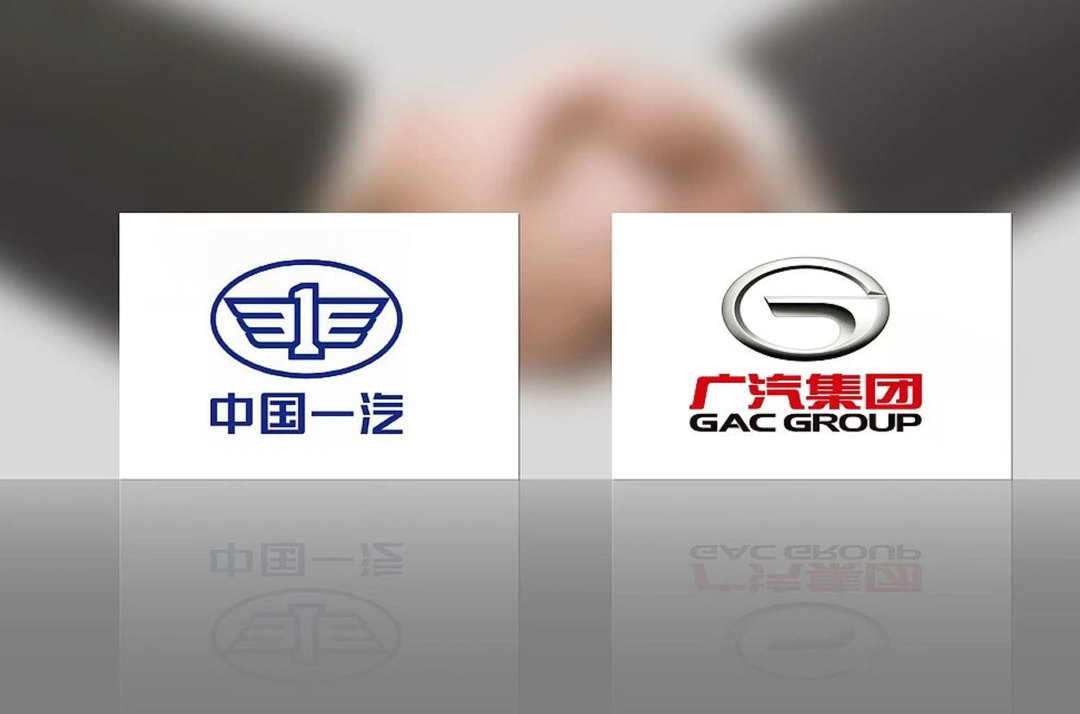
On the evening of September 14, 2026, GAC Group announced the signing of a letter of intent with China FAW Group Co., Ltd. GAC plans to acquire a portion of the equity held by FAW in a joint-venture vehicle company through the issuance of shares and raise supporting funds.
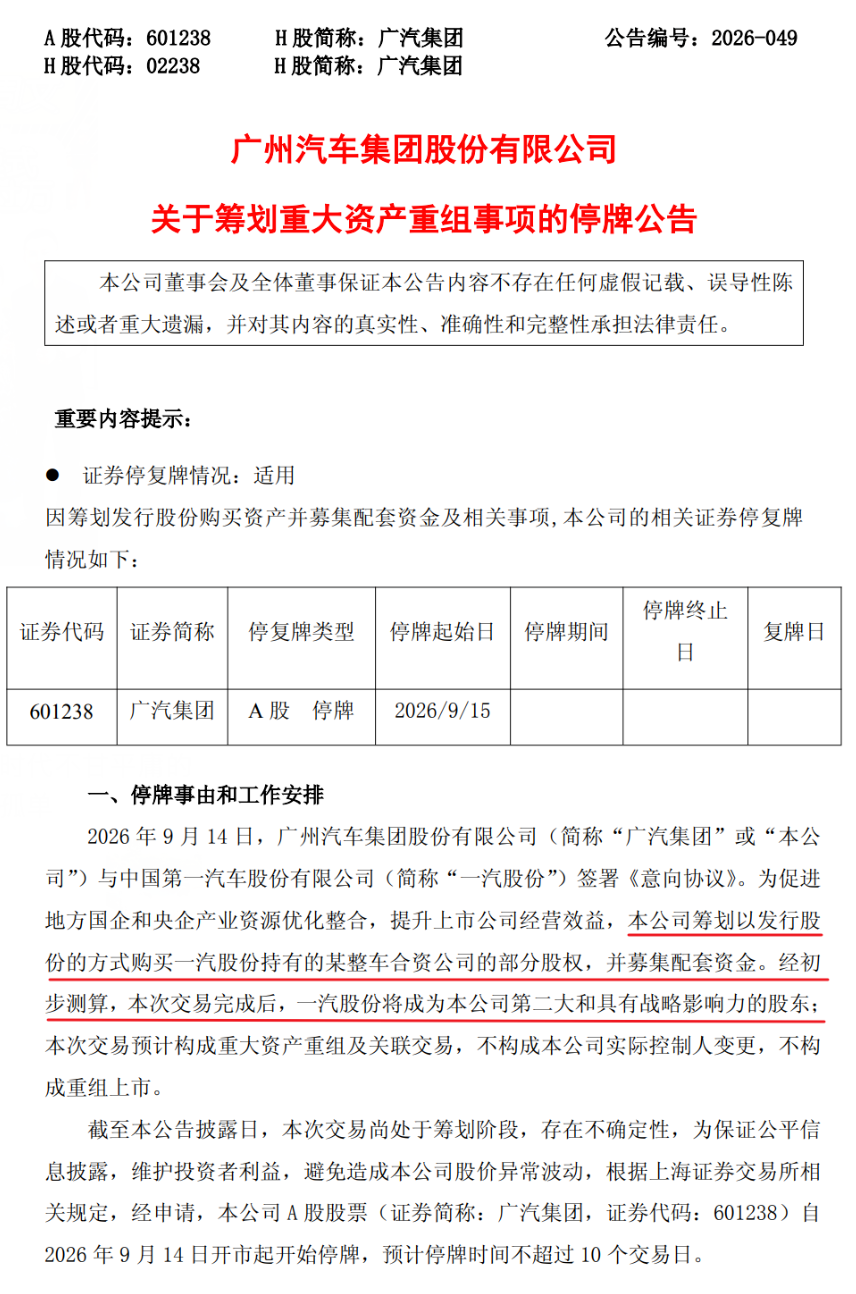
The sophistication of this deal far exceeds the initial perception of "state-owned enterprises banding together." Media estimates suggest that China FAW will trade 25% of its stake in FAW Toyota. After the transaction, Guangzhou's state-owned assets will maintain firm control, but FAW will emerge as GAC Group's second-largest strategic shareholder with substantial influence.
On one side stands FAW, the "eldest son of the republic" based in northern China, and on the other, GAC, a joint-venture and new energy powerhouse deeply rooted in southern China's Greater Bay Area. When the largest central SOE and a leading local state-owned automotive flagship in China's automotive history choose to complete this unprecedented equity transfer at a critical reshuffling point in 2026, industry insiders recognize that the competitive logic of China's automotive sector has fundamentally changed. A "third solution" that breaks down regional barriers and reshapes China's automotive industry hierarchy is emerging.
FAW's 'Quality' Meets GAC's 'Intelligence'
Seasoned industry observers understand that equity transfers between trillion-yuan-scale automakers should not be hastily labeled as "forced marriages" or "administrative mergers." This transaction is not a tear-down-and-rebuild reorganize (restructuring) but rather a highly strategic asset corridor opened between FAW and GAC through sophisticated capital design, enabling high liquidity and deep synergy.
This is not a spur-of-the-moment tactical move. Over the past year, the SASAC has repeatedly signaled to China's automotive "national team" through high-profile seminars and key work deployments: from "optimizing existing structures" to "improving resource allocation efficiency," central SOE leaders must take the lead in dismantling "involutionary cutthroat competition" and deepen specialized integration through market-driven mechanisms. The SASAC aims to reverse the industry's disadvantages of redundant investments and fragmented consumption. The asset corridor established by FAW and GAC represents the most robust and pragmatic response to this strategic directive.
Once the corridor is established, the first capabilities released by the two companies will not be mere accounting premiums but true competitive strengths visible in end-market confrontations.
In automotive manufacturing, scale is a matter of survival. Toyota's historical "north-south division" in China saw FAW Toyota and GAC Toyota, both bearing the same emblem, operate as separate legal entities in procurement. Each negotiated commercial terms independently with global giants like Bosch, Aisin, Denso, and battery leaders CATL and CALB, armed with orders for hundreds of thousands of units. This fragmented procurement weakened China's negotiating leverage.
With the asset corridor established, the two companies now stand behind a super procurement pool of millions of units. Whether for traditional components like chassis stampings and rubber seals or cost-heavy items like high-voltage batteries, SiC powertrains, and high-computing-power autonomous driving chips, combined orders give them unparalleled bargaining power.
In today's component market, such scale is absolute hard currency. Doubling procurement weight not only bolsters confidence in annual price negotiations but also squeezes out supply chain premiums that previously existed between the north and south. In today's brutal price wars, saving even RMB 1,000 in BOM costs per vehicle translates directly into billions in net profit.
As automotive manufacturing enters its second half, everyone understands that "software-defined vehicles" and underlying architecture R&D are bottomless money pits. No entity, no matter how large, can sustain endless R&D amortization alone. By establishing the asset corridor, FAW and GAC have created China's most scarcity (scarce) north-south R&D synergy.
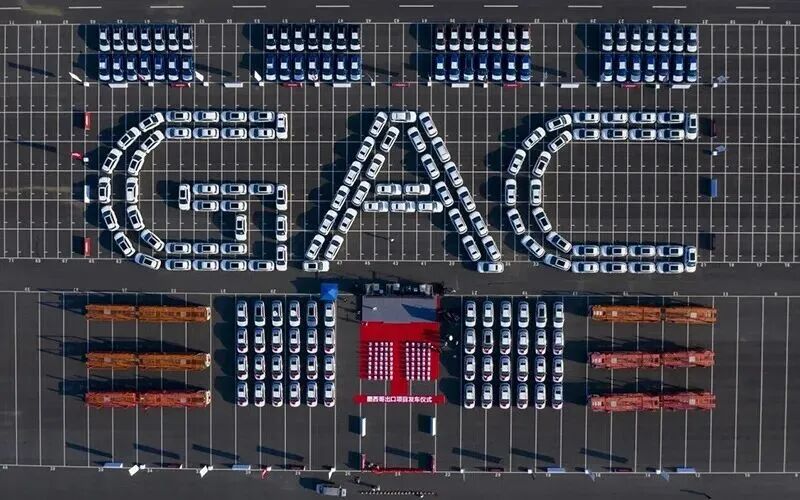
GAC, rooted in the Pearl River Delta, excels in "electrification and intelligence." From its early AEP pure electric architecture and high-safety blade battery system to its self-developed G-MC hybrid DHT and proximity to Shenzhen/Dongguan's rapid-response supply chains for autonomous driving algorithms and cockpit chips, GAC's new energy transformation strategy is fast and precise.
FAW's Changchun stronghold specializes in "quality and prestige." The resources poured into the Hongqi brand have cultivated substantial vehicle engineering expertise, industry-leading NVH control, extreme cold-weather calibration experience, and access to national automotive technology center's vast testing facilities and wind tunnels.
Previously, both companies developed separate chassis architectures and testing standards, with redundant R&D costs reaching tens of billions. Now, with underlying integration, basic electronic architectures and test data are shared, while frontend models retain independent brand definitions. New model development cycles shrink by months, and R&D costs per vehicle plummet.
Toyota's Unified Force
This transaction must be viewed beyond a single corporate lens, placed within the broader context of multinational automakers' transformation in China and revaluation of joint-venture assets.
For two decades, Toyota's dual-track system in China was legendary. From Changchun and Tianjin to Guangzhou, FAW Toyota inherited engineering heritage while GAC Toyota honed Greater Bay Area lean manufacturing and market agility. The "twin-car strategy" of Corolla/Levin and RAV4/Wildlander maximized TNGA platform efficiency, becoming Toyota's most stable global profit engine.
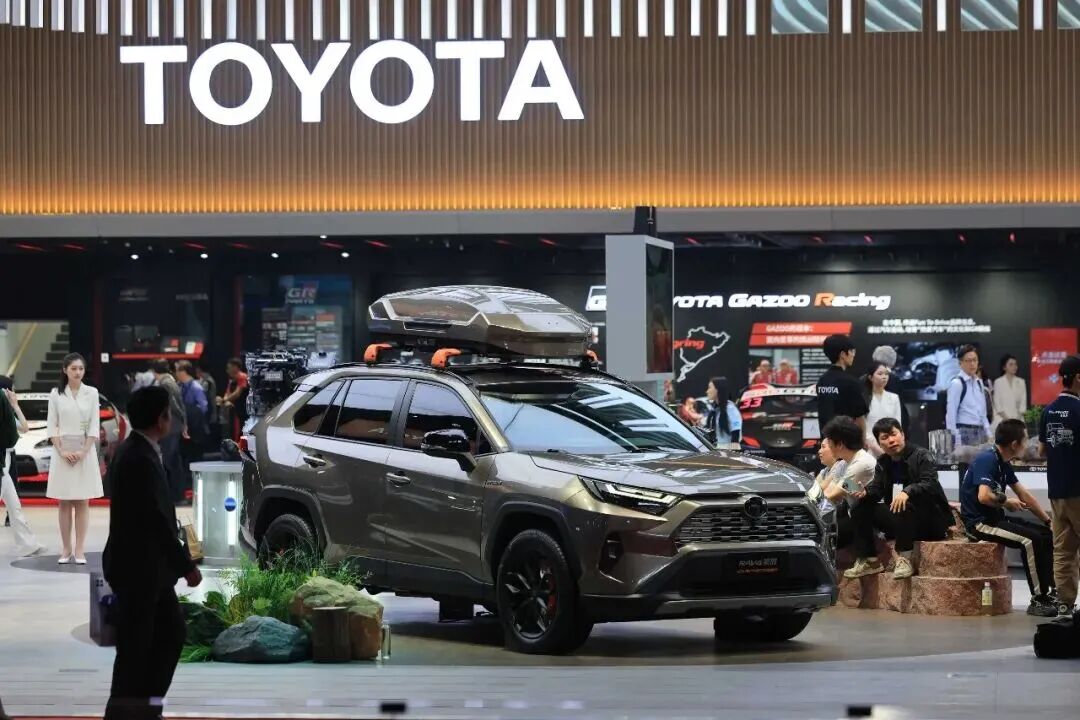
However, in electrification and intelligence's deep waters, industry logic shifted from "incremental market share" to "efficiency in existing markets." With slowing market growth, dual-track redundancies in manufacturing, supply chains, and R&D became organizational burdens. Facing monthly iterations from local new energy brands, joint ventures must dismantle north-south communication barriers to establish unified, efficient decision-making hubs for intelligent cockpits and advanced autonomous driving.
FAW and GAC's capital transaction aligns perfectly with this historical juncture, fundamentally streamlining "Greater Toyota China" from the Chinese capital base.
First, manufacturing and procurement integration. North-south bases now collaborate against tri-electric systems and local supply chains, enhancing anti-cyclical resilience.
Second, R&D convergence. The Changchu R&D center and local tech giants (Huawei, Tencent, etc.) finally have a unified platform for ecological collaboration in intelligent driving and cockpits.
Third, capital value optimization. For FAW, swapping non-listed assets for strategic equity in GAC's listed parent unlocks liquidity and investment gains while freeing resources to focus on core autonomous brands like Hongqi. For GAC, this breaks free from southern regional constraints, achieving national industrial reach.
The era of easy profits for joint ventures is over, but their residual value and mature manufacturing capabilities are being reloaded into China's automotive arsenal in unprecedented ways.
Forging China's 'Volkswagen Group'
The harsh reality of a century-old automotive industry is that a single hit model can create a viral automaker, but only a leak-proof full-spectrum pyramid can sustain a super empire across cycles.
When Ferdinand Piëch led Volkswagen, he aggressively acquired Skoda, bet on Audi, and integrated Bentley and Porsche—not for vanity but strategic depth. Skoda and Volkswagen scaled MQB platform components across tens of millions of units, Audi captured middle-class profits, while Porsche and even Lamborghini reaped premium margins. If luxury markets faltered, mass-market volumes provided stability; if budget markets engaged in price wars, premium profits subsidized R&D.
Over the past decade, China's automotive industry has demonstrated astonishing explosive power in new energy, but its underlying industrial structure suffers from fatal structural pains: fragmentation and solitary combat.
China has countless agile "light cavalry" but lacks a "heavy armor group" capable of spanning cycles. Mass-market players are trapped in thin margins, eroding survival space with each technological iteration. Premium brands face narrow audience ceilings, unable to offset R&D bills with million-unit production bases. If China's automakers remain trapped in "tactical involution," they will remain vulnerable breakthroughs against global giants' industrial moats.
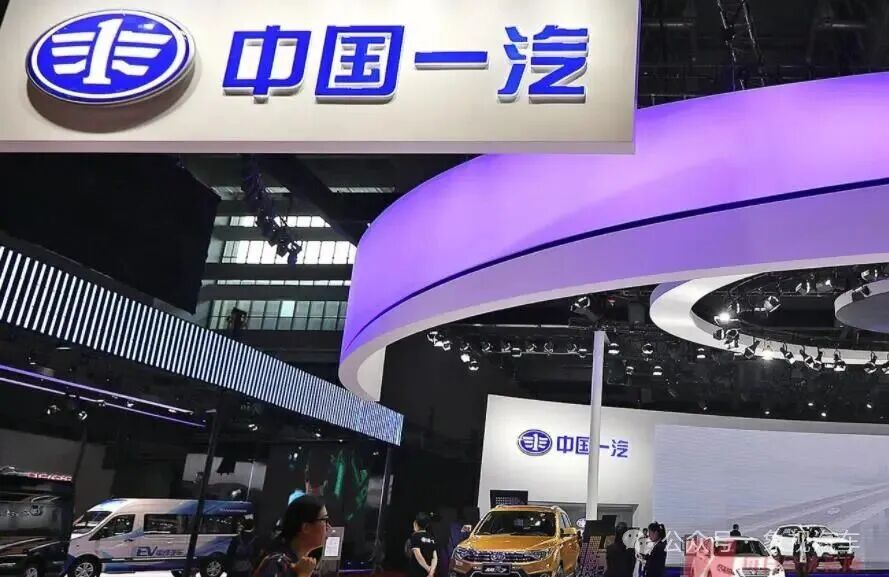
FAW and GAC's strategic alignment represents far more than business synergy—it is China's automotive industry undergoing "metabolic restructuring" under national industrial will.
This DNA fusion combines southern China's most agile supply chain efficiency with northern China's most robust industrial heritage, reconstructing the ultimate form of modern automotive industry at a strategic depth.
To the south, GAC embodies Guangdong manufacturing's ruthless cost control, refined supply chain ecosystems, and mass-market agility. To the north, FAW holds unparalleled high-end political assets, the Hongqi brand's ceremonial prestige, and the republic's deep heavy industrial foundations.
When these cards combine, they form not mere sales volume addition but a complete price ladder spanning extreme budget vehicles (RMB 10,000s), mainstream family cars (RMB 100,000s), tech-forward models (RMB 300,000+), and million-yuan industrial icons.
With scale engines at the base, profit defenses in the middle, and national brand auras at the top interlocking on a single balance sheet, China's automakers no longer rely on single-hit luck but deploy a "heavy aircraft carrier system" capable of competing with Toyota and Volkswagen across geopolitical cycles.
Auto Commentary
FAW and GAC's equity swap transcends simple corporate consolidation—it marks a landmark exploration by China's automotive industry to break involution through market-driven means. By connecting asset corridors between northern and southern giants, integrating supply chains and R&D capabilities, streamlining Toyota's dual-car system in China, and reshaping industrial hierarchy through central-local capital synergy, they are forging an industrial powerhouse capable of navigating cyclical challenges and pioneering a new paradigm for industrial integration.
As fragmented gun barrels converge, China's automotive gaze now extends beyond domestic market stagnation. An era of "great group armies" for China's automakers has begun.
Operations | Su Hongying
Produced by | Kanche China
-
![]()
Weekly Stock Review | Trump’s Concern Over AI Rivalry: The Auto Industry’s ‘Biggest Competitor’
-
![]()
FAW and GAC's Strategic Move: More Than Corporate Collaboration, a Pioneering Case of National Industrial Anti-Involution
-
![]()
Can the Long-Wheelbase Mercedes-Benz GLE SUV Tread in the Footsteps of the BMW X5?
-
![]()
From Netizens' Perspective, the XPENG G9L Still Seems Pricey
-
![]()
10 Questions I Care Most About Regarding Doubao Mobile Phone II
-
![]()
Quality Performance of China’s New Energy Vehicle Tri-Electric Systems in 2026: Experience-Centric Issues Take Center Stage, Range Remains Top Challenge
-
![]()
AIDrive’s Cooperation Model Undergoes Change: Is Xiaomi Pengcheng the Unexpected Winner?
-
![]()
FAW and GAC Make Moves: Will the "Greater Anhui Automobile" Dream Become Reality?