Profits and Stock Prices Plunge in Unison! Volkswagen Ousted from Europe's Elite Stock Index
 09/22 2026
 348
348
Written by | Guanchejun
Traditional European automakers are facing a chilly reception from capital markets, being shown the exit door one after another.
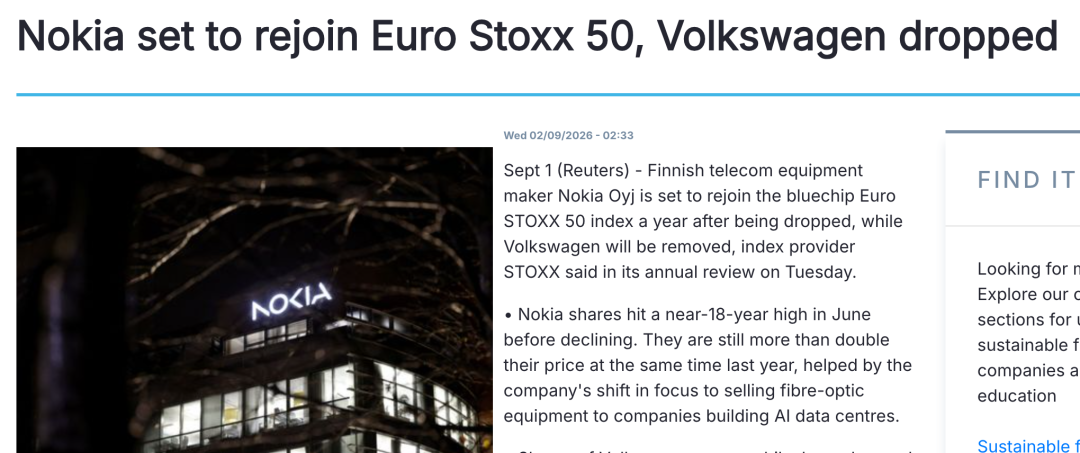
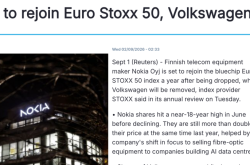
Public reports indicate that Volkswagen has, for the first time in 15 years, been removed from the European STOXX 50 Index. This blue-chip index, which spans the entire eurozone, is akin to the 'crème de la crème' of the European stock market, featuring the 50 most competitive listed companies in Europe.
Now, Volkswagen finds itself on the outside looking in.
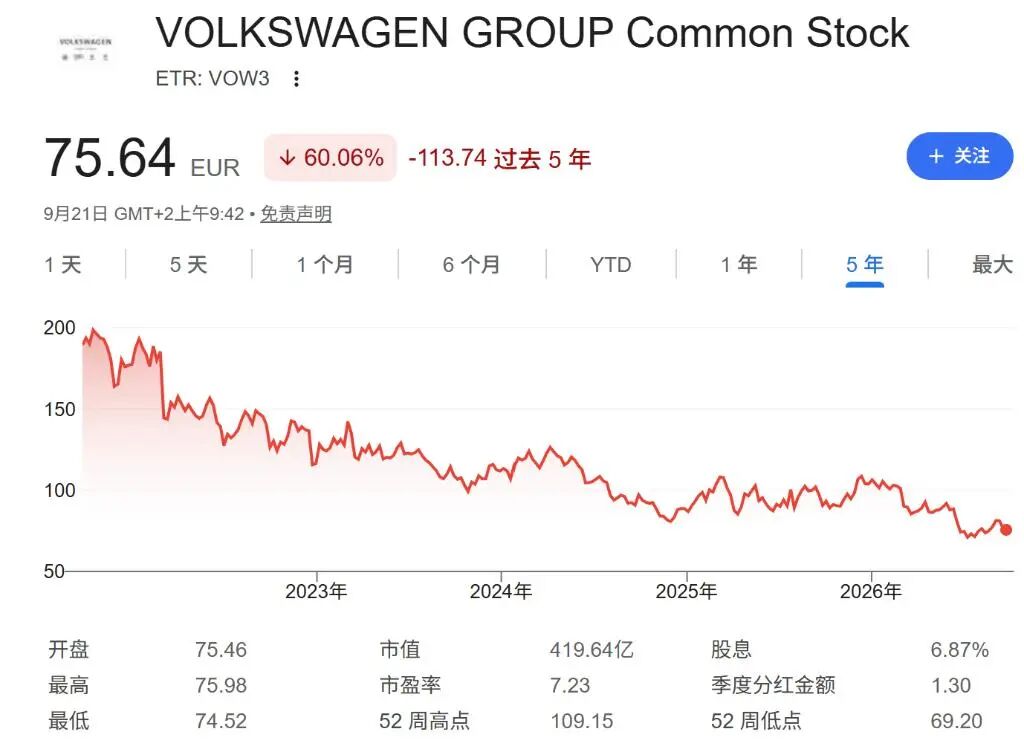
What's the current state of Volkswagen's stock price? It has plummeted by more than three-quarters from its peak during the 2021 stock market euphoria, languishing at its lowest point in 16 years.
More dishearteningly, this is not an isolated incident for European automakers.
In September 2025, Stellantis, the parent company of Peugeot and Fiat, was also ousted from the STOXX 50 Index.
Delving into Volkswagen's latest financial report, Guanchejun noted that its full-year revenue for 2025 stood at €321.91 billion, a slight dip of 0.8% year-on-year. However, its operating profit plummeted to €8.9 billion, a staggering 54% decline from the previous year; net profit after tax shrank from €12.4 billion to €6.9 billion, a 44% reduction.
The real blow, however, is yet to fully materialize.
On September 18, Volkswagen revised its fiscal year 2026 forecast, slashing its full-year operating profit margin expectation from the previous range of 4.0%—5.5% to a meager 'no more than 1%'.
What does a 1% margin signify? Even the interest rate on bank demand deposits surpasses this figure.
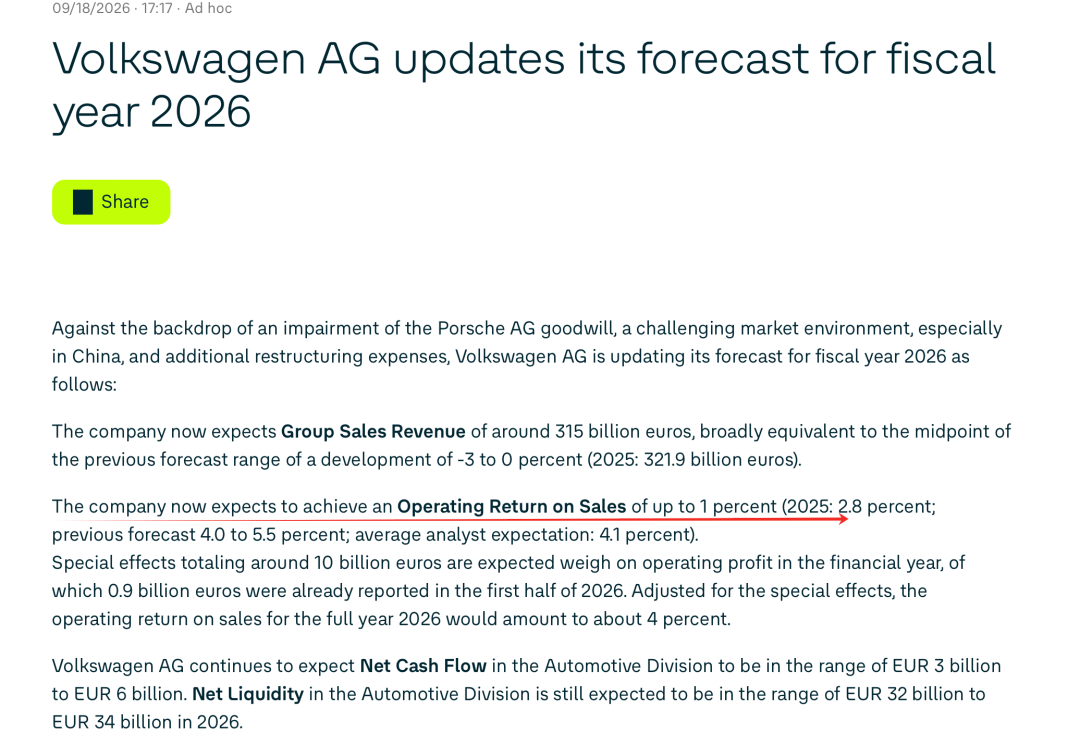
Simultaneously, Volkswagen announced special project impairments amounting to approximately €10 billion, with €6 billion stemming from the goodwill impairment of the Porsche brand. In layman's terms, as translated by Guanchejun, this means: Porsche, once the most lucrative cash cow, is now considered less valuable.
Porsche's own predicament is equally grim. It anticipates its fiscal year 2026 net performance after tax to range between a loss of €500 million and a profit of €1.5 billion.
Note the possibility of a loss. Last year, Porsche's profit margin was a mere 1.1%, already at a historic low.
Public reports reveal that Volkswagen CEO Oliver Blume himself acknowledged that the group is in a 'precarious' situation, and the entire German automotive industry is grappling with 'the most severe turmoil in history'.
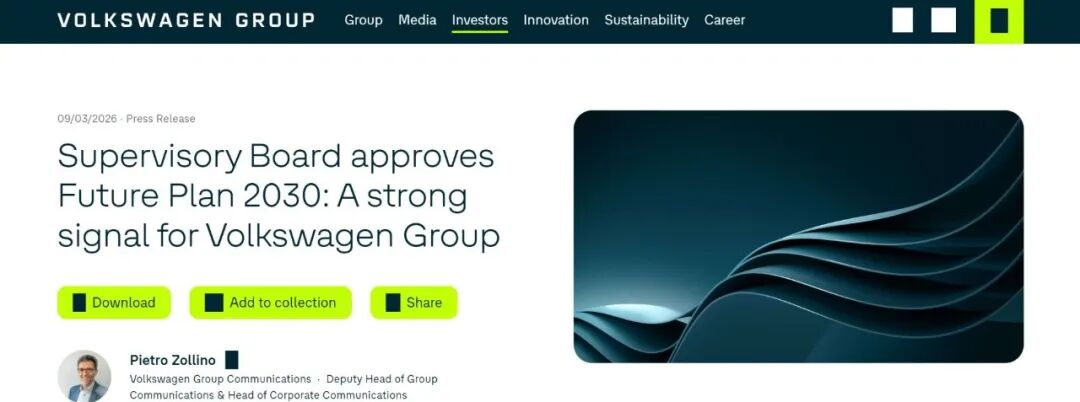
Earlier, on September 3, Volkswagen's supervisory board approved the 'Future Pact 2030,' which entails laying off an additional 50,000 employees, on top of the existing 50,000, bringing the total to 100,000. This equates to a 15% reduction in the entire Volkswagen Group's global workforce, double the 50,000 layoffs implemented by General Motors during its bankruptcy restructuring in 2009.
Porsche was singled out for 'surgical' cuts. Volkswagen's supervisory board, in addition to Porsche's existing 9,000 layoff plan, will ax approximately 4,100 more employees to bridge a €700 million cost gap.
Another cost-cutting measure targets the model lineup. Volkswagen plans to slash its model range by roughly 50% by 2035.
On September 7, Volkswagen announced the sale of its factory in Osnabrück, Germany, to an Israeli investment firm and the German state government of Lower Saxony. This factory will transition from automobile production to manufacturing military products.
From the perspective of the Volkswagen brand itself, global deliveries in the first half of this year were approximately 4.13 million units, a 6.3% year-on-year decline. However, markets in Western Europe, Central and Eastern Europe, North America, and South America all witnessed positive growth, while the Chinese market experienced the sharpest decline, with deliveries of 973,000 units, a 25.9% year-on-year drop.
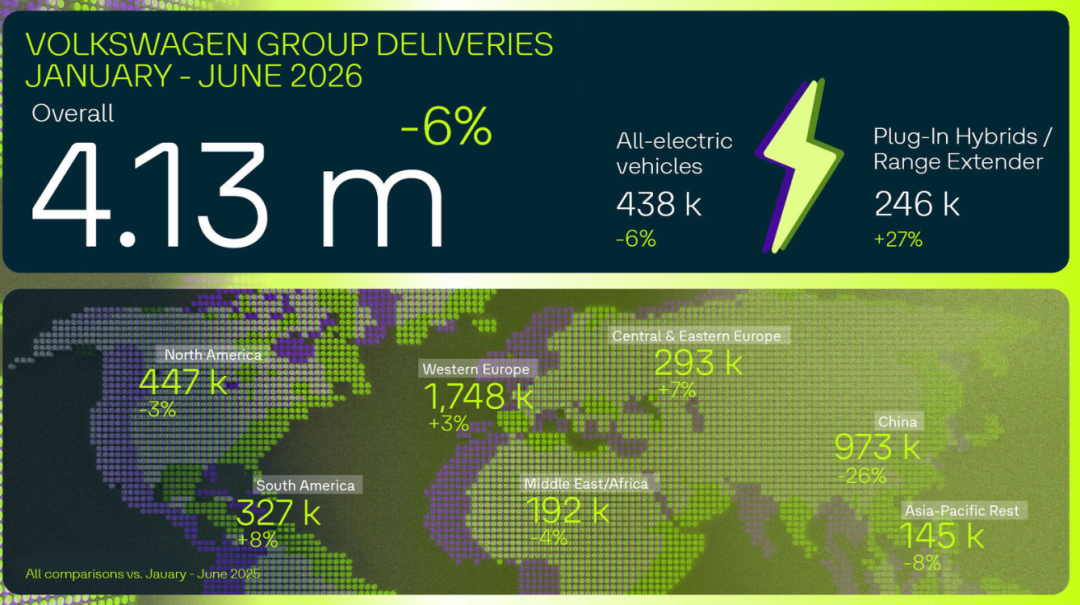
Guanchejun has repeatedly emphasized that the entire traditional automotive industry stands at a historic crossroads. Global electric vehicle sales are projected to reach 23 million units this year, accounting for nearly 30% of total new car sales—a proportion that was merely around 5% five or six years ago.
This trend is irreversible and accelerating.
Volkswagen's predicament lies in the fact that its scale advantages in the era of internal combustion engine vehicles have become burdens in the era of electrification.
100,000 employees, ten brands, and a global factory network—these were once formidable competitive advantages but are now significant costs.
The dilemma of traditional automakers' transformation is not that they are unwilling to change, but rather that their ships are too large to turn quickly. Balancing profits from internal combustion engine vehicles while heavily investing in electric vehicles often results in sluggish progress on both fronts.
More harshly, the capital markets have already cast their votes. Being removed from the STOXX 50 Index means that a large number of passive index funds must divest Volkswagen shares, further depressing the stock price. A declining stock price weakens financing capabilities; weak financing, in turn, makes transformation even more arduous. This is almost a vicious cycle.
Can Volkswagen survive? Guanchejun dares not jump to conclusions. But one thing is certain: when the era abandons you, it doesn't even bid farewell.
The charts in this article, unless otherwise stated, are sourced from public disclosures through various channels. We hereby acknowledge and express our gratitude! The views expressed herein are for reference only and do not constitute investment advice.
This article is original content from Leverage Car Observation and is prohibited from being reprinted without authorization. If reprinting is required, please obtain authorization. Additionally, when authorized for reprinting, please also indicate the source and author at the beginning of the article. Thank you!
-
![]()
The AI Price War is Undergoing Changes
-
![]()
Dropout Gen Zer, Valued at $67 Billion: Sold 100,000 AI Assistants
-
Re-evaluating AI Penetration Rates Among Three Internet Veterans
-
![]()
Decoding Tesla FSD's EU Certification: Two Pathways for China's L2++ Intelligent Driving to Go Global
-
![]()
Unistrong Sheds Overseas Assets After 7.5 Years of Losses Totaling Nearly RMB 3.7 Billion, Operating Cash Flow Plunges by 4532%
-
![]()
Profits and Stock Prices Plunge in Unison! Volkswagen Ousted from Europe's Elite Stock Index
-
![]()
Don't Just Fixate on RMB 59.88! The True Catalyst for Sanhua Intelligent Lies in Its 'Third Growth Curve'
-
![]()
Starting from 100,000? Honda's new car suddenly revealed: Launching on October 6