Unistrong Sheds Overseas Assets After 7.5 Years of Losses Totaling Nearly RMB 3.7 Billion, Operating Cash Flow Plunges by 4532%
 09/22 2026
 435
435
Unistrong (002383.SZ) is navigating a turbulent transition marked by simultaneous downsizing and financial strain. Recently, the company proposed transferring a 49% stake in Unistrong Technology (S) Pte. Ltd. (hereinafter referred to as "Singapore Unistrong"), with a benchmark price of SGD 16.186 million for 100% equity. Since the beginning of this year, Unistrong has been aggressively divesting non-core assets in an effort to refocus on its core business and enhance profitability by shedding inefficient operations.
Securities Star observed that Unistrong has been under sustained operational pressure, with net losses after non-recurring gains and losses accumulating to RMB 3.668 billion over seven and a half consecutive years. In the first half of this year, the company experienced declines in both revenue and net profit. The surveying, mapping, and construction engineering sectors, once key growth drivers, saw reductions in both revenue and gross margins. Meanwhile, although the scale of accounts receivable has decreased, it remains 1.38 times the revenue. Coupled with rising inventory levels, this has led to a staggering 4532.38% decline in operating cash flow, exacerbating financial bleeding and highlighting increasing liquidity pressures.
01. Multiple Asset Disposals Underway, Seeking Recovery Through Sales
The announcement revealed that UNISTRONG CO., LIMITED, a wholly-owned subsidiary of Unistrong, intends to transfer its 49% stake in Singapore Unistrong through a negotiated agreement. Simultaneously, Accord Integrated Pte Ltd, another shareholder of Singapore Unistrong, plans to transfer its 51% stake. Upon completion of the transaction, neither party will retain any equity in Singapore Unistrong.
COSEM Safety & Security Services Pte. Ltd., the intended acquirer of 100% of Singapore Unistrong's equity, is a partner of Singapore Unistrong in the Singapore government's emergency ambulance service project. The transaction is still under negotiation, and a formal equity acquisition agreement has not yet been signed.
The benchmark price for 100% of Singapore Unistrong's equity in this transaction is set at SGD 16.186 million, with the final transaction price subject to adjustments based on expenses, revenues, and other factors from the evaluation benchmark date (November 30, 2025) to the expected closing date.
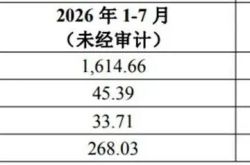
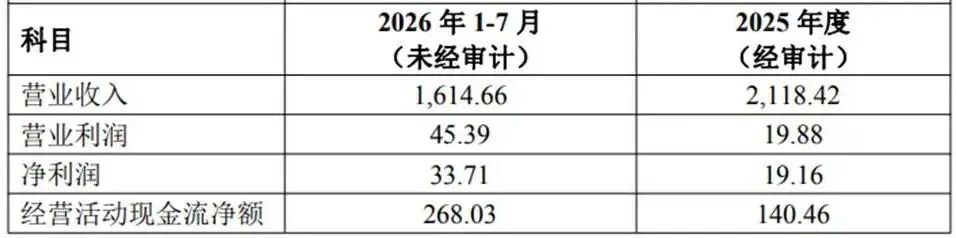
Singapore Unistrong's profitability is relatively weak. In 2025 and from January to July 2026, the entity reported revenues of SGD 21.1842 million and SGD 16.1466 million, respectively, with net profits of SGD 191,600 and SGD 337,100.
Securities Star noted that this is not Unistrong's first asset divestment this year. According to an announcement disclosed on August 4, Unistrong intends to publicly list and transfer its 65% stake in Shanghai Titan Communications Engineering Co., Ltd. (hereinafter referred to as "Shanghai Titan") at an initial listing price of RMB 32.6821 million.
In 2025, Shanghai Titan reported revenues and net profits of RMB 40.579 million and RMB 8.1906 million, respectively. However, it incurred losses from January to April this year, with revenues and net profits of RMB 2.8551 million and RMB -2.1334 million, respectively.
Earlier in April, Unistrong relisted for transfer its 100% stake in Jiangsu Jinwei Remote Sensing Data Engineering Co., Ltd. at a listing price of RMB 45.903 million, approximately 28% lower than the initial listing price of RMB 64.1202 million in January 2025. In terms of performance, the entity reported net losses of RMB 5.7571 million and RMB 6.4881 million in 2024 and 2025, respectively.
Regarding these asset sales, Unistrong stated that the transactions would optimize its asset structure, divest non-core businesses lacking competitiveness, and enhance profitability. It is expected that these transactions will increase the company's net profit, with proceeds to be used for production and operational activities, supporting the development of core technologies and core business operations.
02. Net Profit Decline Far Exceeds Revenue Decline, Core High-Margin Business Contracts
According to information, Unistrong is one of the earliest companies in China to enter the satellite navigation and positioning field. The company develops, manufactures, and sells related products based on satellite navigation technology, providing Beidou/GNSS high-precision and spatiotemporal information product services, as well as "Beidou+" and "+Beidou" industry solutions to numerous users.
Unistrong mentioned in research activities that the company continues to promote strategic adjustments and business structure reshaping, systematically divesting certain non-core businesses and inefficient assets, particularly project-based businesses with low gross margins and long payment collection cycles. These phased adjustments have collectively reduced the company's revenue scale.
Over an extended period, from 2019 to 2025, the company's revenue experienced fluctuations, with three consecutive declines after 2021. Although revenue rebounded to RMB 1.369 billion in 2025, it remained below the 2019 level. Meanwhile, net losses after non-recurring gains and losses persisted for seven consecutive years. This indicates that behind the company's statement of "strategic adjustments and business structure reshaping" lies the reality of its long-term inability to establish stable profitability.

Securities Star observed that Unistrong continued to incur losses in the first half of this year, reporting revenue of RMB 606 million, a year-on-year decline of 8.13%. Corresponding net profit attributable to shareholders was a loss of RMB 35.4205 million, an increase of 290.44% year-on-year. Net loss after non-recurring gains and losses was RMB 39.3364 million, an increase of 143.07% year-on-year, with profit decline far exceeding revenue decline. Thus, the company has not relied on its core business to achieve profitability for nearly seven and a half years, with accumulated net losses after non-recurring gains and losses reaching RMB 3.668 billion.
Regarding the performance decline in the first half of this year, Unistrong attributed it to a structural decline in revenue scale due to phased strategic adjustments, coupled with slightly increased costs related to personnel placement and asset disposal during business contraction, negatively impacting overall profitability.
Another reason for the performance deterioration is the rapidly intensifying competition in certain niche markets, leading to fluctuations and declines in revenue scale and profit margins. In terms of industry segmentation, the once-key growth driver, surveying, mapping, and construction engineering, has significantly cooled. In 2025, revenue from surveying, mapping, and construction engineering increased by 30.35% year-on-year to RMB 571 million, the fastest growth among all business segments, coupled with a 1.42 percentage point increase in gross margin, becoming the main driver of performance growth.
However, the trend reversed in the first half of this year, with revenue declining by 16.95% year-on-year to RMB 218 million, accounting for 36.06% of total revenue and remaining the largest revenue source. Meanwhile, the gross margin simultaneously declined by 4.19 percentage points to 50.37%. The simultaneous decline in revenue and gross margin of this high-margin core segment became one of the main factors dragging down this period's performance.
Performance among other segments was mixed. Revenue from intelligent manufacturing declined by 23.2% year-on-year to RMB 88.5809 million, but the gross margin improved by 3.23 percentage points to 11.44%, making it the only business segment to achieve positive gross margin growth.
Resources and public services, as well as other businesses, exhibited a divergence between profitability and revenue. Resources and public services saw the fastest growth among all segments, increasing by 7.61% year-on-year to RMB 216 million, with its revenue share climbing to 35.62%. However, the gross margin slightly decreased by 0.33 percentage points to 28.85%. Other businesses reported revenue growth of 3.11% year-on-year to RMB 82.8519 million, with the gross margin decreasing by 6.35 percentage points to 71.09%.
03. Accounts Receivable Surpass Revenue, Cash Flow Continues to "Bleed"
Amid the contraction in revenue scale, Unistrong continues to face mounting pressure on operational assets such as accounts receivable and inventory.
In the first half of this year, the book balance of accounts receivable was RMB 1.174 billion, with a provision for bad debts of RMB 339 million, increasing the provision ratio from 22.45% in the same period of 2025 to 28.92%. The book value after deducting bad debts was RMB 834 million, a year-on-year decline of 12.12%. However, this amount was 1.38 times the revenue for the same period, reflecting that a significant portion of revenue remains on the books and has not been converted into actual cash inflows.
Analyzing the aging structure, the book balance of accounts receivable within one year was RMB 404 million, RMB 390 million for one to two years, RMB 61 million for two to three years, and RMB 318 million for over three years. Among them, the book balance of accounts receivable within one year significantly decreased by approximately 48% year-on-year, while those over three years increased by 43.29% year-on-year, with their share climbing from 18.16% in the same period of 2025 to 27.13%. This indicates that a substantial amount of receivables are shifting toward longer collection periods. Unistrong stated that accounts receivable over three years are primarily concentrated among project-based clients, which generally have longer payment collection cycles.
Securities Star noted that, in addition to accounts receivable, pressure on the inventory side has also increased. The book value of inventory in the first half of the year was RMB 418 million, a year-on-year increase of 5.61%, with inventory turnover days extending from 192.3 days in the same period of 2025 to 203.8 days.
With significant funds tied up in inventory and accounts receivable, Unistrong's cash flow has further deteriorated. The net cash flow from operating activities in the first half of the year plummeted by 4532.38% year-on-year to RMB -86.8292 million, compared to RMB -1.8744 million in the same period of 2025, primarily due to rising material costs, increased business inventory needs, and concentrated payments.
Further analysis reveals that cash inflows from operating activities in the first half of the year were RMB 807 million, a year-on-year decline of 8.62%, primarily due to a year-on-year decrease of 8.14% in cash received from sales of goods and provision of labor services to RMB 784 million. Tax refunds and other cash inflows related to operating activities also decreased to varying degrees. On the expenditure side, cash outflows from operating activities increased by 1% year-on-year to RMB 894 million, primarily due to a 6.97% year-on-year increase in cash paid for goods and labor services to RMB 566 million. This imbalance further widened the gap in the company's operating cash flow. (This article was first published by Securities Star, Author | Lu Wenyan)
- End -
-
Re-evaluating AI Penetration Rates Among Three Internet Veterans
-
![]()
Decoding Tesla FSD's EU Certification: Two Pathways for China's L2++ Intelligent Driving to Go Global
-
![]()
Unistrong Sheds Overseas Assets After 7.5 Years of Losses Totaling Nearly RMB 3.7 Billion, Operating Cash Flow Plunges by 4532%
-
![]()
Profits and Stock Prices Plunge in Unison! Volkswagen Ousted from Europe's Elite Stock Index
-
![]()
Don't Just Fixate on RMB 59.88! The True Catalyst for Sanhua Intelligent Lies in Its 'Third Growth Curve'
-
![]()
Starting from 100,000? Honda's new car suddenly revealed: Launching on October 6
-
![]()
Mobile Phone Prices Soar: Can Changxin Offer a Cost-Effective Solution?
-
![]()
The “De-CATL-ization” Trend: Can CATL Weather the Storm?