Does Audi Headquarters Disown AUDI? Unveiling the Real Story
 09/24 2026
 345
345
Lead-in
Introduction
At the product level, the AUDI series already boasts competitive luxury all-electric capabilities. Yet, at the brand level, brand recognition remains a significant hurdle for AUDI at this juncture.
Recently, the automotive world has been abuzz with rumors that 'Audi headquarters does not acknowledge the SAIC AUDI brand.' Numerous reports have interpreted legal actions taken by Audi's global headquarters as an outright rejection of the AUDI letter-branded series models.
In response, SAIC Audi promptly issued an official statement clarifying that the issue was with unauthorized parallel importers Auto China in Germany, not the AUDI brand itself. Since AUDI models entering Germany through unofficial channels cannot access Audi's global official after-sales system, the headquarters declined to provide maintenance services.
As this controversy has escalated, the spotlight has intensified, extending beyond the core issue. The reasons for the heightened attention to this industry event are multifaceted.
01 Is AUDI Truly an Audi?
Firstly, Audi, or rather AUDI, has garnered significant attention lately.
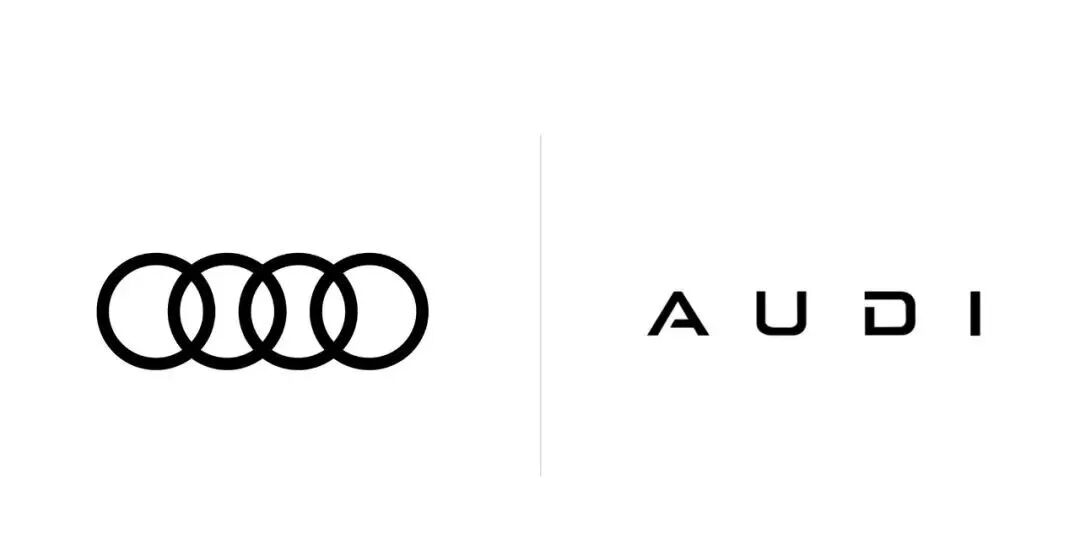
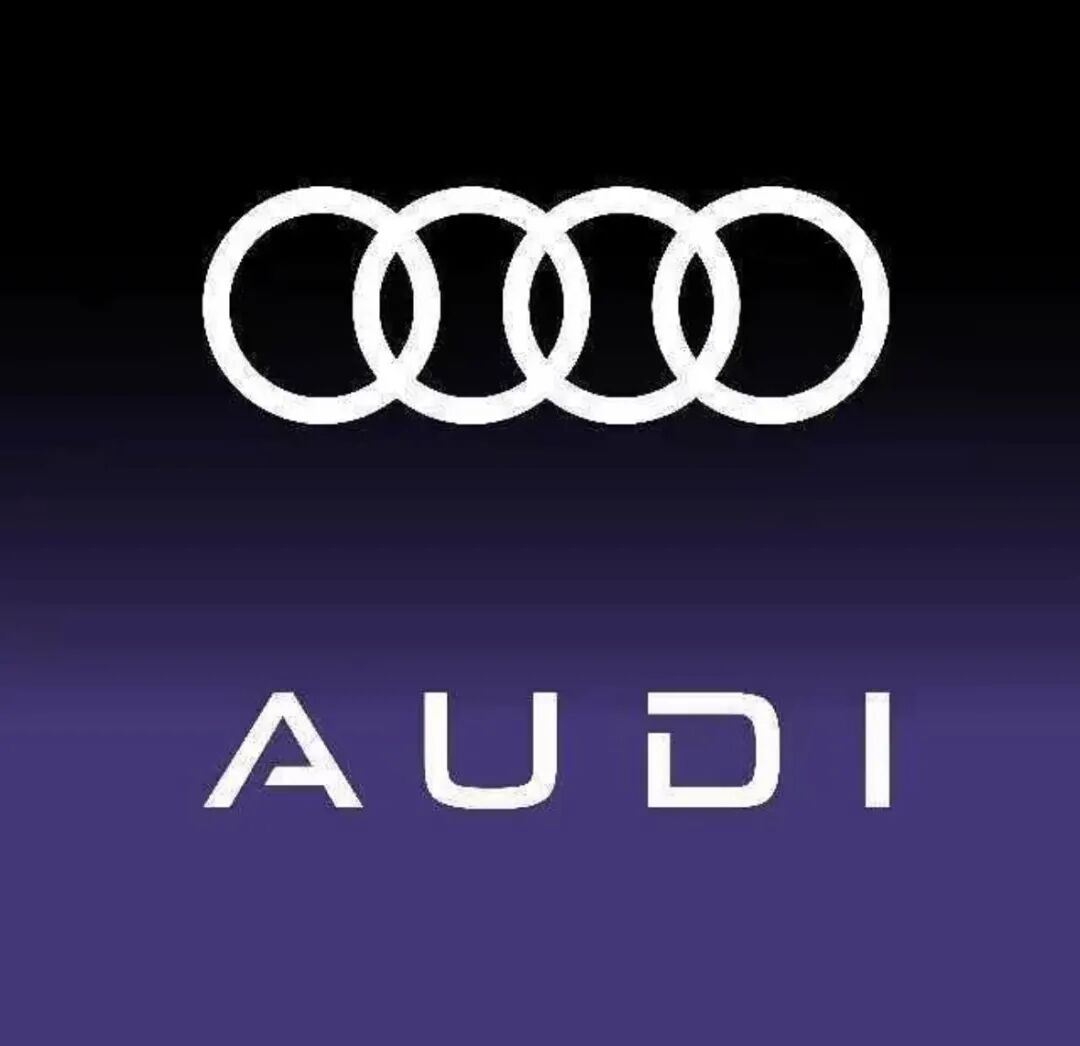
For instance, the widely discussed split governance of Audi in China between FAW-Audi and SAIC Audi—where FAW-Audi's primary focus is on the Four Rings brand, while SAIC Audi emphasizes the AUDI letter brand, halting future production of new Four Rings Audi models—has led to cognitive biases among consumers. To most, FAW-Audi, adorned with the Four Rings logo, is perceived as the authentic Audi. Conversely, AUDI, lacking the Four Rings and featuring only the letter logo, is often viewed as 'non-genuine.'
However, from a brand heritage standpoint, this bias is unfounded. The Audi brand originated with the Audi letter logo, which later evolved into the Four Rings emblem. Today, SAIC Audi's AUDI letter brand essentially represents a return to and innovation upon Audi's century-old brand legacy, rather than a mere derivative.
This bias primarily stems from disparities in market presence and brand scale.
After all, FAW-Audi has established a strong foothold in the Chinese market, boasting a comprehensive lineup of fuel-powered vehicles, a nationwide dealership network, and a vast customer base, firmly ingrained in consumers' minds. In contrast, AUDI, with its relatively short history and limited market presence, has yet to amass the market scale necessary to overturn entrenched perceptions. This explains why, despite repeated official clarifications, the public remains hesitant to fully embrace the letter-branded Audi.
Indeed, from a brand perspective, this holds true. Since its inception, AUDI has focused on the premium all-electric market segment, with its current flagship models being the Audi E5 Sportback and Audi E7X, both all-electric offerings. However, model sales are still in their nascent stages.
According to retail data, in June 2026, the Audi E7X's inaugural month sales surpassed 4,000 units, positioning it at the forefront of the 300,000-yuan-plus all-electric SUV segment. By August of the same year, it became the first luxury all-electric model to exceed 10,000 units in sales within a hundred days.
In recent years, a common phrase in the automotive market has been: 'With enough embellishments, anyone can claim the crown.' Of course, this trend is undesirable, indicating that sales are not truly robust and reflecting a lack of confidence from brands, which resort to exaggeration to highlight so-called achievements.
Once such practices become widespread, many genuine market leaders suffer, as the automotive circle experiences a 'boy who cried wolf' scenario.
Returning to AUDI's market performance, particularly the Audi E7X, its initial post-launch momentum has been impressive, and the product itself boasts notable strengths, undoubtedly ranking among the elite in the 300,000-yuan-plus luxury car segment, especially among joint-venture all-electric models.
However, joint-venture brands have witnessed a significant decline in market share, and even BBA has struggled to achieve major breakthroughs in electrification, leading some potential users to adopt a wait-and-see attitude towards AUDI and even BBA's electric vehicles.
Ultimately, it all boils down to brand recognition. From an overall market perspective, AUDI's limited product lineup and insufficient market presence result in a clear gap in brand influence compared to FAW-Audi's scale, which remains an unavoidable challenge for AUDI at this stage.
02 Is It a Rejection of AUDI or a Deeper Concern About Chinese Cars?
Focusing solely on the product level, however, the AUDI series already possesses competitive luxury all-electric capabilities, blending Audi's automotive heritage with new insights gained from China's manufacturing prowess. Compared to other overseas, particularly European, all-electric vehicles, its intelligent cockpit interaction, advanced driver-assistance systems, and optimized three-electric energy efficiency better meet current user demands, forming a distinct competitive edge.
This is the key to AUDI's potential to defy the odds and emerge victorious in the future.
This likely explains why German parallel importers are willing to take the risk and introduce AUDI models.
Moreover, according to industry insiders, the terminal prices of the Audi E5 Sportback and E7X parallel imported to Germany are roughly double those in the domestic market, indicating a substantial premium.
Of course, the controversy sparked by AUDI's reverse exports to Germany also mirrors China's rise in smart manufacturing, challenging Europe's traditional automotive industry barriers. In 2026, Chinese automotive exports surged, achieving significant year-on-year growth in overall export sales despite facing European tariff barriers.
Beyond sales growth, Chinese automakers have deepened their footprint in Europe, rapidly enhancing their overseas supply chain systems through acquisitions of local factories, establishment of new production bases, and deep cooperation with local automakers. Brands like Leapmotor, BYD, and NIO have made their mark in Europe, breaking the local monopoly of foreign luxury brands.
Meanwhile, the strong breakthrough of local automakers has placed significant pressure on Europe's traditional automotive industry.
As the birthplace of the global automotive industry, Germany's automotive sector is experiencing unprecedented growing pains. Volkswagen Group has finalized plans for tens of thousands of layoffs, multiple factory closures and transformations, and even ventured into military business to absorb idle capacity.
As one industry declines, another rises. Multiple European countries have therefore planned to increase tariffs on Chinese electric vehicles, essentially a passive defense mechanism after their local industry defenses were breached.
Isn't the reverse influx of AUDI models into Germany also a reflection of striking at Europe's industrial pain points?
Compared to traditional European all-electric models, AUDI combines luxury handling, advanced intelligence, stable three-electric systems, and reasonable pricing, forming a comprehensive product advantage. This differentiated edge, when placed in the German domestic market, possesses sufficient competitiveness. The current parallel import boom is merely a glimpse of China's high-end new energy models impacting the European market.
So, returning to the Audi brand itself, there is currently no concrete evidence to support the claim that 'the headquarters does not recognize AUDI.'
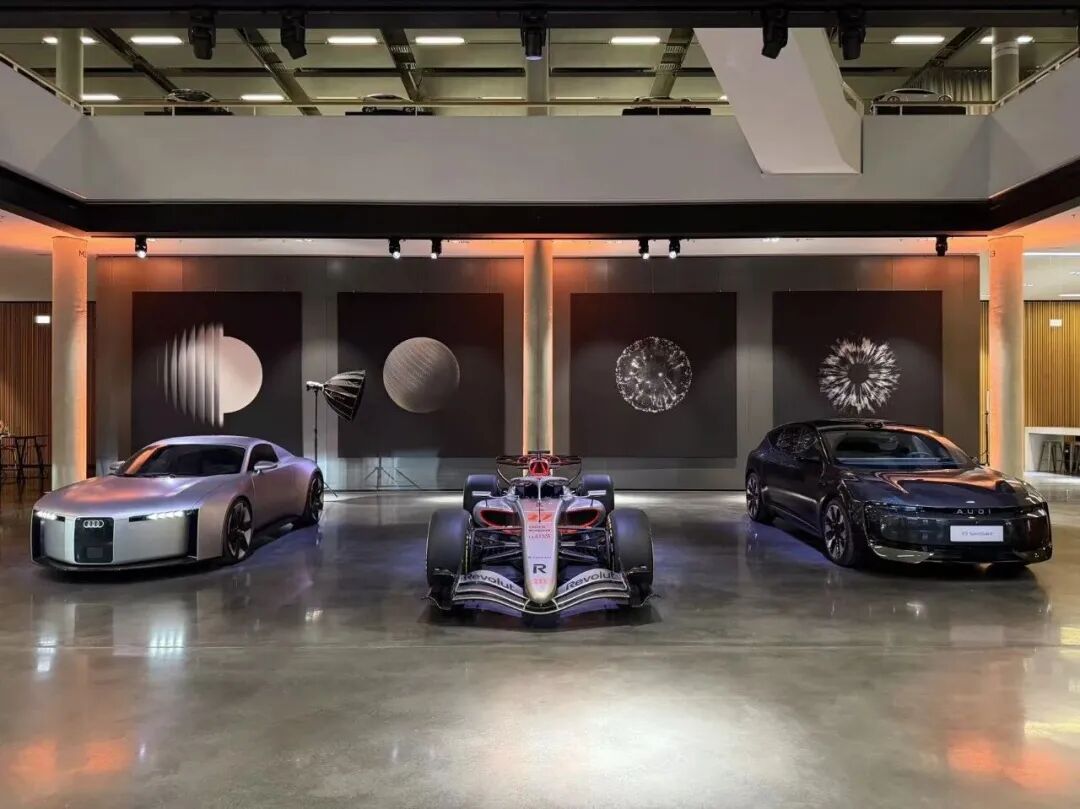
Previously, Audi's global CEO Gernot Döllner has attended multiple AUDI brand-related events, and the Audi E5 Sportback has even been displayed in the German Ingolstadt headquarters showroom alongside Audi's F1 racing car, serving as an official endorsement of the AUDI brand by the global headquarters. This indicates that the official overseas expansion channel for AUDI in the future remains open.
In April 2026, Audi's first overseas Intelligent Electric Technology Center was established in Shanghai, with formal registration completed in September. It will leverage the second-generation ADP exclusive platform to continuously innovate and introduce new products for AUDI. For AUDI, if there is an opportunity to expand overseas in the future, it already has a solid foundation.
Editor-in-Chief: Cao Jiadong Editor: He Zengrong

THE END
-
![]()
Why Does Hungary's New Energy Industry Policy 'Waver Between Two Paths?'
-
![]()
Why Is Chery Reshuffling Its Executives Now—For Globalization or Luxury Ambitions?
-
Retail Industry Evolution: From Instant to AI-Driven Retail
-
![]()
Leapmotor's Dual 'Time Advantages': Technological Leadership, Capital Support
-
![]()
Muse is On Fire: Is This Meta's Real Turning Point or Just a False Climax?
-
![]()
Does Audi Headquarters Disown AUDI? Unveiling the Real Story
-
![]()
From 'Honda China' to 'China Honda': CR-V Continues to Lead as the 'Pioneering Test Ground'
-
![]()
The Arrival of the 'New King of Boxy Cars': Trumpchi Emko 7 Marks a Crucial Leap Forward for the Brand