Xpeng Rakes in Over 1 Billion Yuan from Carbon Credits, Elevating Its Global Expansion to New Heights
 09/30 2026
 336
336
Chinese Automakers: The New 'Lifesavers' for Global OEMs!
On the afternoon of September 29, Xpeng made a groundbreaking announcement:
Xpeng has inked carbon credit trading agreements with Porsche and several other international OEMs, covering carbon emission regulations in the EU, UK, Australia, and beyond. The cumulative total trading revenue is projected to surpass 1 billion yuan.
Collaboration with Porsche is no longer a surprise. Back in August, news broke that Porsche AG had officially exited Volkswagen Group's carbon emission pool to pursue a separate carbon credit partnership with Xpeng. Yet, this development still stunned netizens—primarily due to the staggering profitability involved.
Xpeng alone has generated over 1 billion yuan from carbon credit trading. To put this into context, in the first half of this year, Xpeng's gross profit from car sales stood at just around 3.4 billion yuan. This means carbon credit revenue accounts for nearly one-third of its automotive profit.
Historically, Tesla dominated this revenue stream. Since 2015, Tesla has amassed over $11 billion from selling carbon credits, including $2.76 billion in 2024 alone. However, in recent years, as Chinese EV makers like Xpeng have expanded into overseas markets, more traditional fuel-powered (internal combustion engine) automakers have begun exiting Tesla's credit pool. Led by Xpeng, Chinese automakers are now the go-to suppliers of carbon credits for European automakers.
The deeper significance of this carbon credit trade lies in the fact that Xpeng is no longer just an automaker reliant solely on vehicle sales for profit. China's leading new energy vehicle companies are transitioning from selling products to exporting comprehensive capabilities in technology, compliance, and carbon management.
1. The 'Second Report Card' of Overseas Sales: The 'Prize Pool' Keeps Growing
To appreciate the value of Xpeng's 1 billion yuan in carbon credit revenue, one must first understand the 'emission pool' rules in markets like the EU.
Starting January 1, 2025, the EU will officially enforce new passenger car carbon emission regulations: automakers' average CO2 emissions must reach 93.6g/km (under WLTP standards). If the average exceeds this threshold, a fine of €95 per gram of excess emissions will be imposed, multiplied by the automaker's annual sales volume. Industry estimates suggest potential penalties could reach up to €15 billion across the sector.
Although the EU later adjusted the rules to average emissions over three years (2025-2027), the benchmark target remains unchanged, keeping the pressure high.
So, what's the solution? The EU provides a loophole: automakers can form 'emission pools' with other companies that have surplus carbon credits to lower their overall average emissions and avoid hefty fines.
New energy vehicles, especially pure EVs, produce virtually no emissions. Higher sales volumes mean significant accumulation of carbon credits. Collaborating with high-emission automakers to share emission pools allows one party to avoid massive fines while the other monetizes idle carbon credits—a win-win situation.
In other words, this 1 billion yuan in carbon credit revenue didn't appear out of thin air. It represents the added value generated by overseas sales, a pure EV product mix, and expanded market coverage, serving as a 'secondary realization' of Xpeng's international operational quality. Carbon credit trading revenue can be seen as Xpeng's 'second report card' for overseas sales.
Porsche's choice of Xpeng is clear: high overseas sales volume and abundant carbon credits.
Previously, European automakers primarily traded carbon credits with Tesla. However, with Tesla's recent sales slump in Europe, its carbon credit pool has fluctuated. In contrast, Xpeng's pure EV models like the G6 and G9 have performed strongly in overseas markets. By 2025, Xpeng's cumulative overseas deliveries exceeded 45,008 units, surging 96% year-on-year, making it China's top-selling new energy pure EV brand overseas.
Thus, Chinese automakers like Xpeng are replacing Tesla as the preferred 'emission pool' partners for European automakers.
Carbon credit trading has directly brought significant benefits to Xpeng. In Q4 2025, Xpeng achieved single-quarter profitability through high-margin technology licensing and carbon credit trading revenue. In Q2 this year, Xpeng's services and other businesses contributed 2.03 billion yuan in gross profit, nearly matching automotive sales gross profit, ultimately raising the company's quarterly comprehensive gross margin to 20.7%.
Today, Xpeng's carbon credit 'prize pool' continues to grow. In H1 2026, it delivered approximately 18,000 vehicles across 21 European countries, up 154% year-on-year. From January to July, Xpeng achieved strong results in multiple core markets, topping China's new energy pure EV brand sales charts in Norway, Denmark, France, and Portugal.
According to Xpeng, it will launch multiple extended-range models overseas in 2027, further expanding geographic coverage and market share.
2. Taking AI Global: The Second-Generation VLA Becomes a 'Game-Changer'
As pure EV sales grow, Xpeng's carbon credit pool expands. Undoubtedly, Xpeng is becoming a key global carbon credit supplier for OEMs.
Xpeng's success in overseas markets isn't reliant on the traditional Chinese perception of 'affordable quality.' Instead, it stems from genuine technical prowess.
Pricing-wise, Xpeng's pure EV models average over €40,000 ($43,000) overseas, equivalent to over 320,000 yuan. This places Xpeng among the higher-priced Chinese automakers and within the core price range of mainstream European brands. This indicates that Xpeng's overseas sales boom isn't driven by price cuts but by reputation and market penetration built on quality.
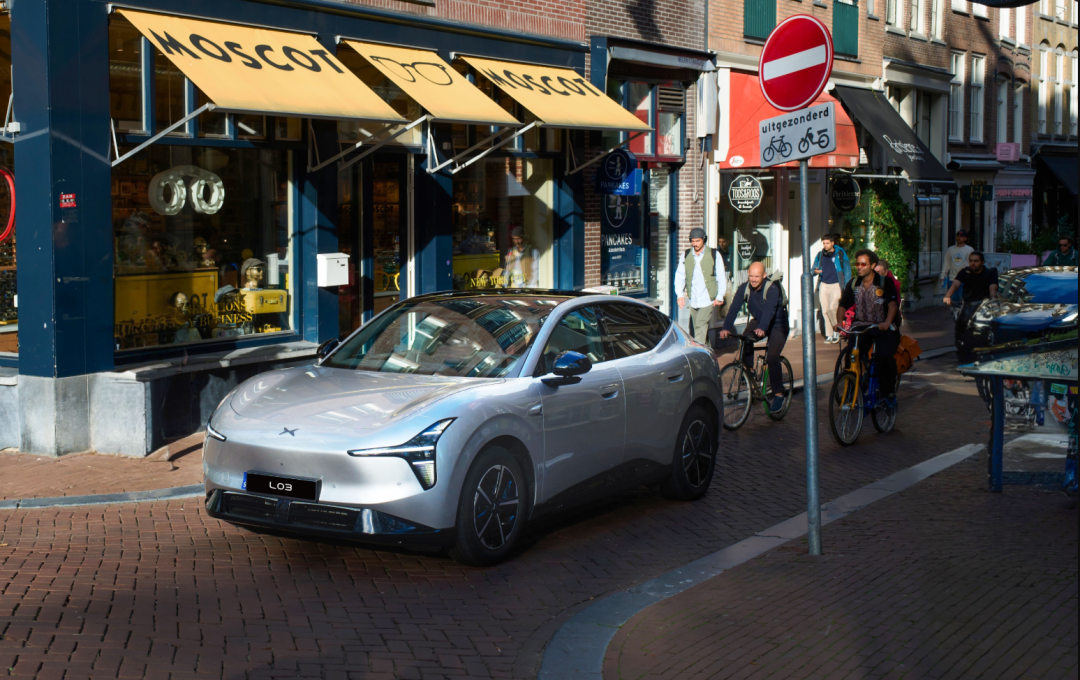
In July, the Xpeng MONA L03 garnered significant attention at its Munich launch, prompting Xpeng to confidently state during its Q2 earnings call that the MONA L03 would become its first global blockbuster model. Especially with Q4 deliveries set to begin, there's hope it will drive Xpeng's overseas quarterly sales beyond 40,000 units.
Xpeng's bold confidence stems from its strong technological capabilities in overseas markets.
This brings us to Xpeng's VLA, which has drawn considerable external attention in recent years. In March, Xpeng began rolling out its second-generation VLA model to users. According to official disclosures, this model covers both L2 assisted driving and L4 autonomous driving capabilities and is already used in Robotaxi applications.
Advanced intelligent driving in Europe lags far behind China and the U.S. In other words, high-level intelligent driving is a rare feature in Europe, making it highly attractive to European consumers. The MONA L03 has drawn attention for its standard VLA 2.0 configuration and intelligent capabilities.
Meanwhile, Xpeng's second-generation VLA is accelerating globalization, performing exceptionally well in European testing. In July, Xpeng completed localized validation testing of the second-generation VLA in Munich, Germany. This pure vision model, trained on Chinese road conditions, required almost no additional data to accurately recognize European road signs, traffic rules, and right-of-way. Xpeng thus became the first Chinese automaker to deploy the same model in both Chinese and European markets.
On September 28, Xinhua News Agency reported a real-world test of Xpeng's NGP and Tesla's FSD in Amsterdam, Netherlands, under more complex road conditions. Despite lacking additional data from the Netherlands, Xpeng performed on par with Tesla, further validating the strong generalization capabilities of its second-generation VLA.
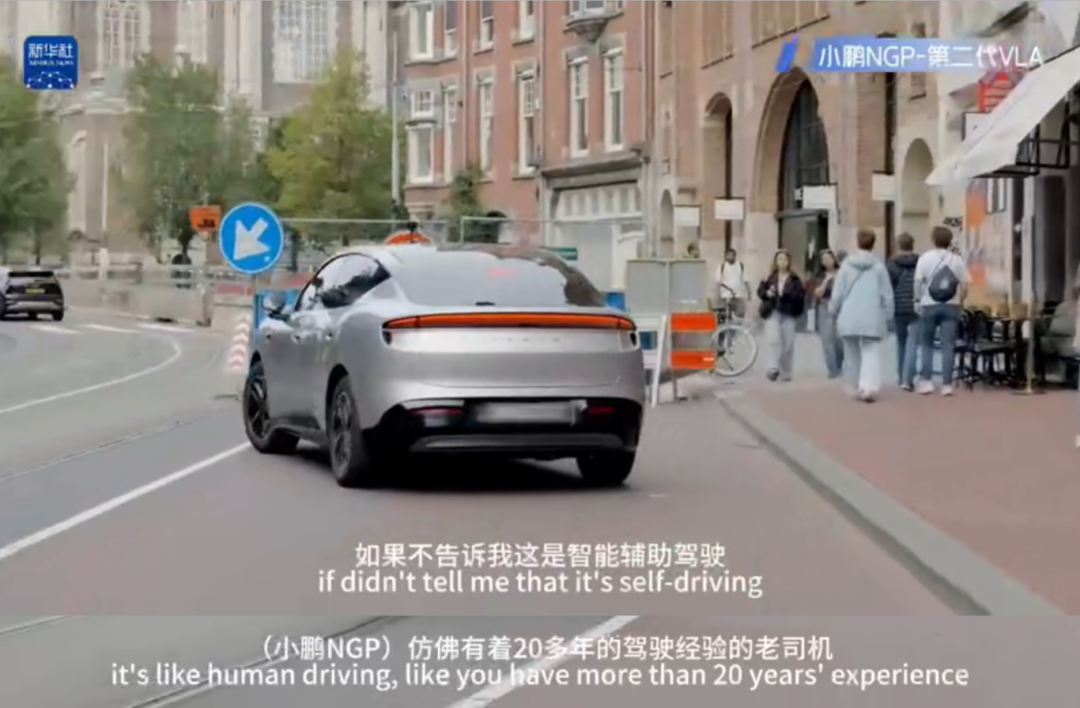
He Xiaopeng also stated that Xpeng aims to obtain regulatory approval in Europe by the first half of next year and begin delivering the second-generation VLA to overseas users in more countries.
As the second-generation VLA accelerates its overseas rollout, it will become Xpeng's most critical differentiated competitive advantage, further strengthening its global expansion.
3. Deepening Cooperation with Volkswagen
Porsche's carbon credit trading cooperation with Xpeng is not surprising.
Carbon credit cooperation involves more than just credit transactions. The choice of emission pool partners requires stable overseas sales to ensure consistent carbon credit fulfillment capabilities. In other words, this deal represents a comprehensive endorsement of Xpeng's international operations, compliance capabilities, and brand credibility by international OEMs like Porsche—a vote of confidence through action.
Porsche's recognition of Xpeng began years ago.
As early as 2023, its parent company, Volkswagen Group, began collaborating with Xpeng, starting with an equity investment, followed by a joint development agreement for electronic and electrical architecture technology, the co-creation of ultra-fast charging networks, the export of intelligent driving technology, and recently the production, pre-sale, and launch of their first collaborative model, the ZEEKR. Volkswagen Group and Xpeng are continuously deepening their cooperation.
As a luxury brand under Volkswagen, Porsche's decision to exit Volkswagen's emission pool and collaborate separately with Xpeng, while surprising, is not unreasonable.
However, the carbon credit dividend has a clear window period and is not a sustainable long-term revenue source. For Xpeng, this carbon credit deal represents more than just a new piece in its diversified commercial revenue puzzle—it's also an upgrade in its global expansion and cooperation with Volkswagen.
Beyond carbon credit trading, technology licensing is one of the most important collaboration models between the two. Since Volkswagen's equity investment in Xpeng in 2023, the two automakers have embarked on technical cooperation, with technology licensing gradually becoming Xpeng's second revenue growth driver. Huatai Securities estimated that Xpeng's platform software collaboration revenue could reach around 1.3 billion yuan by 2026, while EEA joint development could generate approximately 1.4 billion yuan. Earlier, Lei Feng Network reported that Xpeng's existing technology collaboration projects with Volkswagen were expected to contribute 500 million to 1 billion yuan per quarter in Q3 and Q4.
In addition to technology licensing and carbon credits, Volkswagen and Xpeng are also collaborating on physical AI.
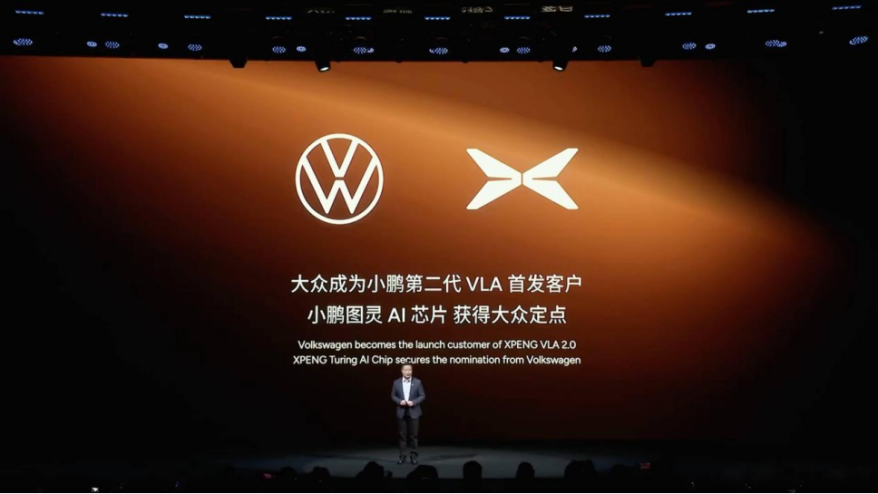
Currently, Volkswagen has become the launch customer for Xpeng's second-generation VLA. The jointly developed ZEEKR will come standard with Xpeng's VLA full-scenario intelligent driving assistance system.
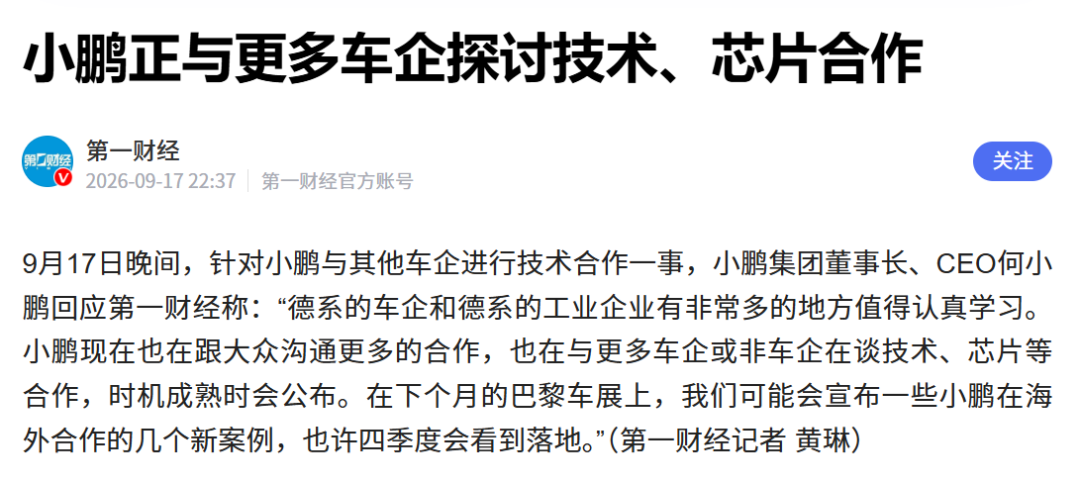
Recently, He Xiaopeng stated that besides Volkswagen Group, Xpeng is engaging in discussions with multiple automakers and non-automotive companies for collaborations spanning technology, chips, and other areas.
This signifies that Xpeng's global expansion extends beyond product sales, as it builds a more diversified, three-tiered business model encompassing product sales, technology licensing, carbon credit trading, and physical AI, including VLA.
Taking Xpeng's cooperation with Volkswagen as a prime example, this multi-faceted collaboration is emerging as a new form of global industrial synergy.
4. Conclusion
In the past, Chinese automakers competed overseas on cost-effectiveness. Now, companies like Xpeng are competing on technology, compliance, carbon management, and even AI.
Selling cars is just the starting point. Carbon credits are a bonus. Technology licensing and physical AI represent even greater potential.
From automotive sales to technology licensing, carbon credit trading, and physical AI, Xpeng's global expansion has transcended merely 'selling cars' to become a new form of global industrial synergy. This is not just an individual exploration by Xpeng as a company but a paradigm shift reflecting the enhanced capabilities of Chinese tech companies in going global.
*Disclaimer: The views expressed in this article are solely those of the author. The market carries risks, and investment decisions should be made cautiously. Under no circumstances does the information or opinions in this article constitute investment advice to any individual.
Deep Blue Finance New Media Cluster originated from the Deep Blue Finance Journalist Community and has a 16-year history. As a well-known domestic finance new media outlet, its accounts focus on China's most valuable companies, cutting-edge industry developments, and emerging regional economies, providing valuable content for investors, corporate executives, and the middle class. Welcome to follow.
-
![]()
August Online Market for Consumer-Grade Action Cameras: Volume, Value, and Price All Rise Year-on-Year, with New Products Fueling High-End Expansion
-
![]()
Surging by 1.3 Trillion Yuan in a Single Day! Meta's AI Triumph Led by a Chinese AI Guru
-
The Hidden Risks in Second-Hand Transactions of Intelligent Driving Vehicles
-
Yutong Optics’ Array-Molded C-Lens Hits Monthly Shipments of Tens of Millions!
-
Survival Game of New Energy Vehicles Accelerating Industry Reshuffle
-
![]()
Why Doesn't a 58% Gross Profit Margin Lead to Growth? The IPO of an Optical Industry Giant
-
Qijing GT7 Fails to Make a Breakthrough, Liu Jiaming’s Debut Ends in Disappointment: GAC Group’s Premium Push Hits Another Snag
-
Sales Plummet Over 40% Again: Can Qian Yang’s JiaYue 07 Revive Roewe?