During Long Holidays, EV Charging Stations at Highway Service Areas Are in High Demand. Should Range-Extended and Plug-In Hybrid Vehicles Give Way?
 10/08 2026
 369
369
In recent years, the supporting infrastructure for charging new energy vehicles (NEVs) has seen significant improvements. Not only has the number of charging stations surged, but the adoption of 800-volt high-voltage platforms has also enhanced charging efficiency. The latest data reveals that there are now 85,400 charging stations in highway service areas nationwide, covering over 80% of these facilities. Charging speeds have reached a point where a substantial charge takes just 5 minutes, and a full charge can be achieved in 9 minutes.
Despite these advancements, during this year's National Day holiday, pure electric vehicle (PEV) owners traveling on highways still faced the same dilemma as in previous years: "queuing for 5 hours to charge for half an hour." What is the underlying issue here?
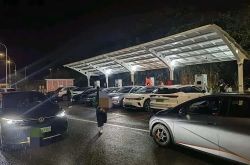
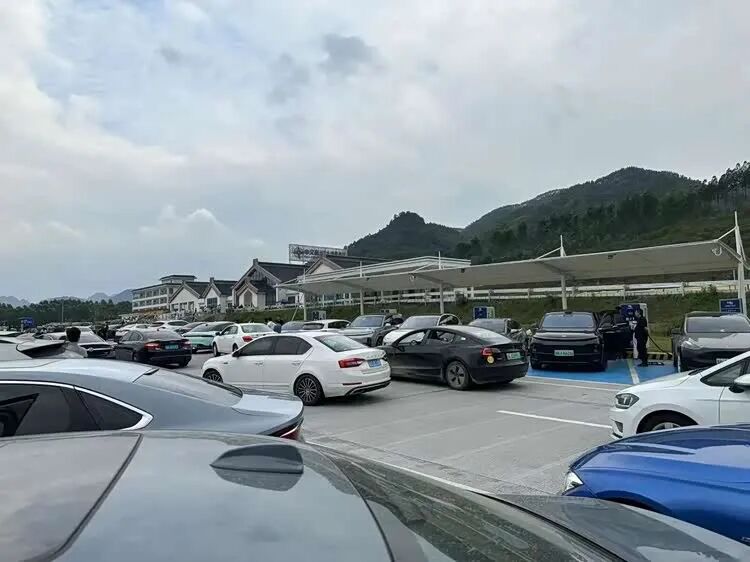
Media reports indicate that during the National Day holiday, numerous highway service areas across the country witnessed long queues of NEVs waiting to charge. Some netizens humorously compared the experience to queuing for food in a cafeteria. A vehicle owner from Chengdu recounted that upon arriving at the service area, they were assigned number 99 in the charging queue and had to wait over 5 hours to charge. This owner also noted that charging after 2 AM at the service area required no queuing.
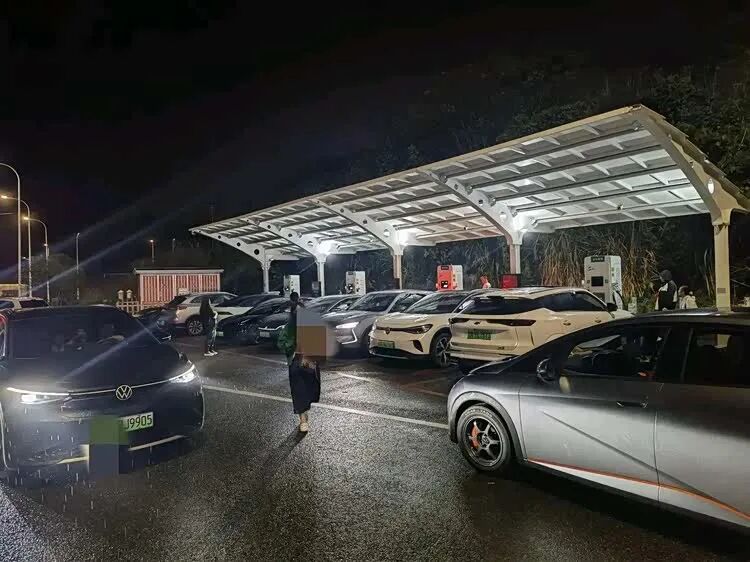
However, the actual situation may be even more dire than described by this vehicle owner. For instance, at around 3 AM on October 1st, a vehicle owner posted on social media that they had been assigned charging number A140. Staff informed them that when numbers were issued, the charging queue was at number 29, implying that over 100 vehicle owners were ahead of them waiting to charge.
Another vehicle owner, Ms. Huang, while queuing to charge at the Zaoyang North service area on the evening of September 30th, waited for over an hour even after some people ahead of her gave up charging. By the time her vehicle was fully charged, it was already the fifth round of charging, with approximately 200 vehicles waiting to charge at that time. Ms. Huang also mentioned that due to the high traffic volume during the National Day holiday, charging power was significantly limited, resulting in slower charging times than usual.
Compared to ordinary public charging stations, brand-built charging stations at highway service areas generally do not require long waiting times. A vehicle owner stated that while driving from Nanjing, Jiangsu, to Penglai, Shandong, they charged at a brand-built 5C supercharging station and completed charging in just 15 minutes after queuing for half an hour.
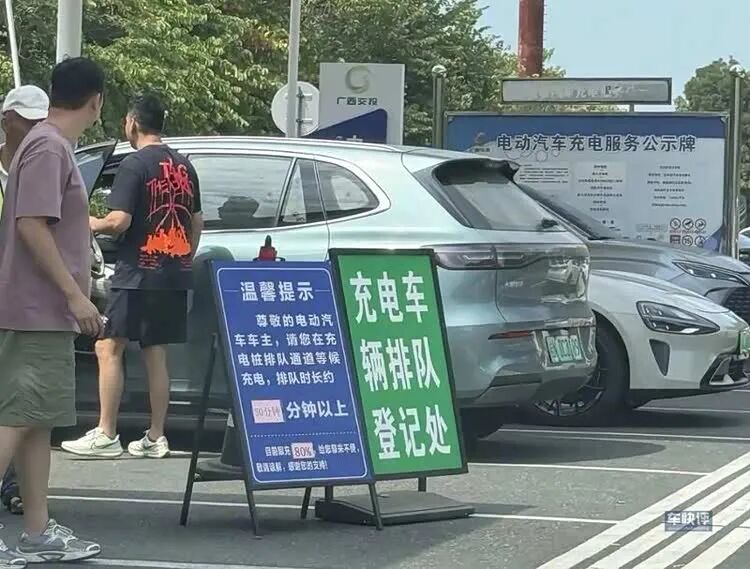
While the experiences of the aforementioned vehicle owners may seem excruciating, there are even more distressing situations. For example, some vehicle owners' vehicles ran out of power and broke down before reaching the highway service area, forcing them to be pushed forward. In some service areas with high traffic volumes, electric vehicles were not even allowed to enter for charging. One can only imagine the frustration of the vehicle owners at that time.
To alleviate the pressure of charging queues, some service areas have explicitly stipulated that vehicles must leave once their battery is charged to 80%. As for why "difficulty in charging" occurs at highway service areas during every long holiday, although there are many contributing factors, such as management and charging habits, the most crucial point, when traced to the source, is the high concentration of vehicles and the scarcity of charging stations during holidays.
Additionally, another significant factor is the severe reduction in range for electric vehicles on highways. You might be driving a pure electric vehicle with an officially stated range of 600 kilometers, but on the highway, you might not even be able to travel 300 kilometers before needing to find a charging station. This is currently one of the most notable shortcomings of NEVs compared to fuel-powered vehicles.
Faced with this situation, some PEV owners have proposed novel ideas. They argue that although range-extended hybrid and plug-in hybrid vehicles can also be charged and are considered NEVs, they can still refuel like fuel-powered vehicles and continue driving without charging. Therefore, these PEV owners believe that in scenarios where charging resources are scarce, range-extended hybrid and plug-in hybrid vehicle owners should voluntarily yield charging stations and prioritize charging for PEV owners.
What is your opinion on this matter? Should range-extended hybrid and plug-in hybrid vehicle owners, who also qualify for green license plates for NEVs, be obligated to yield charging stations? Leave your comments and engage in the discussion.
Copyright Notice: This article is original content from Che Kuai Ping. Reproduction requires permission. Unauthorized reproduction and any form of plagiarism or unauthorized use of images are strictly prohibited and will result in legal action. Some images in the article are sourced from the internet, with copyright belonging to the original authors. If your work has been used, please contact us for royalties or removal.
-
![]()
Diversifying Production Capacity Amid Pressure and Hedging Against Price Wars: Chinese Automakers Seize Overseas Growth Opportunities
-
From Selling Server Racks to Selling Tokens: Where Has AIDC's Valuation Anchor Shifted?
-
![]()
Porsche’s 2035 Vision: Amid Layoffs and Model Streamlining, a Steadfast Commitment to Fuel-Powered Vehicle R&D
-
![]()
Global Market: Fuel Vehicle Sales Share Dips Below 50%. Is BYD Poised to Overtake Toyota Soon?
-
![]()
During Long Holidays, EV Charging Stations at Highway Service Areas Are in High Demand. Should Range-Extended and Plug-In Hybrid Vehicles Give Way?
-
![]()
September Auto Sales: Traditional Powerhouses BYD, Chery, Geely Maintain Lead; Leapmotor Holds onto New Energy Crown
-
![]()
Should Chinese Automakers Establish Factories in the U.S.: A Boon or a Bane?
-
![]()
Navigating the Complexities: A Closer Look at Global Market Access Rules for Chinese Automakers