Global Market: Fuel Vehicle Sales Share Dips Below 50%. Is BYD Poised to Overtake Toyota Soon?
 10/08 2026
 435
435
At BYD's shareholder meeting on June 10th this year, Chairman Wang Chuanfu made a daring declaration, setting a goal for BYD to ascend to the position of the world's largest automaker in terms of scale within the next five years. He envisioned achieving production and sales of 10 million vehicles by 2030, thereby surpassing Toyota to claim the title of the automaker with the highest global sales.
This statement swiftly became a hot topic across the automotive industry, with some expressing optimism about BYD's prospects while others deemed it overly ambitious. Indeed, based on current scale, Toyota, which has held the global sales crown for numerous consecutive years, significantly outstrips BYD. However, in the view of Che Kuai Ping, dismissing BYD's ambition to surpass Toyota based solely on the current scale seems somewhat shortsighted. It's crucial to remember that change is the only constant in this dynamic world.
To bolster BYD's confidence in its quest to become the world's top automaker, Li Ke, Executive Vice President of BYD, stated candidly in an interview with foreign media that BYD does not require the U.S. market nor the acquisition of other automakers to fuel its sales growth and achieve the goal of surpassing Toyota as the global sales leader. This fully demonstrates the unwavering confidence of BYD's leadership in their ambition to overtake Toyota.
Moreover, a recent development appears to further substantiate the possibility of BYD surpassing Toyota.
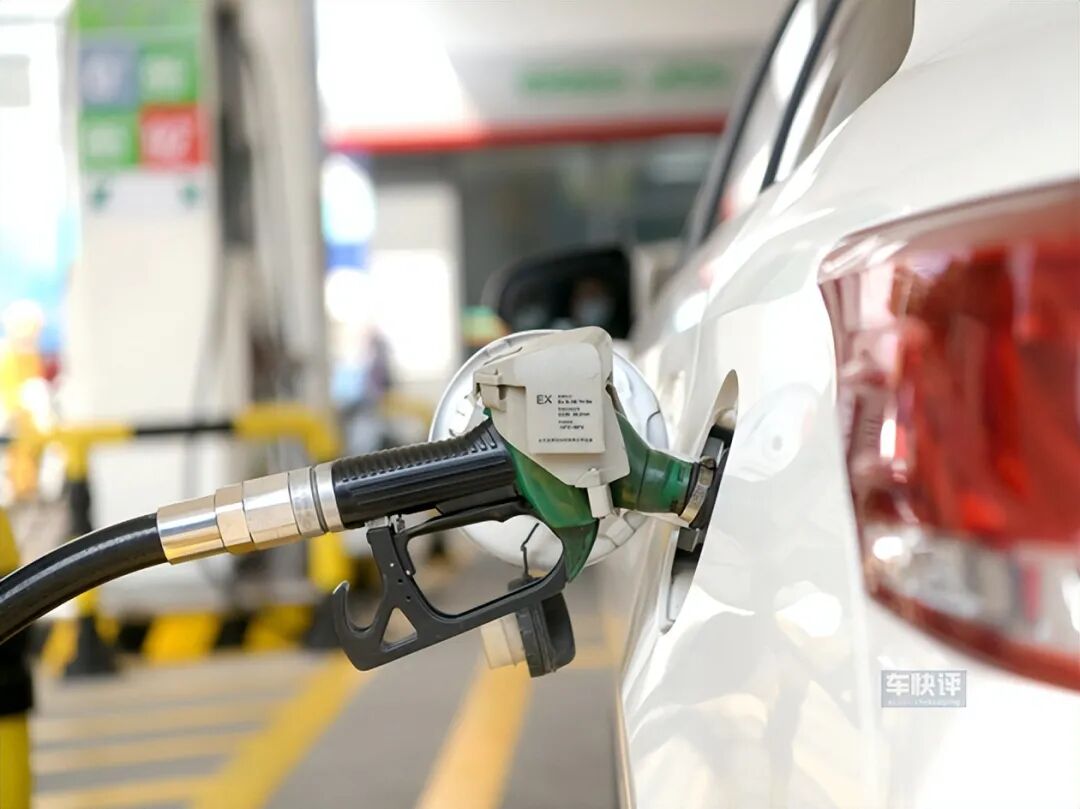
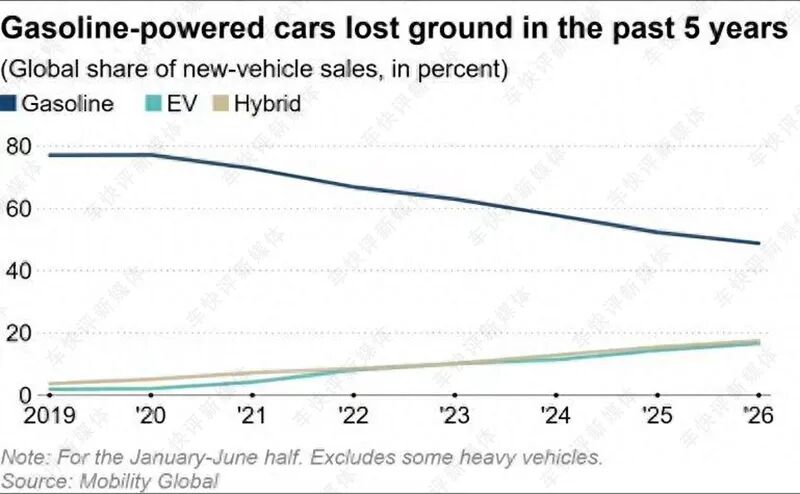
On October 6th, foreign media reported that global automotive sales data for the first half of 2026 revealed that the sales share of pure gasoline vehicles had plummeted to 49%, marking the first time in history that the sales share of fuel vehicles had fallen below 50%. This signifies that global sales of new energy vehicles surpassed 50% for the first time in the first half of this year, reaching 51%. Just five years prior, in 2021, the global sales share of pure gasoline vehicles stood at a lofty 73%.
In terms of regional markets, China witnessed the most significant decline in global fuel vehicle sales in the first half of the year, with a year-on-year decrease of 26%. The European market followed suit, experiencing a 13% year-on-year decline. According to industry insiders, with global oil prices expected to rise further in the second half of the year, fuel vehicle sales may continue their downward trajectory.
In stark contrast to the decline in fuel vehicle sales, new energy vehicle sales in the European market soared to 1.81 million units in the first half of the year, representing a year-on-year increase of 32%. Besides Europe, the Southeast Asian and Latin American regions also witnessed substantial growth in new energy vehicle sales in the first half of the year, with Southeast Asia experiencing an 81% year-on-year increase and Latin America a 75% year-on-year increase.

Also during the first half of this year, overseas sales of new energy vehicles by Chinese automakers generally experienced significant growth. BYD led the pack with cumulative overseas sales of nearly 770,000 units, marking a year-on-year increase of 73.6%. Among domestic automakers, BYD stands out in new energy vehicle exports. Chery and Geely also reported high export volumes of new energy vehicles in the first half of the year, with Chery exporting 290,000 units, a 92% year-on-year increase, and Geely exporting 280,000 units, a staggering 585% year-on-year increase.
Finally, when comparing the sales performance of BYD and Toyota in the first half of the year, Toyota undoubtedly leads in total sales, with a cumulative global sales volume of 5.39 million units. BYD, on the other hand, had cumulative global sales of 1.8085 million units in the same period, indicating a substantial gap with Toyota. However, a deeper analysis reveals that Toyota's global sales have been declining year-on-year for several consecutive months, with a 4.3% year-on-year decrease in the first half of the year. In contrast, BYD's overseas market performed exceptionally well during the same period, with a year-on-year increase of nearly 68%. This stark contrast underscores the significant difference between the two automakers, and describing it as "worlds apart" is hardly an exaggeration.
Given these circumstances, some institutions predict that BYD's sales will officially surpass Toyota by 2027-2028 at the earliest, claiming the title of the global sales champion for new vehicles. With this in mind, what are your thoughts on BYD's potential to surpass Toyota in sales within the next five years? Feel free to share your comments and engage in the discussion in the comment section.
Copyright Notice: This article is original to Che Kuai Ping. Reproduction requires authorization. Unauthorized reproduction and any form of plagiarism or misappropriation of text and images are strictly prohibited, and legal action will be pursued. Some images in the article are sourced from the internet, with copyright belonging to the original authors. If your work is used, please contact us for royalties or removal.
-
![]()
Diversifying Production Capacity Amid Pressure and Hedging Against Price Wars: Chinese Automakers Seize Overseas Growth Opportunities
-
From Selling Server Racks to Selling Tokens: Where Has AIDC's Valuation Anchor Shifted?
-
![]()
Porsche’s 2035 Vision: Amid Layoffs and Model Streamlining, a Steadfast Commitment to Fuel-Powered Vehicle R&D
-
![]()
Global Market: Fuel Vehicle Sales Share Dips Below 50%. Is BYD Poised to Overtake Toyota Soon?
-
![]()
During Long Holidays, EV Charging Stations at Highway Service Areas Are in High Demand. Should Range-Extended and Plug-In Hybrid Vehicles Give Way?
-
![]()
September Auto Sales: Traditional Powerhouses BYD, Chery, Geely Maintain Lead; Leapmotor Holds onto New Energy Crown
-
![]()
Should Chinese Automakers Establish Factories in the U.S.: A Boon or a Bane?
-
![]()
Navigating the Complexities: A Closer Look at Global Market Access Rules for Chinese Automakers