The Comeback of AITO? Huawei and Seres Revitalize Their Alliance
 10/12 2026
 461
461
On the eve of China's National Day, a piece of news swept through Xingkongjun's WeChat Moments like wildfire: Huawei and Seres have rekindled their partnership.
Just a mere half-month ago, whispers circulated that Huawei and Seres were on the verge of parting ways.
So, what sparked this sudden reconciliation?
Xingkongjun dedicated a holiday to dissecting the intricacies of this news and arrived at a staggering revelation: This was a carefully orchestrated move by both parties!
Before jumping to conclusions, let Xingkongjun delve into the details.
Seres, previously known as Sokon, began its journey as a manufacturer of micro-vehicles. In April 2021, Huawei and Seres officially embarked on a deep collaboration. By December of the same year, the AITO brand was unveiled. At that time, few believed this partnership—between a telecommunications behemoth and a third-tier automaker—could achieve success.
The results, however, defied expectations.
The AITO M5 made a splash, the M7 gained momentum, and the M9 carved out a niche in the premium segment above 500,000 yuan. Picture this: an automaker that started with 50,000-yuan microvans transforming into a titan in the 500,000-yuan price bracket.
AITO's cumulative deliveries soared past 1.2 million units, with its product range spanning from 200,000 to 600,000 yuan, making it the first brand under the Harmony Intelligent Mobility Alliance to establish a sustainable business model.
In 2025, the Harmony Intelligent Mobility Alliance delivered 589,100 vehicles for the entire year, marking a 32% year-on-year increase. Cumulative deliveries surpassed 1 million units in just 43 months, setting a record as the fastest among China's new automotive forces. AITO was the undisputed cornerstone.
On September 15, the Harmony Intelligent Mobility Alliance and AITO jointly announced that Seres would henceforth take the lead in product definition, design, brand marketing, channel retail, and service systems for AITO, with Huawei Terminal shifting to a supportive role.
In simpler terms, the reins were passed from Huawei to Seres.
The capital markets reacted swiftly. On September 15, Seres' A-share price closed down 5.09% at 45.46 yuan; its Hong Kong-listed shares plummeted 6.12% to HK$34.68, breaching the lowest point since its Hong Kong debut.
Even some customers who had placed orders began inquiring about cancellations.
On September 24, Yu Chengdong publicly responded at a Harmony Intelligent Mobility Alliance store in Hefei (and reiterated the same stance at the Harmony Intelligent Mobility Alliance's new product launch on September 28): Seres has made significant strides in its capabilities through cooperation with us over the years. Now, they aspire to take the lead independently, so they proposed to do just that. We support their decision.
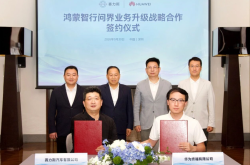
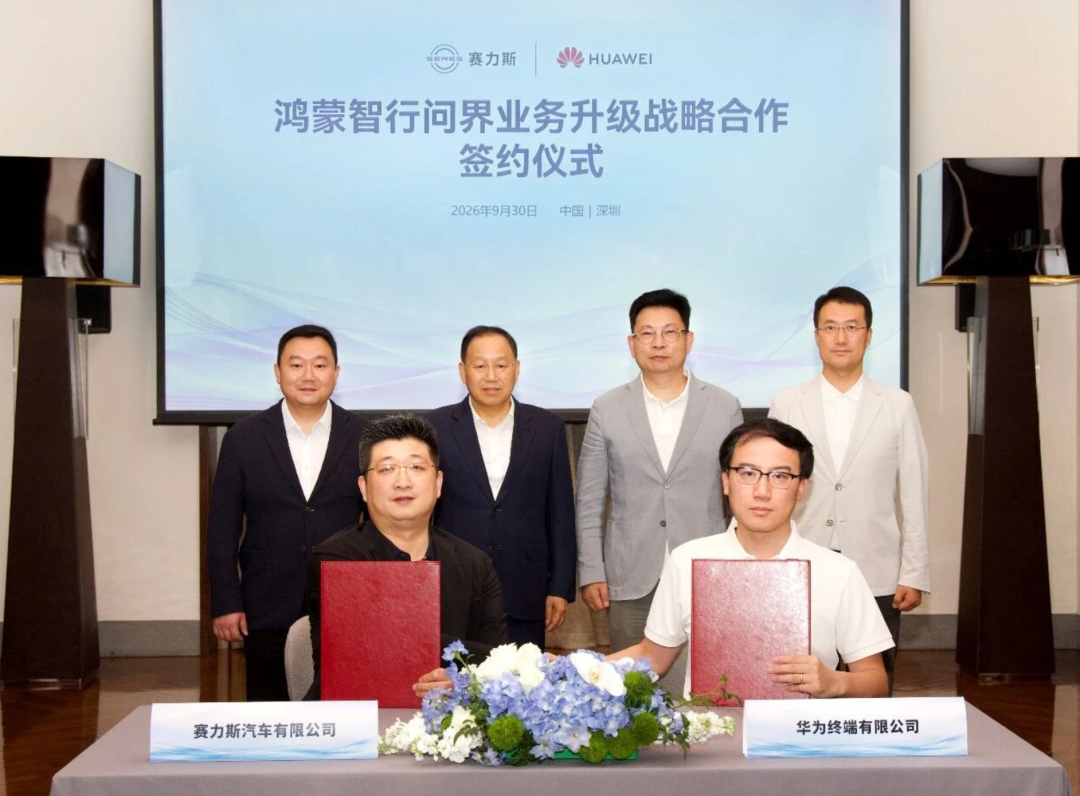
On September 30, the new five-year agreement was finalized.
1. The Truth Behind the 'Huawei Tax'
Let's delve into the numbers: How much does Huawei truly earn from each AITO vehicle?
First, let's revisit Huawei's role under the previous model. Under the Smart Selection vehicle mode, Huawei was deeply involved in product definition, vehicle design, intelligent solutions, brand marketing, store channels, user experience, and quality control, with sales completed through Huawei's stores. Seres was responsible for vehicle platform R&D, manufacturing, supply chain, chassis, body, and after-sales delivery.
Based on Seres' Hong Kong prospectus and annual financial reports, the fees Seres pays to the Huawei ecosystem can be broadly categorized into three parts.
The first is hardware procurement fees. For components provided by Huawei, such as the intelligent driving system, Harmony cockpit, and three-electric systems, the cost per vehicle for ordinary models is approximately 52,000 to 53,000 yuan, while the top-spec AITO M9 exceeds 160,000 yuan.
The second is technology licensing fees, accounting for about 2% of the vehicle's selling price, covering the Harmony cockpit system, advanced intelligent driving algorithms, high-precision maps, vehicle-cloud services, and joint development engineering services.
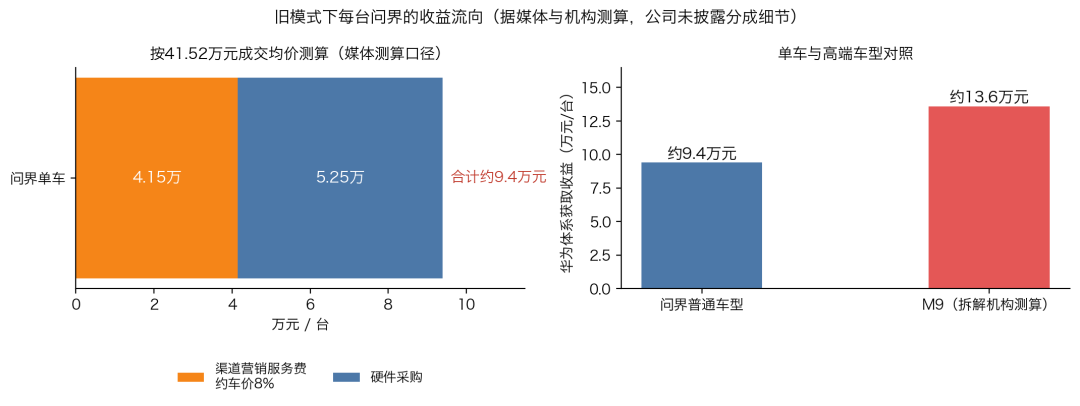
The third is channel marketing service fees, accounting for about 8% of the vehicle's selling price, corresponding to sales, test drives, brand promotion, and after-sales referrals at Huawei stores.
The latter two combined equal roughly 10% of the vehicle's price. The industry has coined a vivid term for this: the Huawei tax.
Based on AITO's average transaction price of 415,200 yuan in July 2026 (as calculated by media outlets), 10% amounts to 41,500 yuan. For every AITO sold, over 40,000 yuan in service fees flows to Huawei, not including hardware costs.
Media calculations, based on 21st Century Business Herald's figures, suggest that under the previous model, the revenue-sharing ratio between the two parties was roughly 1:9. For an AITO M7 all-wheel-drive flagship model priced at 379,800 yuan, Huawei would earn approximately 38,000 yuan.
Even more striking is the total volume. In 2025, Seres' procurement from the Huawei ecosystem reached a staggering 56.054 billion yuan, accounting for about 34% of its revenue for the same period. Based on AITO's estimated deliveries of around 385,000 units in 2025, the per-vehicle procurement cost exceeded 140,000 yuan.
From 2022 to 2025, Seres cumulatively paid over 110 billion yuan to the Huawei ecosystem, a figure that includes hardware procurement and covers the statistical period from 2020 to 2024.
During the same period, what was Seres' net profit attributable to shareholders? Approximately 1.48 billion yuan.
Data Source: ifind
In the first half of 2026, Seres' cumulative new energy vehicle sales reached 178,800 units. Rough calculations suggest that service fees flowing to Huawei amounted to approximately 7.4 billion yuan, with the full-scope figure (including hardware) exceeding 16 billion yuan.
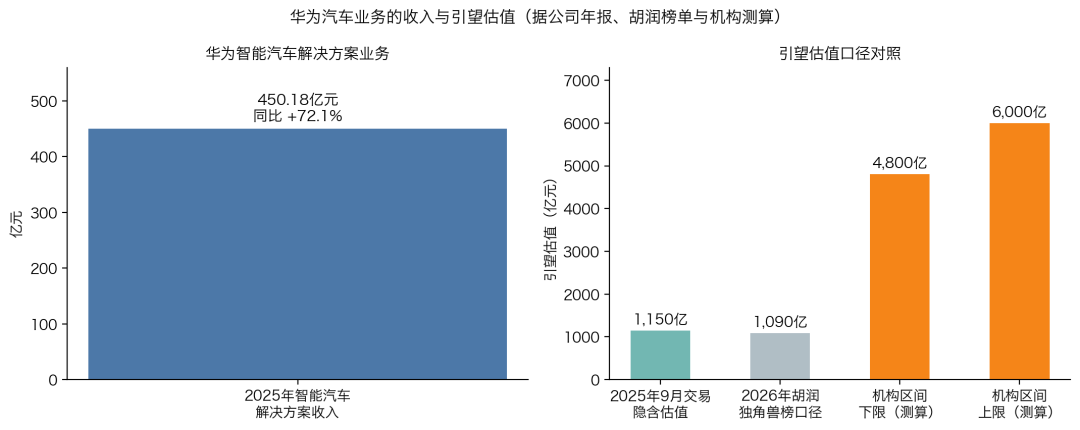
For context, consider Huawei's automotive business scale. Huawei's 2025 annual report disclosed that its intelligent automotive solution business generated 45.018 billion yuan in revenue, up 72% year-on-year. This revenue is primarily carried by Yinwang Intelligence. According to Avatr's prospectus, Yinwang Intelligence reported 45.018 billion yuan in revenue for 2025, up 72.1% year-on-year, with Avatr accounting for a 10% equity stake and a net profit of 182 million yuan; the pro forma financial statements for the proposed business loading showed revenue of 10.435 billion yuan and net profit of 2.231 billion yuan for January-June 2024.
AITO alone contributed the largest share of this revenue. This is also the core of Huawei's automotive business model: Regardless of which automaker sells vehicles, revenue from technology licensing and hardware sales flows into Yinwang Intelligence.
In January 2025, Huawei injected the assets of its former Intelligent Automotive Solution Business Unit into Yinwang Intelligence, which achieved hundred-billion-yuan revenue in its founding year. Besides Seres, Avatr also invested 11.5 billion yuan to acquire an additional 10% stake in Yinwang Intelligence.
It should be noted that all the above ratios are estimates, as Huawei and Seres have never officially disclosed the details of their revenue-sharing arrangement. Seres explicitly states in its prospectus that it does not engage in any profit-sharing arrangements with Huawei. These two perspectives should be viewed in tandem.
But regardless of the perspective, one fact remains unavoidable: Under this model, Huawei enjoys certainty, while Seres bears the volatility.
When price wars erupt, selling prices drop, service fees decline accordingly, but hardware procurement costs remain unchanged. When sales slide, economies of scale evaporate, and profits are wiped out instantly.
2. Seres' Loss-Making First-Half Earnings Report
On August 19, Seres released its first-half earnings report for 2026.
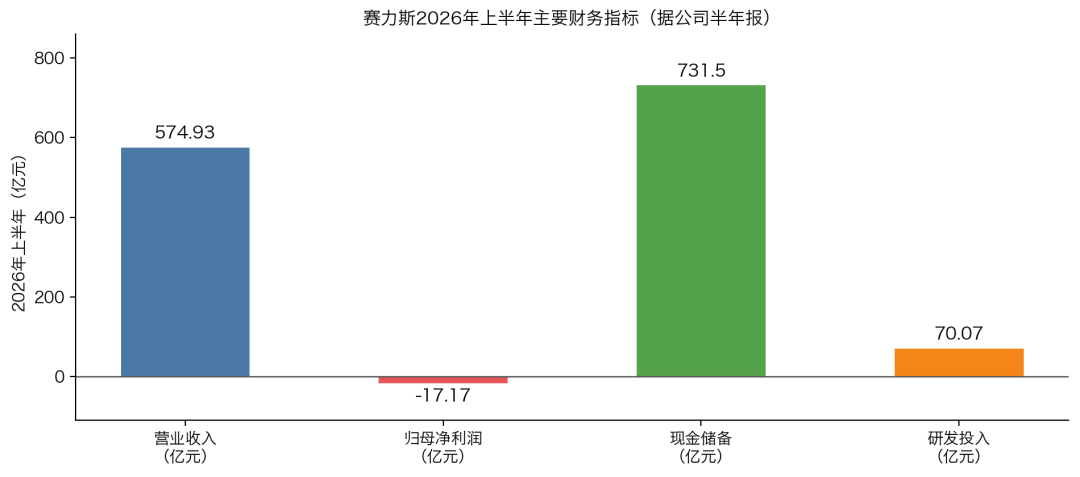
Revenue for the first half was 57.493 billion yuan, down 7.87% year-on-year. Gross margin stood at 23.3%, still leading the industry.
The revenue decline is not hard to fathom. The domestic auto market witnessed intensified price wars in the first half, with competitors slashing prices frequently. Although AITO's delivery volume increased by 10.2% year-on-year, the mix shifted toward the volume-focused M6, pulling down the average selling price.
However, net profit attributable to shareholders was a negative 1.717 billion yuan, compared to a profit of 2.941 billion yuan in the same period last year.
The company's own explanations are twofold: First, rising prices of raw materials such as memory chips, industrial metals, and lithium carbonate pushed up production costs. Second, adjustments were made to the book value of certain existing assets with limited adaptability due to technological iterations and model updates.
Data Source: ifind
In layman's terms, one issue is market-driven, and the other is accounting-related.
The earnings report also revealed R&D investment of 7.007 billion yuan, up 34.8% year-on-year. Behind self-developed achievements like the Magic Cube Technology Platform 2.0, next-generation super extended-range systems, and intelligent safety features lies substantial financial investment.
On the flip side of the losses is product strength. In the first half, AITO's cumulative deliveries increased by 10.2% year-on-year. The all-new M9 achieved over 20,000 deliveries in its first seven weeks, while the M6 surpassed 40,000 deliveries just 97 days after launch.
In July, AITO's average transaction price reached 415,200 yuan. Few brands in the Chinese market can maintain an average selling price above 400,000 yuan.
The market's verdict, as reflected in stock prices, is nuanced: Following the loss announcement, the share price barely dipped. After the signing of the new five-year agreement, the share price hardly budged.
3. Huawei's Strategic Shift
Huawei's full-year revenue in 2025 reached 880.9 billion yuan, with net profit of 68.036 billion yuan. In this annual report, the intelligent automotive solution business was the only segment maintaining over 70% growth, with revenue of 45.018 billion yuan. Automotive has become Huawei's fastest-growing business by far.
However, the composition of this growth is changing. Harmony Intelligent Mobility Alliance has expanded from one brand to five: AITO, Luxeed, Enjoyment, Majesty, and Shangjie. The four new brands all require Huawei's full-process resources: product definition, marketing firepower, store touchpoints, and launch event buzz.
For a brand selling nearly 400,000 vehicles annually with over 1.2 million users, continuing to have Huawei deeply manage every aspect means riding out every downturn in the auto market together.
This is not a burden a technology platform should shoulder.
Huawei positions itself as the Bosch plus Intel of the smart automotive era, selling full-stack technology and channel capabilities rather than operating brands for automakers. With AITO now mature, returning operational control to Seres while retaining technological certainty through Yinwang Intelligence makes strategic sense.
An even deeper move is the capitalization of Yinwang Intelligence. In September 2025, Seres invested 11.5 billion yuan to acquire a 10% stake in Yinwang Intelligence. Based on this transaction price, Yinwang Intelligence's implied valuation was 115 billion yuan, according to the 2025 Hurun Unicorn List (updated to 109 billion yuan in the 2026 list). The latest valuation range given by institutions is 480-600 billion yuan, based on estimates and expectations.
Shifting from a 2% technology licensing fee tied to vehicle prices to a fixed fee and eliminating per-vehicle channel service fees means Huawei is sacrificing short-term gains for long-term equity appreciation.
Asset-light money is more valuable than heavy-operation money.
Data Source: ifind
-THE END-
Disclaimer: This article is based on the public company attributes of listed companies and relies primarily on information disclosed by listed companies in accordance with their legal obligations (including but not limited to interim announcements, periodic reports, and official interaction platforms) as the core basis for analysis and research. Shiyu Xingkong strives to ensure fairness in the content and viewpoints presented in the article but does not guarantee its accuracy, completeness, or timeliness. The information or opinions expressed in this article do not constitute any investment advice, and Shiyu Xingkong assumes no responsibility for any actions taken based on this article.
Copyright Notice: The content of this article is original to Shiyu Xingkong and may not be reproduced without authorization.
-
![]()
Zuckerberg, the Eyewear Seller, Becomes the Fourth Richest Person in the World
-
![]()
Spherical Aberration: Why Even On-Axis Points Fail to Achieve Perfection?
-
![]()
Apple is Finally Adding Touchscreens to MacBooks, Why is This Time Different?
-
![]()
The Other Side of the 'Great AI Opportunity' for Digital Employees | WAVE
-
![]()
The Comeback of AITO? Huawei and Seres Revitalize Their Alliance
-
![]()
GAC Serves as a Mediator: FAW Toyota and GAC Toyota to Jointly Unlock New Growth Potential for Joint Venture Automakers
-
From Global 'Best' to Continuous Decline: The Systematic Exodus Amid South Korea's Stock Market Plunge
-
![]()
AI Influences New Trends in Mobile Phones, Foldable Screens May Become Mainstream