Integration of FAW Toyota and GAC Toyota Ushers in Major Changes to Joint Venture Model
 10/13 2026
 539
539
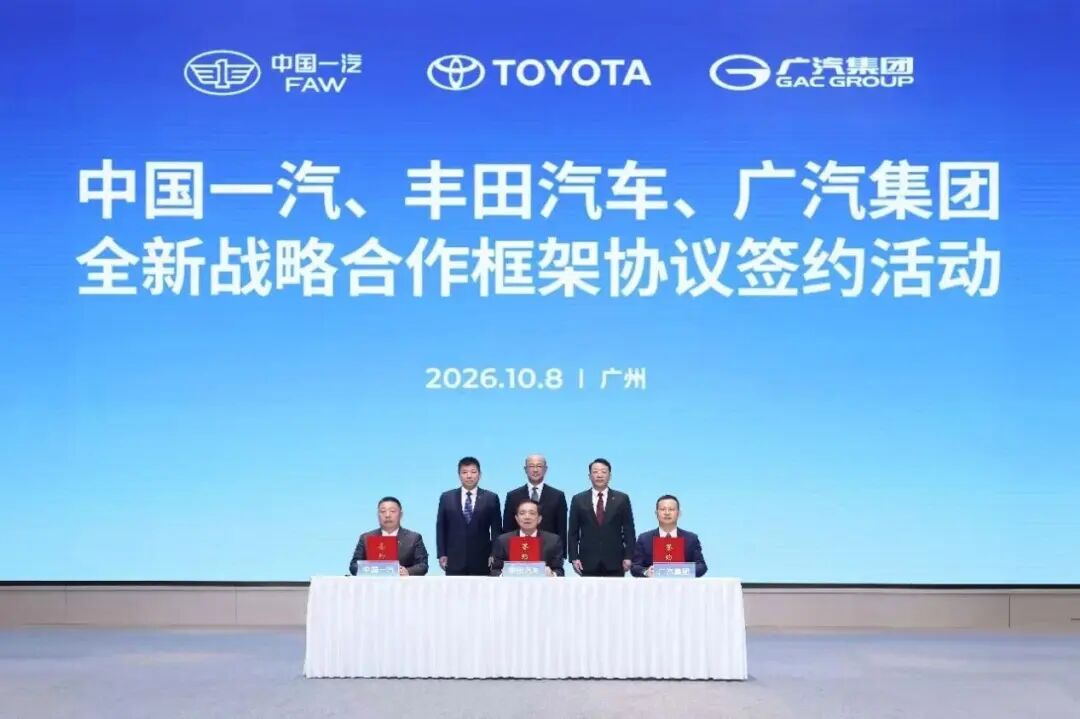
On October 8th, China FAW Group, GAC Group, and Toyota Motor Corporation signed a new strategic cooperation framework agreement, officially launching the integrated and synergistic consolidation of FAW Toyota and GAC Toyota and implementing the "China ONE TOYOTA" operational system. This marks the first domain-wide synergistic reform in the history of Chinese automotive joint ventures, jointly driven by dual Chinese shareholders and a multinational automaker.
According to the agreement, GAC Group will issue shares to acquire the 50% stake in FAW Toyota held by China FAW Group. After the transaction, FAW Toyota will maintain its independent legal entity status. China FAW Group will become a strategic shareholder of GAC Group. Toyota's global leader, Jin Kentaro, described this as the "optimal solution" under current market conditions, signaling a new phase in Toyota's cooperation in China.
From a macro industry perspective, this integration explores a new cooperation model between central and local state-owned enterprises and foreign capital, reshaping the underlying rules of supply chain, channel, and capital competition. It also signals the end of the classic model of "one foreign brand, two parallel joint ventures" from the era of fuel vehicle growth.
01 The Era of Stagnant Growth: The Turning Point for the Dual Joint Venture Model
For more than two decades, foreign brands such as Toyota, Volkswagen, and Honda have commonly adopted a layout of "one brand, two joint venture companies." During the market growth phase, the strategy of having two independent systems in the north and south, along with sibling models, allowed for rapid expansion of production capacity and distribution networks. Moderate internal competition helped grow the overall market, with the costs of duplicated investments covered by continuously increasing sales and profits.
However, as the market entered a period of stagnant growth and electrification transformation, the shortcomings of this structure became apparent. Duplicated investments in two R&D, procurement, marketing, and distribution systems led to internal competition among sibling models and price wars at the terminal level, continuously eroding brand profits.
Toyota has a significant presence in China, with combined sales of FAW Toyota and GAC Toyota exceeding 1.56 million units in 2025, making it one of the few Japanese brands to achieve positive growth. However, in the first half of 2026, FAW Toyota's sales reached 273,700 units, down 27.4% year-on-year, while GAC Toyota's sales were 341,100 units, down 6.3% year-on-year. The larger the production and sales base, the more pronounced the contradictions arising from separate management in the north and south, including overlapping product planning, mismatched production capacity, dispersed marketing resources, diluted R&D resources, diverted attention from new energy transformation, and difficulty in matching the efficiency of independent brands' intensive approaches.
For all joint ventures, the logic of market competition has changed. The focus is no longer just on individual product strength but on system efficiency, resource concentration, and the speed of localization and iteration. In fact, the integration of FAW Toyota and GAC Toyota had been quietly laying the groundwork. At the 2025 Shanghai Auto Show, Toyota introduced the ONE R&D China unified R&D mechanism, establishing a Chief Chinese Engineer system to centralize product definition and localization adaptation of sibling models under a unified local team, laying the foundation for this equity reform.
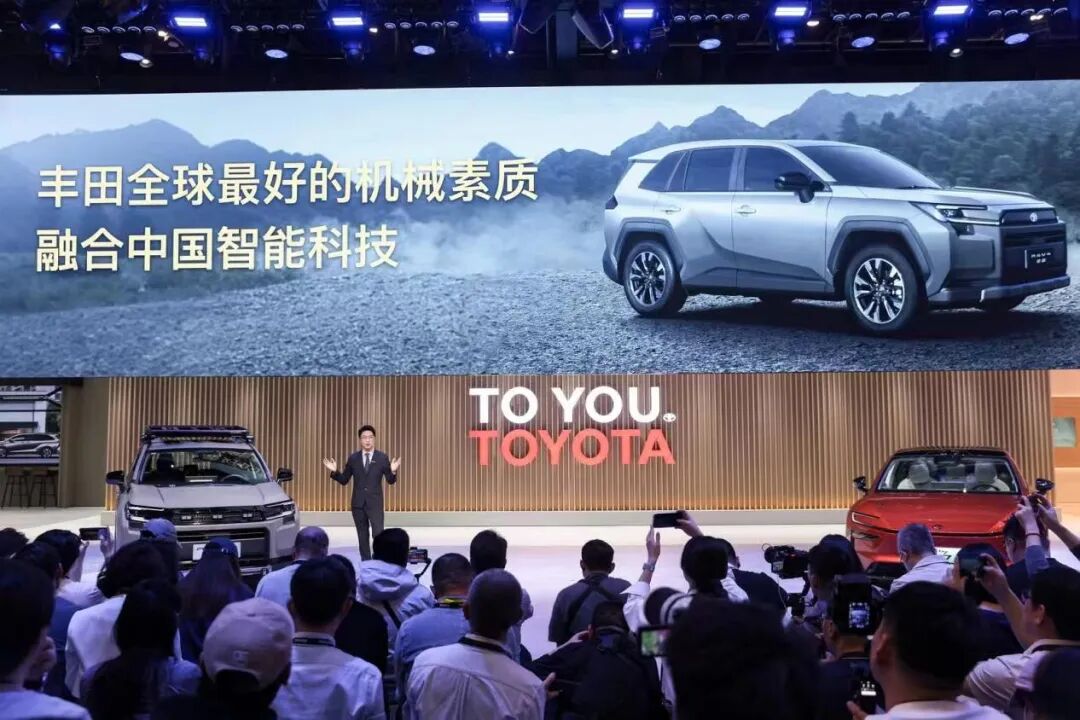
FAW Toyota and GAC Toyota have chosen a gentle restructuring path with minimal disruption, avoiding the cancellation of legal entities or large-scale personnel upheaval. Instead, they rely on market-driven equity swaps to reconstruct top-level governance, unifying backend R&D, procurement, and product planning while gradually synergizing terminal channels. This practical and replicable approach officially transitions joint venture automakers from the "dual-system expansion" phase of the growth era to a new cycle of "single-system efficiency enhancement" in the era of stagnant growth.
02 Strategic Choices of the Three Parties: Diverse Aspirations, Mutual Benefits
Behind this equity transaction, FAW Group, GAC Group, and Toyota have distinct strategic aspirations, achieving a balance of interests through negotiation.
For Toyota, the core goal of integration is to establish a unified "China ONE TOYOTA" governance system, eliminating internal friction caused by dual shareholders. Under the old model, Toyota had to simultaneously engage with two independent Chinese teams from FAW Group and GAC Group, leading to duplicated planning and supply chain demands that lengthened decision-making chains. After integration, GAC Group becomes the unified Chinese operational window, significantly reducing communication costs. Unified product planning will end internal competition among sibling models, stabilize prices and fuel vehicle profit margins, and allow released resources to be concentrated on electrification and intelligent R&D for the Chinese market. This structural upgrade does not require significant cash expenditures from Toyota, with challenges primarily centered on cross-organizational synergy and adaptation.
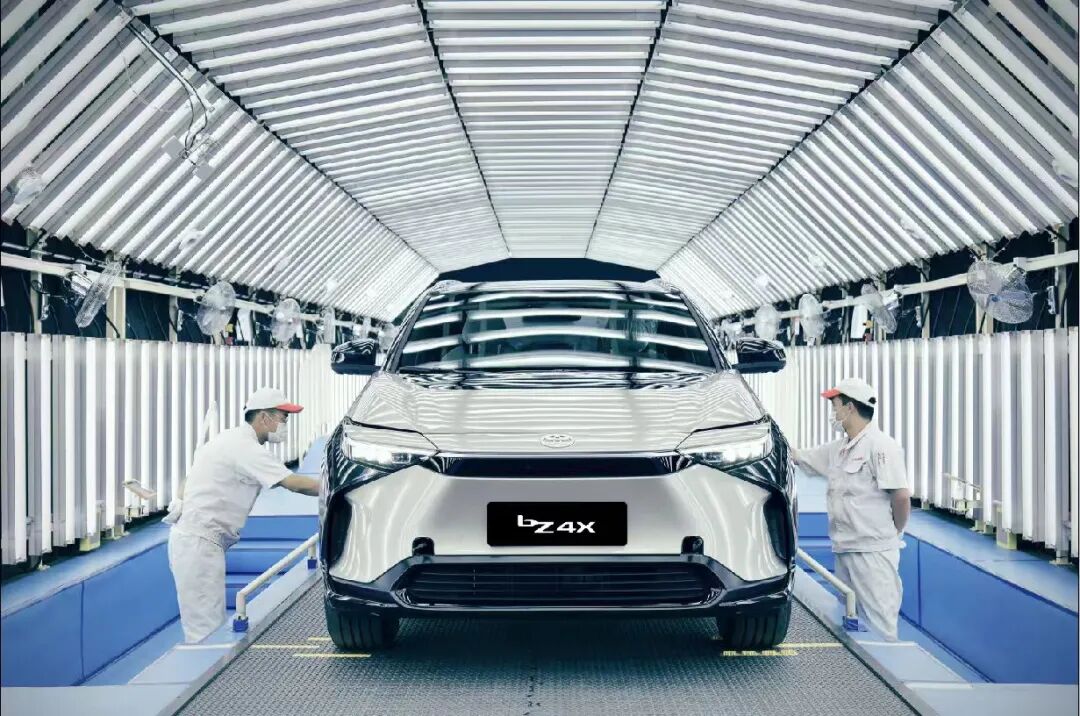
For GAC Group, acquiring the Chinese equity stake in FAW Toyota fills gaps in the northern market, securing three major production bases in Changchun, Tianjin, and Chengdu, and achieving integration of production capacity, channels, and user resources across the north and south. Unified procurement and production capacity scheduling bring economies of scale, bolstering high-quality "cash cow" fuel vehicle profits while supporting new energy transformation. Meanwhile, GAC Group bears the pressure of implementing this reform, needing to merge two decades-old operational systems, balance the interests of thousands of dealers, resolve inventory conflicts, and endure integration growing pains.
Turning to China FAW Group, this transaction represents strategic divestiture and resource focus. By exiting the daily operations of FAW Toyota, FAW Group acquires a strategic stake in GAC Group, transitioning from an operator to a long-term value investor, continuing to share dividends from the integrated entity. This comes at a time when FAW's Hongqi brand is undergoing deep adjustments and striving for breakthroughs in the high-end autonomous segment. Divesting from complex joint venture management allows FAW Group to concentrate capital, talent, and resources on driving upward breakthroughs for its autonomous brands.
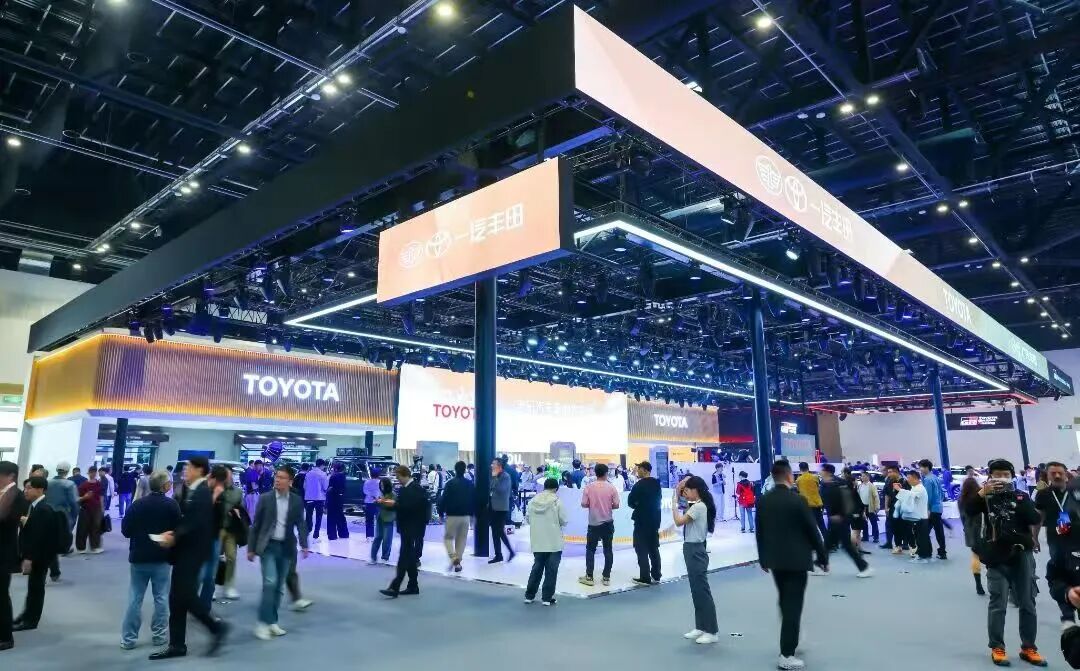
In summary, Toyota gains governance efficiency and transformational resources, GAC Group fills gaps in its national footprint and consolidates profit margins, while FAW Group achieves strategic repositioning to focus on autonomous business. Building on mutually beneficial outcomes, a new era of symbiotic cooperation in joint ventures has been established.
03 Far-Reaching Industry Impact: Reshaping the Underlying Logic of Joint Venture Operations
This equity restructuring redefines the operational rules for automotive joint ventures. The two major state-owned automakers have shifted from independent competition to deep equity binding and collaborative co-construction. FAW Toyota and GAC Toyota have transformed from internal competition to complementary strengths under unified top-level planning.
It is important to note that integration does not mean the merger of the two companies. FAW Toyota and GAC Toyota will retain their independent legal entities and operational foundations, with unification occurring at the levels of top-level strategy, backend supply chains, R&D, and product planning, achieving a transition from decentralized to intensive operations.
Viewed within the four-decade history of automotive joint ventures in China, this integration holds milestone significance. Following the relaxation of equity ratio restrictions, this marks the first time that two leading Chinese state-owned enterprises have reshaped their top joint venture operations through deep equity integration, establishing "synergy over internal competition" at the institutional level. The reform integrates three major industry trends: state-owned resource consolidation, foreign capital localization, and full-link efficiency upgrades, providing a reference benchmark (benchmark) sample for the high-quality development of joint venture automakers.
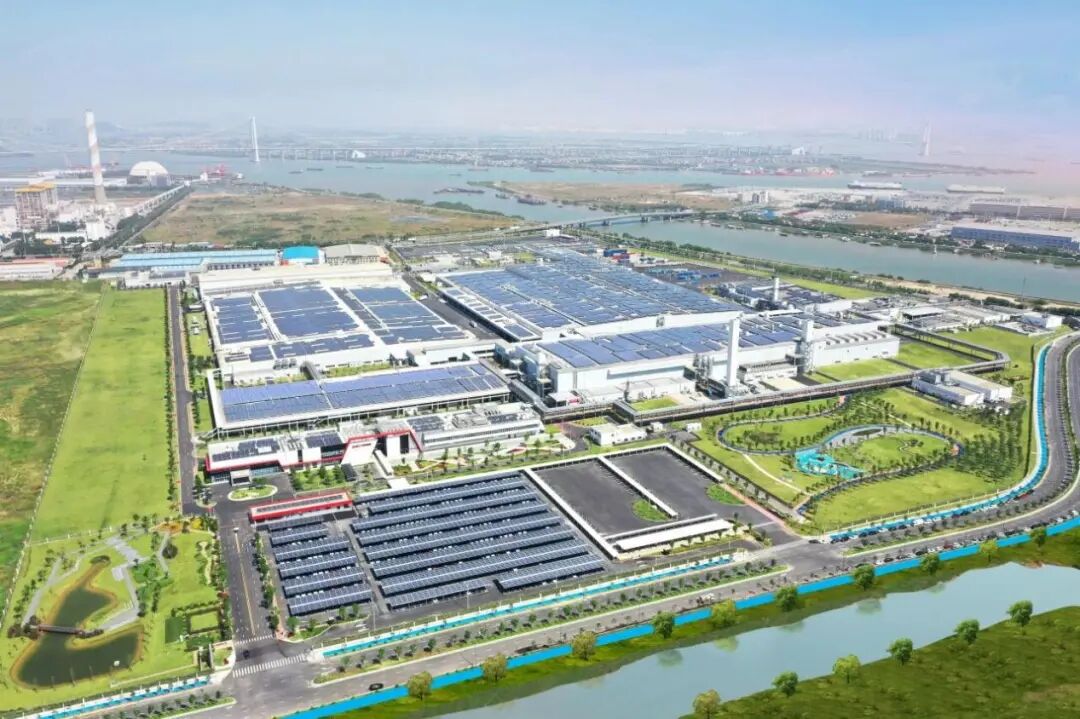
Undoubtedly, a unified system will accelerate the implementation of Toyota's new technologies and vehicle models. By concentrating R&D resources and optimizing production capacity layout, it can swiftly respond to domestic consumption changes, Perfect (improve) the new energy vehicle matrix, and upgrade intelligent cockpits and localized intelligent driving systems. This also reflects a fundamental shift in multinational automakers' China strategies, with China no longer just an export base for global models but a core market for global innovation and a primary hub for localized co-creation. This model also offers new cooperation ideas for Chinese automakers going global and multinational enterprises' layout (layout) in China.
Dashijun's Perspective:
The domestic automotive industry is in a cycle of transformation and upgrading, requiring both the strengthening of the local industrial chain and independent innovation, as well as adhering to high-level opening-up to promote complementary advantages between China and foreign entities.
The exploration by FAW Toyota and GAC Toyota demonstrates that deep binding and joint co-creation between Chinese and foreign entities can balance global mature technologies and management standards while unleashing the iterative vitality of the Chinese domestic market, building a more robust and efficient joint venture system. Its value extends beyond internal system optimization within enterprises, serving as a typical sample of high-level opening-up and mutual industrial empowerment in China's automotive industry.
-
![]()
Global Market Share of Pure Gasoline Vehicles Dips Below 50%: Is the Gasoline Car Era Nearing Its End?
-
![]()
The Whole Story of the 2026 'Rushed Vehicle' Controversy: From a Live Stream Joke to a Public Naming by People's Daily
-
![]()
V4 Flash Scores Impressively, But DeepSeek Hasn't Revealed All Its Cards Yet
-
![]()
MiniMax is set to tell a new story
-
![]()
Feishu’s Strategic Shift: Is Doubling Down on Entry Points for China’s AI-Powered Office Tools the Right Call?
-
Toyota’s North and South China Operations Merge, GAC Toyota Appoints New Chinese Executive
-
![]()
Zunjie V800 Brake Pedal Third-Party Test Results Unveiled: Withstands 3000N Longitudinal Force Without Damage
-
Domestic Mobile Phone Brands in Disarray as Market Slides 20%: Samsung and Apple Surge Amidst Domestic Decline!