From January to September, Chinese EV Brands Shine in Europe: One in Five Cars Sold, Some Brands See 20-Fold Increase | Mirror Pro
 10/13 2026
 333
333
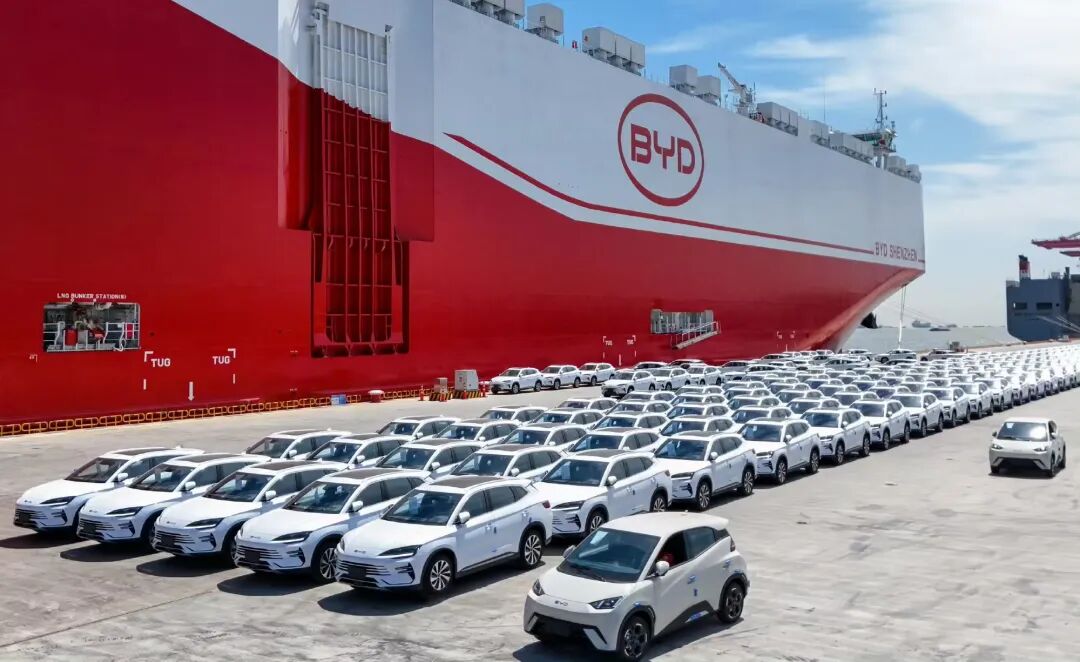
Riding the wave of momentum from the first half of the year, Chinese electric vehicle (EV) brands are rapidly expanding their presence in the European market. According to data from European agencies, in the first three quarters of this year, EV sales in 14 key European countries (including Germany, the UK, Italy, Spain, the Netherlands, Sweden, Switzerland, Poland, Denmark, Norway, Finland, the Czech Republic, and Ireland) reached 1.867 million units, marking a year-on-year increase of 36.15%. Among these, Q3 EV sales hit 690,300 units, up 41.52% year-on-year, accelerating from Q2's 36% growth.
Chinese EV brands have significantly contributed to this overall growth. In the first three quarters, Chinese brands (including Volvo, Polestar, smart, and Lotus—four brands under Chinese control) sold 371,300 EVs, up 79.12% year-on-year, with their market share rising from 15.12% to 19.89%.
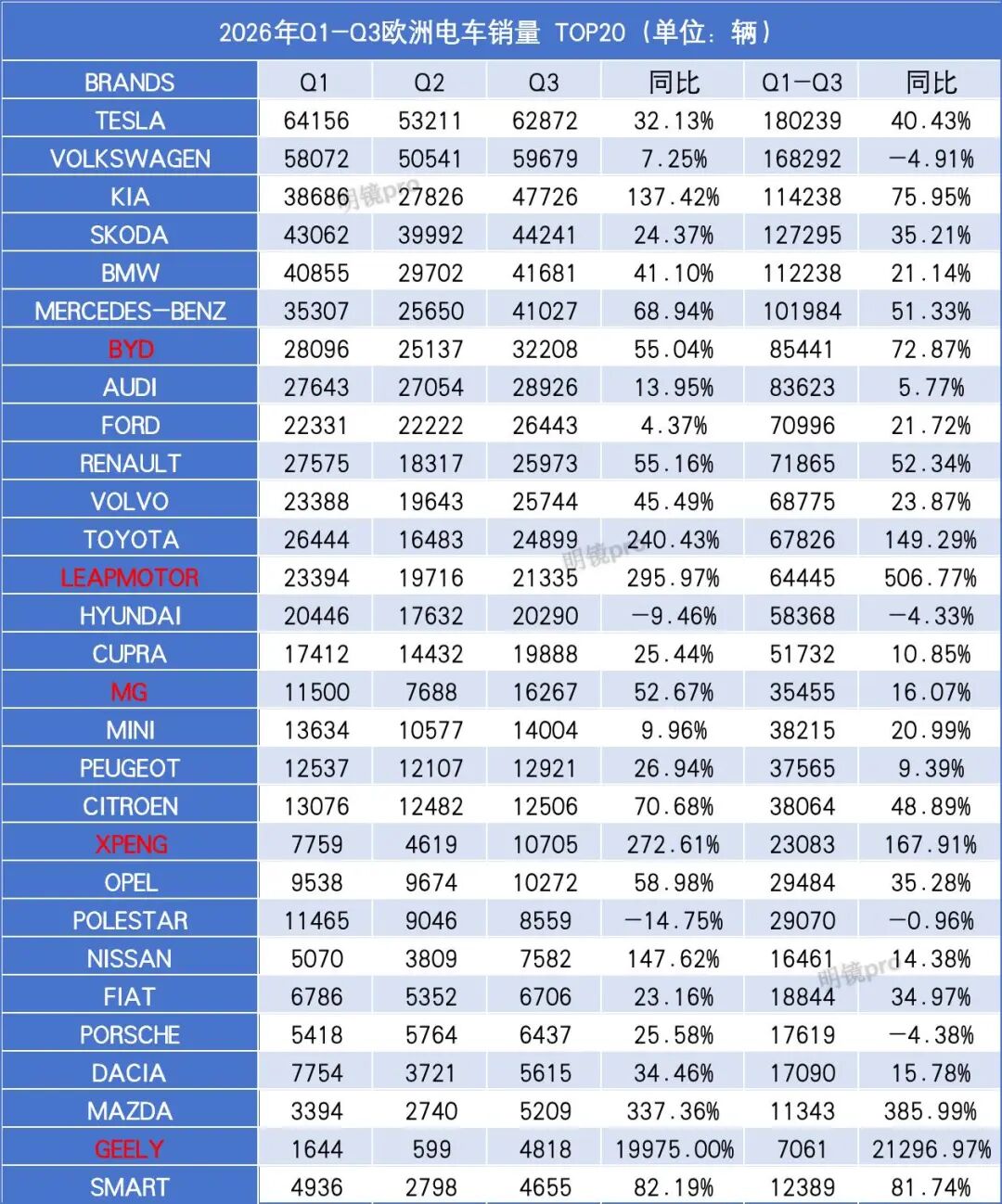
Excluding Volvo, Polestar, smart, and Lotus, Chinese brands still sold 260,000 units in the first three quarters, up 55.99% year-on-year, with their market share increasing from 8.35% to 13.93%. Conversely, if all Chinese-controlled brands were excluded, Europe's EV market growth in the first three quarters would drop to around 28%, representing a loss of about 8 percentage points.
01 BYD and Leapmotor Lead the Charge, Geely and Chery Deploy Multi-Brand Strategies
Among Chinese brands, most experienced rapid sales growth, with five brands exceeding 100% growth. Geely's growth surpassed an astonishing 20,000% (partly due to a low base last year). BYD and Leapmotor emerged as the top tier of Chinese brands in Europe, with cumulative sales exceeding 50,000 units in the first three quarters. Three brands—MG, XPENG, and JAECOO—sold between 10,000 and 50,000 units, while the rest sold below 10,000 units.
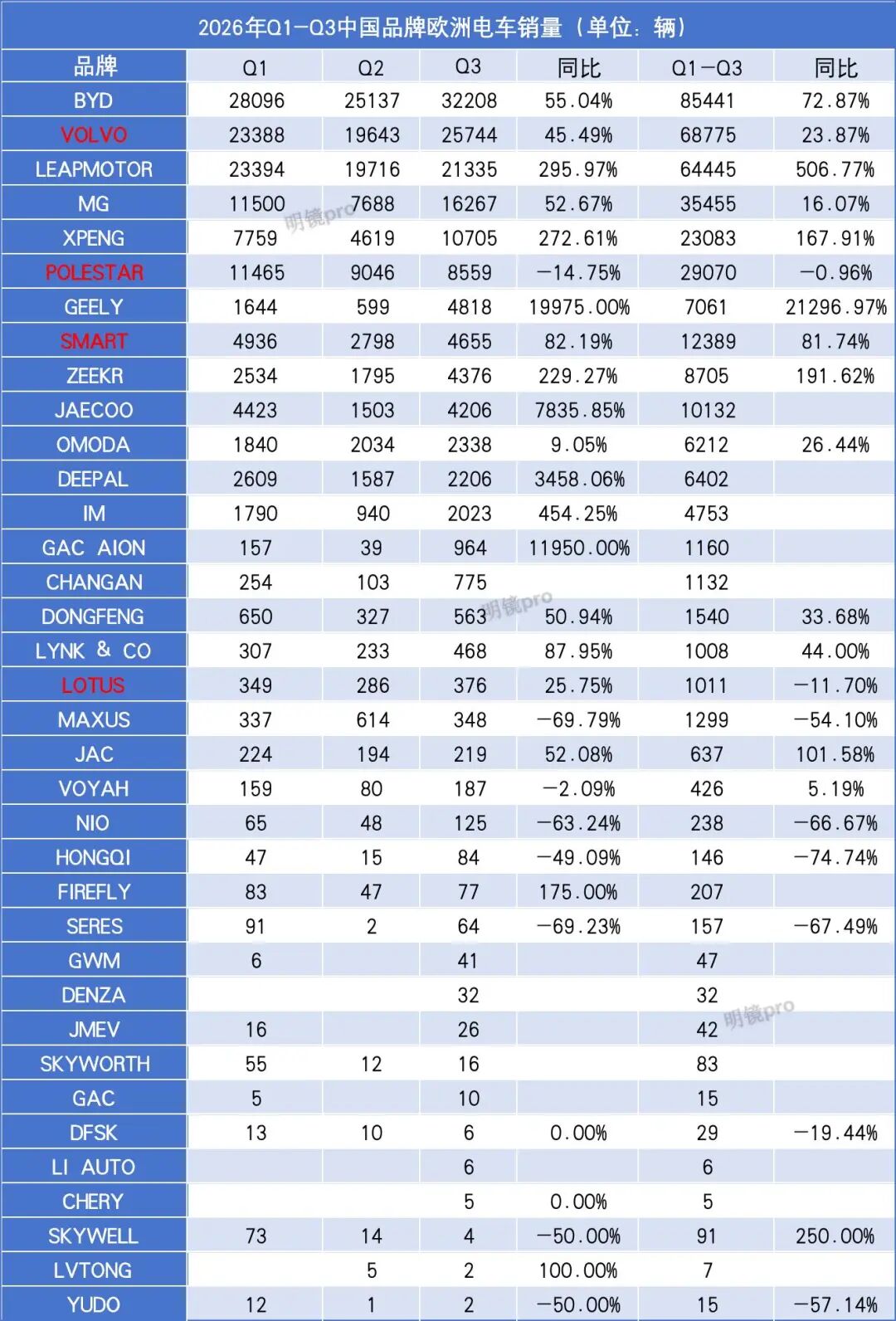
Specifically, BYD continued to lead the pack, selling 85,441 units in Europe in the first three quarters, up 72.87% year-on-year, ranking 7th among European EV brands. Q3 sales hit 32,208 units, up 55.04% year-on-year, also ranking 7th. BYD's diverse product lineup in Europe includes the newly launched DOLPHIN SURF, which sold 20,021 units in the first three quarters, becoming a new volume driver. Other popular models include SEAL, SEALION 7, and ATTO 3, covering segments from compact cars to mid-size SUVs. BYD's premium brand, Denza, launched Z9GT and D9 DM-i in Europe this year but has yet to gain significant traction.
Leapmotor's high growth trajectory continued, with a notable shift in its sales structure. In the first three quarters, Leapmotor sold 64,445 units in Europe, up 506.77% year-on-year, ranking 13th and surpassing giants like Hyundai. The T03, which drove sales in the first half, sold 34,893 units in the first three quarters, up 306.77% year-on-year, though Q3 sales dropped to 6,018 units. The B-series models took over, with B10 selling 7,729 units in Q3 and 16,529 units in the first three quarters. The newly launched B05 sold 3,113 units in Q3, while C10 sold 8,606 units, up 365.19% year-on-year. Leapmotor's product focus in Europe is shifting toward higher-end segments.
MG also saw a sharp acceleration in sales, selling 35,455 units in the first three quarters, up 16.07% year-on-year. Q3 sales hit 16,267 units, up 52.67% year-on-year, driven by the new MG4, which sold 8,549 units in Q3, up 51.66% year-on-year. MG S5 sold 11,465 units, up 130.59% year-on-year, while the MG-badged former IM series product, MG S6, delivered 5,985 units. The directly branded IM5 sold 3,036 units.
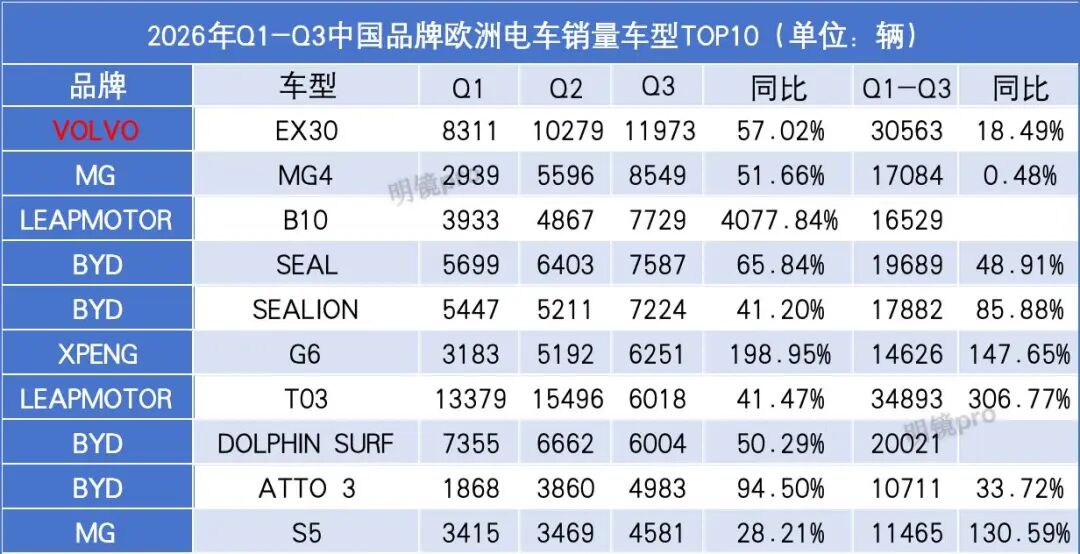
XPENG maintained steady growth, selling 23,083 units in Europe in the first three quarters, up 167.91% year-on-year. The G6 and G9 remained top sellers, with 14,626 and 6,167 units sold, respectively, both up around 150% year-on-year. The refreshed P7 delivered 1,281 units in Europe in Q3, entering a ramp-up phase. JAECOO, Chery's overseas NEV brand, followed with 10,132 units sold in the first three quarters. Chery's Omoda added 6,212 units, totaling over 16,000 units, with JAECOO J5 contributing 10,013 units alone.
Like Chery, Geely employed a multi-brand strategy in Europe, with an even richer lineup. Zeekr sold 8,705 units in the first three quarters, up 191.62% year-on-year. Geely's Galaxy brand sold 7,061 units, with 4,818 units in Q3 alone, led by the EX5, which sold 4,671 units, showing rapid growth. Lynk & Co sold 1,008 units, up 44% year-on-year. Combined, these three brands sold nearly 17,000 units. Including Volvo, smart, Lotus, and Polestar, Geely's EV sales in Europe reached 128,000 units.
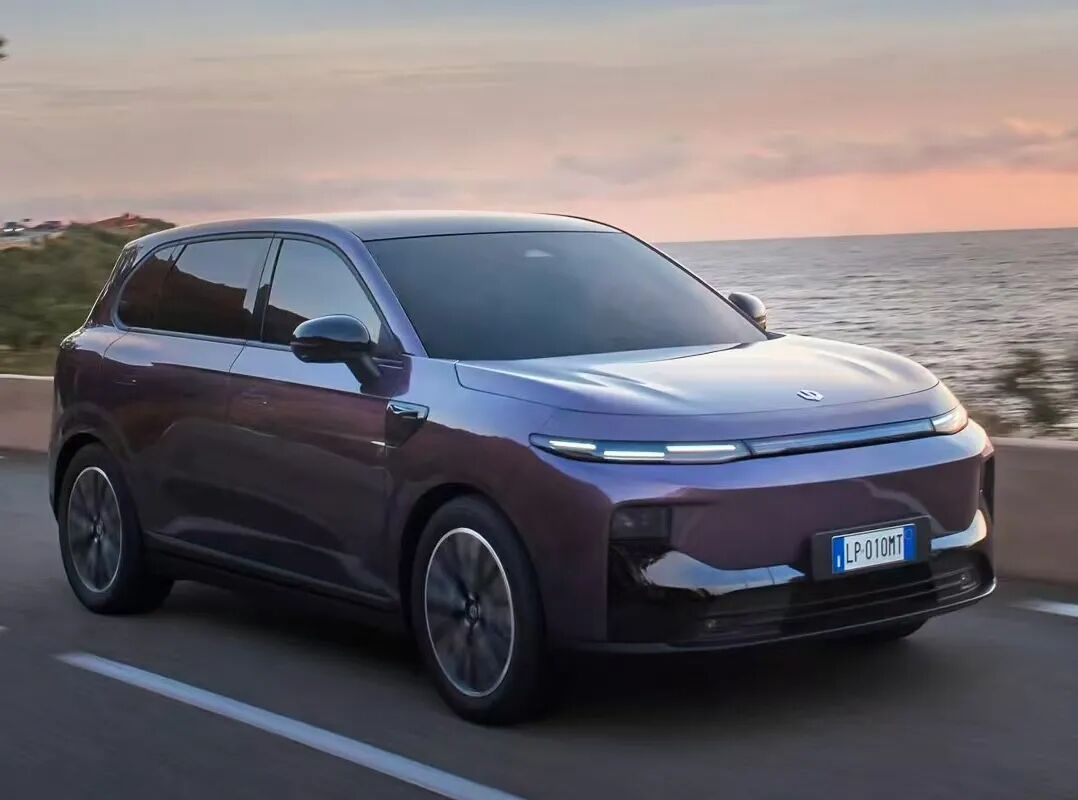
Changan also accelerated its European sales. Deepal, Changan's main brand in Europe, sold 6,402 units in the first three quarters, up a staggering 3,458% year-on-year. Changan's namesake brand sold 1,132 units, primarily the Deepal S05. Changan's premium brand, Avatr, despite debuting in Europe, has yet to launch any products. Aion, which started selling in Europe late last year, sold 1,160 units in the first three quarters.
Other brands saw less impressive performances in Europe in the first three quarters, with some even declining. NIO's main brand sold only 238 units in Europe, down 66.67% year-on-year, due to a lack of new product launches for three consecutive years. NIO's premium sub-brand, Firefly, delivered only 207 units in its first year. Brands like VOYAH, Seres, Great Wall, and Hongqi sold only in the hundreds. Notably, Li Auto registered just six units (i6 model) in Q3, with plans to debut in Europe on October 12, suggesting these are likely not individual consumer registrations. For these brands, the European market is still in its infancy.
02 Collective Growth: Volkswagen the Only Top 15 Brand to Decline
The rise of Chinese brands, coupled with new product cycles from local automakers, reshaped Europe's EV market in the first three quarters. Tesla and Volkswagen remained the top two brands. Tesla defended its crown with 180,239 units sold, up 40.43% year-on-year, widening its lead over Volkswagen (168,292 units) to nearly 12,000 units. The Model Y sold 111,045 units, up 39.29% year-on-year, remaining Europe's best-selling EV. The Model 3 sold 67,808 units, up 43.32% year-on-year, but was surpassed by Skoda's Elroq (68,546 units) to rank third.
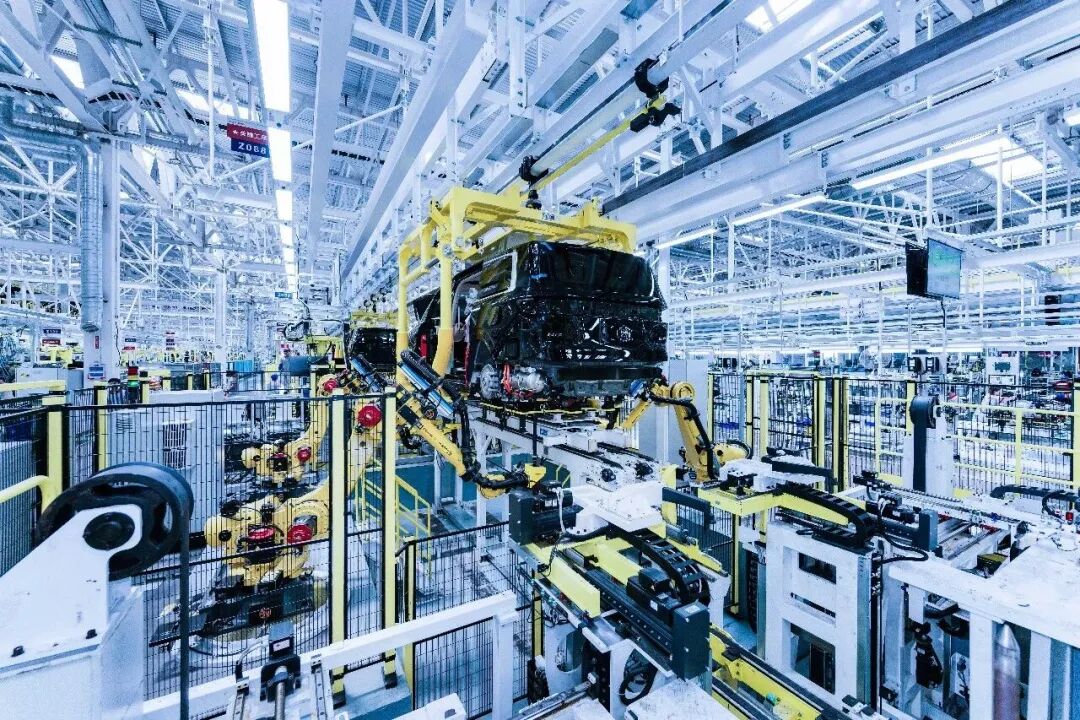
Volkswagen was the only brand among the top 15 to see a decline, with sales down 4.91% year-on-year, due to across-the-board drops in its ID. family. The ID.3 sold 43,791 units, down 3.55% year-on-year; the ID.4 fell 9.56%; combined ID.4/ID.5 sales dropped 12.42%; the ID.7 fell 16.63%; and even the ID. BUZZ saw a slight 1.69% decline. No ID. model achieved positive growth. Volkswagen's decline directly corresponds to Chinese brands' rise: Leapmotor's B10 and BYD's DOLPHIN SURF took market share from the ID.3, while BYD's ATTO3 and Leapmotor's C10 ate into the ID.4's share. However, with only a 12,000-unit gap between Volkswagen and Tesla after three quarters, the race for Europe's EV sales crown remains open.
Fortunately for Volkswagen Group, Skoda provided strong support. Skoda sold 127,295 units in the first three quarters, up 35.21% year-on-year, ranking third. The Elroq sold 68,546 units, up 43.96% year-on-year, becoming Europe's second-best-selling EV. The Enyaq sold 56,349 units, up 21.43% year-on-year, ranking fourth. Including Audi and Porsche, Volkswagen Group remains Europe's EV leader.
Kia also saw rapid sales growth with new product launches, selling 114,238 units in the first three quarters, up 75.95% year-on-year, ranking fourth. Q3 sales hit 47,726 units, up 137.42% year-on-year, ranking third behind Tesla and Volkswagen. Kia's surge came from dense new launches: the EV3 sold 35,467 units, becoming the brand's top seller; the new EV5 sold 18,443 units; and the newly launched compact EV2 sold 10,984 units in Q3 alone, breaking into the top models list.
As Europe's EV market grew, luxury brands collectively rebounded. BMW sold 112,238 units in the first three quarters, up 21.14% year-on-year, ranking fifth. The new-generation iX3 entered a rapid ramp-up phase, with over 100,000 cumulative orders and 26,729 units sold in the first three quarters, including 12,676 units in Q3 alone, breaking into the top 10 models list. Mercedes sold 101,984 units, up 51.33% year-on-year, with the electric CLA selling 37,473 units, up nearly 10-fold year-on-year, becoming the luxury segment's largest single-model growth driver. The electric GLC began deliveries in Q3, selling 9,334 units. Audi sold 83,623 units, up 5.77% year-on-year, ranking last among the BBA trio. The Q6 e-tron sold 28,684 units, maintaining growth, while the Q4 e-tron fell 7.58% year-on-year.
Among Japanese brands, Toyota's electrification efforts finally gained traction, selling 67,826 EVs in Europe in the first three quarters, up 149.29% year-on-year. The bZ4X sold 26,443 units, up 31.12% year-on-year; the new C-HR EV sold 21,578 units, becoming a second growth driver. In contrast, Nissan, despite a 147.62% year-on-year increase in Q3, sold only 16,461 units in the first three quarters, remaining a small player in Europe's EV market.
French brands continued their first-half recovery. Renault sold 71,865 units in the first three quarters, up 52.34% year-on-year, with the Renault 5 alone contributing 30,212 units, up 33.78% year-on-year. Citroën sold 38,064 units, up 48.89% year-on-year, with the ë-C3 selling 29,754 units, up 69.26% year-on-year. Peugeot sold 37,565 units, up 9.39% year-on-year. With several compact BEV models, the top three French brands regained their footing in the local market. Ford sold 70,996 units, up 21.72% year-on-year; Cupra sold 51,732 units, up 10.85% year-on-year, with the new Raval selling 9,566 units in Q3 alone, showing strong sales potential.
First-three-quarters data shows a 36% overall market growth, proving the electrification trend remains strong. On one hand, European automakers are fighting back, with new models like the new-generation iX3, electric GLC, EV2, Raval, and C-HR EV launching in Q3. On the other hand, Korean and Japanese EV products regain momentum, while Chinese brands' market share rose from 15.12% to nearly 20%, with growth driven by mainstream models like B10, Seal, G6, and EX5 rather than just low-priced compact cars. Amid this multi-sided competition, Europe's EV market landscape continues to evolve.
However, with restrictions on plug-in hybrids in the European market and adjustments to China's export tax rebate policy for automobiles, further major adjustments may still occur in the subsequent European automobile market.
-
![]()
From January to September, Chinese EV Brands Shine in Europe: One in Five Cars Sold, Some Brands See 20-Fold Increase | Mirror Pro
-
Transsion Holdings' Hong Kong IPO: What Makes the Business in Africa's Mobile Phone Market So Challenging?
-
![]()
Global Market Share of Pure Gasoline Vehicles Dips Below 50%: Is the Gasoline Car Era Nearing Its End?
-
![]()
The Whole Story of the 2026 'Rushed Vehicle' Controversy: From a Live Stream Joke to a Public Naming by People's Daily
-
![]()
V4 Flash Scores Impressively, But DeepSeek Hasn't Revealed All Its Cards Yet
-
![]()
MiniMax is set to tell a new story
-
![]()
Feishu’s Strategic Shift: Is Doubling Down on Entry Points for China’s AI-Powered Office Tools the Right Call?
-
Toyota’s North and South China Operations Merge, GAC Toyota Appoints New Chinese Executive