SAIC Volkswagen Unveils New Leadership: Prioritizing Fuel Vehicle Market Penetration and Accelerating EV Market Pursuit, with the 8X Targeting Market Dominance
 10/14 2026
 397
397
'Our primary focus at SAIC Volkswagen remains on products, with the core strategy being the parallel advancement of both fuel and electric vehicles. We must deeply penetrate the fuel vehicle market while fully embracing the electric vehicle sector.' On October 12, Wu Yun, the newly appointed General Manager of SAIC Volkswagen, outlined the future strategic vision for this leading Chinese joint venture automaker at a media briefing following the launch of the ID.8X. This marked his inaugural public appearance and media interview since assuming office.
On August 3 of this year, SAIC Volkswagen Automobile Co., Ltd. announced a leadership transition, with Wu Yun, previously the Executive Deputy General Manager of Human Resources and Organization, succeeding Tao Hailong as General Manager. Subsequently, SAIC Volkswagen underwent a series of key personnel reshuffles. On the same day, the Volkswagen brand's management team at SAIC Volkswagen made a collective debut, featuring Fu Qiang, Executive Deputy General Manager of Sales and Marketing; Fabio Stoelzel, Executive Deputy Director of Marketing for the Volkswagen brand; and Chen Feng, Executive Deputy Director of Marketing Operations for the Volkswagen brand.
Wu Yun highlighted several industry trends: First, the rapid pace of new energy development has surpassed expectations; second, production capacity constraints have intensified internal competition, leading to ongoing price wars; third, in the new energy era, joint ventures, including SAIC Volkswagen, are in a catch-up phase. Faced with these realities, SAIC Volkswagen must adopt a pragmatic approach. Wu emphasized that the company's core strategy revolves around product development, maintaining a balanced focus on both fuel and electric vehicles.
For fuel vehicles, despite a projected decline in market share to 30%-40%, Volkswagen, as a dominant player, must continue to capitalize on this segment—a market exceeding 20 million vehicles, with 30%-40% translating to over 6 million units, surpassing the entire Japanese market. Fuel vehicles remain a critical foundation that must be solidified. However, the strategy has shifted from a broad, shotgun approach to a more focused one, aiming to concentrate resources on truly penetrating strong and advantageous markets. 'Flagship products require continuous iteration and updates to sustain market share,' Wu Yun asserted.
SAIC Volkswagen has consistently invested in fuel vehicle R&D, covering nearly all segments from A-class to B-class and B+-class vehicles. In the new energy market, Wu Yun stated that SAIC Volkswagen aims to rapidly catch up and effectively transition from the existing market. This involves not only shifting from fuel vehicle products but also meeting evolving consumer demands. For instance, if a consumer previously sought a Lavida, they might now prefer a new energy alternative, necessitating a 'new energy Lavida' like the 5S. Consequently, every fuel vehicle model from SAIC Volkswagen will require a new energy counterpart, forming the basis of their product strategy.
Currently, SAIC Volkswagen has deployed three models: the 9X, 8X, and 5S, with an additional 5X model slated for launch. Fu Qiang referred to this as the '985' product structure. These four models span the price range from 100,000 to 300,000 yuan, encompassing extended-range, plug-in hybrid, and pure electric vehicles, with nearly full coverage from SUVs to sedans. Among them, the 9X has made a strong debut, currently ranking fourth in its segment. The 5S has performed exceptionally well, with robust sales since its launch and orders exceeding 20,000 to date. Fu Qiang noted that production capacity was constrained last month, with the goal of delivering over 10,000 units in October and sustaining this level moving forward, firmly establishing a presence in this price segment. 'Barring any unforeseen circumstances, it should claim the top spot in its segment,' Fu Qiang stated.
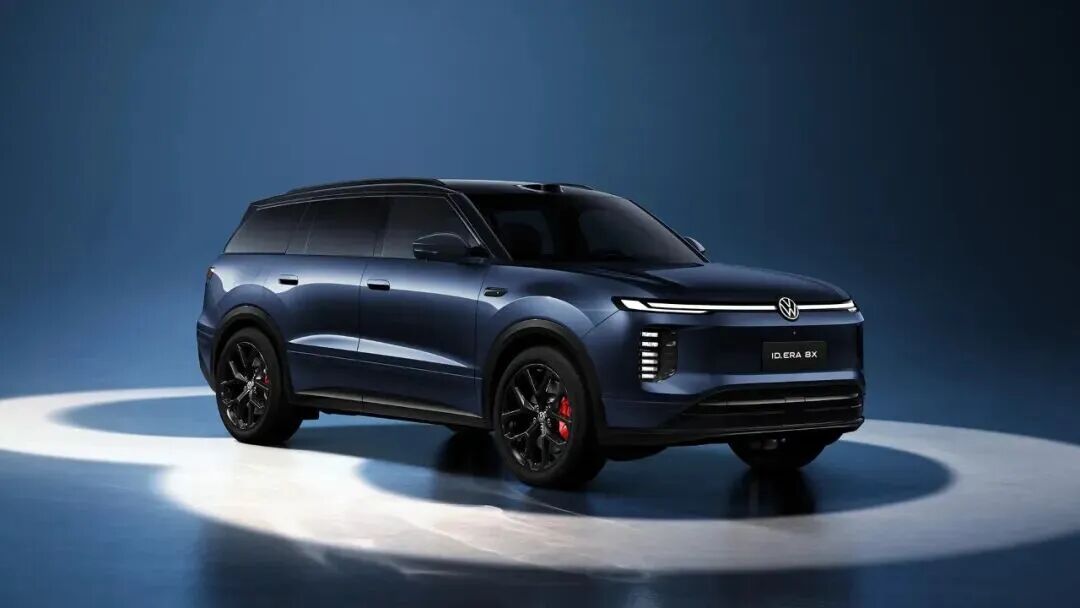
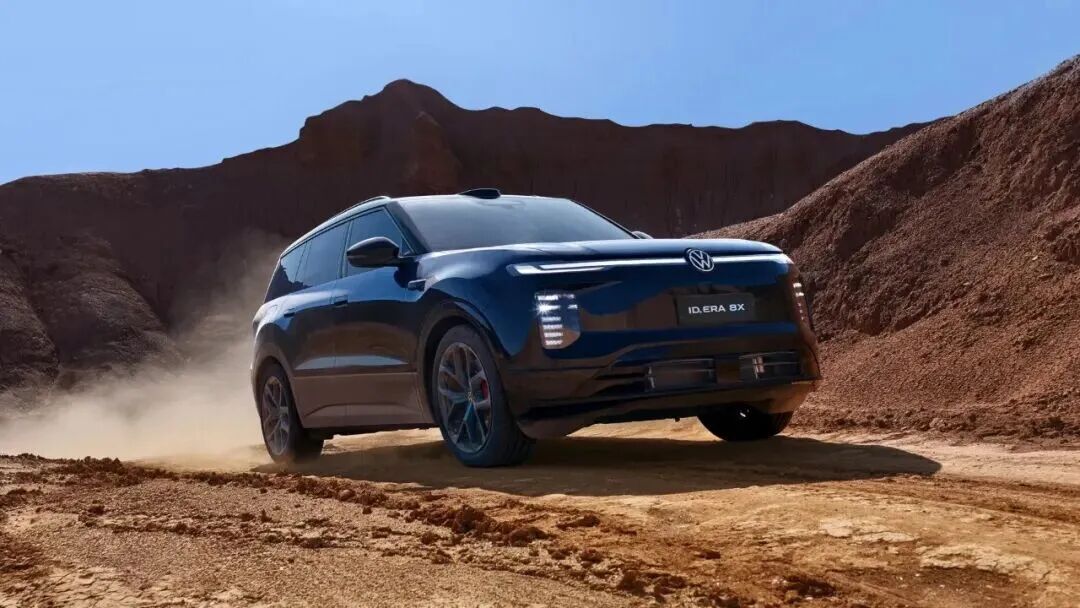
The newly launched 8X is also expected to excel. 'The 8X aims to lead its price segment,' Chen Feng declared. The limited-time offer price for the SAIC Volkswagen ID.ERA 8X, launched on October 12, ranges from 206,800 to 269,800 yuan. Chen Feng described this as a competitive price, noting, 'This segment is currently dominated by new energy vehicles from emerging brands. We intend to fiercely compete in this market and secure our position.' He believes the 8X has no significant weaknesses, offering the comfort of Li Auto, the intelligence of Xpeng, and the traditional strengths of German engineering in chassis control. Additionally, shortcomings in intelligent driving assistance and smart cabins have been addressed. It can compete with traditional fuel B-class SUVs, including BBA models, while also offering differentiated competition against emerging brands.
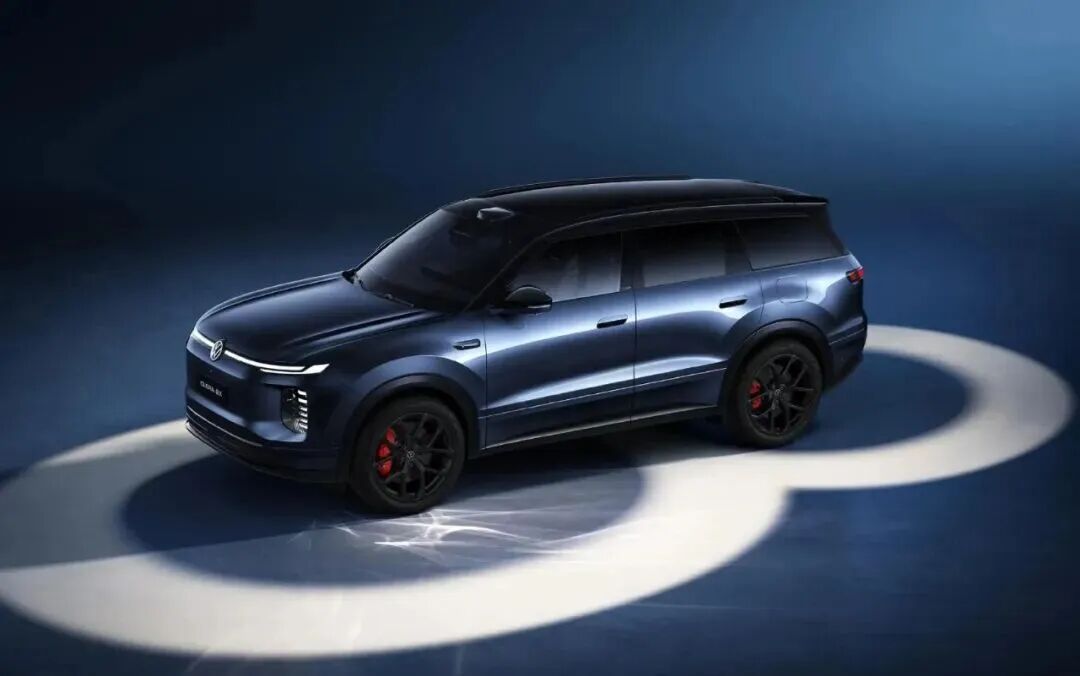
The vehicle is positioned as a large five-seater extended-range SUV, measuring 5020/1997/1750mm with a wheelbase of 2970mm. It is powered by the EA211 extended-range system, built on an 800V high-voltage platform, boasting a maximum combined range of 1602km. The chassis features CloudFlow intelligent chassis and a closed dual-chamber air suspension with a 150mm stroke, balancing handling and comfort. Intelligent driving capabilities include LiDAR and the Momenta R7 world model, while the interior is equipped with ultra-clear dual screens, W-HUD, Smart Surface magic screens, zero-gravity seats with massage function, and a 12L intelligent temperature-controlled refrigerator. From a product configuration perspective, it offers four versions, with the entry-level Pro version including the EA211 golden extended-range engine, leather seats, dual screens, and a 12-liter temperature-controlled refrigerator. Higher trims offer four-wheel drive and dual-chamber air suspension, followed by larger batteries, and at the top, a fully-loaded version.
From an industry standpoint, the vehicle competes with models like the Li Auto L6 and Seres M6, aiming for market leadership, which implies a target monthly sales volume of around 8,000 to 10,000 units. 'The 8X and 9X, as flagship products, target different family customers and scenarios, creating a synergistic effect and firmly establishing SAIC Volkswagen's new energy product positioning in this price range,' Chen Feng explained. However, with a price gap of tens of thousands of yuan between the 9X and 8X, additional products may be introduced later, which remains to be seen.
In November, SAIC Volkswagen will also launch the 5X. Fu Qiang described the 5X as a pure electric product aimed at younger consumers. It is a pure electric SUV built on a new platform, targeting a younger demographic. Fu Qiang stated that among the four '985' models this year, the 9X, 8X, and 5S are extended-range and plug-in hybrids, while the 5X, launching in November, is pure electric, with next year focusing primarily on pure electric models. He noted that the industry trend is for a single model to offer both plug-in hybrid and pure electric versions, and in the future, more SAIC Volkswagen products will feature 'one model, two powertrain options.'
Wu Yun stated that the Chinese market, with a scale exceeding 20 million vehicles, is vast, and the future consumption pattern will maintain a multi-powertrain landscape for an extended period. He noted that even if fuel vehicles continue to decline, a 20%-30% market share still represents several million units; concurrently, extended-range, plug-in hybrid, and pure electric powertrains will all occupy a certain proportion for a considerable time. For users, despite advancements in battery technology improving the range of pure electric products, range anxiety will persist for now.
'Plug-in hybrids and extended-range vehicles will remain in demand for some time. Given this scenario, we should focus on all areas in the short to medium term. The market will become more diversified in the future, and our pure electric products will also evolve accordingly,' Wu Yun remarked.
Wu Yun stated that the overall market is expected to decline below 20 million units this year, particularly due to a significant drop in the fuel vehicle market. SAIC Volkswagen's goal is to first stabilize its sales volume and avoid falling behind the overall market trend. By maintaining the current pace, the company aims to stabilize both volume and pricing fundamentals. The ID. ERA series will boost sales confidence next year, with sales expected to gradually rebound from 2027. 'We will proceed step by step, gradually adjusting the proportion of new energy vehicles to a relatively ideal state while stabilizing our position in the fuel vehicle market through strategic adjustments,' Wu Yun said.
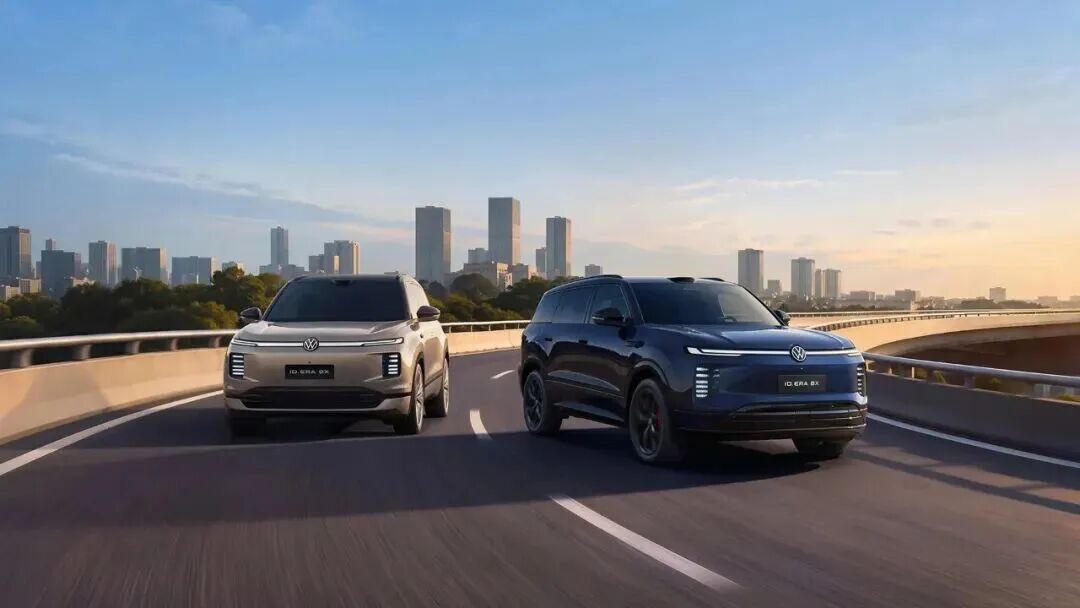
Notably, Fu Qiang stated that the current pricing of the ID.8X is profitable, and the entire '985' product structure is profitable. 'We are adopting an aggressive stance, so profits are not as high as when fuel vehicles were launched years ago. However, profitability is essential—if the company is not profitable, subsequent product development cannot continue,' Fu Qiang emphasized, stating that the company must maintain reasonable profits; otherwise, the future development of the industry will be jeopardized.
For SAIC Volkswagen, the current consumer market and industry trends have brought positive aspects. Multiple national departments have jointly expressed opposition to 'rushed vehicles,' directly addressing industry chaos where some automakers cut corners in verification processes and use substandard materials to rush products to market. SAIC Volkswagen, renowned for its German-engineered quality, is clearly one of the biggest beneficiaries. At the launch event, the ID.ERA 8X showcased rigorous testing, including mountain road trials, high-slope rollovers, and live broadcasts of consecutive battery collisions, all unedited and non-pre-recorded, demonstrating real-world test results on site.
Chen Feng publicly criticized brake pedal failures, stating that if such fundamental components cannot be trusted, basic travel safety is compromised. He directly expressed opposition to five types of vehicles: specially tuned vehicles, rushed vehicles, double-standard vehicles, boundary-pushing vehicles, and material-stacked vehicles. In the new energy era, cars were once considered electronic products, with intelligence as the core. However, with regulatory intervention and ongoing absurd product quality incidents, people will re-examine the essence of automobiles.
-
![]()
JPMorgan Chase Throws Three Buckets of Cold Water on the Auto Industry
-
![]()
SAIC Volkswagen Unveils New Leadership: Prioritizing Fuel Vehicle Market Penetration and Accelerating EV Market Pursuit, with the 8X Targeting Market Dominance
-
![]()
September Sales Analysis: Top Five Independent Chinese Automakers Excel, with BYD Leading and All Expanding Overseas
-
AI with a Defined Trajectory is Energizing the Entire Industry Ecosystem
-
【Daily Science and Technology Innovation】ArcSoft: Why is Half of Its Revenue Invested in R&D? What is the Invisible Champion of Mobile Algorithm Betting On?
-
![]()
The Paris Motor Show is Set to Disrupt the European Luxury Car Market Again
-
![]()
When Plug-in Hybrid and Extended-Range Vehicles Flood the Fully Electric Era: Are You Prepared to Be the "Cannon Fodder"?
-
![]()
Unitree Admits Mistake, DeepSeek Steps In