Can the car still brake if the brake pedal breaks?
 10/16 2026
 380
380
This article only discusses technical common sense and regulatory frameworks and does not involve any specific events, brands, or case-by-case judgments.
There are hundreds of systems on a car responsible for 'making it move,' but only one—the brakes—is responsible for 'making it stop.' Therefore, its engineering logic differs from other systems. While other systems aim to be more user-friendly, the brake system prioritizes functionality even when components fail.
The essence of braking is converting kinetic energy into heat and then dissipating it.
A 1.5-ton vehicle traveling at 100 km/h has approximately 580,000 joules of kinetic energy. Bringing it to a stop means pouring all that energy into four brake discs as heat within a few seconds. This is why continuous heavy braking on long descents can produce a burning smell or even a feeling of the pedal going soft—a phenomenon known in professional terms as 'thermal fade.' It's not that the brakes are broken; the heat simply cannot dissipate quickly enough.
Therefore, the three core objectives of a braking system are always: amplifying force, distributing force, and dissipating heat.
Amid the ongoing 'Zunjie' incident, from the perspectives of media platform DCD and the JAC & Huawei consortium, as vehicle users, the focus should not be on how a car brakes, how much pedal force is required, or even the braking method itself. The true concern for users is whether 'Zunjie's braking system has defects.'
In response to the 'Zunjie' incident, the Dianchehui team conducted some research on vehicle braking systems and now shares the findings below:
Passenger and commercial vehicles follow entirely different approaches.
However, both passenger and commercial vehicles currently adopt disc brake systems as the mainstream approach in China.
Passenger vehicles use a hydraulic system, roughly following this path: pedal → booster → brake master cylinder → two independent hydraulic circuits → calipers or wheel cylinders at each wheel end → brake discs/drums.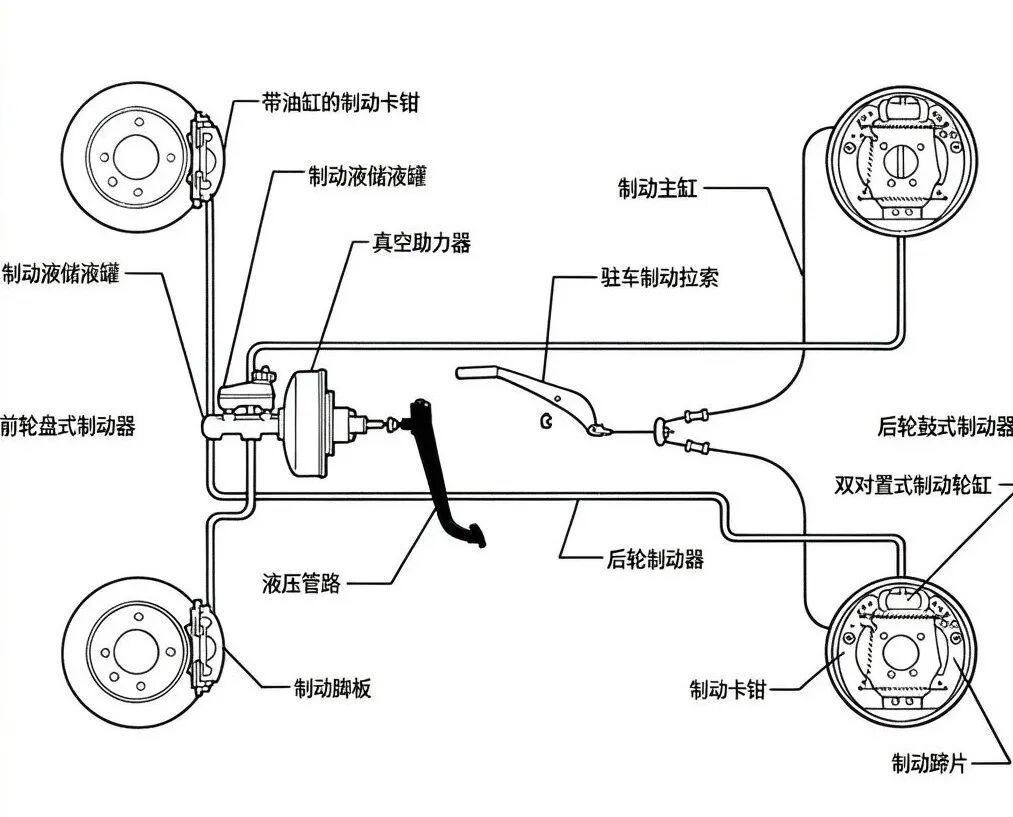
The critical part lies in those two hydraulic circuits. They are typically arranged 'diagonally' (left front + right rear as one circuit, right front + left rear as the other). If one circuit leaks or bursts, the other can still function, albeit with a firmer pedal and longer braking distance. This represents the most basic form of redundant design within national standards and regulatory frameworks for braking systems—not aiming for perfection but ensuring a safety net when issues arise.
In reality, brake force amplification primarily relies on two stages: first, the booster (vacuum-assisted for internal combustion vehicles, replaced by electric motors for electric vehicles—electronic boosting); second, Pascal's principle in hydraulics, where a narrow master cylinder pushes oil, and a wider wheel cylinder piston rises, amplifying force again through area differential.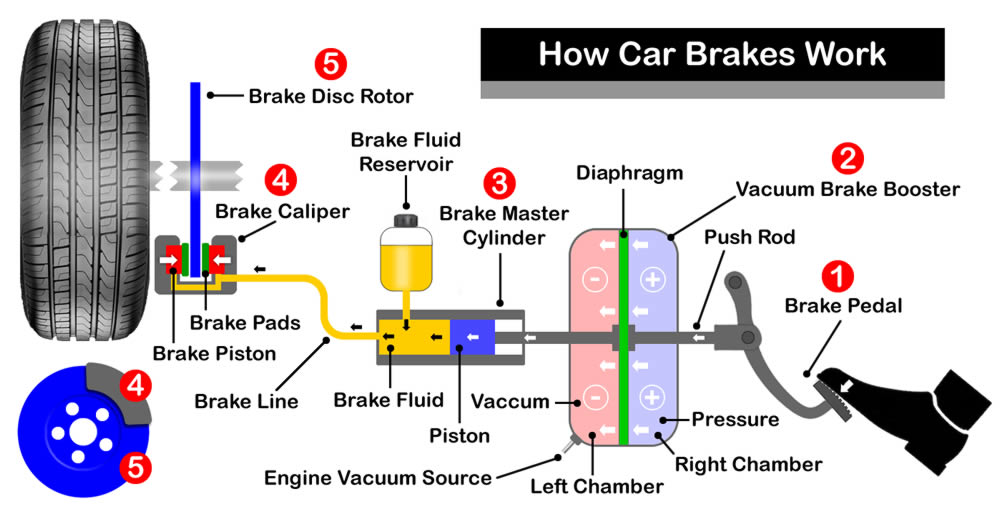
Finally, there's the friction component. Disc brakes offer better heat dissipation, drainage, and faster response, making them almost universal on front axles. Drum brakes exhibit self-energizing effects, providing greater braking force for the same size and lower costs, commonly found on rear wheels or commercial vehicles, though they suffer from weaker thermal fade resistance.
Commercial vehicles use a pneumatic system because heavy trucks and buses often weigh between a dozen to 49 tons, making hydraulic systems insufficient. Instead, they use compressed air: air compressor → dryer → multiple air reservoirs + four-circuit protection valve → brake valve → brake chambers at each axle → cam pushes shoes apart.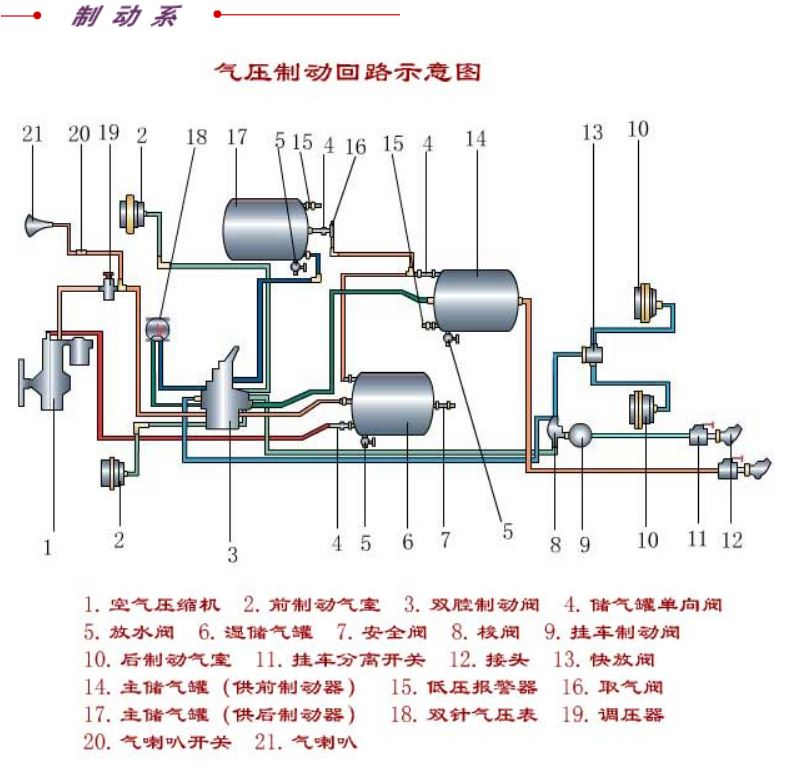
Commercial vehicle braking systems include several components not found in passenger vehicles, which explain their unique characteristics:
Air reservoirs act as 'batteries' for braking energy, allowing a few brakes even after engine shutdown;
The four-circuit protection valve ensures that if one circuit leaks, others maintain pressure;
Load-sensing valves adjust braking force based on vehicle weight, as commercial vehicles experience vastly different axle loads when empty versus fully loaded, preventing wheel lockup when empty;
Spring-loaded brake chambers (parking brakes) use spring force to brake and release when pressurized. If air lines rupture or air leaks completely, the vehicle automatically brakes instead of rolling away—this is called 'fail-safe';
Retarders/hydrodynamic retarders primarily handle most deceleration on long descents, with friction brakes serving as the final safety net. This represents a unique fourth function in commercial vehicles—continuous braking.
Two new variables introduced by electric vehicles
First, energy recovery means braking is no longer 'pure friction.'
When an electric vehicle decelerates, its motor reverses to act as a generator, converting kinetic energy back into electrical energy stored in the battery. Deceleration force thus combines motor braking (energy recovery) and friction braking (brake pads). A significant portion of calibration engineers' work involves smoothly blending these two forces without the driver noticing.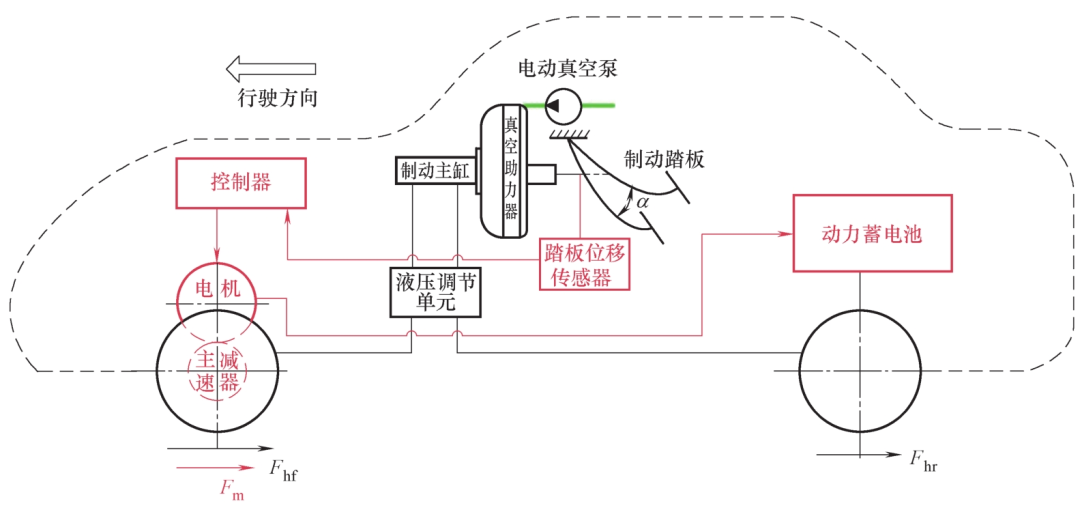
Two common misunderstandings warrant clarification:
First, energy recovery does not equate to brake failure, nor does it mean stronger braking. It simply offloads work from friction components during normal deceleration, making EV brake pads often more durable than those in equivalent internal combustion vehicles. However, brake fluid and disc maintenance logic remains unchanged.
Second, energy recovery only works on driven axles (front wheels on rear-wheel-drive vehicles do not participate); moreover, it is restricted or disabled when the battery is fully charged, at low temperatures, or when system errors occur, causing a sudden weakening of deceleration. This is a frequent cause of drivers mistakenly perceiving 'brake failure.' Additionally, it cannot replace emergency braking—full stops still rely on friction components.
Second, brake-by-wire disconnects the pedal from the calipers.
Traditional braking uses mechanical-hydraulic hard connections; brake-by-wire transforms the pedal into a sensor, converting intent into electrical signals, with a controller calculating required force for each wheel. Two main approaches exist:
EHB (electro-hydraulic) retains hydraulic lines and brake fluid, replacing vacuum assistance with an electric motor. Technologically mature, with tens of millions of global installations, most solutions retain hydraulic backup, allowing fallback to traditional hydraulics if electro-control fails. Most new energy vehicles on the road today use this generation.
EMB (electro-mechanical) completely eliminates brake fluid and hydraulic lines, with four wheels directly clamped by electric motors. It offers faster response, finer force distribution, and eliminates brake fluid changes but demands extremely high requirements for wheel-end motor power, heat dissipation, and power supply redundancy. It remains in limited production previews.
The core value of brake-by-wire lies not in 'pedal feel' but in pressure-building speed. Automatic emergency braking, from detection to full output, is hundreds of milliseconds faster with brake-by-wire than traditional hydraulics—at high speeds, this translates to meters of difference. Conversely, with the physical feedback loop severed, traditional vehicles' softening pedal after continuous heavy braking allowed drivers to sense limits in advance; after decoupling, humans find it harder to judge system state by pedal feel, necessitating robust alarm signals, fault prompts, and redundant designs to compensate.
What exactly do regulations govern?
China's current regulatory framework has two main strands: passenger vehicles follow GB21670—2025 Technical Requirements and Test Methods for Passenger Car Braking Systems (released May 30, 2025, implemented January 1, 2026, replacing the 2008 version and aligning with UN R13-H); commercial vehicles and trailers follow GB12676—2014 (non-equivalently adopting UN R13, currently under revision). Additionally, GB7258 Technical Conditions for the Safe Operation of Motor Vehicles governs production consistency, registration, and in-service inspections.
In plain terms, regulations primarily cover these areas:
Functions must be complete. Passenger vehicles require service, emergency, and parking brakes; commercial vehicles add continuous braking.
Performance must be quantifiable and tested across scenarios: cold basic performance (passenger vehicles tested at 100 km/h and 0.8x maximum speed, both loaded and unloaded), thermal fade (performance must not drop excessively after repeated heavy braking and must recover), emergency braking (deliberately disabling one circuit and retesting with minimum requirements), and strict upper limits on response time. Commercial vehicles undergo more test types (full Type 0/I/II/IIA/III tests) to cover long descents, trailer matching, etc.
Parking must hold on a 20% grade using purely mechanical locking, without releasing when power/air is cut, and with upper limits on operating force.
With electrification, requirements have upgraded. The 2025 version adds several provisions closely tied to daily experience:
Type A regenerative braking: In default mode, deceleration via accelerator release alone must not bring the vehicle to a stop, with default deceleration not exceeding 3 m/s². Each power-on must reset to default, and exceeding default requires continuous optical prompts—essentially excluding 'one-pedal driving to stop' from factory defaults;
Electrically transmitted braking systems (ETBS, including EMB): First written into mandatory national standards, proposing basic requirements around energy storage, power supply, energy management, alarm signals/devices, and transmission failure handling, with a core focus on power supply and performance redundancy;
Emergency braking signals (ESS): Automatic or regenerative deceleration exceeding a certain intensity must activate brake lights to warn following vehicles.
In-service vehicles follow separate protocols. Annual inspections use GB7258's 50 km/h (passenger vehicle) test on road tests; bench tests examine total braking force, left-right wheel balance, drag force, and release time. Certification and inspection standards have different numerical values and must not be conflated in discussions.
What if the brake pedal actually breaks?
First, clarify one point: a broken brake pedal does not mean lost braking. The pedal is a control device transmitting human intent; actual braking force comes from calipers, friction pads, and the hydraulic/pneumatic system. If the former fails, the latter usually remains functional. Remaining options roughly fall into four layers:
Layer 1: Another braking circuit or execution unit. Passenger vehicles have dual hydraulic circuits; commercial vehicles have multiple circuits plus four-circuit protection valves; brake-by-wire vehicles may have ESC independent pressure-building or pure hydraulic mechanical backup. However, a harsh physical detail exists: EHB's hydraulic backup is 'unassisted manual mode,' requiring full driver effort to achieve sufficient deceleration. If the pedal mechanically disconnects, humans cannot apply enough force, rendering this layer mostly unusable. Hence, subsequent layers must exist—this is precisely why regulations never assume 'pedals are always reliable.'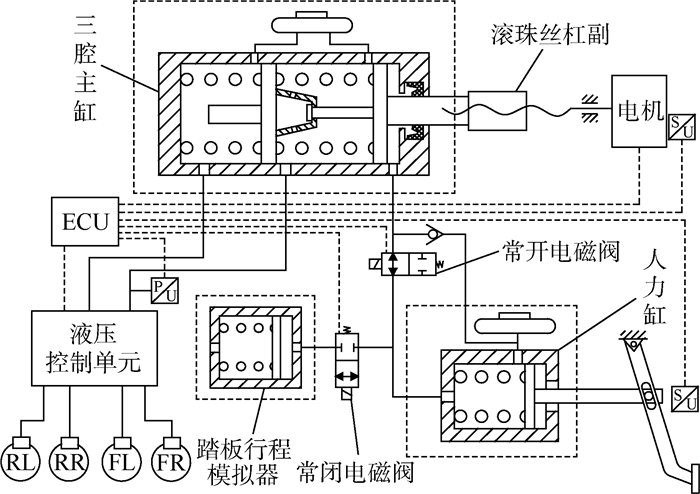
Layer 2: EPB dynamic emergency braking. Holding or lifting the electronic parking brake button continuously activates controlled deceleration to a stop, with ABS and ESP operating simultaneously.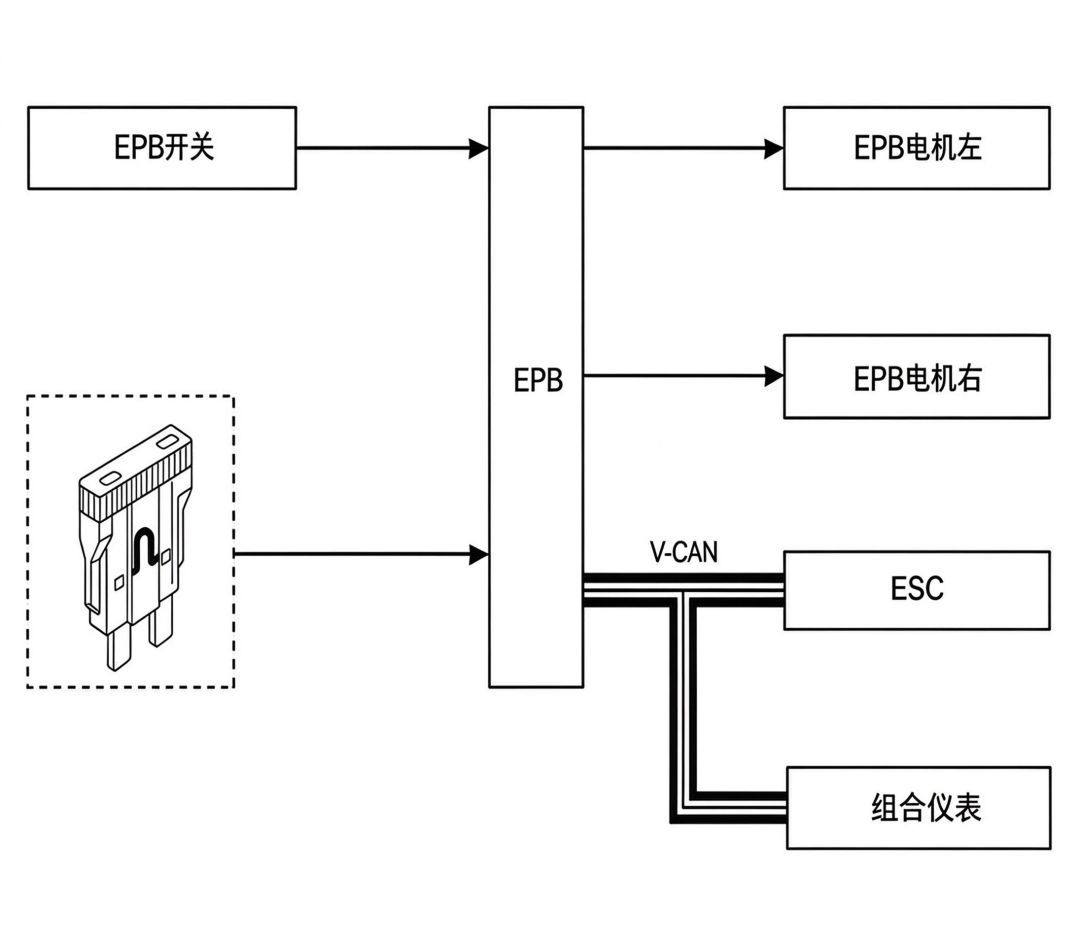
The key operating point: hold without releasing, as releasing interrupts braking. The counterexample is old mechanical handbrakes—acting only on rear wheels via pure steel cables without electronic backup, making high-speed yanking highly likely to cause lockup and skidding. Never confuse the two.
Layer 3: Motor braking (energy recovery). Releasing the accelerator allows motor reversal for power generation, creating resistance that decelerates the vehicle. Limitations have been discussed: only on driven axles, restricted when battery is full/at low temperatures, and unable to replace emergency braking.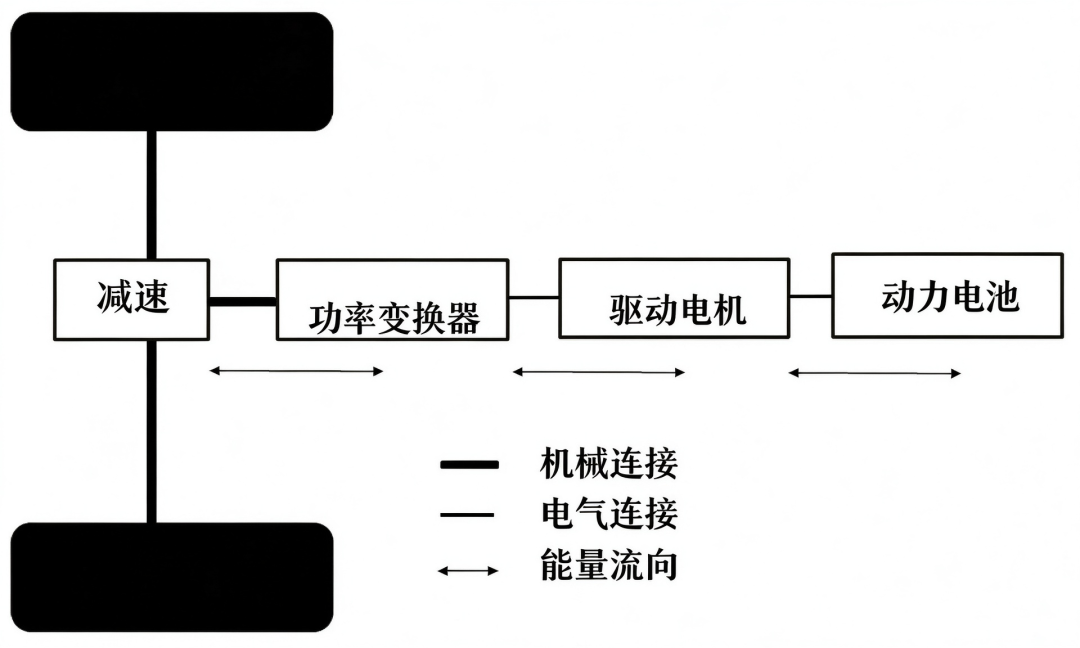
Layer 4: Engine braking/retarders. Shifting an automatic transmission to manual mode and downshifting step-by-step uses engine RPM rise to consume kinetic energy; commercial vehicles also have exhaust brakes and hydrodynamic retarders. This layer provides small deceleration and slow effectiveness but buys time to prevent speed increases.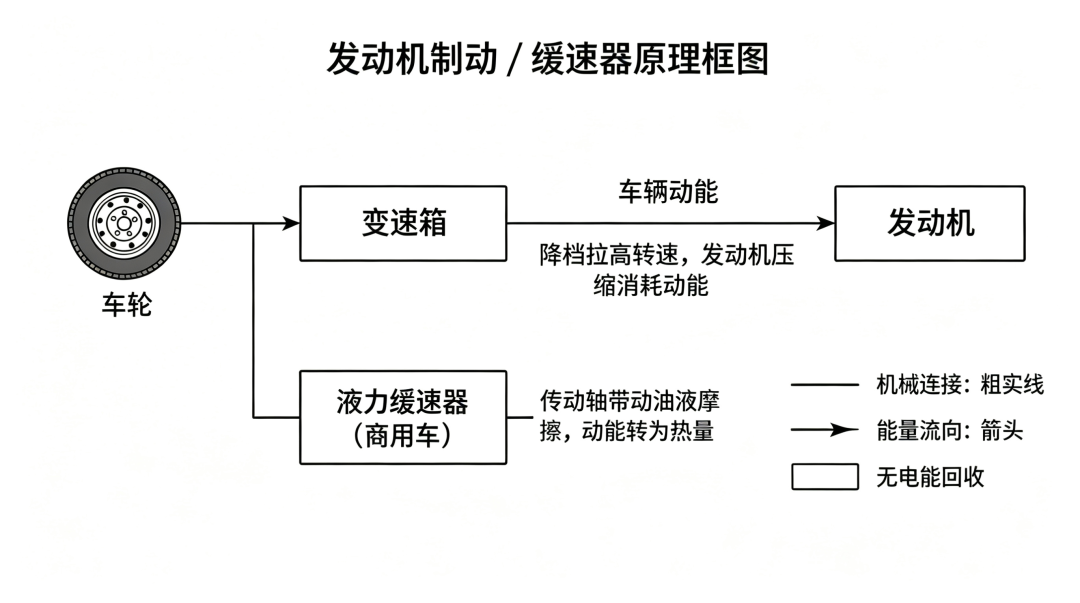
Incidentally, structural strength, durability, and assembly reliability of braking control devices are covered in component standards and vehicle static inspections. Pedal breakage represents an extremely rare failure mode, classified in engineering as 'control device structural failure,' far less common than high-frequency issues like lining wear, fluid leakage, or sensor errors.
The greatest advancement in braking systems over the past century has not been stopping vehicles faster—physical laws and tire-road interactions dictate ultimate limits—but ensuring safety even when parts fail. All those boring numbers, dual circuits, redundancies, and fail-safe mechanisms in regulations ultimately serve one purpose: getting people home safely. Understanding this puts any braking discussion into proper perspective, free from emotional bias.
-
Big Tech Firms Struggle with Security Concerns in AI Race
-
![]()
Apple AI is Finally Coming to China, But Siri is Not in the First Batch of Features
-
![]()
Unbelievable! TikTok Sellers Lodge Collective Complaint: AI-Generated Sales Videos Distort Product Info, Deceiving Shoppers
-
![]()
New China-EU Automobile Trade Consensus: What Do BMW and Volkswagen's Differing Positions Signal?
-
![]()
Three Departments Launch Investigation into Zunjie; DCD Seals Three Vehicles—Who Will Oversee the Retest?
-
![]()
Development Isn't Just 'Washing Away the Exposed Area': How Do Photoresist Sidewalls Take Shape?
-
![]()
Young Wartime CEO: How to Win Meta's AI Turnaround Battle
-
![]()
7 Million DAU! ByteDance's Free CEO Romance Short Dramas Are Driving Foreigners Wild