The UK Refuses to Impose Tariffs on Chinese Cars
 10/19 2026
 341
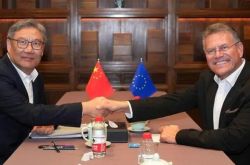
UK Business and Trade Secretary Reynolds publicly stated that the UK would not impose additional tariffs on Chinese electric vehicles under pressure from the EU, as trade defense measures would only consider the UK's own national interests, while also assessing potential Chinese retaliatory measures and export risks.
The subtext of this statement is clear: London is not willing to accept Brussels' offer.
The issue began in September. The EU made it clear to the UK that if the UK did not align its tariff levels on Chinese cars, it might be excluded from European manufacturing-related public procurement and subsidy rules.
The UK refused.
This decision actually went through several iterations. In early October, British media were still reporting that the government was studying plans to raise tariffs on Chinese electric vehicles, to which China responded directly that the essence of economic and trade relations is to leverage respective comparative advantages to achieve mutual benefit and win-win outcomes.
Two weeks later, the official answer arrived: no additional tariffs for now.
Currently, cars manufactured in China entering the UK market are subject to a uniform 10% import tariff. The EU has imposed additional anti-subsidy tariffs of up to 35.3% on top of the standard 10% tariff, bringing the combined tariff rate to as high as 45.3%. The U.S. has gone even further, imposing a 100% tariff.
Among major developed markets, the UK is one of the few players maintaining low tariffs on Chinese cars.
Once the statement was made, many labeled the UK as pro-China.
This label was applied too hastily.
1. Let's First Look at the Automotive Accounts
Consider a set of figures.
In 2023, Chinese brands accounted for less than 3% of the UK's new car market. By 2025, Chinese brands sold nearly 200,000 new cars in the UK, capturing a 9.7% market share. In the first half of 2026, this figure climbed to around 16%, surpassing Japanese brands at 12% and Korean brands at 10%.
Roughly one out of every six new cars sold comes from China.
Export data also highlights the UK's significance. In the first eight months of this year, the UK was the third-largest destination for China's new energy vehicle exports, with a total of 270,000 units, including 135,500 pure electric passenger vehicles and 133,100 plug-in hybrid vehicles. In August alone, Chinese brand plug-in hybrid vehicle exports to the UK ranked first among all national markets.
The passenger vehicle segment is even more striking. In the first eight months of this year, Chinese domestic brands' market share in the UK rose to 14.7%, ranking first in the European market; their share of new energy vehicles reached 26.7%, peaking at 30.8% from July to August.
About one out of every three new energy vehicles sold in the UK comes from China.
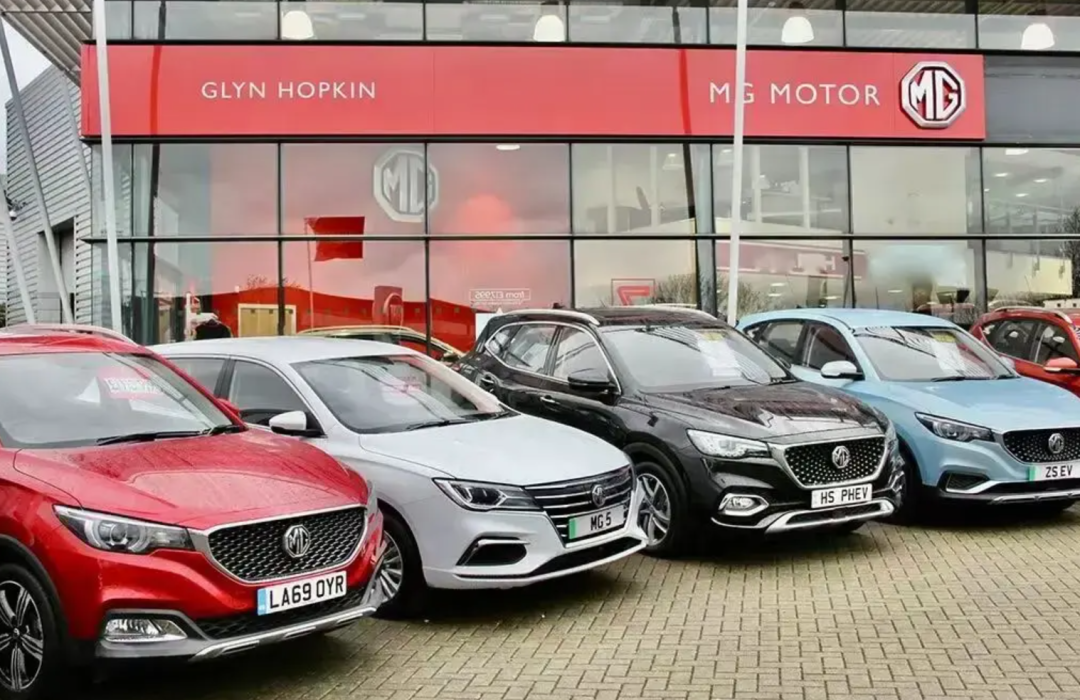
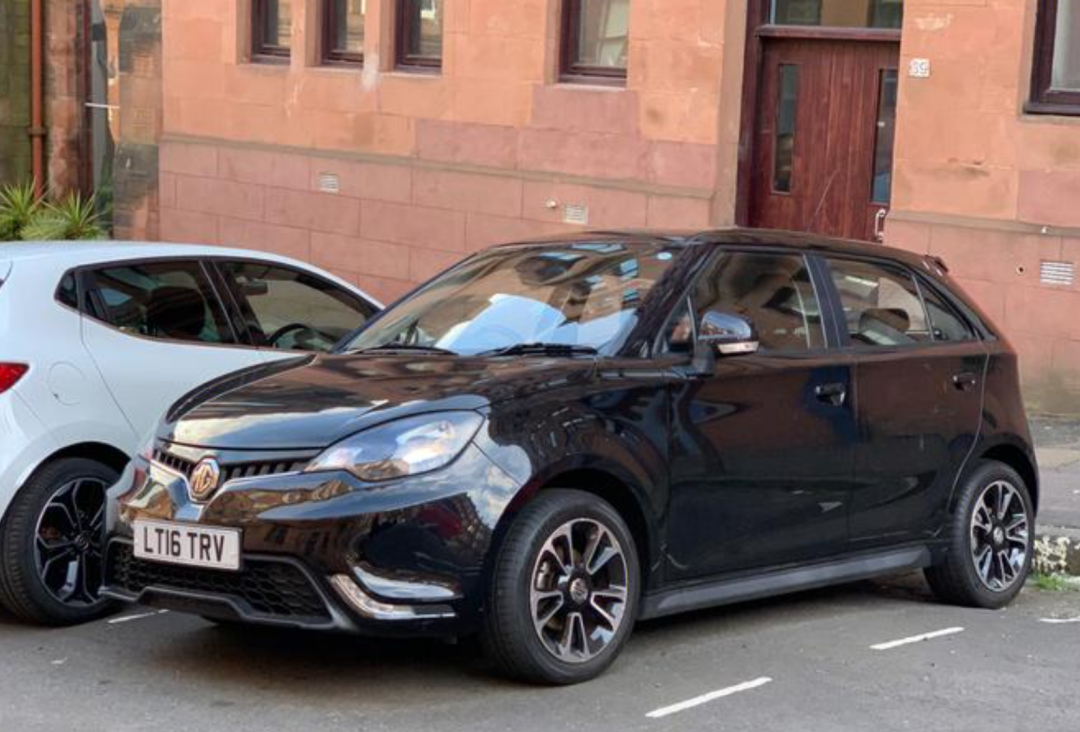
MG, a subsidiary of SAIC, is the most typical example. This century-old British brand, acquired by SAIC and with its production lines relocated to China while retaining only its London design studio, registered over 85,000 vehicles in the UK in 2025, with annual sales in Europe exceeding 300,000 units and cumulative sales surpassing one million.
British consumers have a natural affinity for this brand, while SAIC has leveraged China's parts (components and parts) supply chain system to reduce costs and enhance reliability.
BYD's trajectory has been even steeper. Entering the UK passenger vehicle market in 2023 with just over 1,000 units sold, it delivered 8,788 units in 2024, surged to 51,400 units in 2025, leaving Tesla's 45,500 units behind.
In the first half of 2026, BYD registered nearly 38,000 new cars in the UK, a 95% year-on-year increase, with its pure electric market share exceeding 7%, becoming the UK's largest electric vehicle brand.
The Seagull, starting at £18,650, is one of the cheapest pure electric vehicles on the UK market. The Song PLUS plug-in hybrid, starting at £33,000, sold over 22,000 units in 2025, leading the UK's plug-in hybrid rankings.
Even sales strategies have been localized and adapted. BYD's UK stores employ a five-step experience method: waking up the voice assistant, driving the in-car karaoke, using external power discharge to make coffee. Nearly half of the customers who test-drive the vehicles place orders on the spot.
New players are still lining up to enter the market. Chery's Jetour registered 34,000 vehicles in the UK in the first half of the year, quadrupling year-on-year; Chery's Omoda sales doubled, and Chery's main brand captured a 1.6% share within just six months of launch; Leapmotor, Geely, and Changan, while still small, are all on an upward trajectory.
Eighty percent of the pure electric versions of London's iconic red double-decker buses come from collaborations between BYD and local companies.
Beyond automobiles, there is also an institutional constraint. The UK's zero-emission vehicle mandate requires automakers to year by year (year by year) increase the proportion of electric vehicles, with a target of 33% by 2026 and 80% by 2030. Automakers failing to meet these targets face fines of £15,000 per vehicle.
Electric vehicles happen to be China's strongest supply chain domain.
The matching (supporting) investments for these standards are also substantial. The UK's Department for Transport confirmed in a parliamentary response that the certainty of the zero-emission mandate has driven over £6 billion in private investment into charging infrastructure, with projects like Somerset's battery gigafactory and Nissan's additional investment in its Sunderland plant land (coming to fruition) under this policy framework.
The UK's domestic electrified automotive supply chain started nearly from scratch and was nurtured by policy. Chinese automakers, bringing ready-made products, batteries, and supply chains, exactly (precisely) seized this opportunity.
If the UK were to follow the EU and raise tariffs to 45%, it would effectively be imposing taxes on its own auto market, increasing prices for its own consumers, and complicating its efforts to meet emissions reduction targets.
London has calculated this account very clearly.
2. The Photovoltaic Script Was Written Long Ago
The automotive sector is not the first time the UK has bowed to China's industrial strength.
The photovoltaic sector follows an almost identical plot.
The UK government's National Treasure Energy Plan, launched last year, aims to invest around £200 million to install rooftop photovoltaic systems on 200 schools and NHS hospitals. The components procured for the first batch of 11 schools all came from Chinese photovoltaic companies Aiko and Longi.
A government-backed national energy project using Chinese panels.
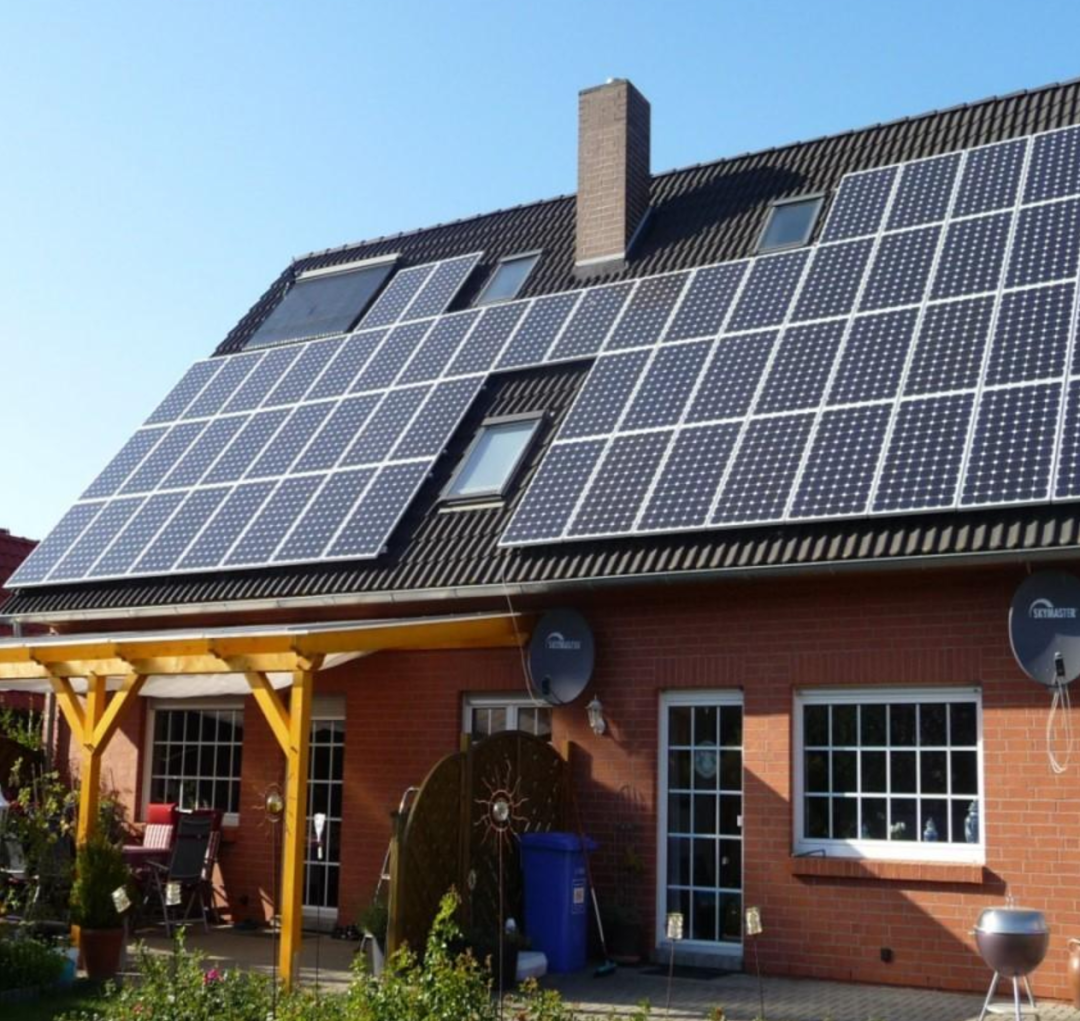
Trade statistics from HM Revenue & Customs show that in 2024, 68% of the UK's imported solar panels came from China, up from 61% in 2023. The first major investment from National Treasure Energy in Chinese components represents a real vote of confidence in China by UK energy policy.
In the rooftop photovoltaic market segment (niche market), Chinese supplies are estimated to account for 75% to 85% of the market.
The UK's domestic photovoltaic production capacity is nearly negligible, with only a few small module assembly plants remaining, with a combined annual capacity of about 100 to 200 megawatts, and cells still imported from China for simple assembly work like film application and framing.
The UK's energy transition target calls for 70 gigawatts of photovoltaic capacity by 2035, but as of early 2025, it had only 18 gigawatts. According to the government's solar roadmap, the conventional scenario calls for 45 to 47 gigawatts by 2030.
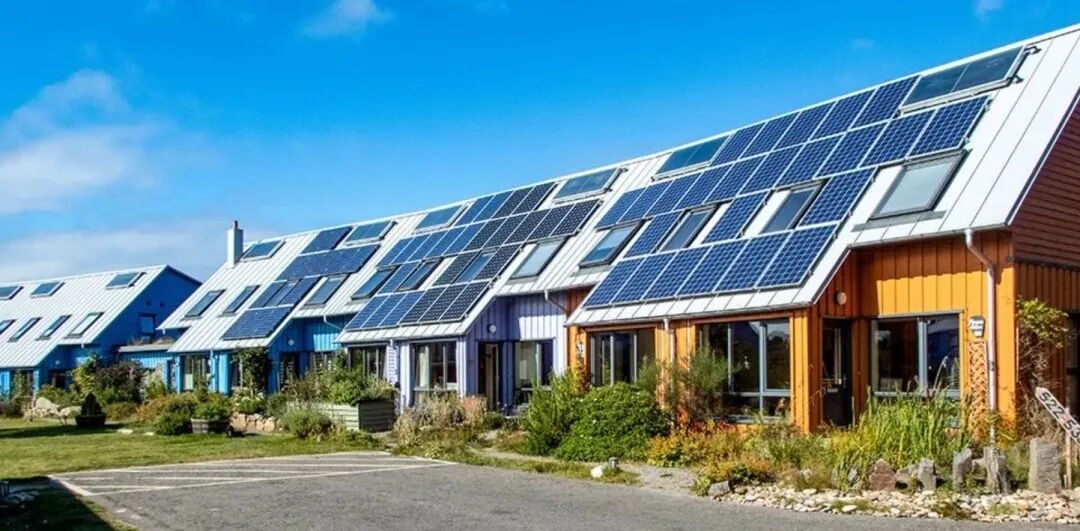
The remaining gap, globally speaking, can only be filled by China's supply chain.
The UK's new residential standards, effective from 2026, require new housing to be batch (mass) equipped with rooftop photovoltaic systems, affecting 150,000 to 200,000 new homes annually. The photovoltaic potential of commercial warehouse rooftops has also been calculated, with full installation capable of saving the warehousing industry £3 billion in annual electricity costs.
Even more subtle is the tariff situation. The most-favored-nation import tariff on photovoltaic modules in the UK is zero, and the Trade Remedies Authority is still reviewing module imports, with no tariff increases currently implemented.
3. The Choice Made in 2015
To truly understand the UK's nature, we must go back to March 2015.
That month, the UK announced its decision to join the China-led Asian Infrastructure Investment Bank, becoming the first G7 member to do so.
At the time, the UK was America's closest ally and a core member of the Five Eyes intelligence alliance.
When news broke, the UK's defection angered the United States.
UK Chancellor of the Exchequer Osborne gave a simple reason: This represented an excellent opportunity for joint investment and development between the UK and Asia.
The AIIB has a statutory capital of $100 billion, is headquartered in Beijing, and is positioned to fill the funding gap for infrastructure construction in Asia.
The subsequent story is well known. Germany, France, Italy, and Australia followed suit, bringing the AIIB's founding membership to 57 countries. Today, the membership has grown to 105 countries, making it the second-largest multilateral financial institution after the World Bank. Among the five permanent members of the UN Security Council, four are members, and among the G20, sixteen are members.
Japan and the United States have yet to join the AIIB, with the two largest Western economies left out due to their hesitation.
Looking back, the historical significance of that 2015 pivot continues to grow. Nearly a decade after the AIIB's launch, the projects it has approved are spread across Asia, and a multilateral institution initiated by China has been accepted by the mainstream international community as a cornerstone of the global financial system.
This pivot was not pro-China but a classic operation of prioritizing national interests over alliance loyalty.
4. The Decline of the Empire and the Rise of the Merchant
Why can the UK afford to be so flexible?
Because its self-perception has already changed.
In the late 1980s, the UK's economy shifted toward finance and services, with its domestic automotive industry continuously hollowed out. Rolls-Royce and MINI went to BMW, Bentley to Volkswagen, Jaguar Land Rover to Tata, and MG to SAIC.
The UK sells over 2 million new cars annually, with Volkswagen, the top brand, holding only an 8.5% share. The top five brands sell between 120,000 and 170,000 units annually.
For a country without a domestic automotive industry, the pain of car tariffs is naturally dulled, while the demand for affordable and capable electric vehicles is naturally acute.
In the financial reports of nominally British automakers like Jaguar Land Rover and Aston Martin, the Chinese market is always listed as a key focus. UK higher education, financial services, whisky, and luxury goods all have stable buyers among China's middle class.
The foundation of Sino-British trade is mutual dependence, albeit in different forms. China sells industrial goods and new energy, while the UK sells education, brands, and services.
This is why the UK dared to follow the U.S. on 5G but not on cars and photovoltaics.
Security and intelligence can be aligned, but daily life cannot.
The City of London's China business follows the same logic. RMB offshore trading, bond issuances and listings by Chinese companies, and European headquarters of Chinese institutions are heavily concentrated in London. When it comes to finance, the UK has never let go of this cake due to political alignment.
Brexit has only reinforced this logic.
After leaving the EU, the UK regained independent trade policy, with its Trade Remedies Authority able to independently decide whether to initiate investigations or impose tariffs. This mechanism, procedurally, means the UK does not have to follow Brussels' rhythm.
The empire's façade has long been dismantled, and what governs now is a purely merchant-oriented government.
The merchant's first principle is not to engage in losing propositions, and the second is to hedge bets wherever possible.
Thus, we have the current situation: aligning with the U.S. on security, opening up to Chinese imports industrially, taking advantages from both sides, and minimizing costs on both ends.
-
![]()
Does China’s Intelligent Driving Sector Possess a Competitive Moat? Who Will Survive the Intense Competition?
-
![]()
Don't Push Mathematicians Too Hard, AI
-
![]()
AI Phones: The Challenge of Breaking Through Ecosystem Barriers
-
![]()
The Differences Between Kimi and DeepSeek Are Becoming More Pronounced
-
![]()
As the Era of Lavish AI Spending Fades, Is the AI Race Taking a New Turn?
-
![]()
The Entire Internet Ridicules Tesla’s Flying Car—Don’t Be Short-Sighted
-
![]()
How to De-escalate China-EU Trade Tensions and Enhance Sharing of Hybrid Technology Benefits?
-
![]()
Cook Lauds China’s Unique Manufacturing Prowess: Apple’s Reliance Now Unavoidable