The Differences Between Kimi and DeepSeek Are Becoming More Pronounced
 10/19 2026
 536

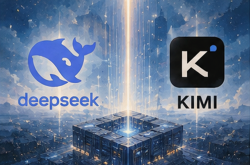
Convergence is merely an appearance. Divergence is the reality that is unfolding.
Image source | Internet (please contact us for deletion if infringement occurs) Partially generated by AI
More than halfway through 2026, if one were to pick the two most noteworthy companies in China's large model sector, the answer would hardly be a surprise.
At the beginning of the year, a narrative prevailed in the industry: Kimi and DeepSeek were "converging."
Both had completed large-scale financing, both had included long-form text, Coding, and Agent in their roadmaps, and even their recruitment positions overlapped.
Two years ago, Kimi was the most frequently funded star startup, while DeepSeek was the "tech oddball" that "didn't seek financing, didn't commercialize, and didn't do roadshows"; but by 2026, DeepSeek had also joined the capital table, and Kimi had started talking about underlying architectural innovation. The boundaries seemed to be blurring.
However, when the timeline is pulled to the present and the financing rhythms, revenue structures, technological choices, commercialization stances, and organizational forms of the two are laid out, a contrary conclusion emerges: they are not only not becoming more alike, but are choosing different directions at every key juncture.
Convergence is merely an appearance. Divergence is the reality that is unfolding.

Two Kinds of "Wealth," Two Kinds of "Value"
The most intuitive (intuitive) differences in 2026 are reflected in how capital prices the two companies.
Kimi's financing rhythm almost follows the beat of model releases. Valued at approximately $4.3 billion at the end of 2025, it broke through the $20 billion post-money valuation mark after a $2 billion funding round in May 2026. Another round was completed around the release of K3 in July, reaching a $35 billion post-money valuation, followed by a final pre-IPO round at a $50 billion pre-money valuation.
In less than nine months, the valuation surged approximately eightfold, and it subsequently submitted its A1 filing to the Hong Kong Stock Exchange in a confidential manner.
According to a person close to the deal, Kimi is pricing its valuation based on the "product cycle," with each new model release serving as a window for re-financing.
DeepSeek's rhythm is entirely different. It only introduced external equity financing for the first time in 2026, with an initial round of approximately 51 billion yuan and a second round planning to raise 50 billion yuan, corresponding to a post-money valuation of 500 billion yuan, while preparing to list on the Shanghai Stock Exchange's STAR Market.
Converted, this values it at approximately $75 billion, more than twice Kimi's valuation for the same period.
However, it is worth noting that DeepSeek's valuation surge is not tied to a single model release or a steepening of a particular revenue curve.
It is more like being "priced all at once" within a relatively closed system, backed by the sustained financial support of High-Flyer Quant, its strategic positioning within China's domestic computing power ecosystem, and the premium associated with its identity as the "foundation of China's AI technology."
Behind the two kinds of "wealth" are two ways companies are priced.
Kimi's valuation follows ARR and product rhythm, representing an "operational valuation" verifiable through monthly data.
DeepSeek's valuation follows strategic positioning and ecosystem scarcity, resembling more of an "infrastructure valuation."
The former asks, "How much did we grow this quarter?" The latter asks, "If it weren't them doing this, who else could?"

Changes in Revenue and Expenditure
Financing figures are merely the entry point. What truly defines a company's character is where it directs its funds after receiving them.
Kimi's use of funds points to a very clear cycle: buy computing power, train the next generation of models, generate demand, and then buy more computing power.
After the release of K3 in July 2026, demand quickly exceeded GPU capacity, and the company temporarily halted new subscriptions, prioritizing computing power for already paying users.
This is a typical mix of dilemmas and ambitions for a "product-driven" company: model capabilities generate demand, but the infrastructure to meet that demand is not yet fully prepared.
Meanwhile, Kimi's team size has been deliberately kept at around 300 people, with an average age of under 30, and the full-time team has not expanded significantly to this day. Money primarily flows towards computing power and talent density, rather than organizational scale.
DeepSeek's money points to a different set of capabilities. Among the positions it intensively recruited for in 2026, a role significant for a model company emerged: "Senior Data Center Delivery Manager," responsible for the entire process of data center project initiation, construction, and delivery operations, with requirements explicitly stating experience in GPU computing power delivery, operation and maintenance, and large-scale cluster planning and construction.
This is not a role a company "just doing models" would prioritize. DeepSeek is investing its money in building its own large-scale clusters and underlying infrastructure, transforming computing power from a "rented resource" into a "self-controlled foundation."
As its founder put it at an investor meeting, in the worst-case scenario, selling APIs could sustain a listed company, but the true long-term goal lies elsewhere.
One spends money on "getting more people to use the model," while the other spends it on "running the model on its own computing power." The former operates a product curve, while the latter builds an infrastructure runway.
In 2026, both companies saw their revenues climb to new heights, but when broken down, the "quality" of the money is entirely different.
Kimi's ARR surpassed $300 million in mid-June, with a steep curve from $100 million in March to $300 million in June.
More critically, in terms of structure: API revenue accounts for over 70% of total revenue, with paid subscriptions and overseas developer calls being the main growth drivers.
This means Kimi's revenue is shifting from an early single-mode C-end subscription to a scaling (scaled) monetization phase centered around developer and enterprise calls.
Its B-end leader has publicly stated that the company is transitioning from relying on individual subscriptions to B-end scaled monetization, with API proportion (proportion) continuing to rise.
This is a path validated by Anthropic's early commercialization: if the model capabilities are good enough, developers will vote with their feet, and revenue will scale linearly with usage volume.
DeepSeek's revenue volume is rapidly approaching, but the logic behind its revenue composition differs.
Revenue confirmed for the first seven months of 2026 was approximately 475 million yuan, about ten times that of the entire year in 2025, with an annualized run rate breaking through $1 billion around September.
API business gross margin stood at 82.9%, with an overall gross margin of 44.6%. High gross margins themselves are not rare; what is remarkable is their sustained presence in a company long perceived as "low-cost."
DeepSeek's pricing logic has never been about "burning money for scale," but rather a simple cost-plus formula: buy a batch of servers, recover equipment costs within ten months, and that's a reasonable profit.
After raising API prices and introducing peak-valley pricing in August 2026, customers did not massively churn, indicating that its price elasticity comes from efficiency redundancy, not subsidy inertia.
One operates on "revenue quality," i.e., API proportion, overseas growth, and paid conversion; the other on "cost structure," i.e., gross margin, computing power self-sufficiency, and unit inference cost.
Kimi's financial narrative is growth-driven, while DeepSeek's is efficiency-driven.
Both can make money, but the way they do so determines what they will prioritize protecting and what they will sacrifice in the next round of competition.

The Difference Between Productization and Research Orientation
Technological divergence occurred earlier than financial divergence and is harder to conceal under the narrative of "convergence."
Kimi's technological choices have a consistent thread: making long-context capabilities a product feature.
K3 boasts 2.8 trillion total parameters and a 1 million Token context window, relying on self-developed innovations like KDA hybrid linear attention and attention residuals, focusing on long-form Coding, complex knowledge work, and Agent tasks.
Keywords that repeatedly appear in its technical reports include "long-duration complex task execution capability," "Token utilization efficiency," and "native visual understanding."
In other words, Kimi's architectural innovations ultimately aim to answer the question: Can the model perform a complex task continuously for dozens of minutes and complete it well? This is a question a product company would ask.
DeepSeek's technological focus lies in another quadrant.
The V4 roadmap emphasizes hybrid architectures, inference throughput efficiency, and systemic optimization under computing power constraints, placing domestic chip adaptation at the forefront of its release strategy. For example, V4 debuted on Huawei's Ascend chips, with Cambricon, Moore Threads, and Hygon chips achieving "Day 0" adaptation—models went live upon release, eliminating the need for lengthy debugging periods by chip vendors.
In DeepSeek's R&D logic, "squeezing out every bit of efficiency under given computing power" is itself the core goal.
Its model capability improvements are largely byproducts of efficiency engineering: architectural optimizations lead to lower unit computing costs, which in turn allow for more exploration attempts, driving further efficiency gains in the next round.
One is transforming long-context capabilities into a deliverable product experience, while the other is turning efficiency engineering into a reusable infrastructure capability.
Kimi's technology is "outward-facing," serving scenario complexity and user task duration; DeepSeek's is "inward-facing," serving computing power constraints and ecosystem adaptation breadth.
Both routes can lead to AGI, but the capabilities, people, and time required along the way are entirely different.

One is "Locking In," the Other is "Penetrating"
If one only looks at product launches, the commercialization stories of the two companies seem to be converging: both talk about enterprise services and Agent deployment. But when it comes to organizational actions, the differences are widening.
Kimi's "Moon Landing Plan," launched in September 2026, is a strong signal.
It partners with system integrators like Chinasoft International, Kingsoft Cloud, Teamsun, Akan share (Akcom), and AsiaInfo Technologies to build a frontline deployment engineer team, embedding Kimi's models into clients' core business processes.
The logic behind the FDE (Field Deployment Engineer) model is not complex: once a model is integrated into a company's core systems, the sunk cost of switching models rises by an order of magnitude, and revenue shifts from "monthly fluctuating API call fees" to sticky medium- to long-term contracts.
For a company rushing toward an IPO and needing to prove revenue predictability to public markets, this is a necessary move.
Kimi does not intend to handle heavy delivery itself; it leaves the "last mile" to partners while guarding the model and architectural layers.
This is a form of "asset-light locking": using ecosystem partners' hands to capture large clients' money.
DeepSeek's commercialization stance is closer to "penetration."
It lacks proprietary Coding products or large-scale enterprise delivery teams, primarily relying on free Web/App, low-cost APIs, and open weights to output capabilities.
Yet the penetration effect is not poor. On the OpenRouter platform, DeepSeek's Token call share doubled from 9% at the beginning of the year to 18%; in U.S. enterprise software billing data, it once topped trending lists, with some U.S. companies directly paying for procurement rather than merely deploying open-source weights locally.
DeepSeek is not in a hurry to "lock" every enterprise client into its delivery system; it cares more about getting as many developers and enterprises as possible to "use it," making the model a default option.
Open-sourcing here is not a sentiment but a distribution strategy: weight openness lowers access barriers, low-cost APIs handle scaled calls, and domestic chip adaptation expands deployable hardware ranges.
Combined, these three elements create broad penetration rather than deep locking.
Kimi manages "replacement costs," while DeepSeek manages "access costs."
One wants clients to be unable to leave; the other wants clients to be able to enter.
These two commercialization philosophies have found their own rhythms in 2026, but they demand opposite organizational capabilities: the former requires delivery systems and client relationships, while the latter requires continuous leadership in model performance and cost structure.

A 300-Person Product Company and a 270-Person Research Institution
One easily overlooked but critically important difference lies in organizational form.
Kimi's full-time team has long been maintained at around 300 people, with an average age of under 30, minimal management layers, and blurry role boundaries—algorithm engineers may work on data, and marketing personnel may transition to model evaluation.
This type of organizational structure offers advantages such as short decision-making chains, rapid product iteration, and a high ratio of human resources to computing power.
It is well-suited for functioning as a 'product company': swiftly transforming model capabilities into usable features, testing them in the market, and using revenue feedback to drive the next round of financing and model iteration.
However, its limitations are also evident: 300 people cannot simultaneously handle foundational model development, enterprise delivery, overseas expansion, and ecosystem construction. Therefore, Kimi has chosen to entrust delivery to FDE partners and industry solutions to cloud vendors, while focusing on maintaining control over the core model layer.
DeepSeek's core research team comprises approximately 270 individuals, with the research and engineering teams making up the vast majority and the commercial compliance team numbering only a few dozen.
Its organizational structure resembles that of a large-scale laboratory: personnel are concentrated in foundational areas such as algorithm research, model training, inference frameworks, and distributed storage, with a deliberate emphasis on maintaining a measured pace of productization.
The advantage of this organizational structure lies in its deep technological expertise, enabling breakthroughs from scratch at the architectural level and achieving ultimate [jí zhì] (utmost) efficiency under computing power constraints.
However, its shortcomings are equally apparent: when commercialization shifts from 'developer self-service' to 'enterprise-level delivery,' a team of 270 cannot simultaneously cover sales, delivery, customer success, and overseas operations.
DeepSeek's approach is to leverage open-source models and low-cost APIs to delegate long-tail demand to the ecosystem, focusing the organization's energy on what it believes truly determines the final outcome: model capabilities, computing power infrastructure, and adaptation to domestic chips.
Kimi's organization is designed for the 'market,' while DeepSeek's is designed for 'technology.' The ceiling for one company depends on its ability to sell its models, while the ceiling for the other depends on its ability to push model capabilities beyond what others can achieve.
Nevertheless, the choice to go public represents a convergence of these two narratives.
In the second half of 2026, both companies took a substantial step toward the capital market almost simultaneously, but with different destinations.
Kimi submitted its A1 document to the Hong Kong Stock Exchange in confidential form to advance its Hong Kong IPO, with a pre-investment valuation of US$50 billion.
The Hong Kong stock market is more sensitive to revenue growth, commercialization narratives, and internationalization stories. What Kimi needs to prove to public investors is not 'how strong the model is,' but rather 'how sustainable the revenue is, how difficult it is to replace customers, and how significant the incremental growth is in overseas markets.'
Numbers such as the FDE model, the proportion of API revenue, and the quadrupling of overseas paying users form the backbone of its IPO narrative.
DeepSeek, on the other hand, has chosen the STAR Market of the Shanghai Stock Exchange and has engaged CITIC Securities for listing guidance.
The pricing logic of the STAR Market for an AI company inherently favors technological barriers, domestic substitution, and strategic scarcity. DeepSeek's prospectus will not revolve around 'ARR growth rate'; instead, it is more likely to focus on 'full-stack adaptation of domestic computing power,' 'global reach of the open-source ecosystem,' and 'the cost moat created by efficiency engineering.'
To some extent, Kimi's move to the Hong Kong stock market is an effort to prove to market-driven capital that it is a profitable product company; DeepSeek's choice of the STAR Market is a way to confirm to strategic capital that it is an irreplaceable infrastructure company.
The two IPO destinations correspond to two different capital market languages and represent the final confirmation of the two companies' identities.

The Divergence Marks the Beginning of Division of Labor
The differences between Kimi and DeepSeek are becoming increasingly pronounced, not because one has chosen the wrong path, but because China's large model industry has reached a stage where division of labor is necessary.
In 2024 and 2025, all model companies were focused on one thing: catching up in terms of model capabilities.
By 2026, the capability gap among top players has rapidly narrowed. What truly determines a company's long-term form is no longer 'whether the model can compete,' but rather 'how to continuously transform model capabilities into something that others cannot easily replace using specific organizational structures, revenue models, and ecological positions.'
Kimi has chosen the path of a product company: creating demand with model capabilities, locking in revenue through APIs and FDE, and amplifying the leverage of the product cycle through financing and IPO.
It must move quickly, continuously demonstrate growth to the market, and find a balance between revenue quality and organizational efficiency.
DeepSeek has chosen the path of a research institution: reducing costs through efficiency engineering, expanding penetration through open-source models and domestic adaptation, and securing long-term investment space through strategic scarcity.
It can afford to move more slowly but must maintain irreplaceability in terms of technological depth and ecological position.
Both paths carry their own risks. The risk for a product company is that as the capability gap narrows, revenue growth becomes increasingly dependent on delivery and sales rather than the model itself. The risk for a research institution is that as commercialization shifts from 'developer penetration' to 'enterprise-level revenue,' restraint may turn into sluggishness, and the vibrancy of the open-source ecosystem may not proportionally translate into financial returns.
However, it is precisely these differing risk structures that allow the two companies to no longer need to be measured by the same yardstick.
Kimi's yardstick is ARR, API proportion, customer replacement cost, and IPO valuation; DeepSeek's yardstick is gross margin, computing power self-sufficiency rate, breadth of domestic chip adaptation, and usage share in the open-source ecosystem.
Measuring DeepSeek with Kimi's yardstick would lead to the conclusion that 'commercialization is too slow'; measuring Kimi with DeepSeek's yardstick would lead to the conclusion that 'technological depth is insufficient.' Neither yardstick is wrong, but they measure two different types of companies.
Before 2026, the industry was accustomed to lumping Kimi and DeepSeek together, calling them the 'Twin Stars of China's Large Model Industry.'
After 2026, this grouping is splitting apart. Kimi is becoming an AI company centered around products and revenue, while DeepSeek is becoming a technological foundation centered around efficiency and the ecosystem.
They will still compete head-to-head on model capability rankings, still draw inspiration from each other in open-source communities, and still be compared by the media in the same headlines.
However, at the foundational level of company structure, a divergence has already occurred, and it is unlikely to close again.
For those following this industry, this is actually more interesting than 'who is stronger.'
The true sign of an industry's maturity is not when all players become increasingly similar, but when top players begin to take root in different ecological niches, answering the same question in different ways: How should model capabilities be transformed into value through specific organizational structures?
Kimi and DeepSeek have provided two completely different answers.
The coexistence of these two answers represents the most significant structural upgrade in China's AI industry in 2026.
-
![]()
Can Beijing Hyundai's Ioniq V Disrupt the New Energy Vehicle Market?
-
Token Export: A New Frontier in Business Opportunities
-
![]()
UBS: Chinese Automakers March into Europe, Replicating Japan's Playbook from 50 Years Ago?
-
Why Are iPhones So Popular? It’s Not About Showing Off
-
![]()
Does China’s Intelligent Driving Sector Possess a Competitive Moat? Who Will Survive the Intense Competition?
-
![]()
Don't Push Mathematicians Too Hard, AI
-
![]()
AI Phones: The Challenge of Breaking Through Ecosystem Barriers
-
![]()
The Differences Between Kimi and DeepSeek Are Becoming More Pronounced