AI Phones: The Challenge of Breaking Through Ecosystem Barriers
 10/19 2026
 493

No One Can Unlock Their Own Ecosystem
Image source | Network (Please contact us for removal if there is any infringement.) Partially generated by AI.
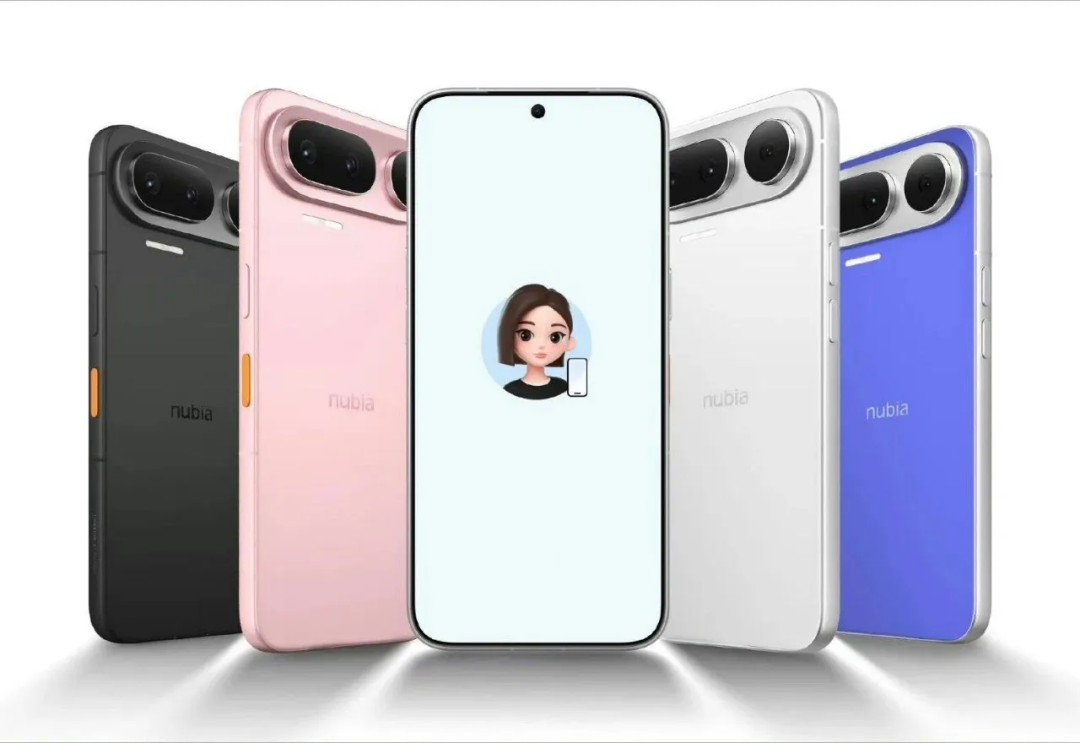
The year 2026 has been hailed as the "AI Phone Boom Year," yet those most eager to revolutionize phones are precisely the ones being shut out by the most critical apps within them.
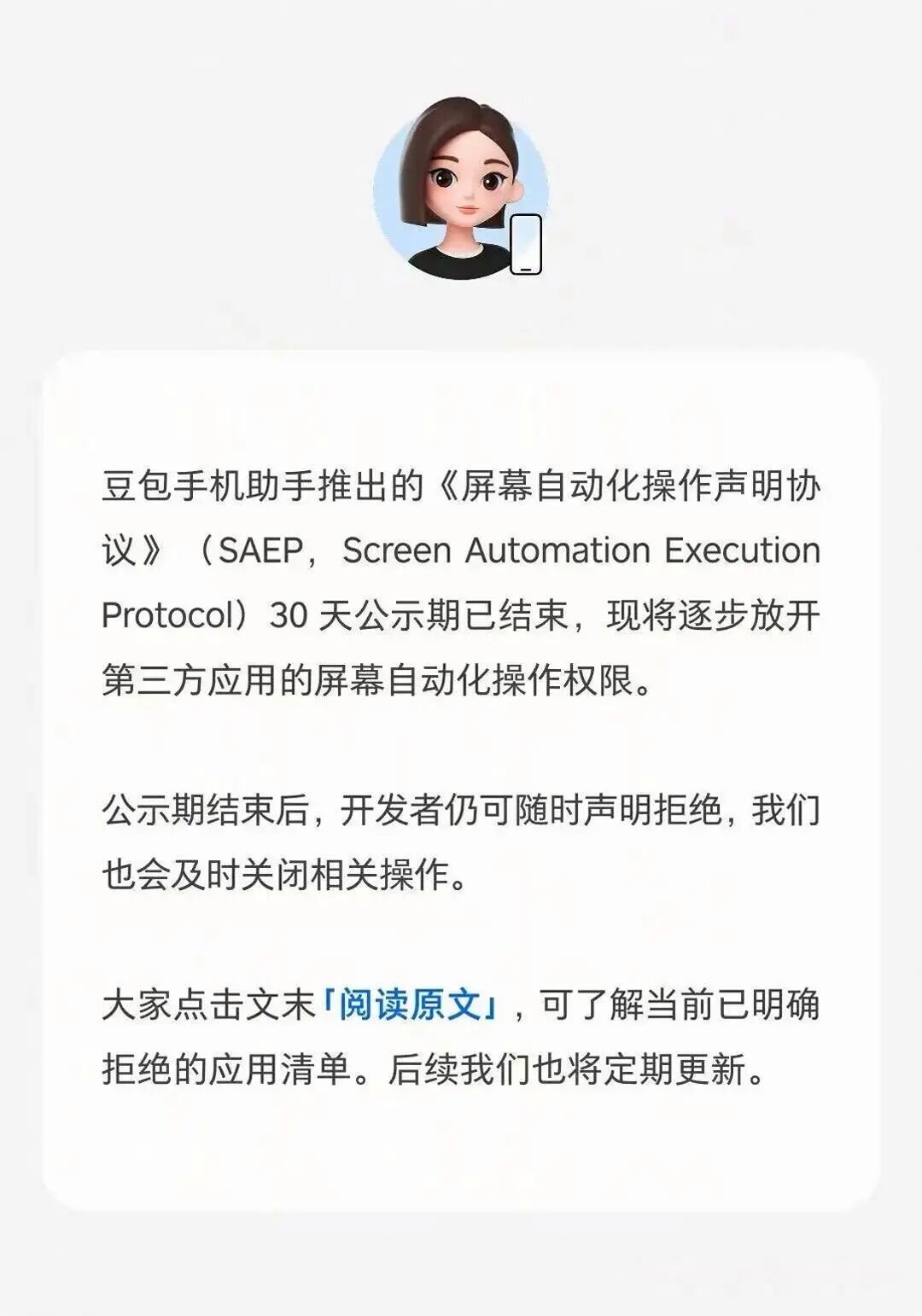
On October 14, the 30-day public comment period for Doubao Phone Assistant's Screen Automation Operation Statement Protocol (SAEP) officially concluded. According to the protocol's design, third-party apps not explicitly rejected during this period will gradually have GUI simulation clicking and screen recognition capabilities enabled for Doubao.
In simpler terms, this means AI can open apps, click buttons, and perform operations on your behalf.
However, the list of rejections released after the public comment period ended immediately added nuance to the protocol's significance.
Initially, 151 apps were rejected, a number that increased to 155 by the time of reporting. This included 66 apps from Tencent and its affiliated ecosystems, 23 from Alibaba, 14 from Kuaishou, and 11 from Meituan, with the two giants accounting for over 57% of the total.
WeChat, QQ, Taobao, Alipay, Meituan, Pinduoduo, Xiaohongshu, Didi, WPS, the three major carriers, multiple banks, and even fellow AI players DeepSeek and Kimi all declined in unison.
This list reads like a directory of China's internet sector.

What Exactly Is SAEP?
To understand the implications of this "collective rejection," we must first grasp what SAEP aims to achieve.
SAEP, or Screen Automation Operation Statement Protocol, is essentially a set of rules governing whether AI can operate apps on behalf of users.
It seeks to transform post-hoc conflicts between AI agents and apps into pre-emptive negotiations.
Traditionally, AI operated apps by simply "doing it first and explaining later." This was how Doubao's first-generation phone functioned, leading WeChat, Taobao, and Alipay to trigger risk controls and block AI operations as if they were bot scripts.
SAEP's logic then shifted. It designed a process where third-party apps could declare, layer by layer—by application, by page, and by operation intent—what operations were allowed or prohibited. The system would complete identity verification and policy decision-making before each operation, with full audit trails.
After the public comment period, developers could submit rejection statements at any time, with Doubao committing to disable support within three business days.
While the approach was respectful—giving developers a choice, a 30-day comment period, and the ability to reverse decisions—the outcome equally respectfully demonstrated another truth: protocols can be negotiated, but interests cannot be compromised.

What Are Super Apps Afraid Of?
Companies did not individually explain their reasons for rejection, but the structure of the rejection list speaks volumes.
The most direct concern is traffic autonomy. Doubao Phone's core selling point is "one-sentence cross-app task completion"—you say, "Help me buy a white T-shirt," and AI searches, compares prices, and places the order on Taobao, all without you ever seeing Taobao's homepage.
This means user app openings, dwell times, and homepage exposure monetization value are all siphoned away by the entry-level AI agent.
The traffic walls super apps have spent over a decade building will not voluntarily come down for a single protocol.
Analysts have bluntly pointed out that once national-level, high-frequency apps open up to AI agent automation, they cede all user behavior paths and interaction touchpoints within their platforms to third parties.
A deeper concern is security.
Carrier apps centralize user phone numbers, real-name identities, call records, and payment balances; bank apps safeguard real money.
Screen automation operations essentially mean AI reading screen content and simulating clicks, representing a scenario where users' ID numbers and SMS verification codes could enter AI's "field of view."
If operation chains lapse, the most fundamental identity assets are at risk.
Notably, screen sharing and remote control are typical tactics in current telecom fraud.
A general-purpose AI agent that can "click for humans" inherently conflicts with anti-fraud defenses, forcing carriers to proceed cautiously.
An easily overlooked group is gaming apps. Automated operations closely resemble game cheats in gaming risk control systems.
Doubao Phone users have already been forced offline from Honor of Kings due to "abnormal device environment" detection, reflecting not just technical compatibility issues but fundamental conflicts in risk control logic.

Not Just Doubao's Problem
One telling detail in the rejection list: while Tencent, Alibaba, Kuaishou, and Meituan uniformly rejected SAEP, none of JD's apps were on the list. Baidu had only Baidu Maps declare rejection, with other products remaining silent.
What are the considerations of these non-rejecting giants? According to reports, a Baidu insider responded that Doubao Phone's shipment volumes are not yet significant, making it a non-issue for Baidu at present.
In simpler terms, Baidu is temporarily uninterested and is waiting to see how things unfold.
More interestingly, this rejection hides a technical route dispute.
Current mainstream AI phone technologies follow two paths. One is the GUI route, where AI "reads" screens to understand interfaces and simulates human clicks and swipes—akin to a master key that can open any app with an interface.
The other is the API route, where standardized interfaces directly call app functions, offering efficiency and stability but requiring app developers to willingly open interfaces.
Doubao uses the GUI route, but super apps prefer the API route.
This is not merely a technical preference. Ecologically, the API route is more likely to evolve into a pattern dominated by a few major platforms—who defines the interfaces and where data flows ultimately concentrates power at the top.
The GUI route, with its low access barriers, gives smaller, niche services a better chance of being discovered and utilized by AI agents.
The outcome will determine the future commercial landscape of mobile internet: if the API route prevails, existing app giants will retain their traffic distribution rights; if the GUI route wins, phone manufacturers and AI assistants will become new entry points, restructuring the entire industry ecosystem.
However, it must be clarified that the wall Doubao Phone faces is not unique to it.
Theoretically, all AI phone assistants attempting GUI operations will collide with the same wall. Honor, vivo, OPPO, and Huawei are all developing AI phones and exploring cross-app operations.
The difference lies in whether they choose "lighter" or "heavier" approaches.
Vivo's stance is representative. Its AI Global Research Institute head told media, "The question of how phones access services as agents has been debated for three years. Today, that debate has concluded with a better resolution: forms like MCP and A2A access."
In other words: abandon forced GUI access to third-party services and capabilities, and instead discuss collaboration with ecosystem partners.
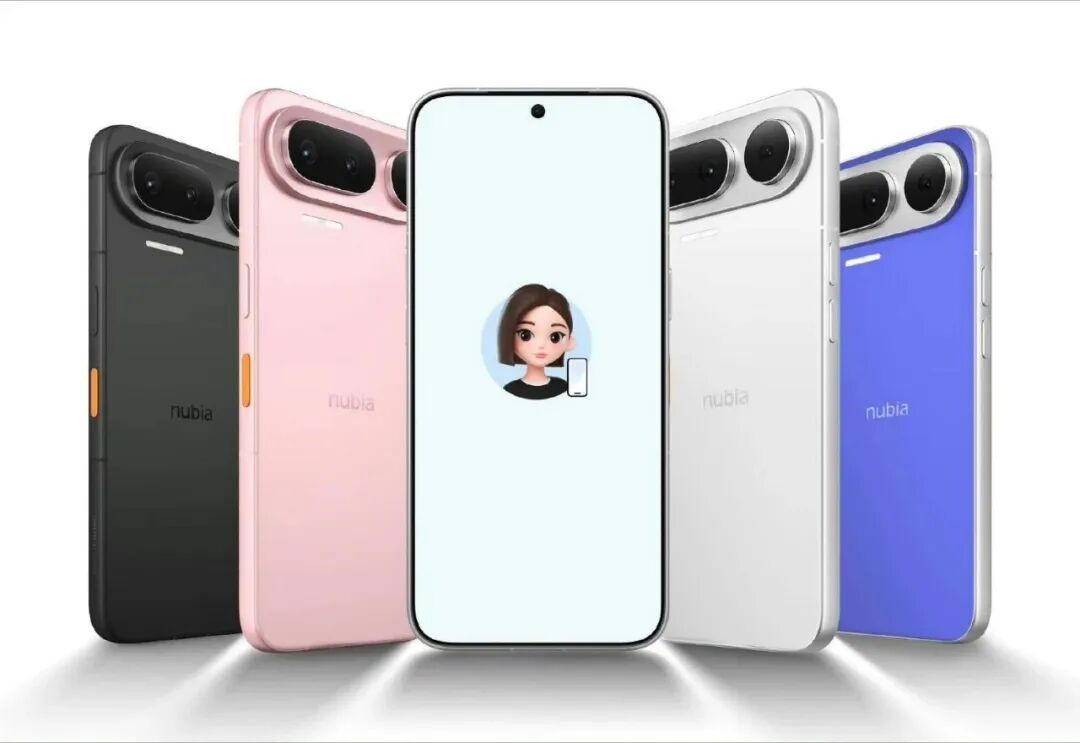
Another phone manufacturer chose a more aggressive path. Jieyue Terminal released the first large-model-native AI agent phone, adopting an entirely different approach—not Android-modified but built on an intermediate layer above Android and Linux, reconstructing the operating environment for AI agents.
Its execution does not rely on GUI simulation clicks but directly calls service interfaces opened by partner firms. Reports indicate the brand has reached cooperation with nearly 100 enterprises, including Alipay, Tencent, Ctrip, and Didi.
Beyond self-development, phone manufacturers are actively collaborating with internet firms.
In 2025, Alibaba and Honor signed an AI strategic cooperation agreement to jointly develop on-device models, AI agents, and multimodal capabilities based on Tongyi Qianwen.
OPPO announced a partnership with AI agent platform Manus to integrate advanced agent technology into its system's core.
These collaborations share a common feature: they are all one-on-one negotiations between specific vendors, not industry-wide open standards.
This means each phone manufacturer must negotiate terms separately with every super app, resulting in low efficiency, high costs, and limited coverage.

Conditions for Breaking Through the Wall Are Brewing
So, can this wall be torn down?
In the short term, the outlook is pessimistic.
As previously stated, the core conflict lies in the struggle for entry rights and data sovereignty. Tencent can reject Doubao from accessing WeChat; tomorrow, ByteDance could impose restrictions on Tencent's agents; Alibaba might similarly adopt its own strategies against competitors.
Without industry-wide standards, each firm will decide based on maximizing its own interests, ultimately resulting in everyone building their own walls.
However, there are positive signals in the medium term.
Regulators are accelerating efforts. In May, the Ministry of Industry and Information Technology and other departments jointly initiated the national standard series "Grading of Artificial Intelligence Terminal Intelligence."
In September, cyberspace regulators added filings for on-device generative AI services, with cumulative filings now reaching 10 models across brands like Huawei, OPPO, vivo, Xiaomi, Honor, Apple, Samsung, and ZTE.
In other words, AI phones are transitioning from wild growth to regulated development, laying an institutional foundation for cross-platform trust.
Technologically, solutions for data trust are also being explored. Alipay introduced a multi-agent cross-terminal interconnection protocol system, splitting the connection between terminal manufacturers and merchants into two layers: terminals directly connect to Alipay's agent hub, while merchants uniformly access this hub, eliminating the need for direct end-to-end connections.
User preferences, account information, and payment data are processed within their respective systems, balancing implementation efficiency and data security.
The three major carriers also participated in security technology trials for cross-terminal collaboration, systematically addressing three core security gaps: identity trustworthiness, interaction security, and collaborative control, building a foundational security layer for large-scale cross-terminal agent collaboration.
These explorations share a consistent direction: the solution does not lie in compelling a single firm to compromise but in establishing technical standards and trust mechanisms acceptable to all parties.
However, forming such mechanisms will not be quick.
It requires technology to mature sufficiently for super apps to trust that AI operations will not spiral out of control; security systems must be robust enough for users and platforms to willingly share data; business models must be clear enough to provide reasonable interest compensation for ceding entry points.
Industry insiders generally estimate that meeting these conditions will take at least three to five years.

The direction of AI phones is correct—making phones truly "understand" you and "handle things" for you represents the most anticipated transformation in smartphone interaction paradigms in over a decade.
But a correct direction does not guarantee an easy path.
The wall Doubao Phone has hit is not a technical barrier but an interest barrier.
The collective "no" from 155 apps stems not from rejection of AI but precisely from their strong belief in AI—they are unwilling to cede entry rights so easily.
Every super app aspires to be the primary gateway for user-AI interaction.
Every phone manufacturer does too. But users do not care who wins or loses; they want a phone that genuinely saves them trouble.
Realizing this wish depends on whether the industry can shift from "building walls" to "establishing shared rules."
The road is long, but at least, someone has started knocking.
-
![]()
Can Beijing Hyundai's Ioniq V Disrupt the New Energy Vehicle Market?
-
Token Export: A New Frontier in Business Opportunities
-
![]()
UBS: Chinese Automakers March into Europe, Replicating Japan's Playbook from 50 Years Ago?
-
Why Are iPhones So Popular? It’s Not About Showing Off
-
![]()
Does China’s Intelligent Driving Sector Possess a Competitive Moat? Who Will Survive the Intense Competition?
-
![]()
Don't Push Mathematicians Too Hard, AI
-
![]()
AI Phones: The Challenge of Breaking Through Ecosystem Barriers
-
![]()
The Differences Between Kimi and DeepSeek Are Becoming More Pronounced