Xingtan 5X: What Are Its Odds in the Competitive Boxy SUV Market?
 10/26 2026
 410
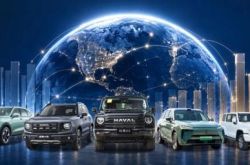
The boxy SUV market has recently seen the arrival of a new player. On October 21, BAIC officially launched its new brand, "Xingtan," and introduced its inaugural model, the Xingtan 5X, for pre-sale. Positioned as an ultra-spacious, intelligent, and top-tier SUV, the Xingtan 5X offers seven variants with both pure electric and plug-in hybrid powertrains. It features Huawei's cutting-edge intelligent driving system and is priced between RMB 139,900 and RMB 184,900. This announcement has sparked widespread discussion among netizens, with many commenting, "For just RMB 150,000, you can own a boxy SUV equipped with Huawei's advanced intelligent driving system—that's quite a compelling deal." However, skepticism lingers: Can this newcomer truly carve out a niche in a market already flooded with boxy SUV models? 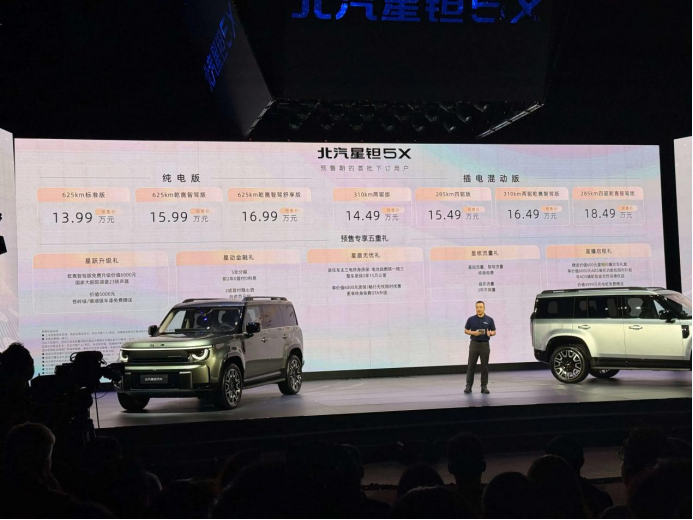
These doubts are not without merit. In recent years, automotive market competition has intensified, with many segments reaching saturation. The once-niche boxy SUV category has now become a common battleground for automakers. BAIC is not alone in this endeavor; GAC, Chery, Geely, and BYD have all rolled out their own boxy SUV models, while brands like VOYAH, Hongqi, and Xiangjie are also joining the fray. Even BAIC itself is no stranger to the boxy SUV segment—its early BJ series has been on the market for years, but its performance has been lackluster, failing to capture the mainstream consumer base. 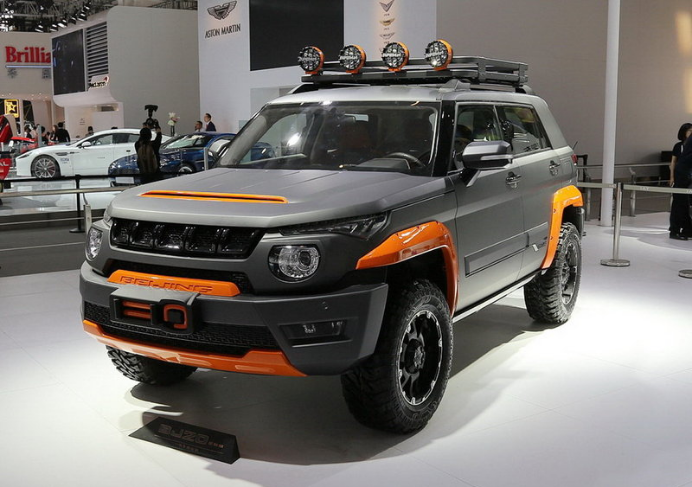
In just a few short years, boxy SUVs have transcended their niche status among off-road enthusiasts, moving from obscurity to mainstream appeal, with price tags ranging from tens of thousands to over a million RMB. Data from the China Passenger Car Association reveals that domestic boxy SUV sales soared from 168,400 units in 2015 to 1.02 million units in 2025. Over the past decade, this niche segment has transformed into one of the fastest-growing SUV categories. Industry estimates suggest that boxy SUV sales could surpass 1.5 million units in 2026. Meanwhile, the number of boxy SUV models available has rapidly expanded from just over 10 in the early days to more than 40 today, with several new models—such as the Xiangjie G9, Haval H10, Galaxy Warship 700, Trumpchi Yue7, and Jetour Traveler 7—set to launch in the second half of 2026 alone. Some industry insiders predict that by 2027, the boxy SUV segment could turn into a fiercely competitive "red ocean." 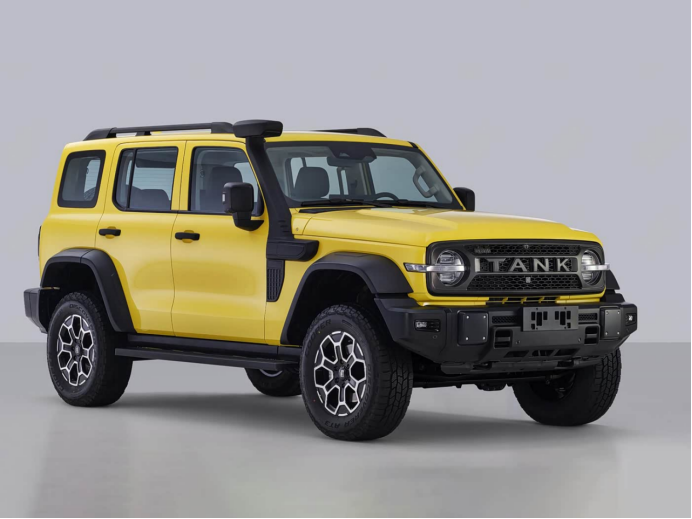
However, only a select few models have truly achieved blockbuster status, with sustained sales volume primarily driven by leading products like the Fangchengbao, Haval, and Jetour Traveler series. As nearly all automakers now offer boxy SUV models, relying solely on a rugged exterior is no longer sufficient to win over consumers—differentiation has become crucial for standing out in a crowded market. Rather than simply piling on homogeneous specifications, the Xingtan 5X offers three distinct strengths.
The most notable highlight is that the Xingtan 5X brings Huawei's ADS 5 Pro intelligent driving system to the RMB 150,000–180,000 price range, making it one of the few rugged SUVs in this segment to feature advanced intelligent driving capabilities. The vehicle adopts an in-cabin solid-state LiDAR solution, eliminating the need for an external radar dome on the roof, thereby reducing the risk of scratches from branches when navigating narrow roads or entering old underground parking lots. Additionally, highway NCA (Navigated Cruise Assist) comes standard, while urban NCA is available via subscription, catering to users with different needs. 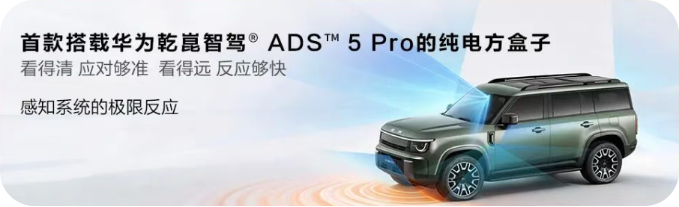
Another advantage of the Xingtan 5X lies in its space utilization. With a 2,875mm wheelbase and an 88.6% interior space efficiency rating, it offers a spacious 2,231L of cargo volume when the seats are folded down. The pure electric version also includes a washable independent front trunk, meeting the needs of camping and outdoor enthusiasts. Price is the Xingtan 5X's third selling point. With a starting price of RMB 139,900, it falls within the budget range of mainstream family buyers, while RMB 159,900 grants access to Huawei's advanced intelligent driving system, establishing a clear differentiation advantage in the "boxy SUV + advanced intelligent driving" segment. Few competitors in the same price range offer both pure electric and plug-in hybrid powertrains while keeping Huawei's intelligent driving system under RMB 160,000. 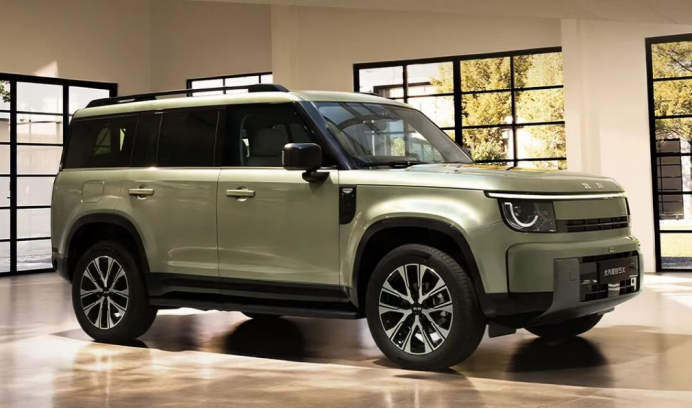
However, this does not guarantee the Xingtan 5X an easy path to a stable market position. The Titan 7, for instance, has already captured consumer attention with its first-mover advantage. Since its launch in September 2025, the Titan 7 has quickly risen in sales, claiming the top spot in boxy SUV sales for multiple consecutive months and reaching 43,000 units in the first quarter of 2026, establishing itself as the segment leader. On the other hand, as a new energy sub-brand under BAIC's Beijing Off-Road division, Xingtan lacks broad consumer recognition, and its offline sales and service network coverage lags behind that of established leading brands like BYD and Geely. 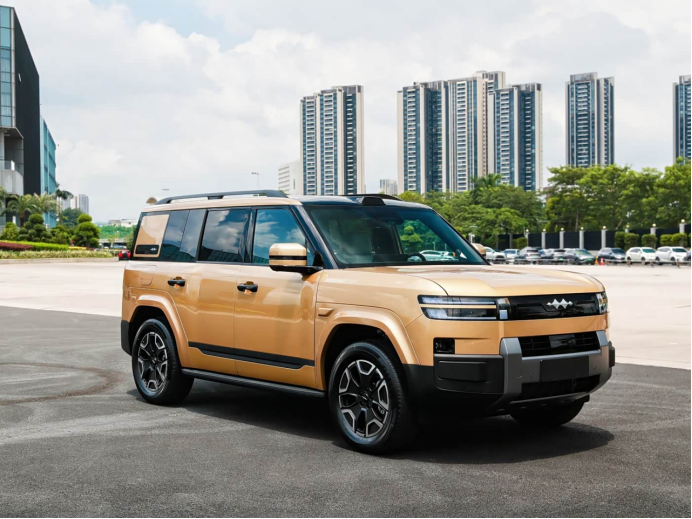
Moreover, the vehicle's battery has become a concern for potential buyers. Public information indicates that the Xingtan 5X's battery cell suppliers are Sunwoda or EVE Energy. Sunwoda's previous dispute with Geely may raise doubts among some users, while EVE Energy lacks the same level of consumer recognition and trust as more familiar battery manufacturers like BYD and CATL. Given these factors, it will not be easy for the Xingtan 5X to secure a stable market share in the fiercely competitive "red ocean." Overall, the Xingtan 5X complements BAIC's Beijing Off-Road new energy product lineup, offering a 150,000-RMB-class boxy SUV that balances family use, off-road capability, and advanced intelligent driving. However, the boxy SUV segment has now entered a phase of intense competition. According to the China Passenger Car Association, 42 models were on sale in the first half of 2026, with the full-year total expected to exceed 50. This averages to around 3,000 units sold per model per month, with many models struggling to cover costs. At this stage, a vehicle's success hinges on whether its pricing is competitive enough, whether its product strength can stand out, and whether its distribution channels and reputation can keep pace.
(Image sourced from the internet. Removal upon infringement notice.)
-
![]()
Massive Exchange Losses! Lens Technology’s Profits Plummet in First Three Quarters—Will the iPhone Duo Mark a New Turning Point?
-
![]()
2026 World Intelligent Connected Vehicles Conference: Transitioning from Spec Benchmarking to Safety Benchmarking, the Industry Steps into a New Era of Regulatory Oversight
-
![]()
Hundreds of Billions Fully Invested in AI, Yet No Returns in Sight
-
![]()
ByteDance's Automotive Ambitions Come to the Fore
-
![]()
$12.9 Billion: Nvidia Buys an 'Insurance Policy'
-
![]()
iPhone Duo: Is It a Thorn in Ternus's Side?
-
![]()
Why Does the Great Wall Gain More Recognition Abroad Than at Home?
-
![]()
Mercedes-Benz Refuses to Be a Bystander and Revolutionizes Itself