Can SAIC Audi, a Brand Yet to Excel in Gasoline Cars, Find Success in the New Energy Vehicle Market?
 10/27 2026
 476
In China's domestic luxury car market, Audi stands out as the sole brand with two joint-venture partners: FAW-Audi and SAIC Audi. Established in 2021, SAIC Audi has been operational for just over three years. Remarkably, this relatively young luxury joint-venture brand has reached a pivotal juncture this year. What has transpired?
This article delves into the developmental journey of SAIC Audi and its current status.
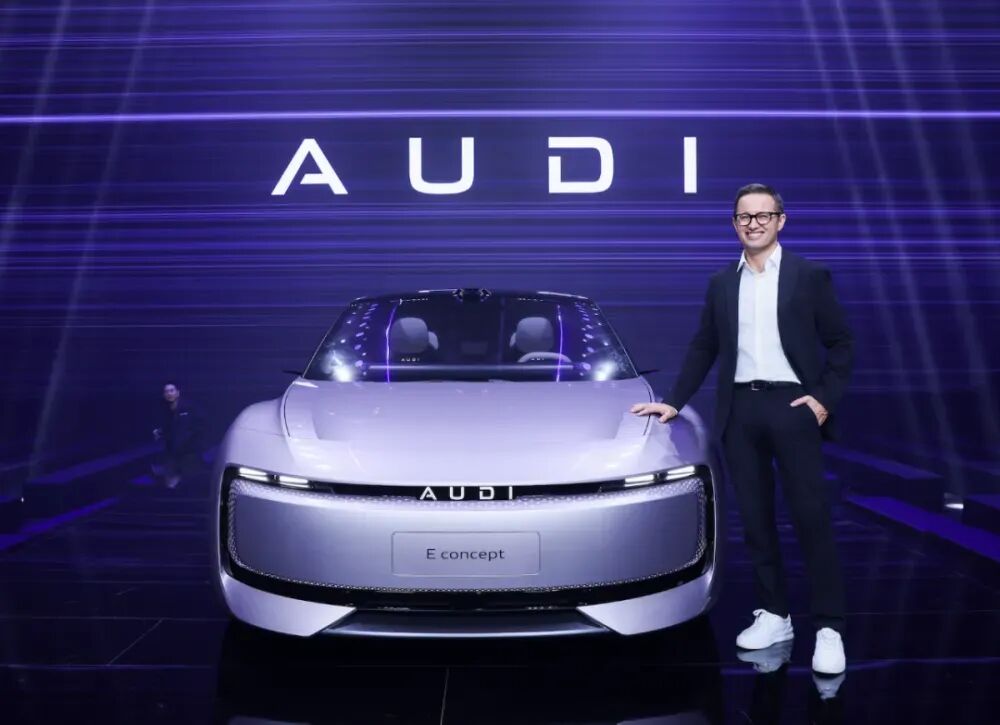
Let's rewind to 2021. On April 18th, just prior to the Shanghai Auto Show, SAIC Audi orchestrated a grandiose brand launch event. At the show, SAIC Audi unveiled its inaugural model, the Audi A7L, marking Audi's official foray into a dual-brand strategy in China. Under normal circumstances, the introduction of SAIC Audi would have been expected to bolster Audi's sales in the domestic market.
However, the reality paints a different picture. Despite the presence of SAIC Audi, Audi's sales have consistently lagged behind those of the other two mainstream German automakers (BBA - BMW, Benz, and Audi) from 2022 to 2024, with the gap between Audi and BMW and Mercedes-Benz widening. It wasn't until 2025 that Audi overtook Mercedes-Benz to claim the second spot in the BBA hierarchy. Examining Audi's domestic sales trend over the past three years reveals a continuous decline, with figures plummeting from 728,600 units in 2023 to 649,400 units in 2024, and further down to 617,500 units in 2025.
In terms of sales distribution, FAW-Audi has consistently commanded over 90% of the market share, with SAIC Audi's peak contribution being a mere 7.7% in 2025. This implies that had SAIC Audi performed even marginally better, Audi might have reclaimed its leadership position in the BBA rankings, surpassing both BMW and Mercedes-Benz. Alas, SAIC Audi fell short.
Moreover, the models offered by SAIC Audi inadvertently compete with those from FAW-Audi, a situation that is difficult to circumvent.
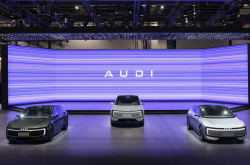
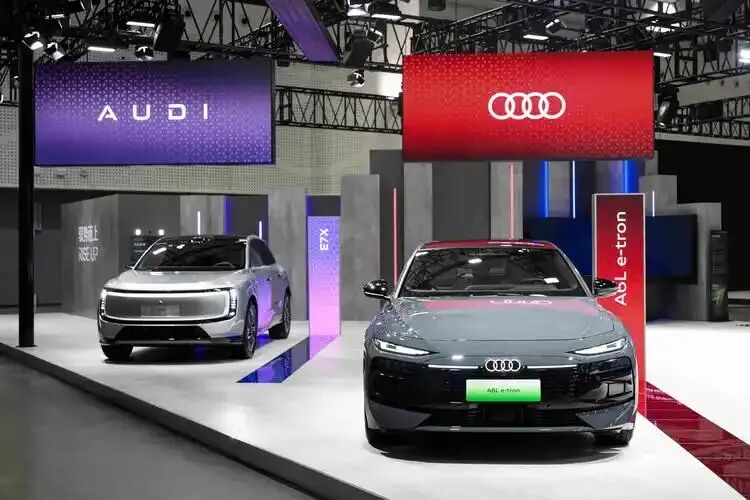
Observing the lukewarm sales of gasoline vehicles, SAIC Audi finally ventured into the high-end new energy vehicle segment with the launch of the AUDI brand in November 2024. Presently, AUDI boasts two models: the mid-sized pure electric sedan Audi E5 Sportback and the large-sized pure electric SUV Audi E7X. Judging by their sales performance, the results have been lackluster. The Audi E5 Sportback, introduced last year, has consistently recorded monthly sales below 1,000 units for six consecutive months. Meanwhile, the Audi E7X, launched this year, has witnessed a sales decline for three straight months, with September sales mustering a mere 1,503 units.
This encapsulates SAIC Audi's current predicament: struggling with gasoline vehicles and grappling with significant challenges in the new energy vehicle sector. Now, let's cut to the chase. On October 26th, Audi China issued a statement declaring that SAIC Audi will transfer assets related to the four-ring models to FAW-Audi and concentrate on developing AUDI-branded electric vehicles. Simultaneously, the company emphasized that SAIC Audi dealerships will continue to sell four-ring models until the end of 2027, and that maintenance and after-sales services for previously sold SAIC Audi models will remain unaffected.
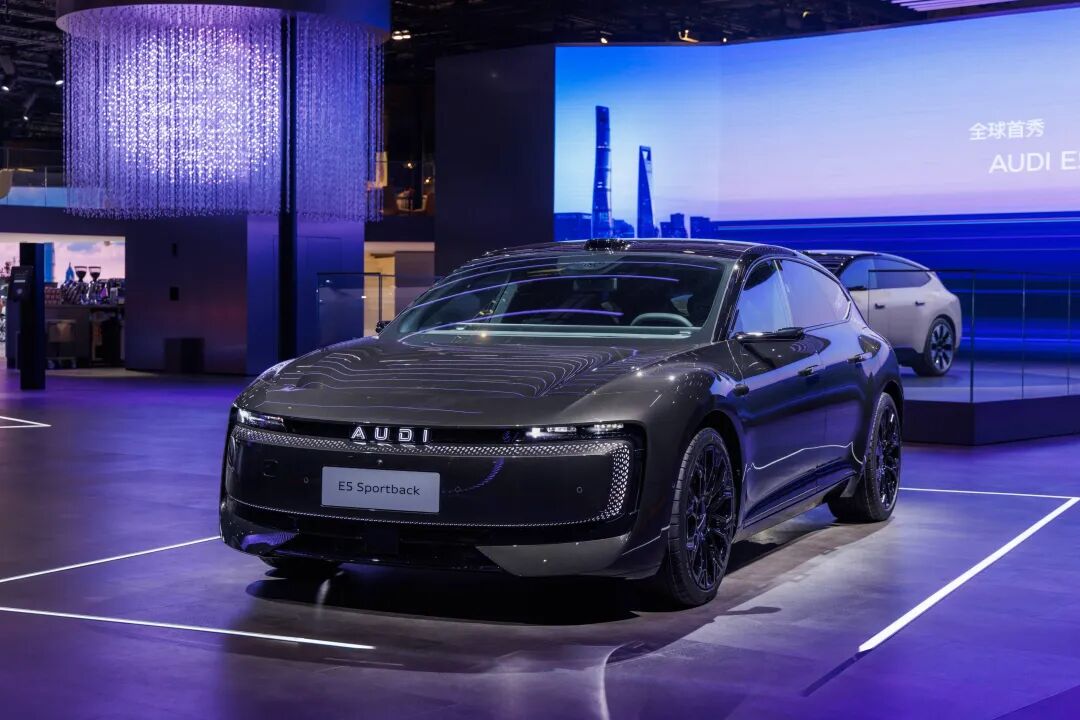
This indicates that Audi's future product strategy in China is crystal clear: all models bearing the "four-ring logo," whether gasoline-powered or purely electric, will fall under the purview of FAW-Audi. SAIC Audi, on the other hand, will dedicate its efforts to developing the AUDI pure electric vehicle brand. From this strategic shift, it is evident that SAIC Audi's primary future competitors will be new energy vehicle startups such as AITO, Li Auto, and NIO.
So, the question remains: Do you believe that the AUDI brand under SAIC Audi can carve out a niche in the high-end new energy vehicle market by going head-to-head with these numerous new energy vehicle startups? Share your thoughts in the comments section and engage in the discussion.
Copyright Notice: This article is the original work of Che Kuaiping. Reproduction requires authorization. Unauthorized reproduction is strictly prohibited, and any form of plagiarism or misappropriation of images and text will result in legal action. Some images in the article are sourced from the internet, and the copyright belongs to the original authors. If your work is used, please contact us for royalties or deletion.
-
![]()
Leapmotor’s Staff Increases by 9,732 in Just Over a Year. Can Zhu Jiangming’s ‘Mini BYD’ Outpace Geely and BYD?
-
![]()
Why Are AI Glasses So Popular, Yet Goertek's Q3 Sales Drop by 2.4 Billion Yuan with Inventory Reaching 22.4 Billion Yuan?
-
![]()
POLYVISION's IPO Review: Persistent Decline in Gross Profit Margin and Weakening Industry Outlook
-
![]()
Audi’s Strategic Split: SAIC-Audi’s Two-Year Plan Leads to Gasoline Vehicle Sales Until 2027 End | Mirror Pro
-
![]()
Racing to Become the "Pioneer Large-Scale Model Stock on the U.S. Stock Exchange": Anthropic Reports Over $80 Billion in Losses Within Half a Year
-
![]()
Wang Teng, Ex-Xiaomi Exec, Proves Prescient Half a Year Ago: Domestic Smartphone and Tablet Product Lines Face Discontinuation Wave
-
![]()
Post-2000s Female Employee Causes Stir at XPENG Launch Event
-
Anthropic Still Needs to Keep 'Sprinting'