Lula Wins Election! His Policies Helped a Bricklayer’s Daughter Become an Engineer at BYD
 10/27 2026
 491
In the second round of Brazil's presidential election, held on the 25th local time, Workers' Party candidate and incumbent President Lula defeated Liberal Party candidate Flávio Bolsonaro—son of former President Jair Bolsonaro—to be elected as Brazil's new president.
Lula's victory marks a triumph for the underprivileged and the China-Brazil cooperation model. It suggests that disadvantaged groups believe China-Brazil cooperation is more dependable than U.S.-Brazil collaboration (although, had Bolsonaro won, China-Brazil cooperation would have continued, albeit with less momentum than under Lula).
In the first round of voting on October 4th, Flávio Bolsonaro led with 47.03% of the vote, while Lula secured only 45.16%—a gap of approximately 2.2 million votes. The 45-year-old Flávio, the eldest son of former President Jair Bolsonaro, received about 56 million votes in the first round, surpassing his father's 49 million votes in the 2018 election and his father's 51 million votes in the 2022 election defeat. The right-wing camp was jubilant, with Trump publicly congratulating him and the São Paulo stock market opening more than 8% higher the next day.
Since Brazil's return to democracy, no candidate who led in the first round of a direct presidential election has ever lost in the runoff.
Three consecutive polling defeats, a gap of two million votes, and a thirty-year electoral rule.
1
Reasons for the Reversal
To win, Lula had to secure the support of approximately 21% of the electorate who were abstainers, as well as those who cast blank or invalid votes.
How significant is this group?
Brazil's current election had about 159 million registered voters. The two main candidates together secured 92.19% of the valid votes in the first round, leaving 7.81% for the other eleven candidates. When combined with the millions of abstentions and blank votes, the silent majority numbered in the tens of millions.

The decision-making logic of these tens of millions differs significantly from that of mobilizing a core base. Ideological alignment fails to ignite their passion; prices, employment, and pensions do.
Brazil's public debt reached 82.9% of GDP in August, with mandatory expenditures such as pensions and social welfare continuously squeezing investment space. Flávio proposed tax cuts, spending reductions, and improved public safety but could not explain where the funds would come from; Lula aimed to increase public investment and faced the same question.
However, on the promise of a welfare floor, Lula's track record in social policy provided swing voters with a greater sense of security. During Lula's third term, the decline in unemployment and reduction in Amazon deforestation were notable achievements; rising living costs and high government debt were targets of opposition attacks. The judgment rendered by swing voters through their ballots was that the former was more trustworthy than the latter.
The low turnout in the first round effectively handed the choice to the silent majority. Middle-of-the-road voters, weary of politics, realigned during three weeks of intense debate.
Another often-overlooked structural factor is Brazil's stark wealth disparity, with historically low turnout among the impoverished—precisely the traditional voting bloc of the Workers' Party. Lula's team's ground mobilization capabilities brought more silent poor back to the polls in the second round. For a politician who rose from union movements and grassroots mobilization, this was familiar terrain.
2
China-Brazil Cooperation
Diplomatic orientation served as a watershed. Flávio pledged to strengthen relations with the United States, join Trump's promoted "America's Shield" security initiative, and stated that he would reassess Brazil's BRICS membership if elected.
Lula's path was diametrically opposed, emphasizing multilateral cooperation, strategic autonomy, and deepening engagement with the BRICS platform.
The silent majority may not care about BRICS summits, but every one of them cares about Brazil's exports, employment, and exchange rates, which are precisely tied to the cooperation channel Lula laid out in recent years.
This channel is called China-Brazil cooperation.
According to Chinese customs statistics, bilateral trade between China and Brazil reached $187.987 billion in 2025, compared to $188.17 billion the previous year. China has remained Brazil's largest trading partner, largest export destination, largest import source, and largest source of trade surplus for many consecutive years. Brazilian exports of soybeans, iron ore, and crude oil steadily flow to China, while Chinese mechanical and electrical products and industrial goods steadily flow to Brazil. This trade flow of nearly $190 billion serves as one of the ballasts of the Brazilian economy.
In May 2025, Lula paid a state visit to China, and both sides promoted the docking and cooperation planning between the Belt and Road Initiative and Brazil's "Growth Acceleration Program," "New Industrial Brazil Plan," "Ecological Transition Plan," and "South American Integration Route Plan." The scale of local currency settlement continues to expand, with the central banks of both countries renewing local currency swap agreements, allowing more soybean and iron ore trade to bypass the U.S. dollar and be directly priced in reais and yuan.
This is not a mere accumulation of diplomatic rhetoric; each plan has specific industrial touchpoints, and the flagship projects that have materialized are the two factories in Brazil operated by two Chinese automotive companies.
3
BYD and Great Wall Motors
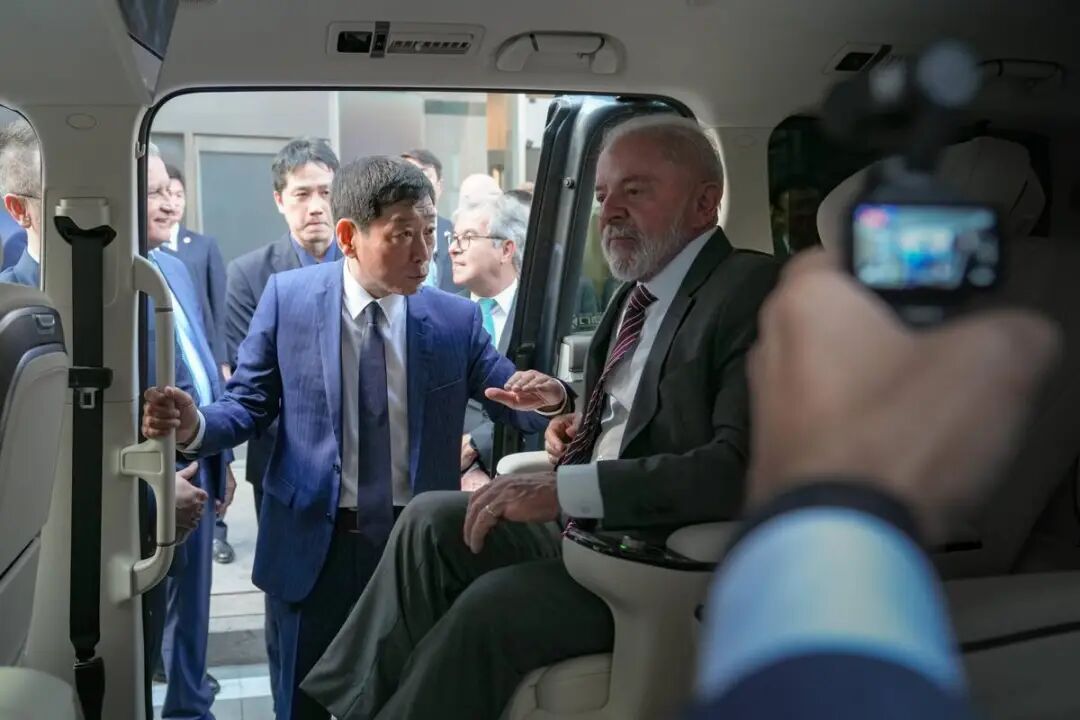
Consider BYD first. Its Camaçari factory commenced operations on October 9, 2025, at the site of Ford's old industrial base, which closed in 2021. Spanning 4.65 million square meters with an investment of 5.5 billion reais, it is BYD's largest overseas industrial complex globally. The factory's initial production capacity is 150,000 vehicles, expanding to 300,000 in the second phase, with Wang Chuanfu announcing a long-term target of 600,000 vehicles to Lula at the inauguration ceremony.
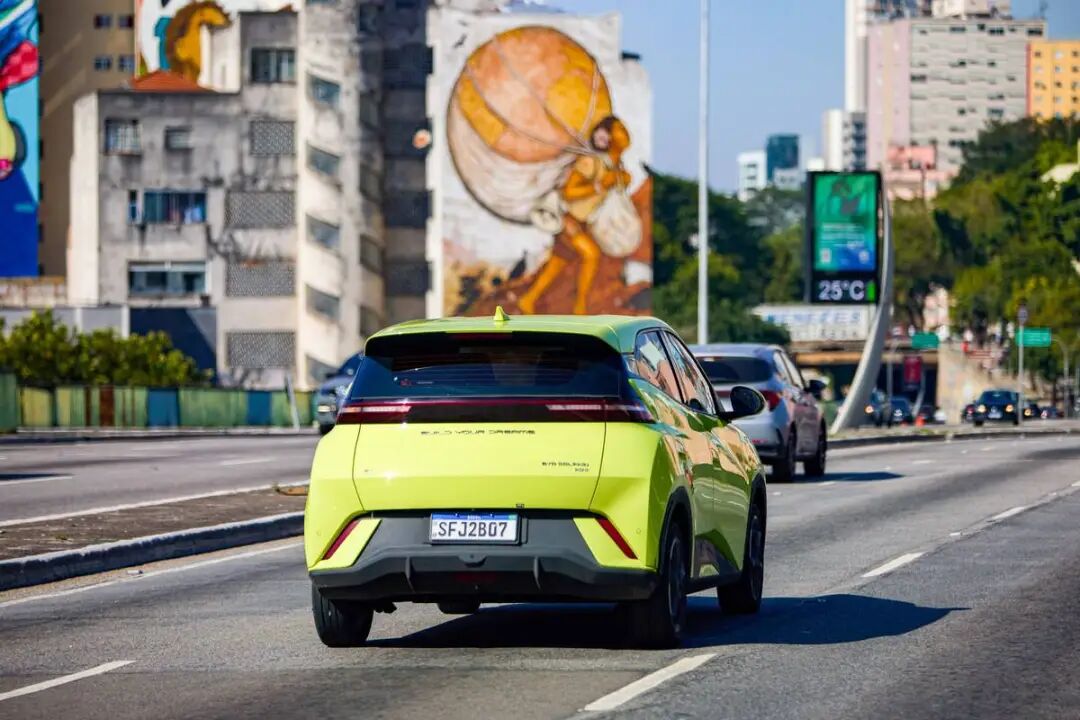
This expansion exceeds most expectations. From January to August 2026, BYD registered 145,862 vehicles in Brazil, with 22,209 in September alone, capturing an 8.5% market share and nearing 200,000 cumulative vehicles for the year.
For comparison: In 2023, it sold only 17,937 vehicles in Brazil throughout the year. Cumulative sales of pure electric models exceeded 100,000, more than seven times the second-place competitor. Currently, approximately 30,000 monthly orders face a production capacity of 25,000 vehicles, with the growth defined by production bottlenecks rather than demand bottlenecks.
The distribution network is expanding simultaneously. BYD already has 200 operational dealer stores in Brazil, covering all states, with plans to increase to 250 within months.
The Dolphin Mini, Song family, and King form the main product lineup, with three models simultaneously cracking Brazil's top ten national sales in August, backed by the complete implementation of inventory, financing, and after-sales systems rather than mere price offensives.
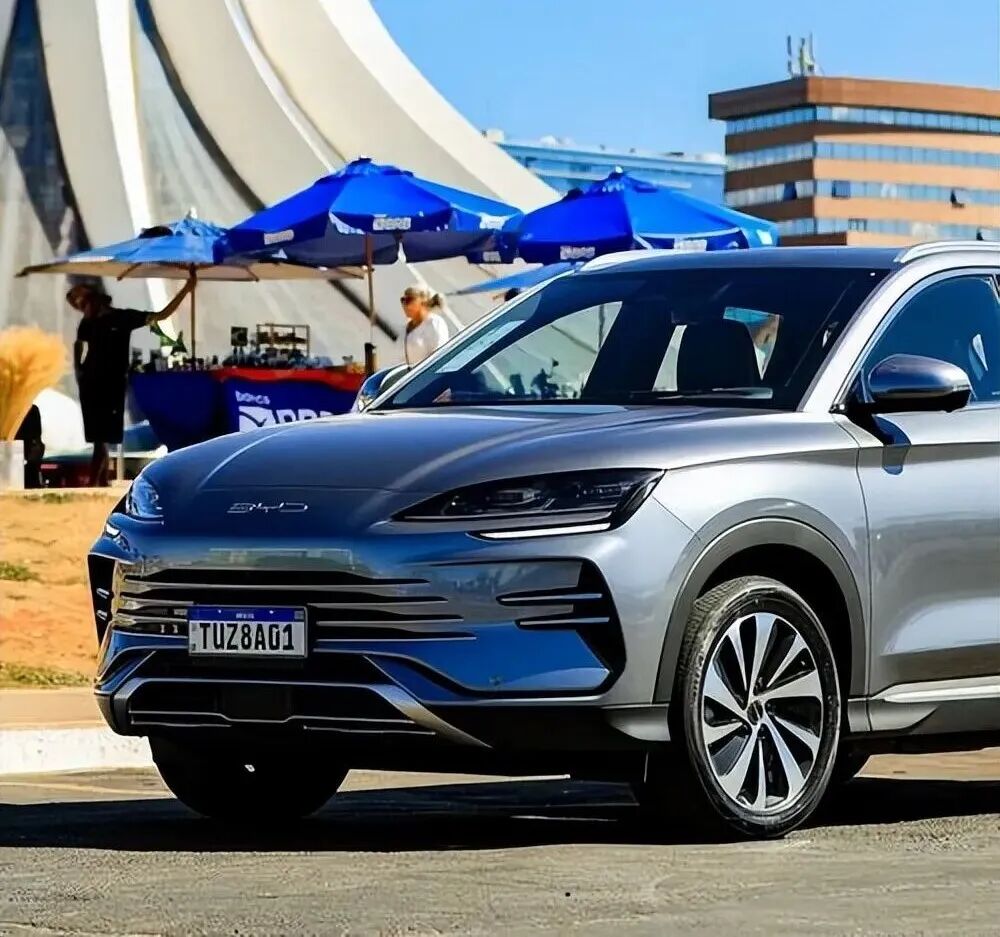
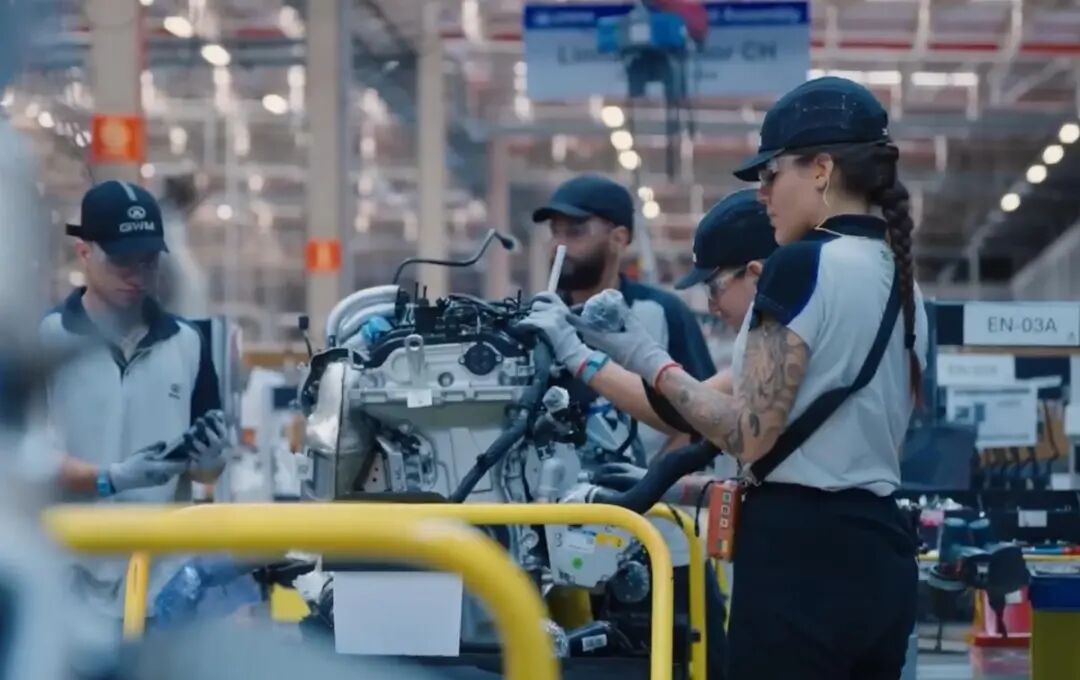
Localization of the supply chain is also accelerating. The factory currently employs about 9,000 direct workers, 90% of whom are locals from Bahia, making it the state's second-largest industrial employer. The workforce is expected to expand to 10,000 by the end of 2026, with direct and indirect employment reaching 20,000 at full production. Civil construction for the welding and painting workshops has been completed, with the localization rate exceeding 50% by early 2027. With export orders for 50,000 vehicles each to Argentina and Mexico, Camaçari is upgrading from a Brazilian factory to a manufacturing base serving all of Latin America. BYD aims to claim the top spot in Brazilian auto sales by 2030.
Great Wall Motors has taken a different path. Its Iracemápolis factory also repurposed old assets from Western automakers, reopening the former Mercedes-Benz factory that closed in December 2020 on August 15, 2025, with an annual production capacity of 50,000 vehicles, manufacturing the Haval H6, Haval H9, and P30 pickup trucks.
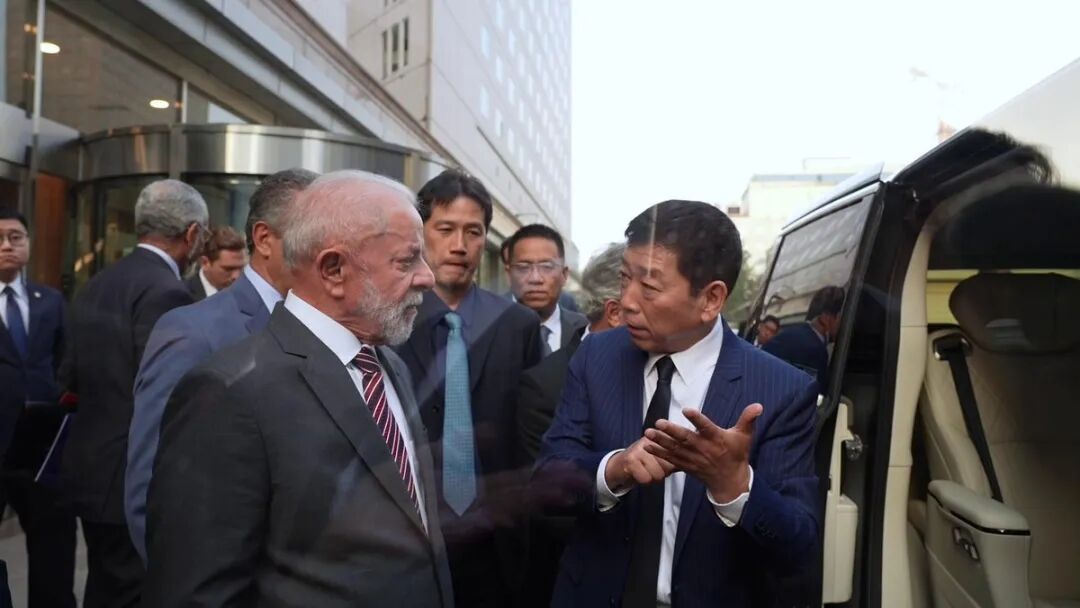
Great Wall Motors has even grander plans for Brazil, committing a total investment of 10 billion reais, with 4 billion invested by 2026 and 6 billion by 2032, ultimately aiming to achieve annual sales of 250,000 to 300,000 vehicles in Brazil.
For a factory starting with an annual capacity of 50,000 vehicles, this target necessitates three to four rounds of capacity expansion and signifies that Great Wall Motors views Brazil as a global strategic base on par with Thailand and Russia.
The site selection for the second factory is already underway among the four states of Santa Catarina, Paraná, São Paulo, and Espírito Santo, with the second-phase investment extending to supply chain construction, battery pack assembly, and even heavy-duty truck operations.
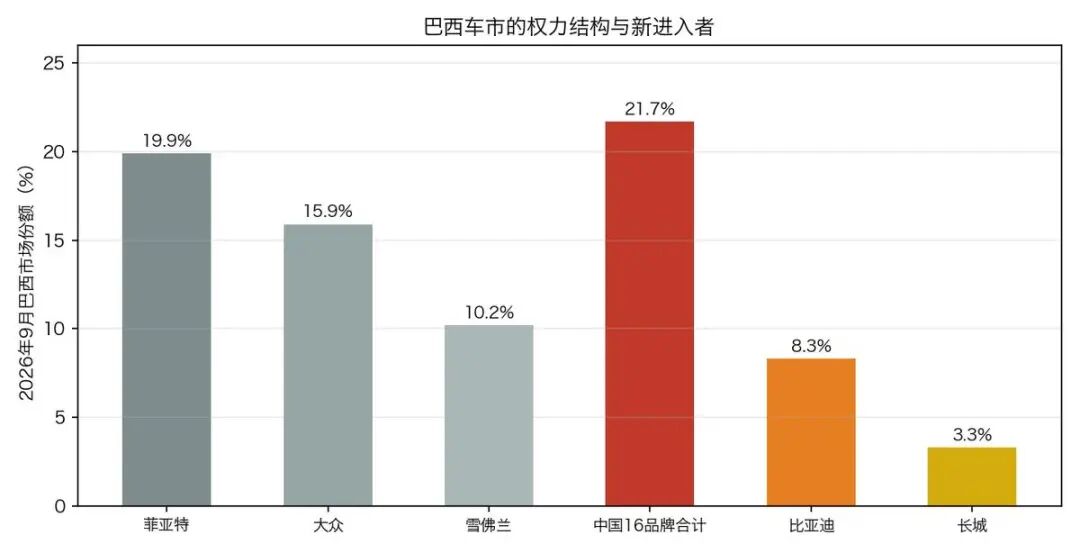
BYD targets the incremental market with new energy vehicles, growing from zero to 20,000 monthly sales in three years; Great Wall Motors targets the existing market with SUVs and pickups, relying on localized manufacturing to encroach on traditional automakers' turf. One fast, one slow, their commonality lies in treating Brazil as a long-term strategic market rather than merely an export destination.
-END- Disclaimer: This article is an analytical study based on the public company attributes of listed companies and the information disclosed by them in accordance with their legal obligations (including but not limited to interim announcements, periodic reports, and official interaction platforms). Shiyu Xingkong strives for fairness in the content and viewpoints presented but does not guarantee their accuracy, completeness, or timeliness; the information or opinions expressed in this article do not constitute any investment advice, and Shiyu Xingkong assumes no responsibility for any actions taken based on this article.
Copyright Notice: The content of this article is original to Shiyu Xingkong and may not be reproduced without authorization.
-
![]()
Leapmotor’s Staff Increases by 9,732 in Just Over a Year. Can Zhu Jiangming’s ‘Mini BYD’ Outpace Geely and BYD?
-
![]()
Why Are AI Glasses So Popular, Yet Goertek's Q3 Sales Drop by 2.4 Billion Yuan with Inventory Reaching 22.4 Billion Yuan?
-
![]()
POLYVISION's IPO Review: Persistent Decline in Gross Profit Margin and Weakening Industry Outlook
-
![]()
Audi’s Strategic Split: SAIC-Audi’s Two-Year Plan Leads to Gasoline Vehicle Sales Until 2027 End | Mirror Pro
-
![]()
Racing to Become the "Pioneer Large-Scale Model Stock on the U.S. Stock Exchange": Anthropic Reports Over $80 Billion in Losses Within Half a Year
-
![]()
Wang Teng, Ex-Xiaomi Exec, Proves Prescient Half a Year Ago: Domestic Smartphone and Tablet Product Lines Face Discontinuation Wave
-
![]()
Post-2000s Female Employee Causes Stir at XPENG Launch Event
-
Anthropic Still Needs to Keep 'Sprinting'