Huawei Wins Audi A8 Deal — Why That Matters More Than Launching Another "Jie" Brand
 11/02 2026
 520
Editor: Liu Zhicheng
Reviewer: Xu Xu
Is the Audi A8 about to team up with Huawei? German magazine Manager recently reported on negotiations still underway: Audi is in talks with Huawei to co-develop a China-exclusive version of the next-generation A8. According to the plan leaked so far, this China-market A8 would no longer be imported from Germany but built locally at the Audi FAW PPE plant in Changchun. The report also says core technical development would be handed to Huawei, with the first batch of vehicles planned for production before the end of 2028.
A high-end SUV on the same platform would follow. The report notes, of course, that the plan has not been finalized and that neither Audi nor Huawei has officially confirmed it. It says the plan is being championed by Audi global CEO Gernot Döllner and may not even have been fully reported to the group's top management in advance — hence its nickname, the "China Adventure Plan." If it ultimately comes to pass, its significance will be something else entirely.
In the past, Audi's approach in China was mostly to introduce global models and adapt them locally; now, production of a flagship sedan — and possibly part of the R&D leadership — may shift to China. More importantly, the negotiation itself already reflects a deeper shift: when the flagship models of German luxury brands need to lean on the technological foundation of Chinese tech companies to win back the market, the balance of power in the global auto industry is being redistributed.
Among BBA, why is Audi the first to approach Huawei?
Judging from the Audi-Huawei track record, this is far from unlikely. Audi has already rolled out multiple models equipped with Huawei's smart driving system. On the combustion side, its three main models — the A5L, A6L, and Q5L — all offer Huawei Qiankun smart driving, making Audi the first among the German BBA luxury brands to equip fuel vehicles with Huawei technology; on the electric side, the Audi A6L e-tron and Q6L e-tron have also adopted Huawei's smart driving solutions. What puzzles observers, though, is that many traditional brands have been reluctant to work with Huawei precisely because they worry Huawei's halo is too strong and will overshadow their own.
As the long-reigning top three in China's premium auto market, BBA should logically be the most protective of their "idol baggage." So why is Audi the first to cooperate with Huawei? There are even rumors that the flagship A8 will be handed to Huawei as well. Behind this is not simply a question of whether Audi is willing — it is that Audi genuinely needs Huawei's capabilities. Audi's sales and profitability are both under pressure to varying degrees.
According to an article by Guancha, estimates put Audi's global sales in 2026 at only slightly above 1.4 million vehicles — possibly lower than its 2011 level. In the Chinese market, according to insiders, 2026 sales are expected to be only above 420,000 vehicles, a year-on-year decline of about 30% — the lowest since 2012 — and internal warnings even suggest it may face its first loss since entering China. Compared with BMW and Mercedes-Benz, Audi is more passive.
In 2025, BMW's global sales were 2.4637 million vehicles, a slight increase of 0.5%; Mercedes-Benz's were 2.16 million, down 10%; Audi's were 1.6236 million, down 2.9%, having declined for two consecutive years. In addition, according to Tianyancha, BMW's 2025 revenue was 133.453 billion euros, with net profit of 7.451 billion euros;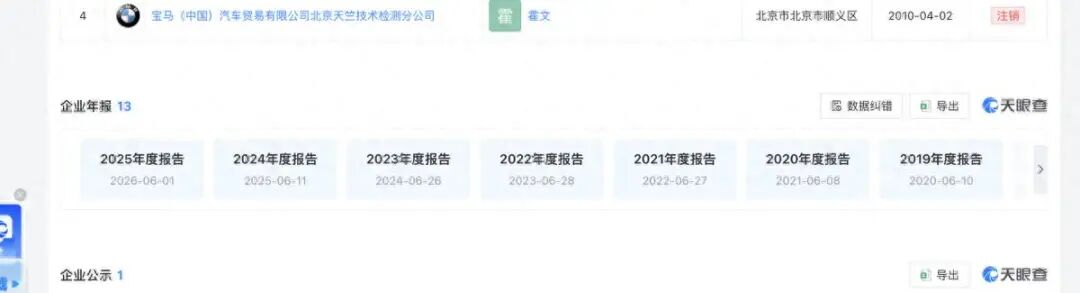
Mercedes-Benz's revenue was 132.214 billion euros. Audi's 2025 revenue was 65.5 billion euros — only half that of BMW and Mercedes-Benz. More critically, Audi's global sales are highly dependent on the Chinese market. In 2025, China accounted for nearly 40% of its global sales. Once the Chinese market loses momentum, the impact on overall operations will be more direct than for the other two.
Against this backdrop, Audi has a stronger sense of urgency around intelligent upgrading than Mercedes-Benz and BMW. BBA still has accumulated strength in mechanical quality, but in areas such as high-level smart driving, smart cockpits, and electronic and electrical architectures, they have clearly ceded ground to Chinese local brands. Now, after two years of smart-driving democratization, China's smart-driving penetration rate has exceeded 70%, and smart driving has become standard.
To stay competitive in the high-end market and keep its premium positioning intact, high-level smart-driving capability has become table stakes for the high-end segment. And in high-end smart driving, Huawei is precisely the manufacturer with the strongest appeal and highest brand recognition in the current Chinese market. Although there is some controversy around Maextro at present, the Maextro S800 once ranked first in luxury sedan sales above 700,000 yuan for several consecutive months, with single-month deliveries exceeding 4,300 vehicles in December 2025 — once higher than the combined single-month sales of the Porsche Panamera, BMW 7 Series, and Maybach S-Class.
It has already been proven that high-end models empowered by Huawei can indeed break through in the heartland of traditional luxury brands. So Audi being the first to tie up with Huawei is not simply a matter of "who is more open," but the result of differentiation after competitive pressure. Mercedes-Benz and BMW, relying on their global market advantages, still have some buffer room for intelligence and electrification, while Audi faces challenges on all fronts and more urgently needs Huawei's intelligent capabilities and influence to stabilize its position in China's high-end market.
Reading the smart-driving market through the Audi A8: Will joint-venture brands and Huawei move toward each other?
The Audi A8 carries considerable weight in the minds of Chinese consumers. Together with the Mercedes-Benz S-Class and BMW 7 Series, it has long formed the benchmark for luxury D-segment sedans, and it was the dream car of many owners when they were young. It is more like a benchmark, a bellwether. Precisely because of this, if the Audi A8 really adopts Huawei's platform and is produced in China, its significance far exceeds a single cooperation deal — and for Huawei it will be an important brand spillover.
In the past, Huawei's intelligent capabilities mainly appeared on new brands — for example, the "Jie" series and "Jing" series including AITO and Luxeed, as well as new brands created by traditional players such as Avatr and Voyah; its penetration into joint-venture and traditional brands was limited. On models on sale from a range of traditional automaker brands — GAC Aion, Hyper, Chery, SAIC-GM, FAW Toyota, and Dongfeng Nissan — third-party smart-driving solutions such as Momenta are more commonly seen than Huawei. If the A8 cooperation materializes, this opening may be torn wide open, and Huawei will have the chance to extend its influence from the "new-brand camp" to traditional luxury flagships, and then seek incremental growth from more joint-venture brands.
In fact, such signs have already appeared: Stellantis, the parent company of Maserati, is reportedly also seeking cooperation with Huawei. Judging from the current development of the automotive industry, it is not impossible for more joint-venture brands to cooperate with Huawei later. First, Huawei's own growth logic has changed, and joint-venture brands are also advancing a China-first strategy. HarmonyOS Intelligent Mobility's five Jie brands have formed a system, but they have also brought resource pressure.
Yu Chengdong once admitted that Huawei's capabilities make it difficult to support two or three "Jie" brands, and that doing five "Jie" brands is very difficult. The five Jie brands are more like "model homes" built by Huawei: at the beginning, traditional automakers were unwilling to hand over the leadership of intelligence to Huawei, and Huawei had no choice but to build AITO through Seres, deeply define the product, and ultimately achieve a smash hit, driving the other four Jie brands and other brands to cooperate with Huawei in different modes. In a sense, the original mission of Huawei's five Jie brands has been completed, and the demonstration effect of the model homes is very good.
Therefore, Huawei's future focus is likely to tilt toward the HI mode, using the "five Jie" brands for brand depth and the HI mode and ecosystem cooperation for scale and breadth. Huawei needs to find the next increment: traditional automakers that do not need Huawei to take over the brand and sales, but do need smart driving, cockpit, and electronic and electrical architecture capabilities. The question follows: where is the next increment? The joint-venture camp is a good target.
Under the HarmonyOS Intelligent Mobility mode, Huawei has to take over the brand, channels, and product definition. This path is asset-heavy and investment-heavy and cannot be replicated indefinitely; joint-venture brands, by contrast, have sales, channels, and brand heritage, and what they lack is intelligent capability — and they will never be willing to give up leadership. This is precisely the space for the HI mode and ecosystem cooperation, and also the realistic anchor for Huawei to further consolidate its positioning of "not building cars, but being China's Bosch." In addition, joint-venture brands are accelerating transformation in China — BMW, for example, has proposed "Home in China" and "China First"; Volkswagen has finalized the concept of "In China, for China."
As is well known, joint ventures advocate globally unified platforms for smart driving, so they often choose Nvidia and Qualcomm for chips, and domestic chips find it relatively difficult to break in. Previously, only Volkswagen, with relatively high "awareness," actively embraced Huawei and Horizon. In 2025, joint-venture brands began to shift, gradually abandoning the "pretension" of globally unified platforms and beginning to advocate "China First." "China First" means having sufficient independence while maintaining strategic synergy with the globe, so as to respond quickly to market changes. To put it bluntly, it means using whatever technical solutions Chinese users like. This may be the opportunity for Huawei to cut in.
Second, Huawei is currently pushing the downward expansion of its own smart driving, which happens to overlap with the transformation gap of joint-venture brands. Entering 2026, the penetration rate of new energy vehicles has exceeded 60%, and in September it even reached 67%. The outcome of the oil-versus-electric battle is basically clear. For joint-venture automakers, the question is no longer "whether to transform to electrification," but "how to transform." Third-party data shows that in August of this year, the combined insurance registrations of new energy vehicles for five major brands — Volkswagen, Toyota, Nissan, Honda, and others — totaled only 34,900 vehicles, with a penetration rate of only 12.9%, far below the market average of about 60%.
In the mainstream market below 200,000 yuan, the domestic camp (BYD, Leapmotor, Geely) has an increasingly high proportion of self-developed smart driving, making it difficult for Huawei to cut in; by contrast, joint-venture brands, in a situation similar to Audi's, may need Huawei's brand and technology endorsement the most. Looking deeper, joint-venture brands embracing Huawei are not only making up for technical shortcomings, but also bridging the generational communication gap with young consumers.
At present, the automotive consumer base has clearly split: the base of fuel-vehicle buyers is still mainly those born in the 1970s and 1980s, who recognize overseas brands' mechanical craftsmanship and brand history; while those born in the 1990s and 2000s are becoming the main force of new energy vehicles. They grew up in an environment where Chinese brands rose, Huawei broke through blockades, and DeepSeek shattered the foreign closed-source narrative, and the "halo" of overseas brands is being disenchanted. The reason the "old ascend" controversy at the XPeng launch event was so big is precisely because this generational differentiation has already turned from data into a public-opinion event — what automakers face is no longer a unified consumer market, but different circles cut apart by age, technology preference, and brand perception.
For these young consumers, the value of a car is no longer just equal to the engine, chassis, and brand story; smart cockpits, high-level smart driving, and software iteration speed also determine product strength — and these are precisely the shortcomings of traditional joint-venture brands. With the help of Huawei's halo, perhaps this gap can be filled. From this perspective, it is not impossible for both sides to move toward each other.
Huawei needs joint ventures in order to break through the new-brand circle, expand the scale of smart driving, and at the same time defend both the high-end and the downward-expansion ends; joint-venture brands need Huawei because it concerns whether they can continue to stay at the table in the second half of China's electrification — using an intelligent experience that better understands the new generation of users to rebuild brand connection and prevent brand aging.
-
![]()
This "Silver October" New Energy Report Card Is Most Striking for Its "Zero, Xiao, Xiao" Polarization
-
![]()
AITO's First Real Test: Can the New M8 Carry Seres on Its Own?
-
![]()
Huawei Wins Audi A8 Deal — Why That Matters More Than Launching Another "Jie" Brand
-
![]()
The Most Aggressive Investor, Mediocre Returns: Has Amazon Become a Worker for Nvidia?
-
![]()
Explained: Anthropic's Prospectus — and What It Means for the Auto Industry and Us Workers
-
![]()
[Xauto Smart Driving Rankings] Xiaomi SU7 N70 HyperOS 1.18.3 Urban Evaluation Report
-
Why AI Short Dramas Have Exploded in Popularity
-
Japanese Big Four See Sales Drop in China in First 10 Months; Are Toyota and Honda Hybrids Still Worth Buying in the Cold North?