Handing the Reins to the Chinese Side: Can Joint Ventures Rest Easy?
 11/03 2026
 462
Introduction
For any joint venture automaker, the pressure of having the Chinese side take the lead is far greater than imagined.
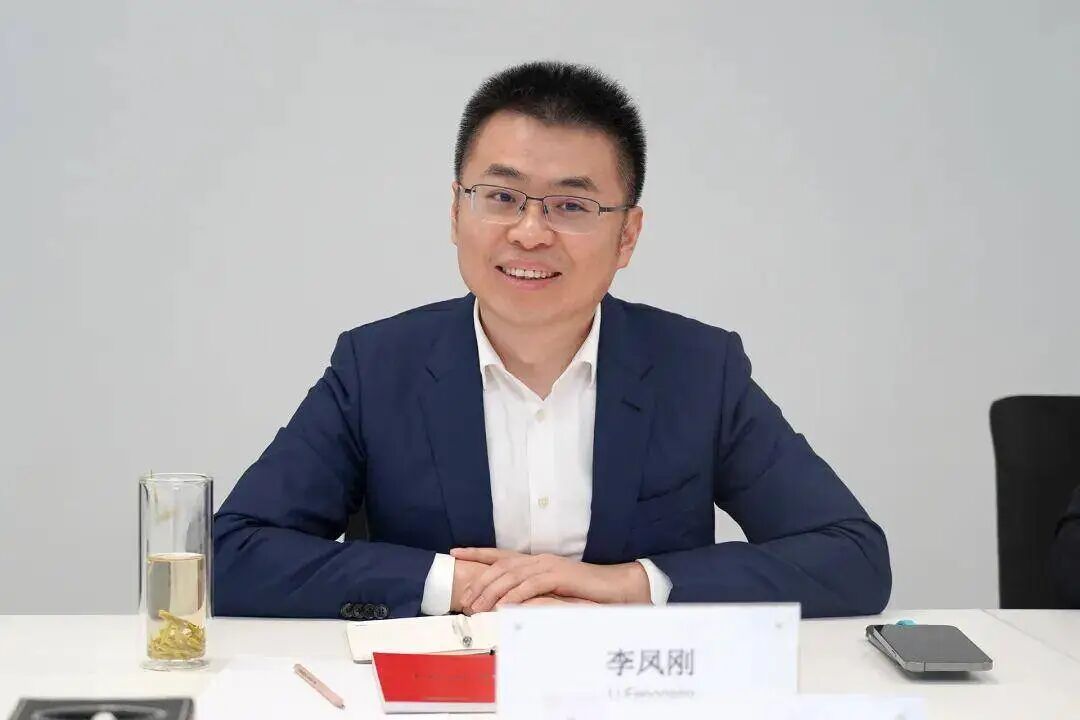
On November 1, 2026, Li Fenggang, who had served just one year as general manager of Beijing Hyundai, "chose" to leave. At that point, only one month had passed since the launch of its strategic electric vehicle, the Inster V.
For Beijing Hyundai, at a time when the Chinese auto market is changing so dramatically, changes in senior leadership are nothing out of the ordinary. But looking at the moves made by joint venture automakers over the past two years, Li Fenggang's departure has also raised a new question for the entire industry.
Everyone believes that, just as China's new energy industry has taught the global auto market a lesson, a large number of overseas automakers have been deterred from the Chinese auto market. If joint venture automakers still want to survive, abandoning the old ways and handing the say to the Chinese side is the right path.
For many years, because of the rapid transformation of the industry's "new four modernizations," Chinese consumers are no longer as easy to fool as before, and their gradually accumulating demands have already made life difficult for automakers of all kinds. Precisely for this reason, after being deeply stung, companies such as Volkswagen, Toyota, and GM are all discussing the feasibility and necessity of Sino-foreign co-governance.
Having been accustomed to taking the helm for decades, suddenly letting foreigners let go and handing the future of the joint venture company to China must be very uncomfortable.
However, seeing market share falling again and again, technological advantages disappearing in the blink of an eye, and brand culture instead becoming a stumbling block constraining enterprise development, whether strong ones like German and Japanese brands or weak ones like Korean and French brands, no one dares to say they can rely on their own abilities to ride out this storm.
Since 2025, we can clearly see that the remaining joint venture automakers have finally come around. The emergence of a large number of localized new energy vehicles is meant to connect the detours taken in the past to China's fast lane as quickly as possible.
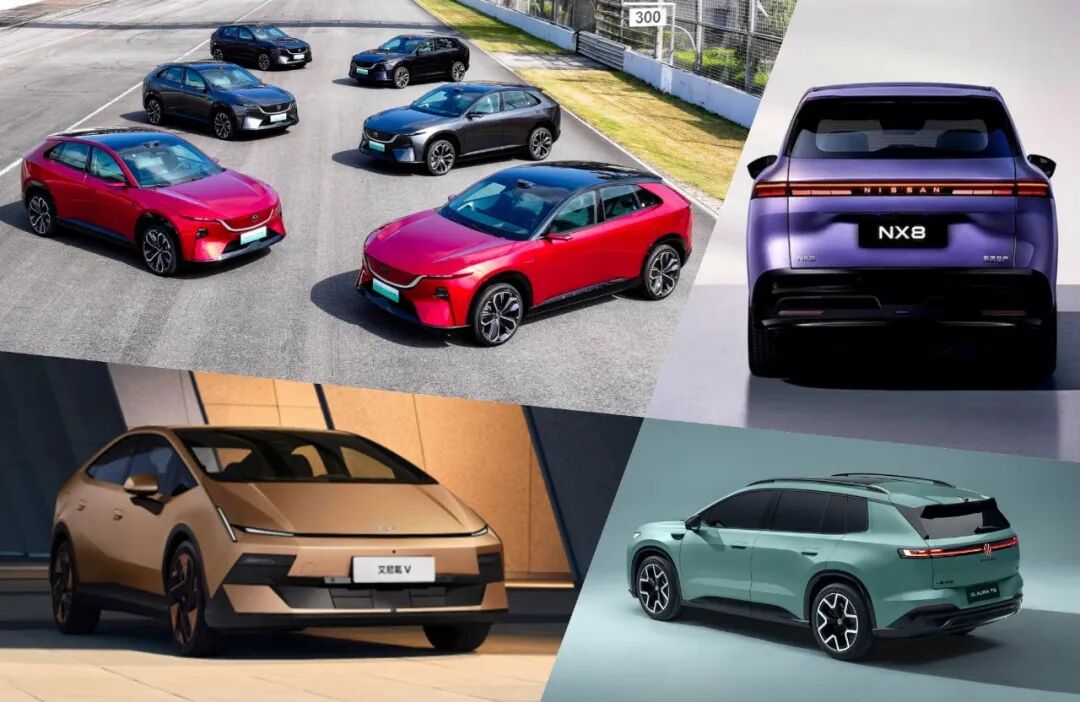
The preliminary results of Toyota bZ3X and Nissan N7/N6 genuinely boosted the confidence of the entire joint venture camp. Everyone believes that as long as they follow in the footsteps of the successful ones, the results will certainly not be worse than imagined.
At this time last year, with the same idea, Li Fenggang replaced the Korean leadership and became the first Chinese general manager since the establishment of Beijing Hyundai. The purpose was clear: since someone could use this move to give the company's future hope of survival, then Hyundai, the world's third-largest automaker, should certainly be able to replicate it 100%.
Unfortunately, reality is always cruel. We not only underestimated the complexity of the transformation of the Chinese auto market, but also underestimated the impact of dramatic changes in consumption trends on joint venture enterprises.
01 The most realistic portrayal of Beijing Hyundai's current situation
October 18, 2002, was the day Beijing Hyundai was officially established. Thereafter, in the development of the Chinese auto market, Beijing Hyundai quickly became a key piece in promoting the growth and strengthening of the local automotive industry.
Some people always say that joint venture companies merely rode the east wind of "market for technology" and enjoyed the dividends of the era when China was poor and blank.
On the surface, that can indeed be said, but objectively speaking, the leading joint venture companies, including Beijing Hyundai, not only established a mature and sustainable development model for China's auto industry, but also provided sufficient guidance in every link of R&D, production, and sales, and truly let Chinese users see what world-class advanced automobiles looked like.
Elantra, Sonata, Tucson—these familiar names are historical witnesses to the Chinese auto market gradually moving from a planned economy to true marketization.
Around 2023, when the shadow of the pandemic had just faded, we must admit that precisely because of these glorious foundations, leading joint venture automakers still faced the Chinese market with a fluke mentality.
Three years later, even if foreigners come to China again and see the dazzling array of electrification achievements, they may just treat it as entertainment, but it was precisely from that time that the time node for the collapse of the inherent advantages of joint ventures was already close at hand.
During this period, it cannot be said that Beijing Hyundai did not perceive the crisis. Selling idle factories and reducing channels were not cyclical adjustments. These sudden changes undoubtedly made the Koreans deeply aware of the sense of powerlessness of Korean cars under the wave of the rise of China's automotive industry.
Before Li Fenggang, Beijing Hyundai had no shortage of iron-fisted general managers. Lu Zaiwan, who came to China at the beginning of the company's establishment, and Yin Mengxuan, who succeeded Tan Daohong, were all capable hands who pushed the company forward.
But Beijing Hyundai shares a common characteristic with other Japanese and Korean joint venture companies: the seemingly continuous rotation of top leaders looks like the embodiment of the group's internal job rotation system, but also confirms the reality that they cannot closely observe changes in the Chinese auto market. Since 2013, the frequency of changing general managers almost every year or so directly removed a due resistance to the rapid rise of China's auto industry.
Of course, to some extent, after understanding the speed of evolution of the Chinese auto market, placing Li Fenggang in the general manager position can also be regarded as Beijing Hyundai's core measure to address the immediate crisis.
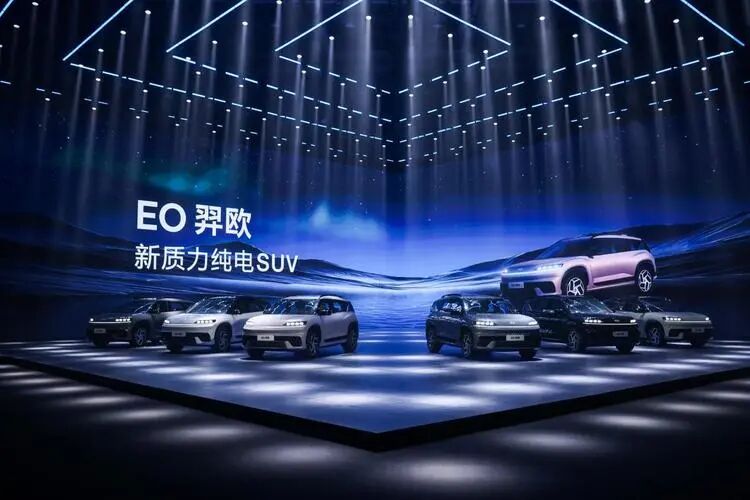
Over the past year, Beijing Hyundai has taken many actions. Let us temporarily count the launch of the EO Yio, comparable to the bZ3X, and the newly launched Inster V as changes under Li Fenggang's tenure. Obviously, as a consistently strong foreign party, Hyundai completely put down its airs. In order to achieve the cost-effectiveness pursued by Chinese users, these two cars clearly were not aimed at making money.
But what was the result? The market performance of the Inster V remains to be seen, but the EO Yio has proven over the past year that the style of the old and new eras will not undergo a qualitative change just because a certain company attaches importance to it.
Similarly, when among a series of Sinicized new energy vehicles launched by the joint venture camp, only one bZ3X has stood out, sometimes the outside world really feels that the dramatically changing Chinese auto market is cruel enough to traditional joint ventures.
In terms of products, in order to fully meet user needs, some adopted the technology of the Chinese side of the joint venture and were said to have lost their soul, while others insisted on building cars in their own way and were labeled as unwilling to progress; in terms of marketing, no matter what they said, it was regarded as arrogance for not understanding the progress of the times.
N7/N6, Zhijing E7/L7, EZ-6/EZ-60 and others flashed briefly before entering the margins of the market. Before the EO Yio, the Kia EV5 did try to get closer to Chinese users, but the word "joint venture" was like a steel stamp branded on them, and later newcomers could all step forward and criticize them.
What exactly should be done to regain consumer recognition? Joint venture automakers have thought themselves sick over it.
02 "People" are not the only condition for joint ventures to win
Entering 2026, more and more joint venture automakers have officially announced that they will establish separate Chinese R&D teams and that core executives will be local Chinese talent. Following BMW and Mercedes-Benz, Audi recently "invited" Zhang Jun from Chery and officially appointed him on November 1 as president of Audi (China). You should know that in Audi's 40 years in China, this position had never been officially handed to a Chinese person.
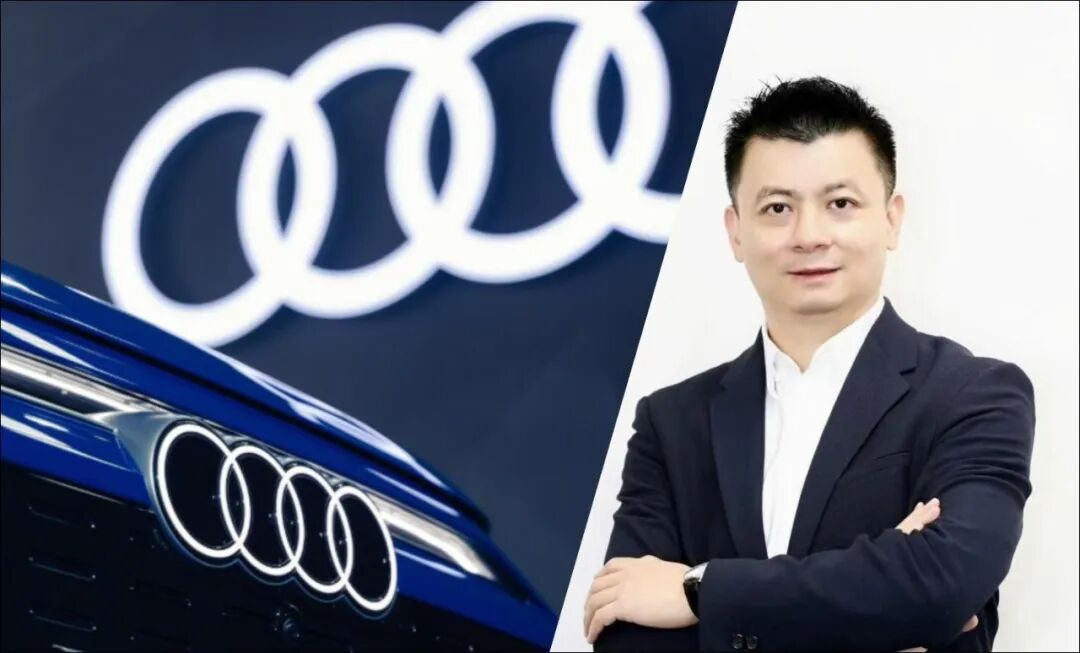
Such a major move is just like Beijing Hyundai last year. Apart from borrowing the vision of Chinese executives to bring the company back onto its proper development track, I cannot think of any other reason.
According to brand positioning, Audi is certainly not in the same circle as Hyundai, but for the company itself, thorough Sinicization may indeed be the best choice at present. Especially with Toyota and Volkswagen setting an example ahead, in one word, just "do it."
However, it is said that man can conquer nature, but will today's Chinese auto market necessarily buy into this?
Actually not. Looking back at these two years, no matter how impressive the people brought in, without good localized products as support, what use can more supporting actions be? A drumstick alone cannot make a sound. Moreover, even good products may not necessarily become an instant hit, so how can there be reason to pin all hope on so-called redistribution of power?
The most typical example is Mazda. Relying on Changan's technology, Mazda long ago gave up the path of self-developed electric vehicles in China, but in the end, the EZ-6 and EZ-60 merely became the vanguard for Mazda's exports. Going forward, even if a separate Chinese R&D team is set up, wanting every model to be a hit would still be difficult even for Toyota.
And in the middle of this year, Volkswagen (Anhui) announced that Chief Operating Officer Liu Zhanshu would become CEO starting July 1, succeeding Tang Tingwan, whose term ended as planned. But with the current product line of ID. UNYX taking on Chinese cars head-on, it is estimated that merely changing to a Chinese executive will hardly turn things around.
From the perspective of a joint venture company, Sino-foreign co-governance will make the whole company more like a Chinese automaker, and its way of thinking will at least align with current Chinese consumption trends. But then again, in the existing market competition, which companies that truly have the ability to cause trouble for their opponents are not Chinese automakers?
This means that joint ventures and independent brands have once again stood on the same starting line.
So what is the situation in the auto market this year? Looking at data from any channel, you can see that not a single item brings good news. In September, retail sales in the national passenger car market were 1.618 million units, down 28.0% year on year and up 5.0% month on month; from January to September, cumulative passenger car retail sales were 13.334 million units, down 21.7% year on year.
Barring surprises, a 20% decline in passenger car retail sales this year and 5 million fewer vehicles sold are already inevitable. In the face of such turbulence, presumably no Chinese automaker can remain unscathed alone, let alone joint venture players who have just awakened.
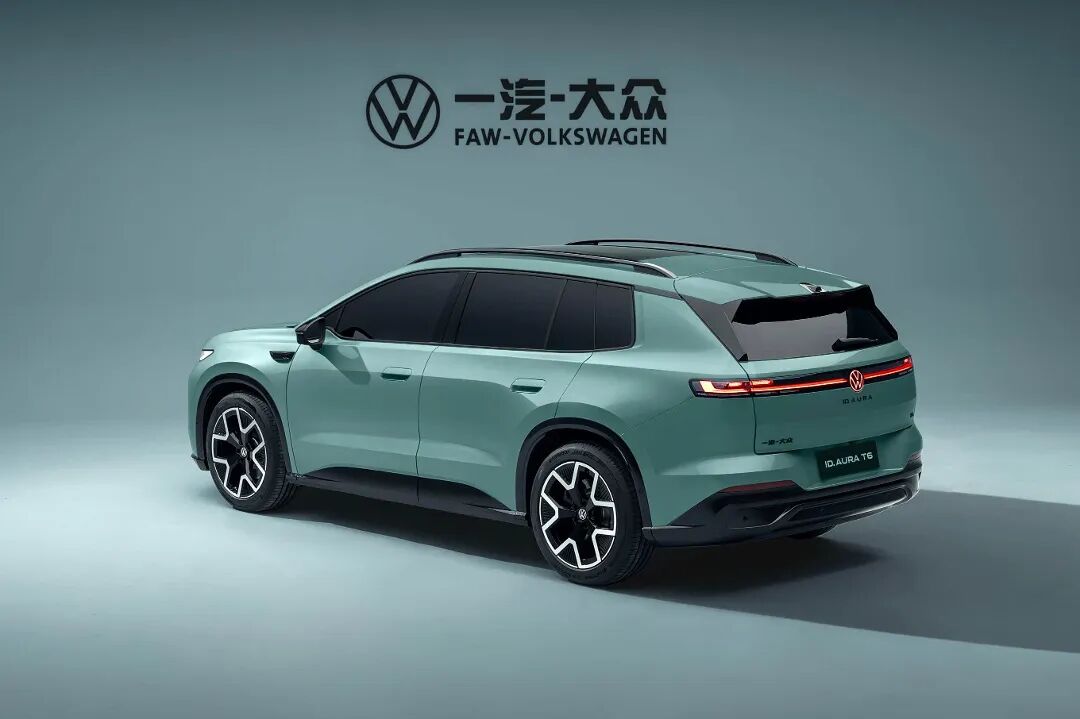
In the second half of this year, FAW-Volkswagen and SAIC Volkswagen continued to push hard, launching a bunch of all-new electric vehicles at prices capable of suppressing their own fuel models such as Lavida and Tayron. The terminal market, meanwhile, very friendly gave support no less than last year's support for the bZ3X.
This is the best microcosm of the effectiveness of Volkswagen China's strategy, but if you say this is a true portrayal of joint venture enterprises staging a king's return in the joint venture 2.0 era, that is obviously not the case. Having a posture lower than that of same-class independent new cars and abandoning the brand halo to emphasize cost-effectiveness feels more like a helpless choice for survival.
Handing the say to the Chinese side ultimately did not convert the former brand reputation into a premium. Compared with competitors, price has unexpectedly become the advantage for joint ventures to survive. In this regard, "thirty years east of the river, thirty years west of the river" is the phrase the outside world likes to use most.
Was Li Fenggang's departure a choice made by Hyundai after discovering that relying on a Chinese team was of no avail? We do not know. But needless to say, for joint venture companies that adopt a full set of Chinese solutions, all of this is only temporary. "Making money" is the ultimate goal of the company's continued operation in China.
For this reason, the Chinese team in the joint venture has not finally been given a chance to show itself; on the contrary, in front of Chinese automakers with equal strength, the challenge appears even more formidable. Rather than relying on bottomless price wars to defend the base, the foreign side wants to see in the following years a prospect with the possibility of sustained profitability. So who can still believe that as long as the system is Sinicized, the joint venture transformation is half successful?
Responsible editor: Cao Jiadong Editor: He Zengrong

THE END
-
US Sales Drop 4%, Japan Plummets 27%—Are Only Chinese Consumers Obsessed with Face? iPhone 18 Pro Surges 29%
-
![]()
BYD Reports 566.3 Billion Yuan, Geely 272.6 Billion Yuan: A Recap of Revenue and Profit for Ten Automakers in the First Three Quarters
-
![]()
After the Big Price Cut, Is the MONA L05 Still Overpriced?
-
![]()
Mercedes' Anchor Is Adrift
-
Beijing Hyundai’s New Energy Transition Slams on the Brakes
-
![]()
Will AI Also 'Take Over' Airport Bookstores?
-
![]()
Haval H6 Held Wei Jianjun Back? The Topic Trends Online
-
![]()
Nebius: The New Cloud Sector's "Magic Pill"—Solid Gold or Just a Bubble?