After the Big Price Cut, Is the MONA L05 Still Overpriced?
 11/03 2026
 540
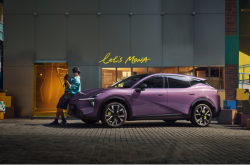
Recently, Xpeng officially launched the MONA L05. As expected, the official starting price came in significantly lower—especially the limited-time range of 139,800 to 171,800 yuan, which showed the market Xpeng's sincerity.
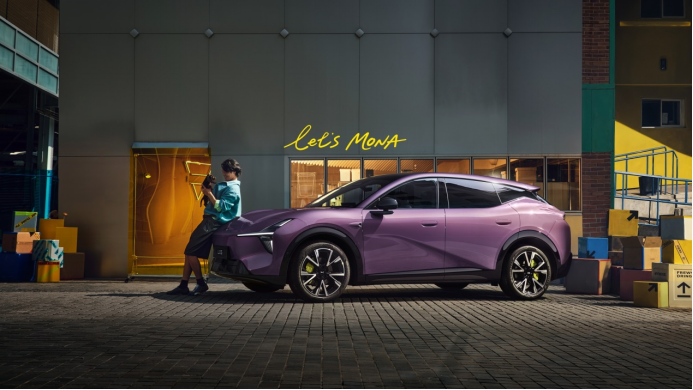
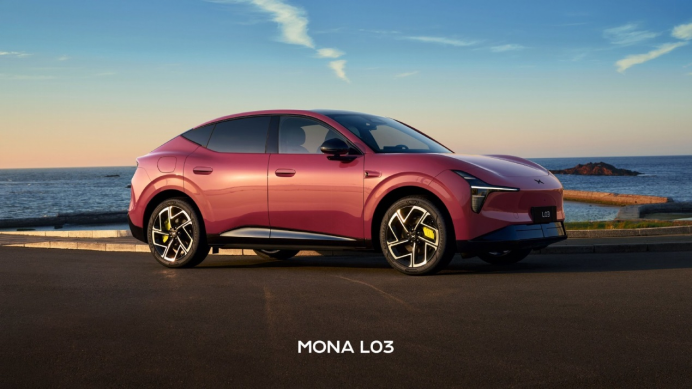
To be fair, for an electrified mid-size SUV, 139,800 to 171,800 yuan is already a fairly friendly price—at least it can't be called too expensive. And given that the Xpeng MONA L03 already runs 123,800 to 156,800 yuan, it makes sense that the larger, higher-positioned MONA L05 carries a limited-time starting price 16,000 yuan above the L03.
The catch is that the L05's official price still falls short of market expectations. The pre-sale price was set high, and the official price isn't cheap either. Lay out the price lists of competitors in the same bracket and compare them one by one, and the L05's pricing has no advantage.
Start with the pure electric versions. The entry-level 540 km Volkswagen ID.AURA T6 starts at just 129,900 yuan. For 139,900 yuan, you can already get the 660 km model, and the Ultra version of the 660 km range variant, with lidar, is priced at only 166,900 yuan. The Mazda EZ-60 is slightly pricier, with its pure electric 600 km version at just 145,900 yuan. The ARCFOX Alpha T7 is even more aggressive: a mid-to-large SUV over 5 meters long with a 3,040 mm wheelbase, starting at a downright 132,800 yuan. Its pure electric version comes standard with an 800V platform, an 84.8 kWh CATL battery, and a starting range of 650 km. Yet the entry-level 535 km Xpeng MONA L05 has a limited-time price of 139,800 yuan, and the 635 km version climbs to 159,800 yuan.
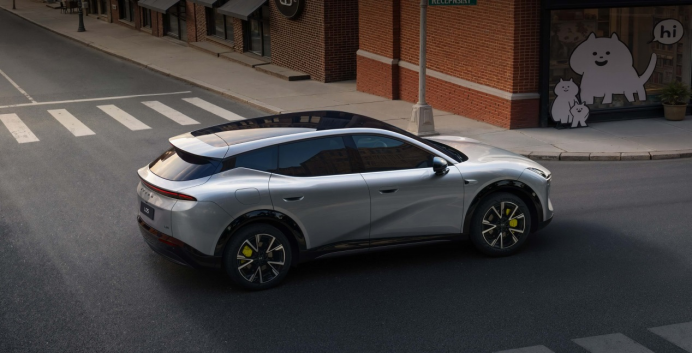
Now the extended-range versions. The MONA L05 Super Extended Range starts at a limited-time 149,800 yuan, with 310 km of pure electric range and 1,310 km combined. The ARCFOX Alpha T7 extended-range version starts at 132,800 yuan, with 320 km of pure electric range and 1,315 km combined. It also uses CATL cells, and its body is a class larger. The Mazda EZ-60 extended-range version starts at 139,900 yuan. The L05 extended-range is 17,000 yuan more expensive than the Alpha T7, has 10 km less pure electric range, and is a size class smaller. You don't need a professional analyst for this math—ordinary consumers can work it out from the spec sheet.
More telling still is the battery behind the range. The MONA L05 pure electric version's battery comes from CALB, with 58.2 kWh capacity on a 400V platform. The Qiyuan Q06 at roughly the same price offers 800V plus a starting range of 540 km, while the ARCFOX Alpha T7 at roughly the same price offers a mid-to-large SUV plus an 84.8 kWh CATL battery.
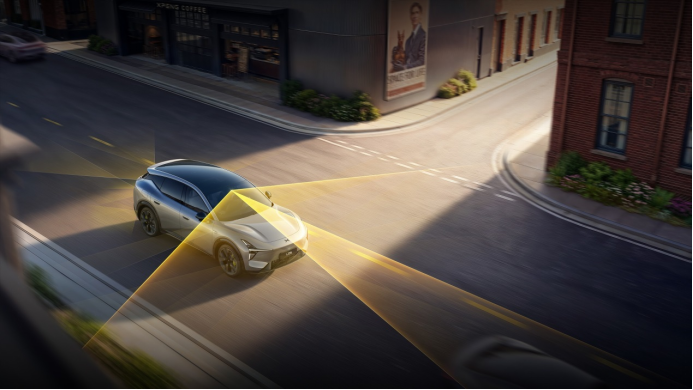
Of course, smart driving is one of the Xpeng MONA L05's core selling points. The Ultra SE version packs dual Turing AI chips with 1,500 TOPS of effective computing power and supports the full second-generation VLA model; the Max version has a single chip with 750 TOPS and supports VLA Lite. The MONA series' previous high-level smart driving versions accounted for 91% of orders, showing that Xpeng's user base genuinely buys into this. But the trouble is that the price premium smart driving can command is limited. When the Kunlun version of the ARCFOX Alpha T7 has already brought Huawei ADS 5 Pro into the 160,000 yuan class, and when the Qiyuan Q06 offers lidar and an end-to-end solution as an option package, the L05's 1,500 TOPS is no longer an exclusive edge—it's a choice that must compete with a bunch of cheaper, larger cars.
As I said, there's not much wrong with the MONA L05's pricing itself. The problem is that in the affordable electrified SUV market where the L05 sits, there are too many competitors—and they're strong.
The Qiyuan Q06, ARCFOX Alpha T7, Volkswagen ID.AURA T6, and Mazda EZ-60 have already raised the bar for the 130,000 to 170,000 yuan range to 800V, CATL batteries, 600+ km of range, and mid-to-large size. The MONA L05 squeezes in with 400V, CALB, a starting range of 535 km, and a mid-size body. Its only differentiator is smart driving. But the pricing power of that differentiator isn't in Xpeng's hands; it's in the hands of consumers willing to pay more for smart driving.
The reason the L05's pricing feels "okay" is that 139,800 yuan is low enough—low enough to make people temporarily overlook what it lacks versus competitors. But once the spec sheets are placed side by side, the L05 is on the back foot at every price anchor. It isn't setting the price; it's matching the bet. Whether it can keep up depends on how many people are really willing to give up a larger battery, faster charging, and a bigger car for Xpeng's smart driving label. The MONA M03's smart driving order share once answered that question; the L05 needs to answer it again.
(Images are from the internet; infringement will be deleted)
-
![]()
Commentary: The "Li Fenggang Phenomenon" — An Unfinished Experiment in Talent Localization
-
![]()
Apple Bows, Alibaba Goes Bottom-Fishing: The AI Ticket for the China-Market iPhone
-
US Sales Drop 4%, Japan Plummets 27%—Are Only Chinese Consumers Obsessed with Face? iPhone 18 Pro Surges 29%
-
![]()
BYD Reports 566.3 Billion Yuan, Geely 272.6 Billion Yuan: A Recap of Revenue and Profit for Ten Automakers in the First Three Quarters
-
![]()
After the Big Price Cut, Is the MONA L05 Still Overpriced?
-
![]()
Mercedes' Anchor Is Adrift
-
Beijing Hyundai’s New Energy Transition Slams on the Brakes
-
![]()
Will AI Also 'Take Over' Airport Bookstores?