Haval H6 Held Wei Jianjun Back? The Topic Trends Online
 11/03 2026
 339
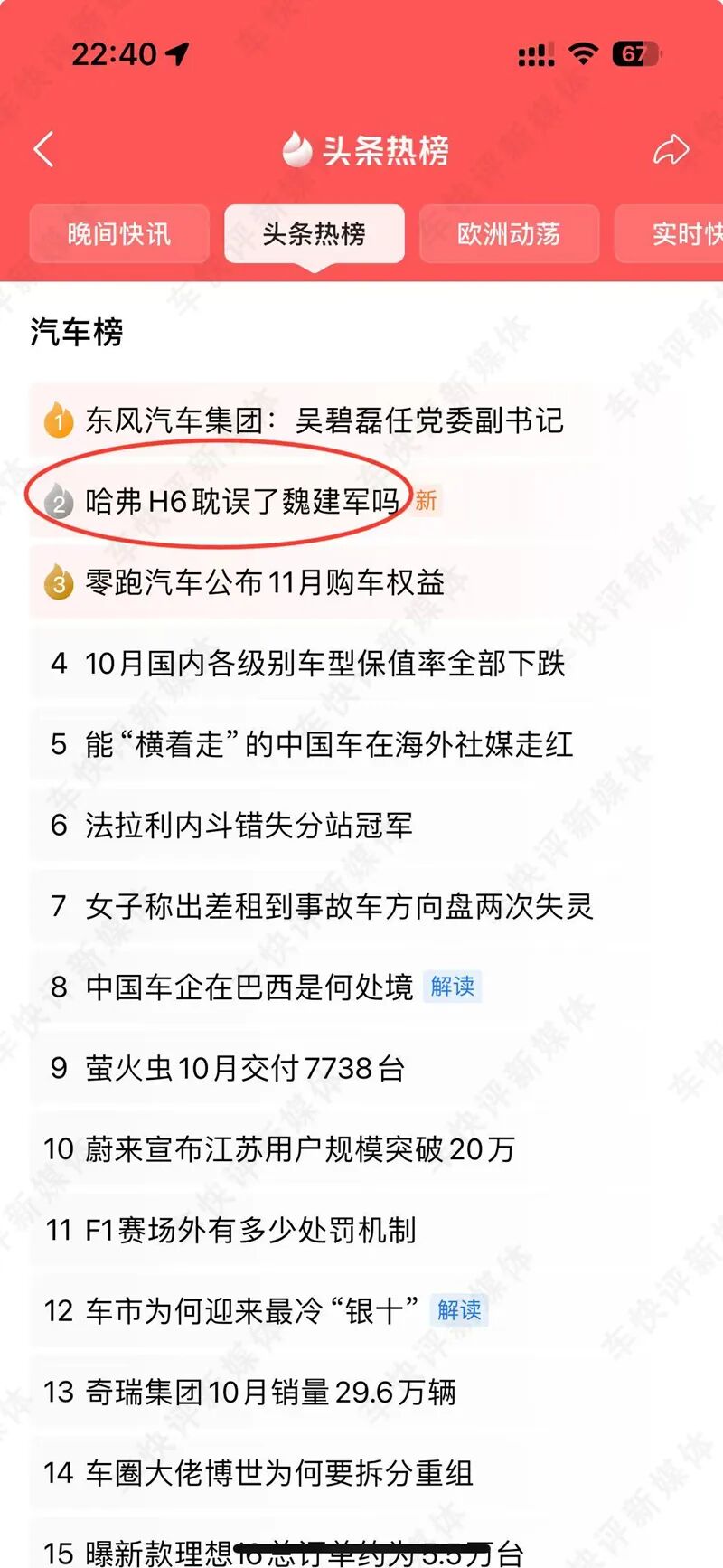
I recently stumbled upon the Toutiao hot list on November 2, where the topic "Did the Haval H6 hold Wei Jianjun back?" surged into the trending searches. This alone speaks volumes about the intense online interest in both the Haval H6 and Great Wall Motor Chairman Wei Jianjun. Today's article will therefore examine this topic objectively—without exaggeration or unfair criticism.
Before diving in, a brief introduction to the Haval H6's sales achievements and Chairman Wei Jianjun's storied history is in order.
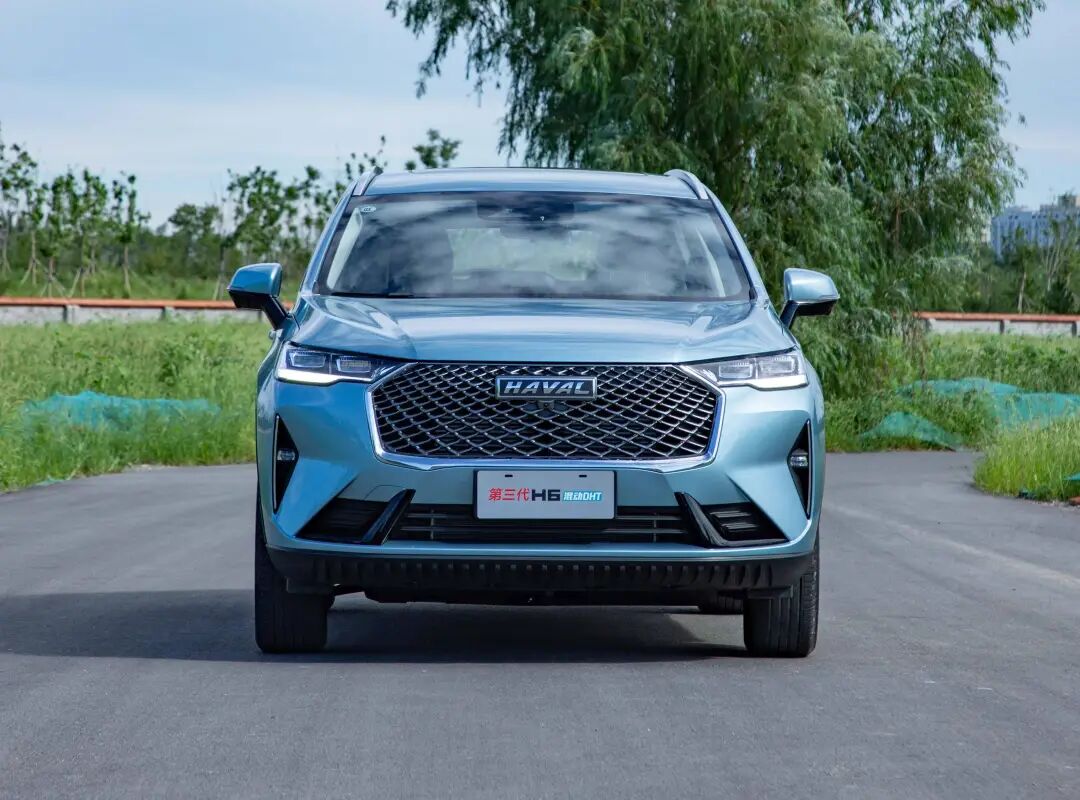
First, it must be acknowledged that in China's domestic auto market—particularly the SUV segment—the Haval H6 can rightly be called a shining jewel. Looking at the numbers: the Haval H6 launched in August 2011. Surrounded by a host of joint-venture fuel SUVs, it quickly became the sales king in the fuel SUV market, thanks to solid product strength and an affordable price. It not only topped domestic SUV sales for 99 consecutive months but also accumulated 108 months as China's best-selling SUV. As of August 2023, cumulative global sales of the Haval H6 had surpassed 4 million units. Calling it a national icon on wheels is no exaggeration at all.
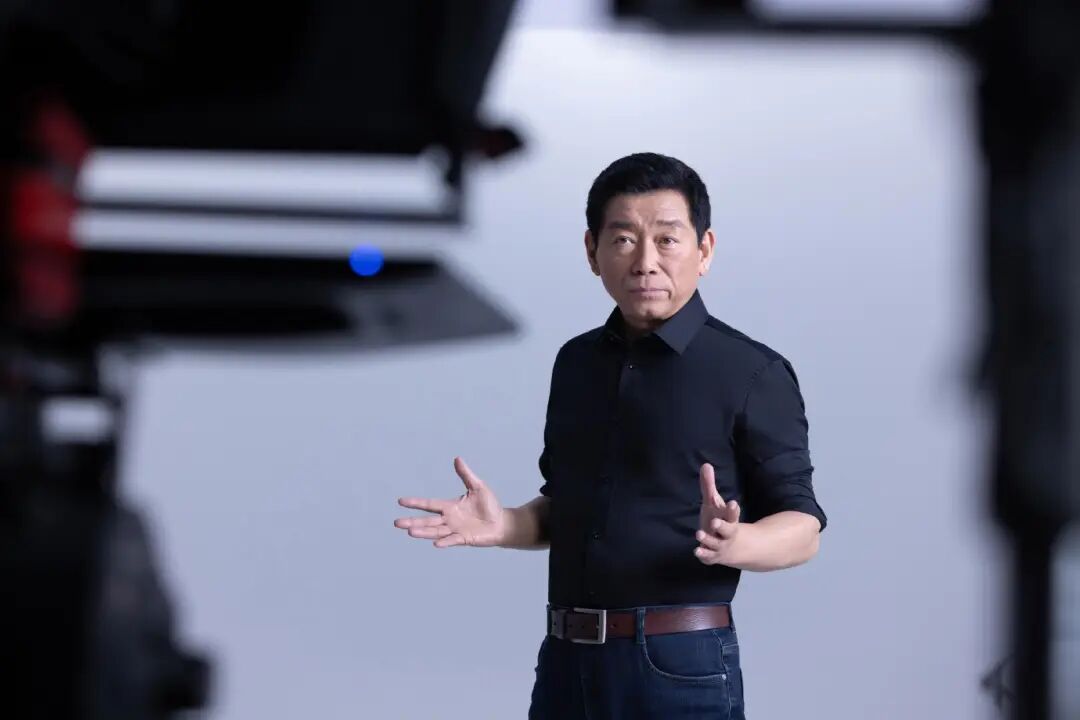
Now let's turn to Great Wall Motor Chairman Wei Jianjun. As the founder of Great Wall Motor—and known as the "Baoding Car God" for his exceptional driving skills—under his leadership the company's annual sales had already exceeded 1 million units a decade ago, back in 2016. In the domestic market, Great Wall Motor has performed remarkably well in the SUV, rugged off-road vehicle, and pickup truck segments. It's fair to say that without Wei Jianjun and Great Wall Motor, China's domestic SUV and rugged off-road vehicle markets today would very likely still be dominated by joint-venture brands.
From this perspective, Chairman Wei Jianjun is unquestionably a respected leading figure among the founders of domestic automakers.
So here's the question: why are the Haval H6—a model that nearly dominated SUV sales throughout the fuel-vehicle era—and Wei Jianjun—the chairman who led Great Wall Motor to 1 million annual sales a decade ago—now being linked together, and even trending? We have to start with Great Wall Motor's current situation.
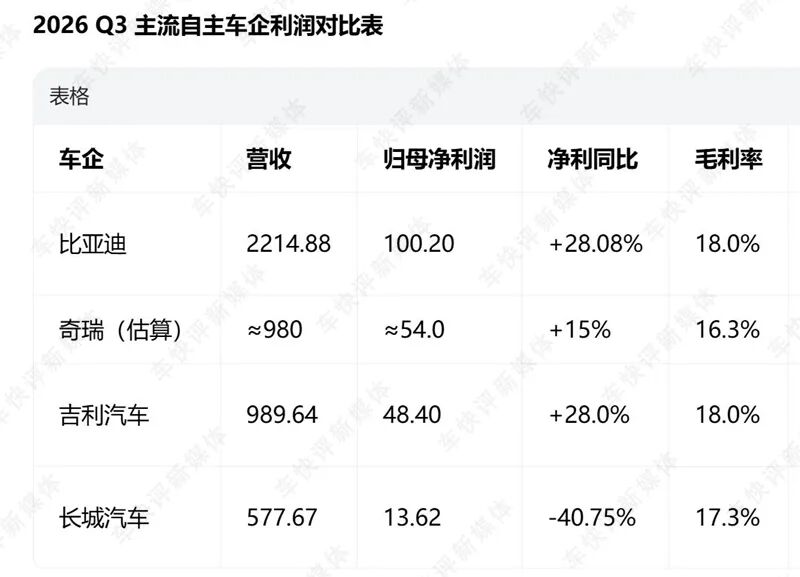
According to Great Wall Motor's recently announced third-quarter 2026 financial report, total revenue was 57.767 billion yuan, down 5.68% year-on-year. Net profit attributable to shareholders was 1.362 billion yuan, also down 40.75% year-on-year. When calculated after deducting non-recurring gains and losses, net profit attributable to shareholders came to just 9.81% yuan, a year-on-year decline of 48%.
In the first three quarters of this year, Great Wall Motor's total revenue was 159.869 billion yuan. Although that represented a 4.09% year-on-year increase, net profit attributable to shareholders was only 3.826 billion yuan—down 55.69% year-on-year. Net profit attributable to shareholders after deducting non-recurring gains and losses was 2.59 billion yuan, down 52.69% year-on-year.
In other words, in the first three quarters of this year, whether measured by net profit attributable to shareholders or by net profit after deducting non-recurring gains and losses, Great Wall Motor's year-on-year decline exceeded 50%. Worse still, cash flow from operating activities was only 6.219 billion yuan—a steeper decline of 70.92% year-on-year.
On the sales front, in the first three quarters of this year Great Wall Motor's cumulative sales were 920,300 units—basically flat compared with last year. Domestic sales, however, were only 444,300 units, down 14.49% year-on-year. In the SUV segment where Great Wall Motor excels, the company is already hard to find among the top 20. Its best-selling model, the Haval Big Dog, ranked only 27th on the list—selling even fewer units than the AITO M7.
Judging from the current situation, Great Wall Motor has not only lost its leading position in the SUV market but has also fallen behind BYD, Geely, Chery, and Changan in the new energy vehicle sector. What's more, its serious "imbalance"—favoring SUVs and pickup trucks while failing to launch sedan products—has meant no major improvement in sales.
Finally, we can draw a conclusion. In Car Quick Review's view, the reason "the Haval H6 held Wei Jianjun back" trended is that the Haval H6's past success was simply too great—prompting Wei Jianjun and Great Wall Motor to focus firmly on the SUV market and neglect the sedan business. Once SUV sales decline while the company is walking on one leg, Great Wall Motor may face an across-the-board collapse.
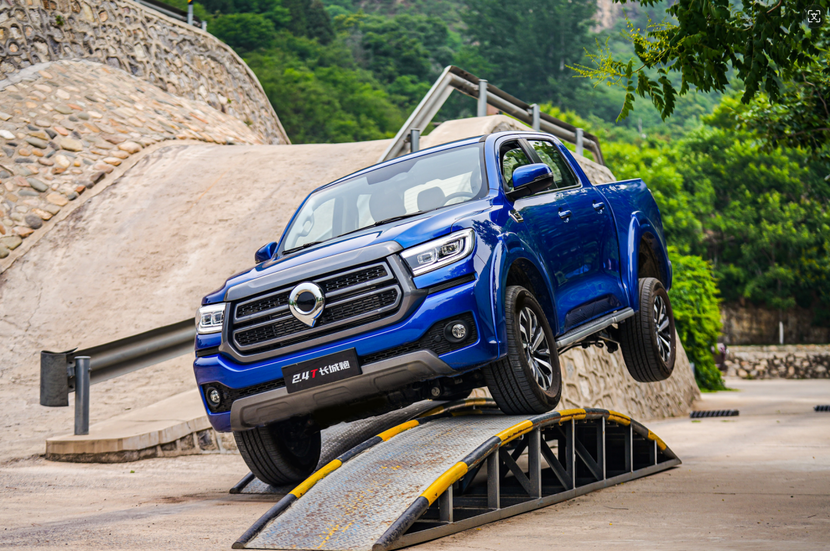
As for pickup trucks, they are inherently a niche market and can basically be ignored. As for whether "the Haval H6 held Wei Jianjun back," feel free to share your views in the comment section.
Copyright statement: This article is original content by Car Quick Review. Please contact us for authorization before republishing. Republishing without permission is strictly prohibited, and any form of plagiarism or misappropriation of text or images is forbidden; otherwise, legal liability will be pursued. Some images in the article are from the internet, and the copyright belongs to the original authors. If your work is used, please contact us to claim payment or request deletion.
-
![]()
Commentary: The "Li Fenggang Phenomenon" — An Unfinished Experiment in Talent Localization
-
![]()
Apple Bows, Alibaba Goes Bottom-Fishing: The AI Ticket for the China-Market iPhone
-
US Sales Drop 4%, Japan Plummets 27%—Are Only Chinese Consumers Obsessed with Face? iPhone 18 Pro Surges 29%
-
![]()
BYD Reports 566.3 Billion Yuan, Geely 272.6 Billion Yuan: A Recap of Revenue and Profit for Ten Automakers in the First Three Quarters
-
![]()
After the Big Price Cut, Is the MONA L05 Still Overpriced?
-
![]()
Mercedes' Anchor Is Adrift
-
Beijing Hyundai’s New Energy Transition Slams on the Brakes
-
![]()
Will AI Also 'Take Over' Airport Bookstores?