Commentary: The "Li Fenggang Phenomenon" — An Unfinished Experiment in Talent Localization
 11/03 2026
 398
"Give the trailblazers a little more tolerance, a little more applause."
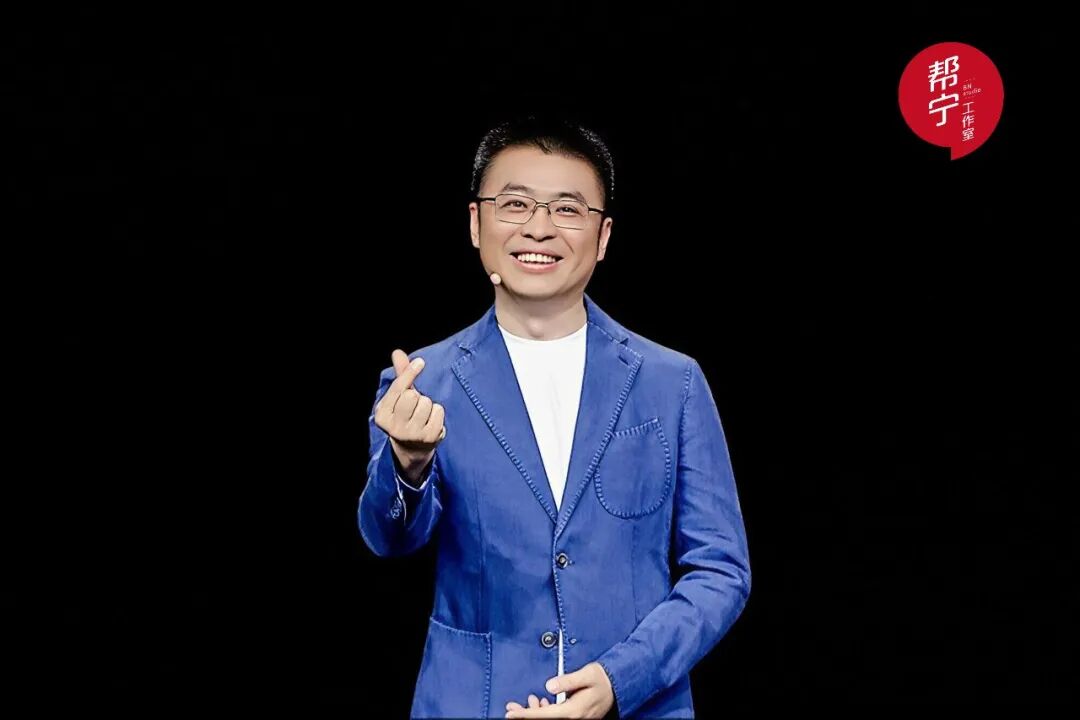
Li Fenggang has stepped down. As of November 1, 2026, he will no longer serve as general manager of Beijing Hyundai.
That is almost exactly one year after he took the reins of the Sino-Korean joint venture on behalf of the Korean side on November 10, 2025 — a three-year contract that ended at the one-third mark.
When Li's appointment was first announced, expectations ran high on all sides.
Beijing Hyundai is a 50:50 venture between BAIC and Hyundai Motor of South Korea. For 23 years since its founding in 2002, the general manager's post had always been filled by a Korean dispatched from headquarters. Li Fenggang was the first Chinese local talent the Korean side had ever appointed to that role.
Many read it as a signal: Hyundai Motor was breaking with its hiring tradition, shedding its airs, and getting serious about the Chinese market.
Beijing Hyundai certainly needed a savior. After peaking at a glorious 1.14 million vehicles in 2016, sales had slid relentlessly ever since, its new-energy lineup was virtually blank, and its dealer network had shrunk to a fifth of its peak. Everyone was hoping for a general manager who understood the Chinese market and the local playbook to lead this established joint venture back from the brink.
A year on, however, the numbers still make grim reading:
In September this year, Hyundai's retail sales in China came to roughly 4,000 vehicles, down 47% year on year. From January to September, Hyundai and Kia combined sold 115,000 vehicles in China, with market share falling to 0.6%.
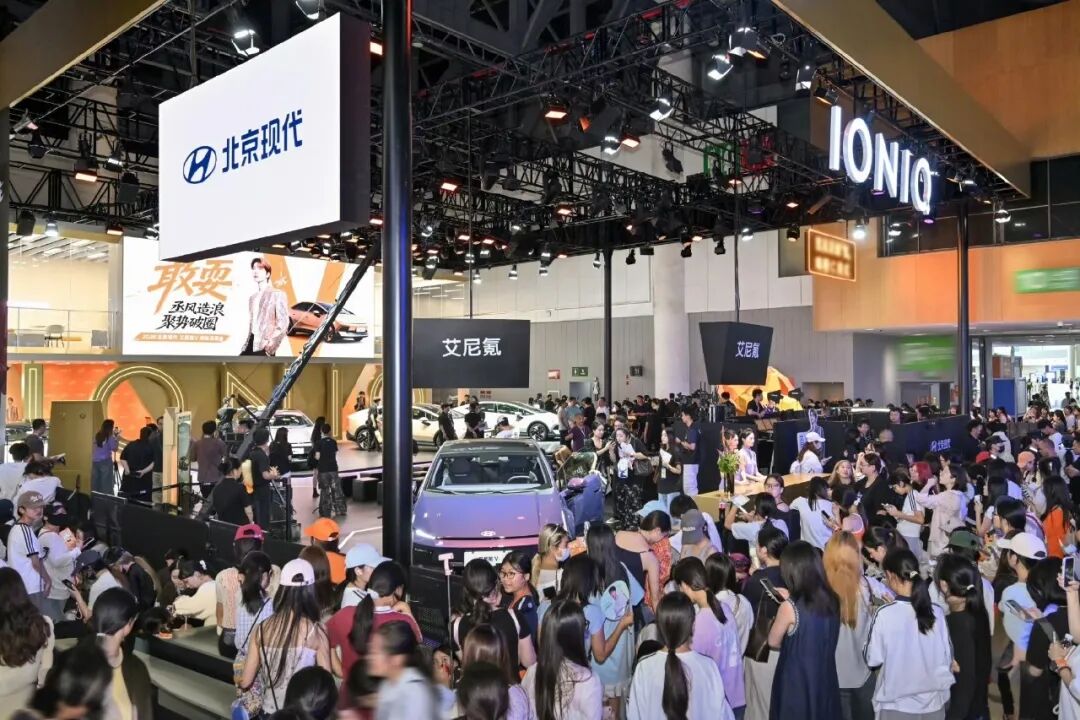
The much-touted Beijing Hyundai Ioniq V pure electric model logged fewer than 100 insurance registrations in its first month on the market. The two shareholders dragged their feet until September before barely agreeing on an annual target of 160,000 vehicles — a far cry from the 500,000-vehicle vision set out in the "Smart Start 2030 Plan" at the start of the year.
To judge Li Fenggang's year as simply a success or failure on the strength of these details would be unfair, because doing so requires reckoning with the many complex realities at Beijing Hyundai. Seen from another angle, his tenure amounts to yet another experiment in the ongoing push by multinational automakers toward talent localization.
The outcome is regrettable and leaves many questions hanging: Will multinational automakers still hand the scepter of China operations — or the joint-venture general manager's chair — to local Chinese talent? Will Chinese executives still put themselves forward for foreign-appointed general manager posts? Will the Chinese and foreign sides of joint ventures keep walking in two parallel worlds, their business philosophies and cultures as fragmented as ever?
From this vantage point, Li Fenggang's resignation is an unfinished attempt — by multinational automakers and Chinese auto talent alike — and it raises at least four questions.
▍01 Do you want local people, or do you want to keep headquarters' power?
The first question: Multinational automakers say they want local talent, but will they really hand decision-making power to Chinese hands?
This is the near-universal dilemma of multinational automakers.
They feel the pain more acutely than anyone: the Chinese market is no longer the market of 20 years ago, when a global model could be brought in and sell like hotcakes. Today's users here are the hardest to please, technology iterates fastest, and the price war is the fiercest.
All of this leaves the foreigners dizzy and alarmed. Unless they find Chinese executives who truly understand channels, users, and the local supply chain to run operations, multinational automakers will sooner or later be pushed out of the Chinese market.
And yet, when it comes to actually delegating power, the worries resurface: Are local Chinese talents familiar with the foreign global system? Do they communicate smoothly with overseas headquarters? Will they tread on the toes of the foreign supply chain? Will they sacrifice profit for sales volume?
This dilemma was especially stark during Li Fenggang's one-year tenure.
On paper, the general manager oversees three core businesses: production, sales, and planning. But the truly critical power of product definition sits with the Korean headquarters. To push through even a small change tailored to the Chinese market, he had to expend considerable effort "paying calls on the Korean R&D team" before inching forward a single step.
As for bringing in CATL batteries, Momenta intelligent driving, and DJI cockpits to close the intelligence gap, or replacing the Korean supply chain to cut costs — every step required back-and-forth wrangling between Hyundai headquarters and the Chinese and Korean shareholders.
The most fatal deadlock, however, was over business objectives.
The Chinese side wanted sales volume and to restore channel confidence as quickly as possible, but the Korean side insisted on profit first and was unwilling to sacrifice profitability in pursuit of volume.
Li Fenggang had reform ideas and the ability to execute, but no resource-allocation power in his hands and no final say. In the end, he was less a true operator who could set direction than a coordinator caught between Chinese and foreign shareholder disagreements.
This was not Li Fenggang's experience alone. Six years ago, Dongfeng Yueda Kia appointed Li Feng as its first Chinese general manager. He cut low-end models, cleared inventory, and raised the average price. He lasted 545 days before being moved out after performance fell short of the Korean side's expectations.
For foreign brands, appointing local talent is not a simple personnel matter: those familiar with the foreign system are often expatriate executives who cannot understand the Chinese market; Chinese executives understand Chinese users, but they struggle to quickly win the trust of foreign headquarters — let alone pry open that complex global system.
Li Fenggang's one-year attempt once again shows that talent localization is not as simple as putting a Chinese person in the general manager's seat.
If decision-making power remains with headquarters ten thousand miles away, and products are still introduced half a beat late according to the global rhythm, then the localized top leader will forever be just a public relations symbol signaling to the outside world — and will never cure the joint venture's illness.
▍02 A hot potato: will local managers take it?
The second question: Should Chinese local talent take the position of foreign-side top leader at a joint venture? Is that position an opportunity for Chinese people to add value, or a risk of being diminished?
Li Fenggang graduated from the Department of Mechanical Engineering at Tsinghua University and joined FAW-Volkswagen in 2003. He spent 22 years in the FAW system, rising from a technical position to executive deputy general manager of FAW Audi Sales Company. At the time, he was one of the youngest senior management cadres in the FAW system — his ability speaks for itself.
But the foreign general manager's post tests any Chinese professional manager, because the foreign shareholder has a global strategy, the Chinese shareholder has local demands, the old rules accumulated over decades in the joint venture system are hard to reverse, and the confidence of users, dealers, and suppliers all needs rebuilding.
These things must be handled simultaneously, communication must be patient, all parties must be balanced, and at critical moments one must dare to make the final call. Chinese talent whose experience has accumulated in only one system will find it hard to quickly get their arms around such a large and complex situation.
Beijing Hyundai's situation was worse still: sales had declined for 10 consecutive years, the new-energy transformation had missed the best window, and the huge disagreement between the Chinese and Korean shareholders had long been an open secret.
In a situation where the board is deadlocked and decisions cannot be pushed forward, no one — whoever is put in place — could turn things around within a year. After all, no one is a god.
Some say Li Fenggang "suffered defeat," but from another angle, daring to take on this hot potato and daring to poke through that layer of window paper in the most rigid of systems is worthy of respect in itself.
At the same time, one should not, because of this single departure, regard such positions as a scourge.

Take it or not? Of course one should continue to take it.
If local talent always circles within the comfort zone of independent brands, or always only serves as the deputy general manager sent by the Chinese shareholder of a joint venture, Chinese automotive people will never reach the core stage of the global industry.
Among the senior ranks of multinational automakers, there are not only people from their own countries. Among executives at Volkswagen, GM, and Stellantis, there are Brazilians, Americans, and Indians. Why can't there be Chinese people?
Moreover, Chinese people have advantages others cannot match: China has been the world's largest auto market for more than a decade, has the most mature new energy supply chain, the most picky users, the fastest product replacement, and the fiercest competition. Talent who have struggled and grown in this environment are tough and highly skilled. Some of them are fully capable of running a joint venture enterprise well — and are qualified to become regional CEOs of multinational automakers' global operations, or even to sit in the global CEO position.
Of course, taking such a position will definitely mean suffering grievances and being caught in the middle, and accepting the prejudice that success is credited to the system while failure is blamed on personal ability.
But talent grows even more through such battering. For Li Fenggang, this year is not a stain on his career, but precious experience that money cannot buy.
▍03 Headquarters are half a beat slow, but China waits for no one
The third question: Can a single professional manager bridge the collision between the two cultures and two sets of business logic of the Chinese and foreign sides in a joint venture?
Many people attribute the difficulties of joint venture automakers to poor products and poor marketing. In fact, looking deeper, they are constrained by conflicts between culture and decision-making systems.
Korean companies emphasize hierarchy, with power concentrated at headquarters. Everything must be reported level by level. Even a small product change may take half a year for headquarters to approve.
But the rhythm of China's auto market shifts in an instant. In 2026, new energy penetration exceeds 67%, a new car is launched almost every day, intelligent driving systems iterate once a month, price wars ignite at the slightest spark, and new cars generally stay hot for only three months. Whatever the brand, if you are a step slower, consumers will forget you.
Headquarters are half a beat slow, but the market waits for no one. This contradiction exists in basically all joint ventures.

A more realistic disagreement lies in interests.
In 2025, Hyundai Motor sold 7.27 million vehicles globally, ranking third in the world for four consecutive years, with net profit exceeding 55 billion yuan. China's sales of just over 100,000 vehicles are only a very small piece of its global pie.
That is why the Korean side dares to wait and dares to drag things out. It would rather protect profits than cut prices to chase volume, and would rather slowly introduce global models than develop products separately for the Chinese market.
But the Chinese shareholder cannot wait. BAIC needs Beijing Hyundai to contribute sales and returns; dealers have goods piled up in inventory and are losing real money every month; employees see share falling continuously and morale disperses.
On one side is the foreign side's profit-first approach from a global perspective; on the other is the Chinese side facing a survival crisis in the local market. Two calculations are made within the same company, and no matter how good a go-between the general manager is, he cannot balance everyone's moods.
The industry is no stranger to such scenes.
Ten years ago, French cars began to fail in China for the same root cause: PSA headquarters consistently refused to delegate power to the Chinese team, products were designed according to European logic, pricing followed the global system, and the decision-making chain was too long to catch up with the market rhythm. In the end, Dongfeng Peugeot Citroen fell from annual sales of 700,000 to less than 50,000 vehicles.
Korean cars today have taken the same old path: ten years ago their combined share exceeded 10%, but now monthly sales have fallen below 10,000 vehicles and share is only 0.6%; headquarters similarly holds power, reactions are similarly slow, they are similarly half a beat slow in the new energy window, and even the move of turning Chinese factories into export bases is exactly the same.
Cultural integration is even more than an empty phrase.
Whoever treats the Chinese market as "part of the global market" will have Chinese consumers treat that brand as a marginal brand; whoever is truly willing to shed airs, take root, and raise the Chinese team's decision-making weight to the same level as headquarters will be qualified to stay at the table of China's auto market.
German, Japanese, and American brands all learned this lesson at a cost. If the Korean side still cannot figure it out, the French side's today will be the Korean side's tomorrow.
▍04 A negative asset, or a bridge that should not be cut
Returning to the joint venture itself: with market share falling below 1% and sales only a fraction of the peak, does such a joint venture still have value to exist? How should this path be taken going forward?
This is the fourth question.
Recently, a view has been circulating in the industry: Beijing Hyundai has become a negative asset for BAIC, and it would be better to liquidate and exit sooner rather than later.
But if you really ask whether the joint venture should continue to be held, the answer is mostly yes.
From an industrial perspective, it still sells over 100,000 vehicles a year. Thousands of employees, hundreds of dealers, and thousands of upstream and downstream supply chain enterprises depend on it for their livelihood, involving the lives of countless families. Simply shutting it down is certainly unrealistic.
Moreover, joint ventures are not just business; behind them often lie country-to-country economic and trade relations. Dongfeng Peugeot Citroen did not exit even in its most difficult times. Apart from still having operating value, one reason is that China and France are major powers to each other in their respective regions, and the political and economic ties between China and France and between China and Europe need this industrial cooperation channel as a bridge.
For another example, since the normalization of China-Japan diplomatic relations, even when political relations between the two countries fell to a low point, economic exchanges were not greatly affected due to economic interdependence, and the tradition of "promoting politics through economics" has been maintained.
China and South Korea are close neighbors, and maintaining communication and ties in economy and trade is good for both countries. Joint venture automakers are precisely one of the smoothest channels among them.
Acknowledging the value of existence does not mean avoiding problems.
Today's joint venture automakers have long passed the stage of comfortably winning by exchanging market for technology. Independent brands have captured nearly 70% of market share. The technological discourse power in new energy and intelligentization is in the hands of Chinese brands. When consumers buy cars, the word "joint venture" is no longer entirely a plus.
If joint ventures still cling to old concepts from 20 years ago, with equal equity but divided hearts, one side wanting profit and the other wanting sales volume, one side wanting to protect the original supply chain and the other wanting to cut costs, they will certainly continue to suffer internal friction.
If foreign headquarters still regard China as an ordinary regional market, wait for global synchronization for new products, launch new technologies according to headquarters' rhythm, and do not give the Chinese team the right to independently define products and make decisions independently, then even if they replace 10 general managers and 20 people of different nationalities, and shout more slogans of "in China, for China," they will not stop sales from falling.
Including Beijing Hyundai, the chronic and deep-seated ills of joint venture automakers cannot all be solved by one Li Fenggang or by appointing one Chinese general manager.
Either truly humble yourselves, make structural changes to governance, give local teams sufficient authority, bind the Chinese supply chain more tightly, and keep up with the market's pace of iteration; or simply transform completely into an export base and stop limiting yourselves to competition in the local market.
If you are unwilling to let go of the profits from the Chinese market and also unwilling to delegate authority properly, the repeated tug-of-war will exhaust the final window for transformation and waste the last hope.
▍05 Give pathfinders more applause
Returning to Li Fenggang personally, over the past year he promoted Beijing Hyundai's cooperation with local technology companies such as CATL, Momenta, DJI, and Horizon Robotics, filling in shortcomings in intelligentization.
He proposed the "integrated direct sales" model and the "Star Rush Plan," attempting to rebuild channel confidence.
At the 2026 China Auto Forum, he sharply criticized the industry's "rushed cars" chaos. His line "Customers are not test drivers" was quoted by People's Daily and set off industry-wide reflection on product quality.
In the face of enormous systemic inertia and disagreements among shareholders, these efforts seemed too insignificant.
Regarding Li Fenggang's resignation, he should not be treated as a sample of failure, nor should people dig for so-called "inside stories behind his departure." On the contrary, pathfinders like him, Chinese automotive talents like him, deserve more applause and more tolerance.
Even if this attempt did not succeed, it cannot stop two trends:
First, Chinese automotive talents will continue to push toward core management positions in multinational automakers.
Second, multinational automakers will continue to accelerate the pace of talent localization.
On the road of experimentation, there may be more cases of pausing midway, but in the long run, the deep integration of local talent and multinational automakers will only become broader and deeper.
Today, Chinese automotive talents can develop independent brands well; in the future, they will certainly also be able to secure the top leadership positions in joint ventures and rise to become CEOs at the headquarters of multinational automakers.
China's auto industry can now export products and technology; in the future, it will certainly also be able to export senior management talent—that will also be one of the hallmarks of the true maturity of China's automotive industry.
-
![]()
Commentary: The "Li Fenggang Phenomenon" — An Unfinished Experiment in Talent Localization
-
![]()
Apple Bows, Alibaba Goes Bottom-Fishing: The AI Ticket for the China-Market iPhone
-
US Sales Drop 4%, Japan Plummets 27%—Are Only Chinese Consumers Obsessed with Face? iPhone 18 Pro Surges 29%
-
![]()
BYD Reports 566.3 Billion Yuan, Geely 272.6 Billion Yuan: A Recap of Revenue and Profit for Ten Automakers in the First Three Quarters
-
![]()
After the Big Price Cut, Is the MONA L05 Still Overpriced?
-
![]()
Mercedes' Anchor Is Adrift
-
Beijing Hyundai’s New Energy Transition Slams on the Brakes
-
![]()
Will AI Also 'Take Over' Airport Bookstores?