Everyone's Building World Models—Will Real-World Autonomous Driving Data Become Less Valuable?
 11/06 2026
 386
How long must an autonomous driving test vehicle run to accumulate enough real-road data? Today, the simulated data a world model generates in a single day may be equivalent to years of on-road testing by vehicles.
On November 3, Baidu released Apollo World, a system designed to simulate road environments and generate multi-sensor synthetic data for Robotaxi training and testing.
Baidu says the system can generate up to 100,000 kilometers of simulated driving data per day and has already been used in Apollo Go training.
In fact, in recent years, companies such as Waymo and NVIDIA have also continued to advance world models for autonomous driving.
As everyone lays out world models, will real-road data—once regarded by the industry as a core asset—become less and less valuable?
01 Real Data Is Increasingly Like a Seed
In the past, autonomous driving companies continuously expanded their test fleets, and one important purpose was to obtain more real data.
The more vehicles run, the richer the road scenarios they encounter.
Traffic rules, driving habits, weather changes in different cities, and various emergencies that are difficult to design in advance all become important material for subsequent training.
But real-road testing has a natural limitation: the data that is most needed is often the hardest to collect.
An ordinary urban road drive can generate a large amount of data on car-following, lane changes, and intersection passage, but what truly affects autonomous driving safety are low-probability, high-risk scenarios.
Scenarios such as a vehicle ahead suddenly driving in the wrong direction, abnormal obstacles appearing in a construction area, or multiple traffic participants engaging in unpredictable interactions at the same time cannot be reliably obtained simply by increasing test mileage.
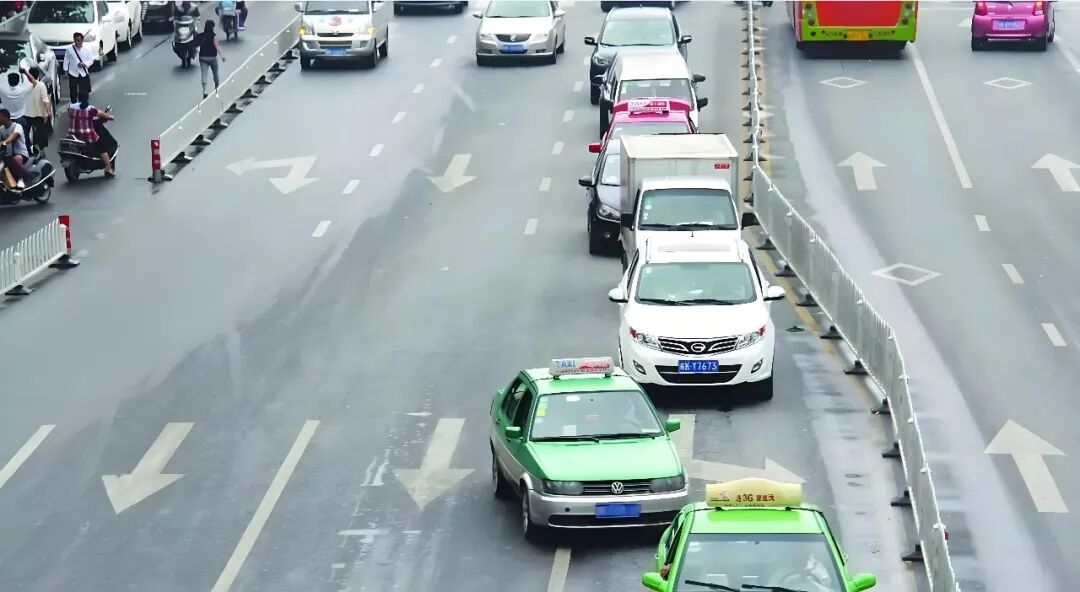
Image source: Internet
What world models are trying to change is exactly this.
They no longer merely replay data that vehicles have already experienced, but continue to generate different environmental changes and traffic participant behaviors based on existing road scenarios.
Developers can proactively change weather, road layouts, or vehicle motion, allowing the autonomous driving system to repeatedly face situations that were originally rarely encountered.
The world model released by Waymo this year demonstrated the use of generative models to simulate rare scenarios and generate corresponding camera and lidar data.
NVIDIA is also promoting the use of world foundation models to generate synthetic driving data to supplement scenarios that are difficult to fully cover through real roads, such as extreme weather and nighttime.
That is to say, the value of a segment of real-road data in the future will no longer lie only in how many kilometers it contains, but in whether it can become the foundation for generating more effective scenarios.
02 Test Mileage Is Getting Longer and Longer—So Why Can't the Problems Still Be Fully Tested?
The autonomous driving industry used to like emphasizing one number: test mileage.
The reason for high attention to test mileage is simple: the more mileage on real roads, the richer the scenarios covered in theory.
But for autonomous driving, mileage does not equal scenario coverage.
A vehicle driving continuously for 1,000 kilometers on a highway may be repeatedly handling similar car-following and lane-keeping scenarios, while a single abnormal interaction at a complex intersection may expose problems the system has never encountered before.
World models provide a different approach: rather than waiting for a test vehicle to by chance encounter a dangerous scenario, it is better to proactively generate that scenario and continuously change its variables.
Testing therefore gradually shifts from collecting what has already happened to proactively validating what may still happen.
This is especially important for autonomous driving R&D.
Traditional data replay has a problem: no matter what decision the system makes, the subsequent road images continue to play according to the original recording.
But real driving is not like that.
If the autonomous driving system decelerates in advance, the relative positions of surrounding vehicles will change; if it chooses to change lanes, the traffic relationships that may appear afterward will be completely different.
For autonomous driving, the value of world models is not just generating more realistic images, but more importantly building a virtual road that can continuously change with vehicle decisions.
Only in this way can the system face different subsequent environmental changes under different decisions.
03 Data Can Be Generated, but the Real World Still Cannot Be Replicated
The development of world models easily leads to a misjudgment: since data can be generated, can real-road testing be greatly reduced?
At least for now, the answer is no.
World models themselves still need real-world data for training. What kind of road scenarios they can generate largely depends on what they have seen and understood before.
More importantly, generated data cannot naturally prove that it conforms to the real world.
Recently, the DrivingGen benchmark released by the University of Toronto and CUHK MMLab at ICLR 2026 systematically evaluated 14 driving world models.
The results found that general models look better but violate physics, while driving-specific models have more realistic motion but lag in visual quality.
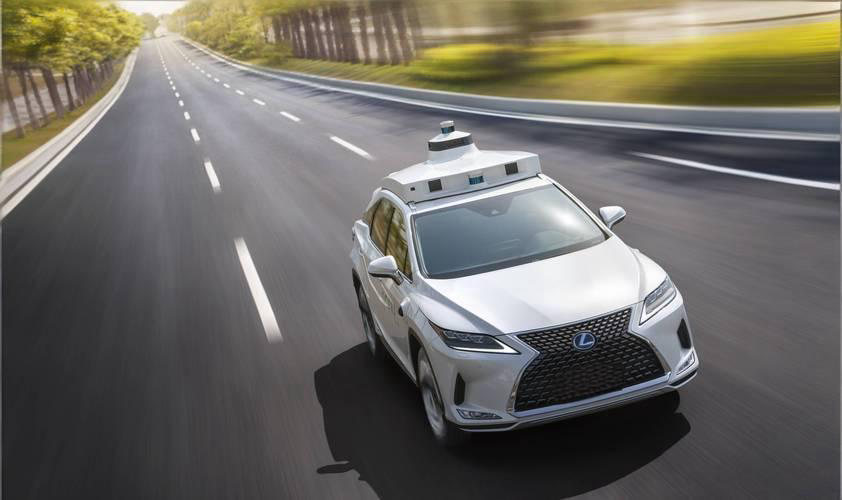
Image source: Internet
Some models generate more realistic images but may still deviate in physical plausibility and motion consistency.
This is exactly where the risk that cannot be ignored in autonomous driving world models comes from.
If a model generates a dangerous scenario that looks real, but the vehicle trajectories, braking processes, or traffic participant behaviors in it deviate from the real world, then systems trained on such data may also learn incorrect patterns.
Therefore, world models will not make real-road data lose its value. On the contrary, real data remains an important foundation for training world models, discovering real problems, and validating simulation results.
What may truly change is the way autonomous driving companies use data.
In the past, competitive advantage came more from how much data one had; in the future, competition may further shift to who can find the most valuable data and use it to construct more scenarios that have never appeared before.
04 Data Competition in Autonomous Driving May Be Entering the Next Stage
According to official disclosures, Baidu Apollo World can generate up to 100,000 kilometers of simulated driving data per day.
If simulated data can grow rapidly, will autonomous driving companies still need to invest in huge test fleets in the future?
At least for now, the answer is still yes.
The real world is complex enough. World models can generate more scenarios, but they cannot exist independently of real-road data.
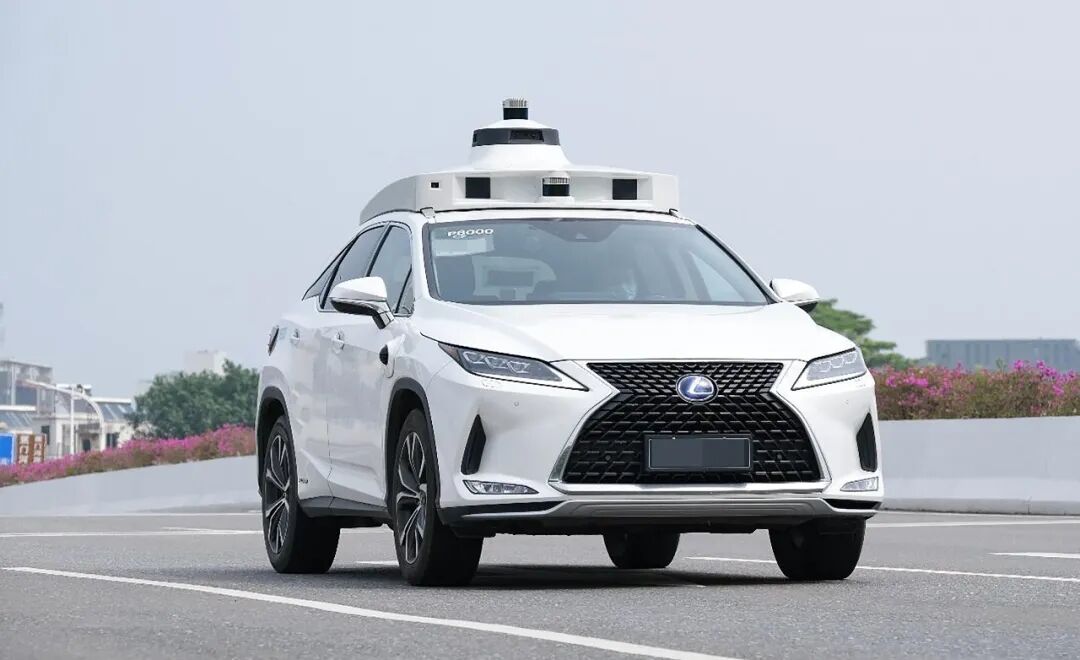
Image source: Internet
More importantly, the most dangerous and scarcest scenarios often also need to be continuously discovered and validated through real roads.
World models do not stop autonomous driving from running data; rather, they gradually turn testing from passively waiting for scenarios to appear into proactively constructing and validating scenarios.
In the future, data generated by test vehicles will still be an important foundation of the entire system.
But the gap between autonomous driving companies may no longer depend only on who has driven more roads, but on who can discover problems from the real world, then generate more variations around these problems, and ultimately return to real roads for validation.
Real data will not become worthless; it is just that the logic of "the more data, the better" may become increasingly insufficient.
When autonomous driving begins to proactively construct scenarios that have never been encountered, the real question that needs to be solved in the next stage may be: what other situations has the system never truly tested?
-
Thank You, Chinese Apple Fans, for Giving Apple's New CEO Two Big Gifts!
-
![]()
You Paid for the Flagship Model—But What You Get May Be a Watered-Down Version
-
![]()
Model Factories Are Bleeding, Cloud Vendors Are Counting the Money
-
Trump Loses Midterm Elections, U.S. Stocks Wipe Out Over $2 Trillion in One Night, AI Bubble Bursts, China's Chance to Overtake Has Come
-
![]()
Why Did OpenAI Label Its Own New Model GPT-6 Cyber with a "Critical" Warning?
-
![]()
$1.8 Trillion! The AI Investment Frenzy Is Running Red-Hot
-
![]()
Baolong Technology, a Leader in Air Suspension, Posts 12.07 Million Yuan Q3 Loss, but Non-Recurring Net Profit Rises 53% to 51.71 Million Yuan
-
![]()
Xiaomi Auto Tops 50,000 Again in October: Stock Surges 18% in Just 4 Days!