Voyah Sustains Monthly Sales Above 10,000 as Lu Fang Earns Promotion
 11/06 2026
 477
On November 2, Dongfeng Motor Group announced another round of senior management adjustments: Lu Fang, former Chairman of Voyah Automobile, was promoted to Deputy General Manager and Standing Committee Member of the Party Committee of Dongfeng Motor Group Co., Ltd. The move came just about a year after he assumed the roles of Chairman and Party Secretary of Voyah Automobile in 2025. From leading a premium new energy brand to joining the Group's core decision-making circle, Lu Fang's upward trajectory sends a clear signal within Dongfeng: those who deliver results on the front lines of transformation are gaining a stronger voice.
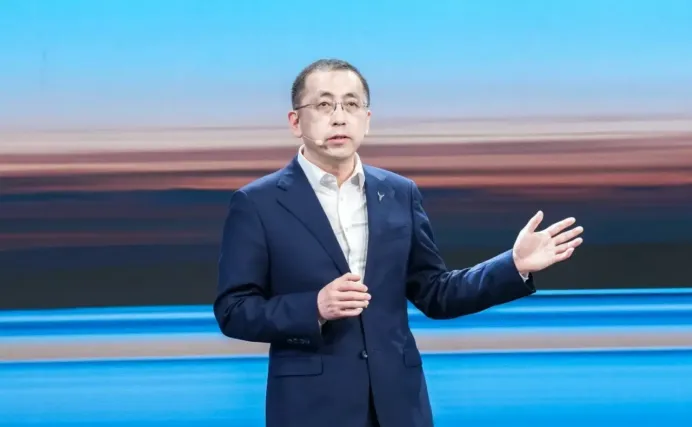
Born in 1976, Lu Fang graduated from Tongji University in 1999 and joined FAW-Volkswagen, later serving as Assistant Director and then Director of the Product Department within the FAW Car system. He is a quintessential auto industry professional who began in technical R&D before moving into product management. In 2018, he headed south to Wuhan, joined Dongfeng Group's Strategic Planning Department, and took charge of the then-incubating Dongfeng high-end new energy project—the H Division.
At the time, Voyah was essentially a blank sheet of paper. Lu Fang served as the No. 1 leader tasked with "building the team from scratch and defining the brand direction." In 2019 he was promoted to General Manager of the Division; in July 2020 the Voyah brand was officially launched, and he became CEO and CTO. In the years that followed, Voyah weathered the pains of the start-up phase, the expansion of its product line, and fluctuations in sales, while Lu Fang completed his transition from technical manager to brand operator. In 2025, he was promoted from CEO to Chairman and Party Secretary of Voyah Automobile, shifting from daily operations to strategy and governance. His entry into the Group leadership team marks his second key leap in two years.
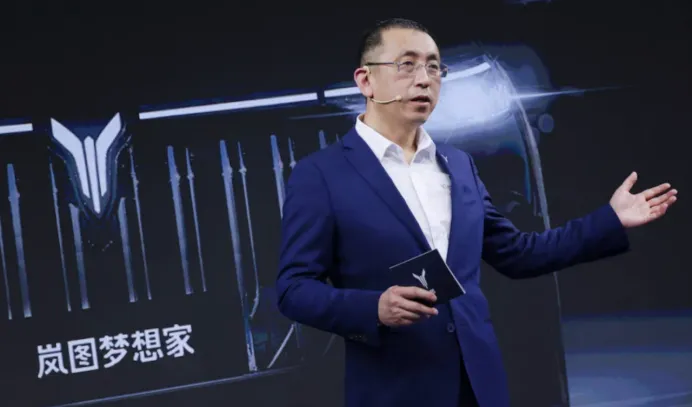
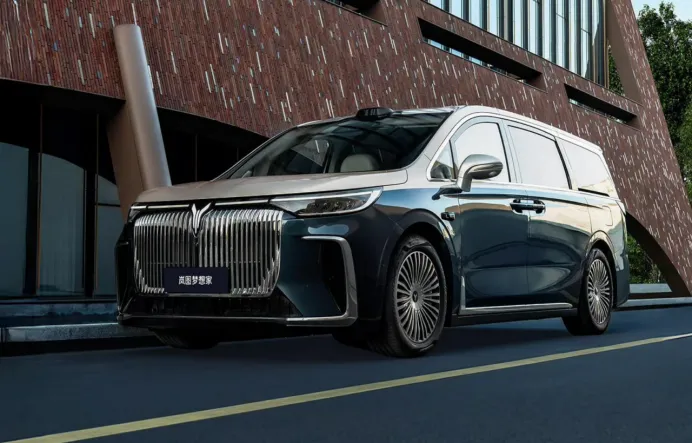
Lu Fang's rise is best underscored by Voyah's performance over the past two years. Data shows that in October 2026, Voyah delivered 13,030 new vehicles, with cumulative deliveries of 128,511 for the year—a year-on-year increase of 13%. In the fiercely competitive premium new energy market, this growth rate is hardly spectacular, but given Voyah's average product price and brand positioning, simply sustaining the growth curve is no small feat.
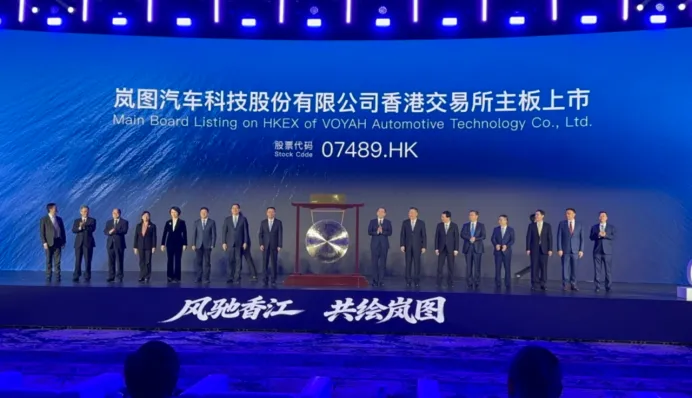
A more critical milestone came in March 2026, when Voyah Automobile listed on the Main Board of the Hong Kong Stock Exchange, becoming the first high-end new energy vehicle stock among central state-owned enterprises. The significance of this step far exceeds sales figures: it means Voyah has been thrust into the scrutiny of the capital market and must answer to both "scale" and "profit."
Lu Fang put it plainly: "Without a certain volume, it is difficult to achieve sustainable development... we need both volume and profit to grow together and build the foundation for self-circulation." In other words, what Voyah must prove is not that it can sell cars, but that it can support itself. For state-owned enterprises' new energy segments that have long relied on Group funding, verification of this self-sustaining capability is precisely what the Group values most.
In fact, placing Lu Fang's promotion within the context of Dongfeng Group's broader personnel adjustments makes the logic more complete. Wu Bilei, who took office the same day, came from the FAW system and was appointed Director and Deputy Secretary of the Party Committee of the Group. Of the two new leadership team members, one has a background in commercial vehicle technology management, and the other has hands-on experience taking a premium new energy brand from 0 to 1—together filling exactly the two gaps Dongfeng most needs to close during its transformation.
Looking deeper, Lu Fang's promotion continues an increasingly obvious trend in recent years in the selection of state-owned enterprise cadres: letting those who have fought tough battles in fully competitive fields enter the decision-making layer. The premium new energy segment above 300,000 yuan, where Voyah operates, faces Tesla, NIO, Li Auto, and electrified products from a host of traditional luxury brands, with no policy protection whatsoever. Experience gained in such an environment—whether in product definition, channel building, or capital market communication—has reference value for the transformation of the entire Dongfeng Group.
Of course, the challenges escalate accordingly. As Chairman of Voyah, Lu Fang was responsible for the life and death of a single brand; after entering the Group leadership team, he must contend with the pace of new energy transformation across Dongfeng's entire self-owned passenger vehicle segment, resource coordination between Voyah and other Group brands, and how to replicate at the Group level certain breakthroughs Voyah achieved in systems and mechanisms. From "running an enterprise" to "managing a segment," the complexity of vision and trade-offs is on a different order of magnitude.
From taking over the H Division in 2019 to entering the Group leadership team in 2026, Lu Fang spent seven years proving how far a premium new energy brand within the central state-owned enterprise system can go. The question he must answer next is: can this playbook also make Dongfeng's other segments move faster?
(Images are from the internet and will be deleted if infringing)
-
Thank You, Chinese Apple Fans, for Giving Apple's New CEO Two Big Gifts!
-
![]()
You Paid for the Flagship Model—But What You Get May Be a Watered-Down Version
-
![]()
Model Factories Are Bleeding, Cloud Vendors Are Counting the Money
-
Trump Loses Midterm Elections, U.S. Stocks Wipe Out Over $2 Trillion in One Night, AI Bubble Bursts, China's Chance to Overtake Has Come
-
![]()
Why Did OpenAI Label Its Own New Model GPT-6 Cyber with a "Critical" Warning?
-
![]()
$1.8 Trillion! The AI Investment Frenzy Is Running Red-Hot
-
![]()
Baolong Technology, a Leader in Air Suspension, Posts 12.07 Million Yuan Q3 Loss, but Non-Recurring Net Profit Rises 53% to 51.71 Million Yuan
-
![]()
Xiaomi Auto Tops 50,000 Again in October: Stock Surges 18% in Just 4 Days!