Can MONA, the pillar holding up half of XPeng's sky, stand on its own?
 11/09 2026
 363
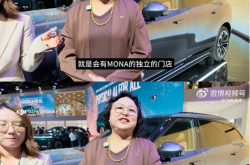
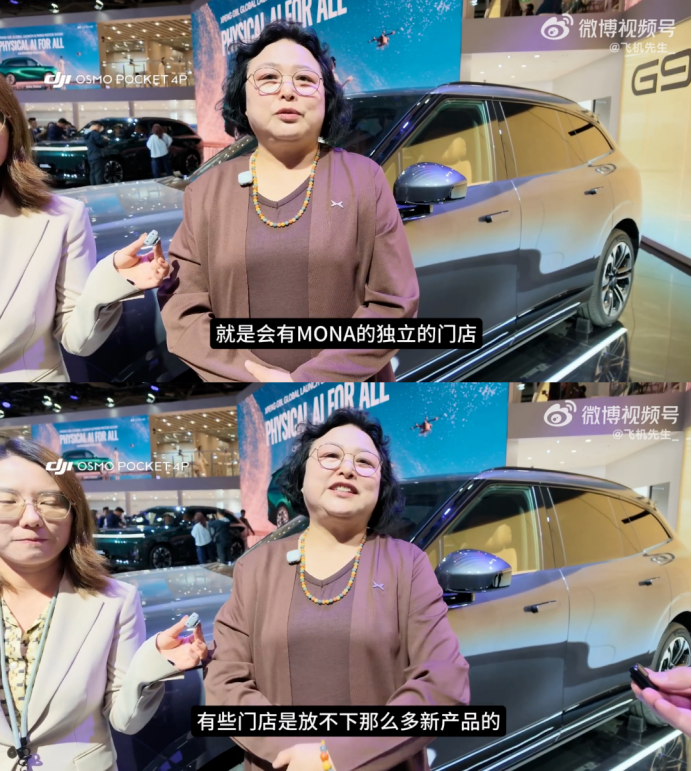
Recent news that XPeng's MONA series plans to open standalone sales stores has drawn considerable attention. According to XPeng President Wang Fengying, starting in 2027, XPeng will establish dedicated MONA stores in select cities, and the company has not ruled out the possibility of developing MONA into an independent brand down the road.
As for why separate stores are needed, Wang Fengying's explanation is refreshingly straightforward: existing showrooms simply can no longer accommodate the growing lineup of new vehicles.
In fact, signs of MONA going solo have been emerging for some time. A shopping mall in Guangzhou's Haizhu District was previously seen with a hoarding for a "XPeng MONA Sales Center" awaiting move-in. Meanwhile, a frontline salesperson in Beijing also indicated that MONA and the XPeng main brand will be sold separately going forward.
Although the specific plan has yet to be announced, judging from current developments, MONA opening standalone stores is no longer merely a proposal on paper.
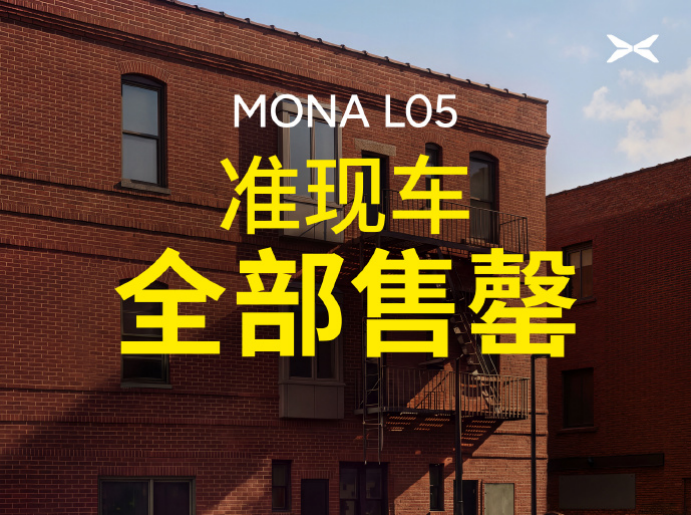
A look at XPeng's product lineup makes clear that the MONA series is undoubtedly a core force. As the first model in the series, the M03 has surpassed 200,000 cumulative deliveries, accounting for nearly a quarter of XPeng's overall sales. The L03 launched in July this year has also gained strong momentum, with major orders exceeding 46,800 units within the first hour after launch and deliveries surpassing 20,000 units in October. The recently launched L05 has performed impressively as well, with 5,000 limited quasi-in-stock vehicles selling out in just three minutes.
From initially relying on a single car—the M03—to now having three models driving growth in succession, MONA's product lineup has grown increasingly rich, and sales no longer hinge solely on the M03. With the steady addition of new vehicles, MONA has gradually built the foundation for independent operation.
But the hot-selling MONA series has also brought some headaches.
On the one hand, as the product line continues to expand, MONA's price range has kept widening, creating a situation of "family members cannibalizing each other."
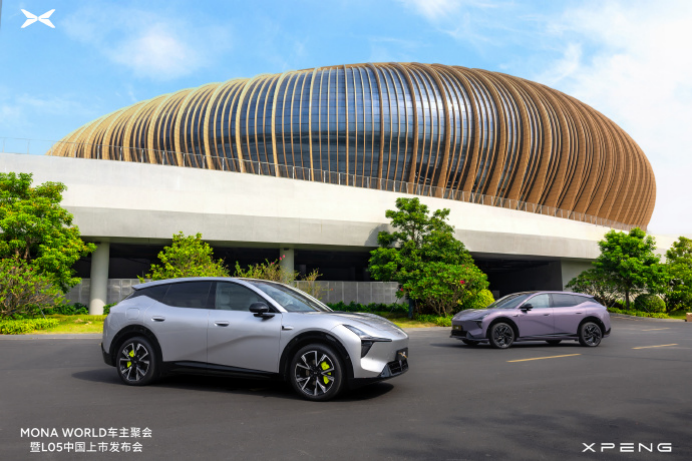
In terms of pricing, MONA is no longer confined to the entry-level segment. From the M03 priced at 119,800–151,800 yuan, to the L03 at 123,800–156,800 yuan, and then to the L05 at 139,800–171,800 yuan, MONA's prices have continued to climb with each new launch, gradually overlapping with XPeng main brand models such as the G6 and P7+.
This means that MONA—originally focused on low prices and volume—has now begun competing with the XPeng main brand for some of the same customers, making internal cannibalization inevitable.
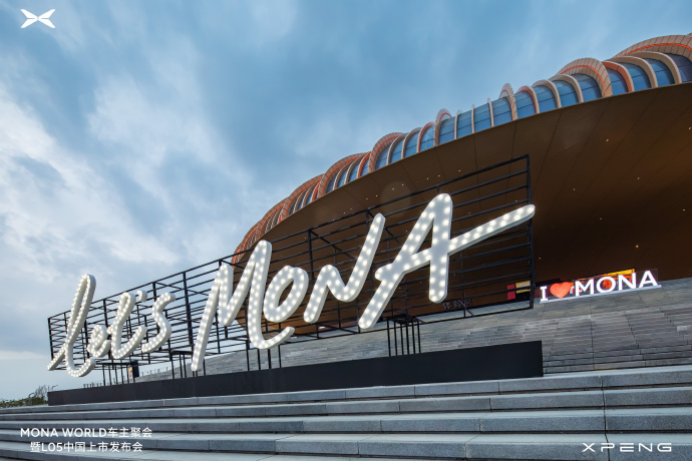
More importantly, MONA's hot sales have also taken a toll on XPeng's brand image. As MONA models priced above 100,000 yuan become the main sales force, consumers' perception of XPeng may remain stuck at the low-price tier, thereby diluting XPeng's mid-to-high-end image.
A BMW owner once said he planned to sell his current car and buy a NIO. When asked why he did not consider XPeng, he said bluntly that "XPeng is LOW." Although this reflects only one individual consumer's view, it also mirrors the brand perception challenge XPeng faces in the mid-to-high-end market.
In terms of average transaction price per vehicle, XPeng still lags noticeably behind other mid-to-high-end new energy brands. In the first half of this year, XPeng's average price per vehicle was approximately 181,000 yuan, up 11,000 yuan year on year, but still below the 238,000 yuan recorded in the same period of 2024. By comparison, NIO's average transaction price per vehicle during the same period was about 404,000 yuan, AITO stood at 371,000 yuan, and Zeekr reached 349,000 yuan. Among them, NIO and Zeekr saw their average prices per vehicle rise by roughly 67,000 yuan and 91,000 yuan year on year, respectively.
Although statistical methodologies vary across brands, such an obvious price gap nonetheless shows that XPeng still lacks sufficient sales support in the mid-to-high-end market.
From this perspective, MONA's plan to open standalone stores is not hard to understand. Letting MONA continue to focus on the 100,000–200,000 yuan market and drive volume allows the main brand to push toward the mid-to-high-end segment—reducing internal competition while also mitigating the impact of MONA's low-price positioning on XPeng's brand image.
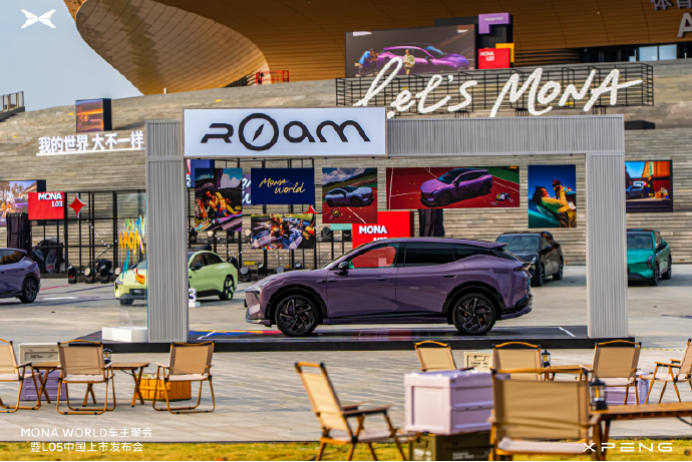
It is worth noting that reports previously emerged that at the end of September, XPeng consolidated its original four product lines—F, D, I, and G—into two lines, G and D, with MONA exclusively occupying the D line. If true, this would mean XPeng is paving the way for MONA's independence through product planning.
However, separate sales do not mean the problems are solved. Opening standalone stores requires greater channel investment, and whether MONA can sustain store operations with existing sales will depend on its subsequent performance. Moreover, even with sales channels separated, if the two sides' models still overlap in price and positioning, internal cannibalization will remain difficult to avoid.
Ultimately, MONA is an indispensable sales pillar for XPeng, while the main brand shoulders the mission of breaking into the mid-to-high-end market. MONA must defend its edge in the fiercely competitive 100,000–200,000 yuan segment, while the main brand must vie with rivals such as NIO and Zeekr for mid-to-high-end consumers. Neither task will be easy.
For XPeng, MONA opening standalone stores is only the first step. How to sustain sales while enabling the main brand to command higher prices is the real test that lies ahead.
(Images are from the internet and will be removed if they infringe on any rights)
-
![]()
MIIT SUV New Car Roundup: Lincoln's All-New Plug-in Hybrid Arrives
-
![]()
Can MONA, the pillar holding up half of XPeng's sky, stand on its own?
-
![]()
Clearing the Way for Major Changes: Toyota China Announces Leadership Transition
-
![]()
The Biggest IPO in History Is Seeing Its Valuation Cut in Half?
-
![]()
BMW Brilliance Cuts 1,800 Jobs: A Full Bet on the New Generation?
-
![]()
October 2026 Automotive Reputation Index Analysis Report
-
![]()
Liu Qingfeng Delivers Half of iFlytek's AI Report Card
-
![]()
Let the Data Speak: China Is Winning the Automotive Electrification Race While the US Market Remains an Island