MIIT SUV New Car Roundup: Lincoln's All-New Plug-in Hybrid Arrives
 11/09 2026
 541
Recently, the 413th batch of MIIT new car filing information was officially released. Among them, the SUV market has welcomed several more competitors; though few in number, each has its own characteristics. Luxury brands are stepping down from their pedestals, replacing traditional large-displacement engines with 1.5T plug-in hybrids; domestic brands continue to fill out their powertrain matrices for combustion and hybrid models; hardcore off-roaders are also going electric; and some automakers have even specifically filed a mid-to-large HEV that cannot get a green plate. It can be seen that while everyone is making SUVs new-energy, each has a different approach. In this issue, we'll round up several SUVs worth watching.
Lincoln Aviator EX8
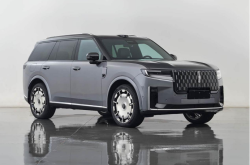
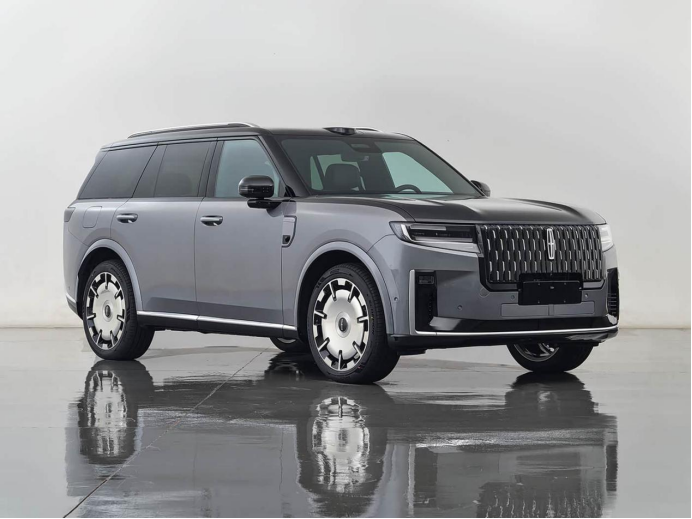
Amid the sweeping trend of new energy, Changan Lincoln is also about to launch new energy models. In this new car filing catalog, Changan Lincoln has officially filed its all-new mid-to-large plug-in hybrid SUV — the Lincoln Aviator EX8.
The new car's length, width and height are 5055mm×1995mm×1790mm/1800mm, with a wheelbase of 3010mm across the board. Compared with the current Aviator, this car is shorter and narrower, with a wheelbase 15mm shorter, though the body is somewhat taller.
The exterior design is also different; the new car's style is more rugged, with a large matrix-style grille paired with split headlights, LiDAR hardware mounted on the roof, and a full-width taillight at the rear. The whole vehicle has a strong new-energy flavor.
The powertrain change is the biggest highlight of this car. The EX8 abandons the traditional 3.0T V6 engine and instead switches to a JL469ZQ1 1.5T engine produced by Changan, with a rated power of 110kW, paired with a lithium iron phosphate battery supplied by Shidai Changan, and capable of external charging. This plug-in hybrid system not only qualifies for a new-energy green plate but also reduces displacement-related taxes and lowers daily running costs.
It's clear that Lincoln has also embarked on a "in China, for China" car-making strategy, but the current high-end new energy market is basically occupied by domestic brands, so getting a share is not easy.
Roewe Jiayue X7
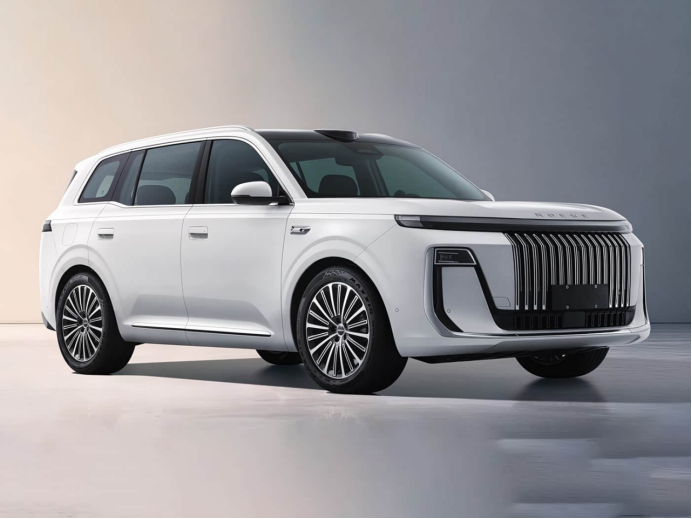
As the brand's all-new mid-size SUV, the Roewe Jiayue X7 has previously completed filings for 1.5T and 2.0T combustion versions, and this newly added hybrid electric model further expands the brand's product matrix.
The new car's length, width and height are 4900mm×1924mm×1759mm/1765mm respectively, with a wheelbase of 2863mm — no changes.
In terms of appearance, the new car is not significantly different from the combustion version either: below the thick daytime running lights sits a dense horizontal-slat chrome grille, with U-shaped black trim strips extending from the light clusters on both sides for high recognizability — said to be the work of a Rolls-Royce designer.
In terms of optional configurations, the new car can be equipped with different style exterior packages, such as a blacked-out front grille, blacked-out trim strips throughout the vehicle, blacked-out tail badges, and different styles of HYBRID badging.
In terms of power, the new car adopts a hybrid electric powertrain combining a 1.5T engine with an electric motor; the engine's maximum power is 180 horsepower, and the battery pack is supplied by Sunwoda.
The core characteristic of this car is that it does not support external charging, making it suitable for family users who don't want to charge frequently and value peace of mind on long trips.
Wey Lanshan HEV Version
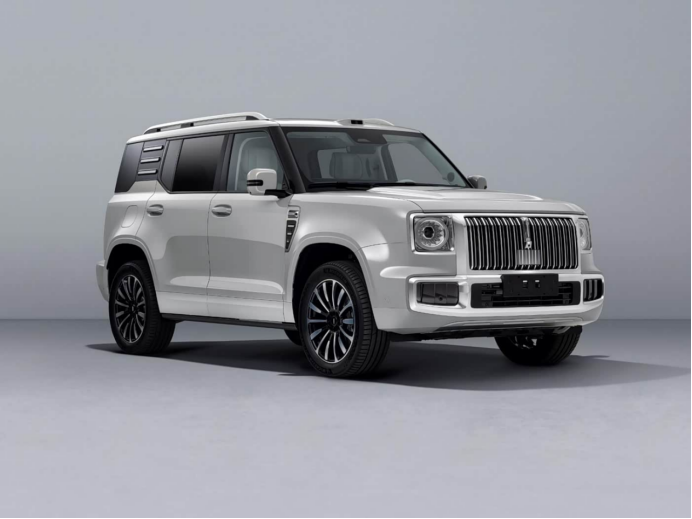
In 2026, when plug-in hybrids and all-electrics are fiercely competing, Wey has filed a mid-to-large SUV that cannot get a green plate and does not enjoy purchase tax exemption — the Lanshan HEV.
The new car's length, width and height are 5140mm×2050mm×1960mm/1975mm respectively, with a wheelbase of 3010mm.
In terms of appearance, the new car continues the plug-in hybrid version's "boxy" design, paired with a large-area vertical waterfall-style chrome grille, giving it a rather rugged overall style. In addition, for different tire configurations (255/60 R20 and 275/50 R21) and vehicle height specifications, the new car's approach and departure angles are 23°/28° and 24°/29° respectively.
In terms of power, the new car adopts a hybrid electric solution, equipped with Great Wall Motors' 2.0T engine with a maximum power of 182kW. This approach of a small battery paired with a combustion engine is similar to the HEV solution Wey previously used on the Gaoshan 8, aimed at optimizing starting and low-speed response using the small battery without relying on external charging, mainly targeting users who lack conditions to install charging piles or have frequent long-distance driving needs.
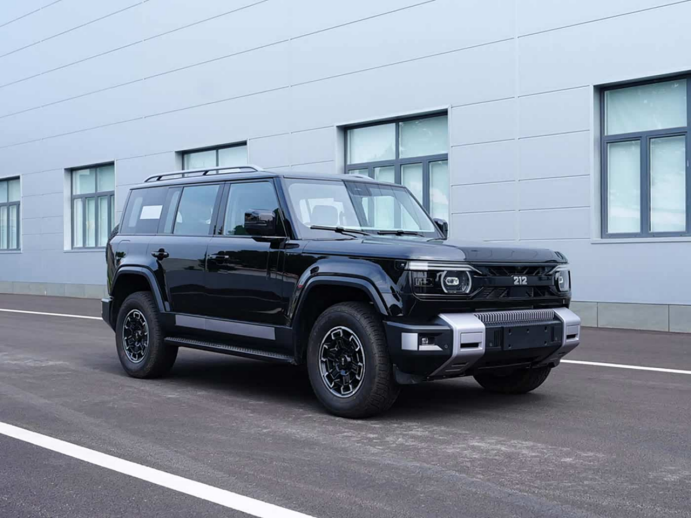
212 X03 Plug-in Hybrid Version
The plug-in hybrid version of the 212 X03 has also completed filing. Following the diesel and combustion versions, this completes the powertrain matrix of this mid-to-large SUV.
The new car's length, width and height are 5095mm×2038mm×1945mm respectively, with a wheelbase of 2950mm, and approach and departure angles of 33° and 30° respectively. The new car adopts a body-on-frame structure, has a curb weight of over 2.5 tons, and also has towing capability — all standard across the lineup.
In terms of appearance, the new car adopts an all-new design approach with a boxy overall shape, an X-shaped grille plus split headlights — square outside and round inside — and rear barn doors plus a full-size externally mounted spare tire; all the rugged elements are present.
It's worth mentioning that, compared with the previously filed diesel and combustion versions, the plug-in hybrid version adds LiDAR on top of the front of the vehicle, representing that the new car will be equipped with an advanced intelligent driving assistance system.
In terms of power, the new car is equipped with a 2.0T plug-in hybrid system; the engine's maximum power is 152kW, the motor's peak power is 160kW, the top speed is 180km/h, and the battery uses CATL ternary lithium batteries.
For users who want to experience the traversing capability of a hardcore off-roader while also needing daily urban commuting and caring about running costs and commuting convenience, the plug-in hybrid version is an option worth watching.
Denza N9 All-Electric Version
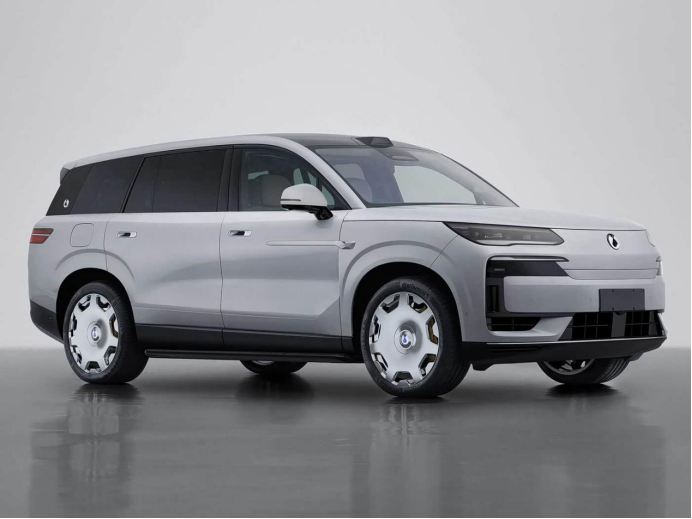
Unlike the already-launched plug-in hybrid version, the Denza N9 all-electric version is the first all-electric model in the N9 series, offering both five-seat and six-seat cabin layouts.
In terms of body dimensions, the new car's length, width and height are 5270mm×2030mm×1830mm respectively, with a wheelbase reaching 3125mm. Compared with the plug-in hybrid version on sale, the all-electric version's length increases by 12mm, while the wheelbase, width and height remain the same.
In terms of appearance, the new car has few changes, but the options are very rich: two-tone body, gold trim, multiple wheel designs, and colored brake calipers can all be selected as needed. In addition, LiDAR is mounted on the roof, and the God's Eye 5.0 full-scenario intelligent driving system is also in place.
The real highlight of the new car is the e-Platform 3.0 tri-motor powertrain; the new car's combined peak power reaches 890kW, about 1210 horsepower, paired with the Yunian-A dual-chamber air suspension, and also supports signature functions such as crab walk and tank turn.
Consumers who have a home charging pile or mainly commute in the city should pay close attention to this car.
Final Thoughts:
Today, automakers no longer crowd onto the same new energy route. Lincoln replacing its large-displacement V6 with a 1.5T plug-in hybrid is a compromise made by a luxury brand to adapt to the domestic market. The Roewe Jiayue X7 and Wey Lanshan HEV focus on hybrid electric powertrains that don't rely on charging piles, targeting family users with limited charging conditions. The 212 X03 adds a plug-in hybrid to a hardcore off-roader, balancing traversing performance with daily commuting. The Denza N9 all-electric version brings flagship-level three-electric and chassis technology, aimed at high-end users pursuing ultimate performance.
It's not hard to see that all-electric is no longer the only answer. After all, the domestic SUV market is no longer simply about comparing all-electric range; diversified powertrain solutions are equally important.
(Images from the internet, deleted if infringing)
-
![]()
MIIT SUV New Car Roundup: Lincoln's All-New Plug-in Hybrid Arrives
-
![]()
Can MONA, the pillar holding up half of XPeng's sky, stand on its own?
-
![]()
Clearing the Way for Major Changes: Toyota China Announces Leadership Transition
-
![]()
The Biggest IPO in History Is Seeing Its Valuation Cut in Half?
-
![]()
BMW Brilliance Cuts 1,800 Jobs: A Full Bet on the New Generation?
-
![]()
October 2026 Automotive Reputation Index Analysis Report
-
![]()
Liu Qingfeng Delivers Half of iFlytek's AI Report Card
-
![]()
Let the Data Speak: China Is Winning the Automotive Electrification Race While the US Market Remains an Island