New Forces' Annual Targets in Jeopardy?
 11/09 2026
 504
Layout | Xiaoxi
After all the twists and turns, another year has passed, and new force automakers have reached the critical moment of sprinting toward their annual targets.
Looking back at the brand launch events and investor briefings of previous years, those sets of high-flying sales targets are still vivid in memory. Standing at the end of 2026 and looking back at reality, it turns out that although the targets have never been easy to meet year after year, this year seems especially hard.
Affected by the downturn in the new energy vehicle industry overall, many companies' progress bars have not advanced at the pace they envisioned, and the divergence in performance among new forces has widened further.
Judging from the current situation, the entire auto industry will likely remain under sustained pressure for the next year or two.
Of course, it is not entirely without hope: the large-scale popularization of smart driving and breakthroughs in overseas market share remain the means to drive trade-ins, stimulate demand, and boost sales growth.
But these incremental windows also come with real-world constraints, and growth will not be handed over easily.
As the high-growth tide of the new energy vehicle industry slowly recedes, the entire industry is rethinking the relationship between scale, profitability, and growth, and the corresponding automakers are becoming more pragmatic in cost reduction and efficiency gains and in focusing on their core business.
| The target mindset of two or three years ago is starting to hold them back? |
Previously, when many new forces set their annual sales targets, they carried on the growth inertia of the industry's high-flying years, and bold claims such as 50% year-on-year growth and sprinting toward one million annual deliveries were commonplace.
The targets set by new forces were on the optimistic side, but the 2026 domestic passenger car retail market is not optimistic.
According to public statistics from the Passenger Car Association, in the first half of 2026 domestic passenger car retail sales totaled 8.701 million units, down 20.2% year on year. This means the domestic demand market has formally entered a zero-sum game, consumers' willingness to trade in is contracting, market competition continues to intensify, and a gap has opened between the real market environment and earlier expectations, with the pressure of the year-end sprint now concentrated and apparent.
Looking specifically at each company's report card, the progress toward targets in the first 10 months has already diverged markedly.
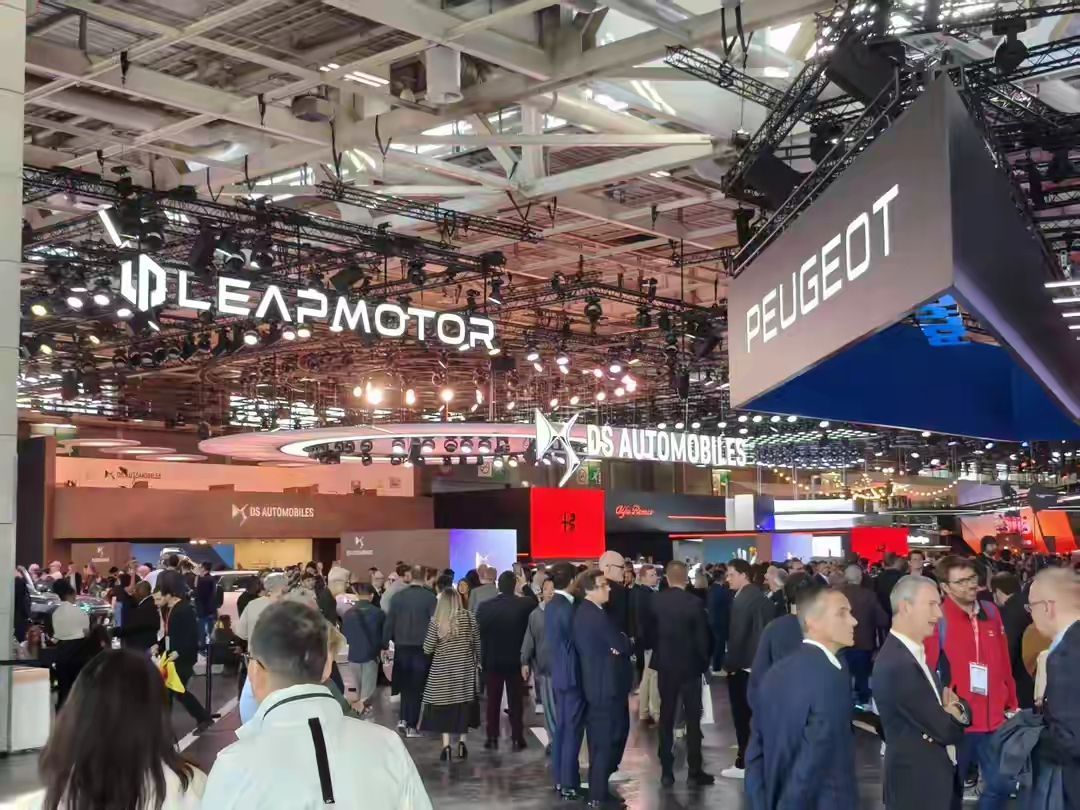
Among them, Leapmotor is one of the few new forces to achieve consecutive monthly sales above 100,000, but as of the first 10 months it had completed only 77.27% of its 1 million annual target. Even maintaining the current high level of 100,000 monthly sales, it will still be very difficult to fill the gap to the million target in the remaining time, and the difficulty of further raising sales from a high base is increasing.
Xiaomi, meanwhile, sold a cumulative 336,500 vehicles in the first 10 months against an annual target of 550,000, a completion rate of 61.2%, and would need average monthly deliveries above 100,000 in the last two months to meet the target. For an automotive business that has not been around long, sustaining 100,000-level monthly deliveries requires continuous blowout orders for new cars and the powerful extended-range models; otherwise the product matrix can hardly support such volume.
Similarly, XPeng has also set an annual target of 550,000, with sales of 334,600 in the first 10 months; the difficulty of hitting the target is basically on par with Xiaomi, and growth depends heavily on market conversion of new products, as the growth space for older models has already been fully tapped.
As for NIO, the company set a 2026 growth target of 40%-50%; based on the 2025 base of 326,000 vehicles, it needs to deliver 456,000-489,000 vehicles for the full year. It delivered 334,500 units from January to October, up 38.5% year on year, with October monthly deliveries of just over 30,000. The brand focuses on the mid-to-high-end segment and is more affected by broader consumer sentiment, so a leap in monthly sales is unrealistic.
In a horizontal comparison, Li Auto and HIMA face greater pressure.
Li Auto's annual target represents growth of more than 20% over 2025, corresponding to at least 487,600 vehicles; it sold 322,500 from January to October, a completion rate of 66.1%, and the remaining gap cannot be underestimated.
Frankly speaking, Li Auto's pure electric products are still in the ramp-up phase and can hardly release massive incremental volume in the short term; the opportunity lies more in next year.
HIMA's annual target is at least 1 million vehicles, and it sold about 400,000 in the first 10 months, leaving a gap of nearly 600,000. Multiple "Jie" brands under it operate simultaneously, with AITO still carrying the bulk, and balanced development remains a challenge. In addition, recent controversies over the Zunjie review and public opinion related to the AITO partnership have to some extent damaged HIMA's reputation.
Through these sets of numbers, the situation of each company at year-end is already clear. XPeng and Xiaomi need to see whether the heat of new car orders can continue to fill the gap; NIO, HIMA, and Li Auto need to seize the last two months to reverse the fatigue in growth.
On one hand are the high targets set at the beginning of the year; on the other is the real market feedback under broader pressure. Facing such a gap, the industry is also looking for a way to break through, and smart driving and overseas expansion are widely regarded as two potential growth opportunities.
| The two cards for growth also come with two thresholds |
Objectively speaking, the large-scale penetration of smart driving and the accelerated breakthrough of overseas expansion do hold growth potential, but the real-world constraints behind them cannot be ignored.
As for the growth opportunity of the smart driving card, moving from high-end optional equipment to widespread availability has some potential to drive trade-ins.
It is worth noting that in the first half of 2026 overall domestic passenger car retail sales declined and industry growth cooled, yet the smart driving segment bucked the trend, with penetration rising against the headwind. Public data shows that in the first half of the year the penetration rate of smart driving configurations in the broad sense climbed to 76.1%, up 8.5 percentage points from the full previous year, and smart driving has shifted from an optional configuration to a core reference point in car purchases.
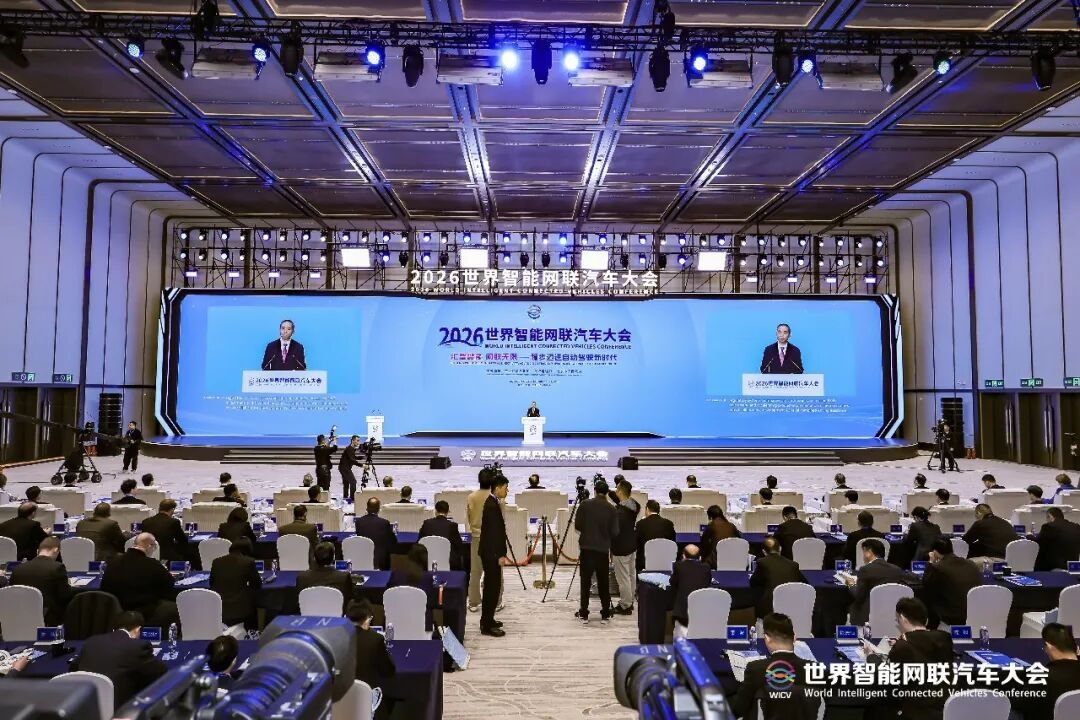
Looking back at the industry's development, at the 2026 World Intelligent Connected Vehicles Conference officials disclosed that the penetration rate of L2-level assisted driving in China was only 34.5% in 2022, exceeded 57.3% in 2024, and had reached 70.5% in 2026, while the penetration rate of urban NOA simultaneously exceeded 34.2%, and the first batch of L3-level conditionally automated driving models have legally taken to the road in specific areas.
Clearly, smart driving is no longer the exclusive label of a few high-end cars, and downward price extension has become a definite trend. Data from the Gaogong Intelligent Automobile Research Institute shows that in the first half of 2026, 27% of models priced below 150,000 yuan came standard with smart driving domain controllers. High-level smart driving continues to move downward, extending from the high-end market above 300,000 yuan to 200,000, 150,000, and even the 80,000-100,000 price range.
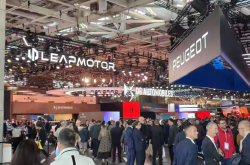
Take Leapmotor as an example: it has already brought high-level smart driving to models in the 80,000 yuan class, and its engineers at the exhibition area said that among pre-orders for new models, the share of versions equipped with lidar is rising, reflecting a significant increase in acceptance of affordable smart driving among consumers in ordinary price segments.
At the same time, policy is also paving the way for newer technologies to land. The Ministry of Industry and Information Technology has officially issued the mandatory national standard "Safety Requirements for Automated Driving Systems of Intelligent Connected Vehicles," which will take effect on July 1, 2027, clearing institutional obstacles for the large-scale rollout of L3 and above smart driving, and the industry is generally optimistic about the driving experience L3 will bring.
From a theoretical perspective, smart driving has the chance to stimulate a new round of trade-in demand. Changes on the consumer side corroborate this: consumers in the current mainstream 100,000-200,000 price range already regard smart driving performance as a core purchase consideration, and the industry's focus has shifted from "can we do smart driving" to "can smart driving make money."
Clearly, smart driving is an attempt to tap the trade-in and growth potential of the domestic stock market, while overseas expansion takes on the mission of opening up external incremental space.
As domestic market competition intensifies, going global has become an important direction for automakers seeking growth. According to market research firm Dataforce, in the third quarter of 2026 Chinese brands' new car registrations in Europe nearly doubled year on year, with market share reaching 12.7%, the first full quarter in which their share exceeded the 11.9% of Japanese automakers.
Looking at the full year, the China Association of Automobile Manufacturers predicts that China's automobile exports are expected to exceed 10 million units in 2026, covering Europe, Southeast Asia, Central Asia, South America, and other regions, with an still optimistic growth outlook for the coming years.
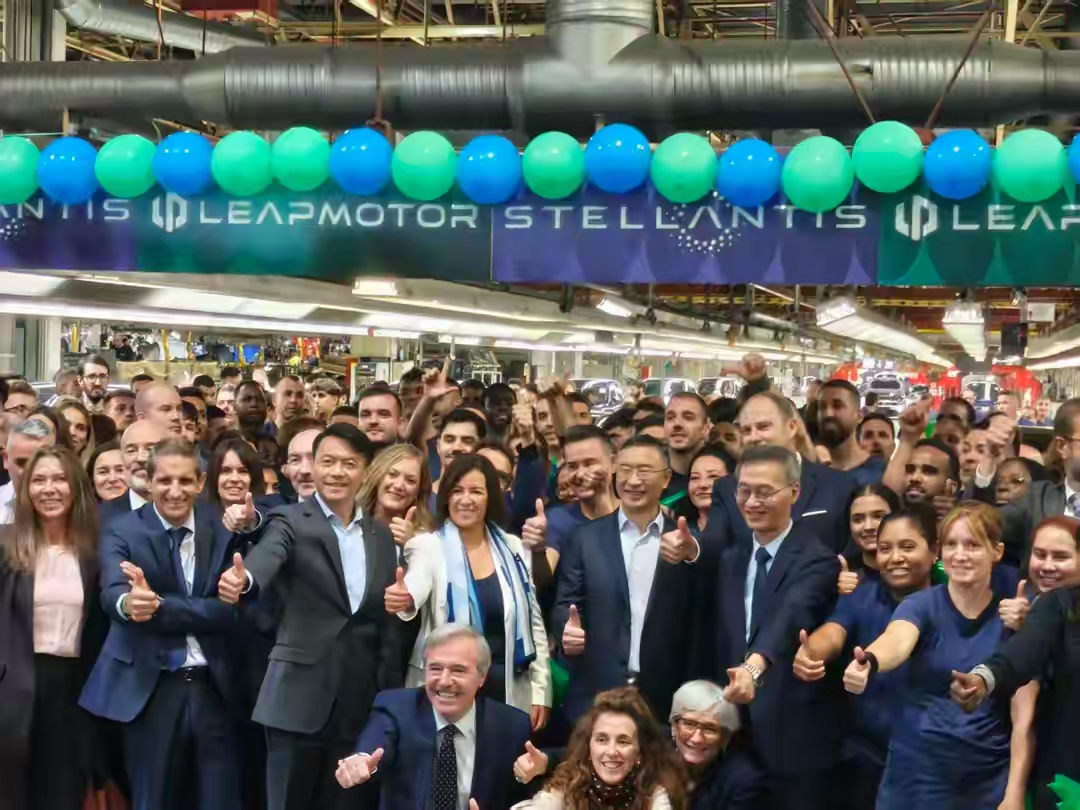
Some new forces are naturally unwilling to fall behind and have successively begun their overseas layouts. For example, XPeng delivered 13,300 vehicles overseas in October, a record high; Leapmotor's B10 officially entered mass production at its Zaragoza plant in Spain; Li Auto's first global pure electric model, the i6, made its European debut; and AITO continues to explore overseas expansion.
However, even though smart driving and overseas expansion both show positive signals, no one can be blindly optimistic.
The two cards may both seem to offer growth opportunities, but real thresholds stand in front of companies, especially since the era of dividends brought by technology plus policy has passed, and it will probably be hard to simply replicate the growth miracles of the past.
As for smart driving, the marginal effect of technology consumption is diminishing, and the smart driving dividend is uncertain.
The reason is that although smart driving penetration is rising rapidly, white-hot competition may still persist when it comes to individual automakers. High-level smart driving is rapidly moving downward, industry homogenization is intensifying, and the gap in product functions among companies is constantly narrowing.
Recall the earlier configuration race over "refrigerators, sofas, and big color TVs," which genuinely drove a wave of car buying; later, as the relevant product definitions became widespread, the original parameters and configurations ceased to be a growth driver for automakers.
Smart driving today may follow the same logic. Growth does not entirely disappear, but the point to watch is that the trade-in momentum it can unlock still needs sustained market validation. As for L3, the timing of true large-scale commercialization has still not been settled.
In other words, whether the value of smart driving can be realized depends on users' actual experience. Only when it is easy to use, trusted, and frequently used can smart driving translate from paper specifications into a real consumer driver. Coupled with the gradual phasing out of various new energy policy and tax incentives, the dual pull of "technology + policy" is no longer what it once was.
Returning to the overseas expansion level, for new forces, driving growth through overseas expansion is a certainty; the challenge is that some new forces have prominent overseas shortcomings.
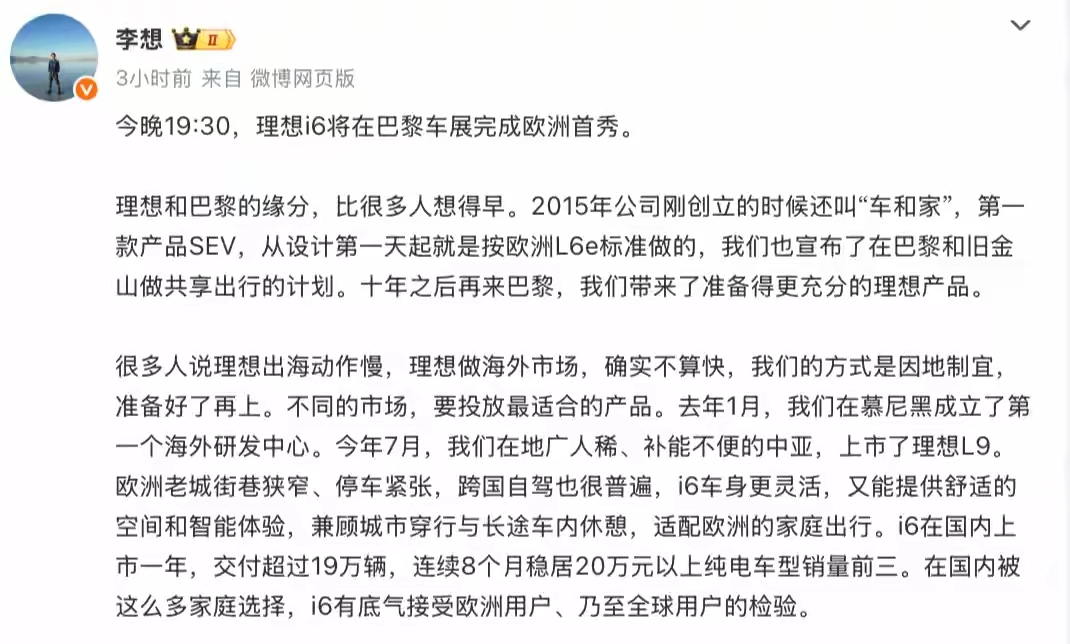
For the new force group as a whole, the overall overseas volume is insufficient, progress among companies is uneven, and the divergence is very pronounced. At times NIO's monthly registrations in Germany were just one unit; Xiaomi's overseas expansion has not yet started on a large scale; Li Xiang also admitted that Li Auto's overseas moves have been slow and insisted on preparing thoroughly according to local conditions before entering; and AITO is still exploring.
On the overseas expansion track for automakers, traditional independent brands have in fact already proven out the scale model. For example, Chery exported 201,000 vehicles in October alone, its third time this year with monthly exports above 200,000, and exported 1.752 million vehicles cumulatively from January to October, up 64.8% year on year; BYD
exported more than 1.51 million new energy vehicles in the first 10 months, already exceeding its full-year 2025 export level.
Obviously, compared with the tens of thousands or hundreds of thousands of monthly overseas sales of BYD, Great Wall, Geely, and Chery, the scale of new forces is too small, and their penetration in overseas markets is generally not high. While facing competitive suppression from traditional domestic automakers, they must also confront fierce battles with established international automakers such as Toyota.
One can imagine that going global is not simply shipping vehicles overseas to sell; channel building, after-sales system development, and localization adaptation each consume large amounts of time and capital investment.
Cui Dongshu, secretary-general of the Passenger Car Market Information Joint Committee of the China Automobile Dealers Association, noted a structural gap in the global new energy vehicle market: "oversupply at the high end and insufficient supply of affordable models." Only companies capable of delivering cost-effective products tailored to local use cases can seize the initiative in global competition. For new entrants, however, achieving this is no small challenge.
In short, smart driving and overseas expansion can serve as medium- to long-term growth levers, but they cannot resolve the operating difficulties at hand overnight. When external tailwinds are no longer readily available, the industry's focus naturally shifts from chasing sales figures to the quality of companies' own operations.
| Slow-selling cars are pulling automakers back on track |
With current market demand falling short of expectations, annual sales targets becoming harder to meet, and future growth prospects carrying both opportunities and challenges, this reality will inevitably force new-force automakers to re-examine their resource allocation logic.
Over the past few years, capital and public opinion have attached many new concepts to the carmaking industry, and derivative businesses such as embodied intelligence and consumer-grade smart glasses have frequently appeared in some new-force automakers' external communications—Li Auto makes glasses, for instance, and XPeng makes humanoid robots.
If the auto market recovery falls short of expectations this year and next, some automakers will most likely subject these peripheral businesses—far removed from the core vehicle business—to new adjustments, even if they remain committed to them, and then refocus on new priorities.
The flip side of resource adjustment is that the industry's focus is gradually returning to the core business, with cost reduction and efficiency gains becoming the central theme. Li Auto's recent strategy meeting reportedly decided to play down embodied intelligence, for example, while battery self-development is increasingly becoming an industry trend. From the release of Xiaomi's Dragon Armor battery to Li Auto, XPeng, and Leapmotor successively ramping up in-house cell development, more and more automakers are realizing that simply stacking configurations and hyping concepts can hardly move the market; the core problem to solve is profitability beyond scale.
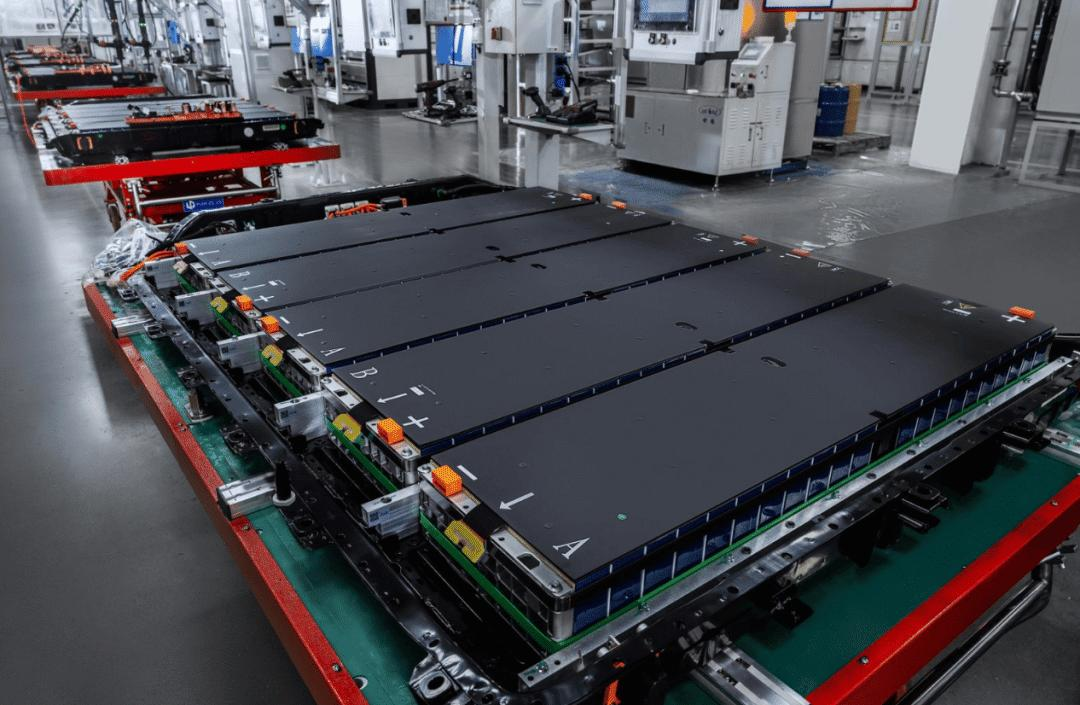
Vehicle manufacturers are beginning to dig deep into the upstream supply chain, seeking greater cost initiative and concentrating resources on the main line of vehicle manufacturing and vehicle sales.
Of course, under the broader trend of returning to the core business, the real tests facing each new force differ. Although Leapmotor's sales scale has surged, its core test going forward is whether profits can keep pace.
Other new forces, on the one hand, must strive to hit annual sales targets domestically by relying on smart driving and new products; on the other hand, overseas expansion cannot be rushed and requires balancing input and output.
The model of driving expansion through high expectations is being corrected by reality. When many companies set targets at the beginning of the year, they referred more to the industry's high-speed growth trajectory of previous years but underestimated the resistance brought by shrinking demand and intensifying competition in a stock market.
The market is pulling new forces back from grand concepts to the most realistic requirements: sell the cars and make money. Images are from the internet and will be deleted if infringing.
-
![]()
Valuation in the Hundreds of Billions, Revenue Just Over a Billion—Can Kling AI Carry Kuaishou's Second Growth Dream?
-
Alibaba Cloud Token Plan Boosts Quota by 70% Starting Today
-
![]()
Just the Facts, No Emotions—Has AI Actually Crashed or Not?
-
![]()
New Forces' Annual Targets in Jeopardy?
-
![]()
In 2026, Tencent Is Frantically Playing Catch-Up
-
![]()
Optical Brain-Computer Interface Paves the Way for Chip Integration! Huichuang Medical Makes Strategic Investment in Westlake Neuralicorn
-
![]()
First Three Quarters Non-Recurring Profit Jumps 116.94%! Why Is Wavelength Optoelectronics Betting Another 150 Million?
-
![]()
TV Distortion vs. Optical Distortion: How Exactly Do You Convert Between Them?