Europe's Punch Missed Chinese Cars and Hit Japanese Cars Instead
 11/10 2026
 460
Introduction
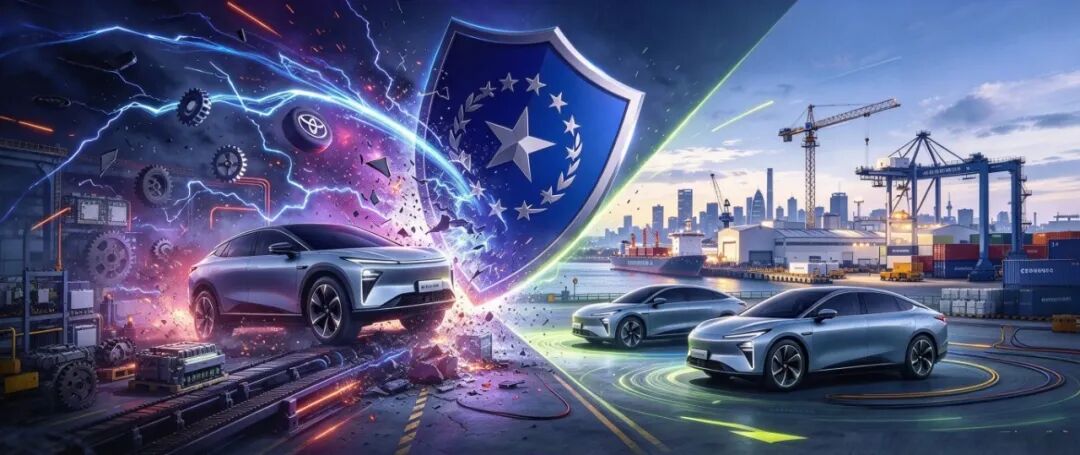
Strength is the hard truth—it can turn even the most conservative policies into "a punch that lands off target."
"I almost thought IAA was the Munich Auto Show," a friend joked.
Indeed, for many years those three letters in the auto industry stood for Internationale Automobil-Ausstellung, once billed as the "Olympics of the auto industry." Most people know it by its old name—the Frankfurt Motor Show—which relocated to Munich after 2021.
But this year it no longer refers only to a grand event. It also points to a ruthless official document, becoming the abbreviation for the Industrial Accelerator Act.
On the surface, it looks like a shield to protect European local industry, but in reality it is an imprecise cleaver. Openly, it is meant to strike at the surging Chinese auto industry, yet it has left Japanese cars trembling first.
Toyota Europe CEO Yoshihiro Nakata said something weighty in Brussels: "Toyota is not a guest in Europe." But when it comes to new energy vehicles, Japanese brands' localization in Europe lags far behind that of Chinese brands.
As a result, the IAA Act became a bombshell that exploded over Japanese cars before it even reached Chinese cars.
Europe wants to use a local content rule to reshape the geographic map of the auto industry, but it seems to have forgotten that the most successful "European companies" in the previous round of globalization were precisely those with the most extensive supply chains.
The Monroe Doctrine was not the greatest contributor to America's golden age. If European manufacturing replicates the "Monroe Doctrine," it is equally unlikely to find a savior.
01 The Accelerator "Misses the Target"
The EU wants to add a layer of protection for local industry through the Industrial Accelerator Act. The idea is straightforward: Chinese EVs are coming too fast, so use a 70% local component content requirement to limit subsidies to "made in Europe," which can at least block part of the increase.
But after the protective measure actually took effect, the first to be affected were not BYD's Hungarian factory or Chery's Spanish production line—these Chinese automakers have already built factories inside the threshold. The ones truly shut out are Japanese cars.
In the first nine months of 2026, Japanese brands sold about 1.18 million vehicles in Europe (EU+EFTA+UK), with an 11.9% share, still a force not to be ignored in the European auto market.
Looking only at those 1.18 million vehicles, Japanese brands have no reason to panic. Names like Yaris Cross, Corolla, and C-HR still have a solid presence on European streets. A starved camel is still bigger than a horse, and the Japanese are not starved at all.
But if you look at the sales structure, you will find that what Europeans and Japanese worry about is not the total volume, but the increment.
In the same period, Geely Group sold 343,875 vehicles, ranking eighth; BYD sold 283,997, more than doubling year-on-year, ranking ninth. Chery Group sold 260,650, up 255.9%; Leapmotor sold 87,922, up 424.2%.
In the third quarter of 2026, the combined share of Chinese brands in Europe reached 12.7%, surpassing Japanese brands' 11.9% for the first time.
Within the Japanese camp, the divergence is also obvious. Nissan sold 205,387 vehicles in Europe from January to September, down 10.5%; Mitsubishi sold 23,701, down 34.1%. Toyota Group not only became the only one moving upward with a 0.5% year-on-year increase, but also accounted for the largest chunk of the Japanese 11.9% share, with 936,000 vehicles alone, a 7.1% share, firmly holding the position of Europe's second-largest passenger car brand.
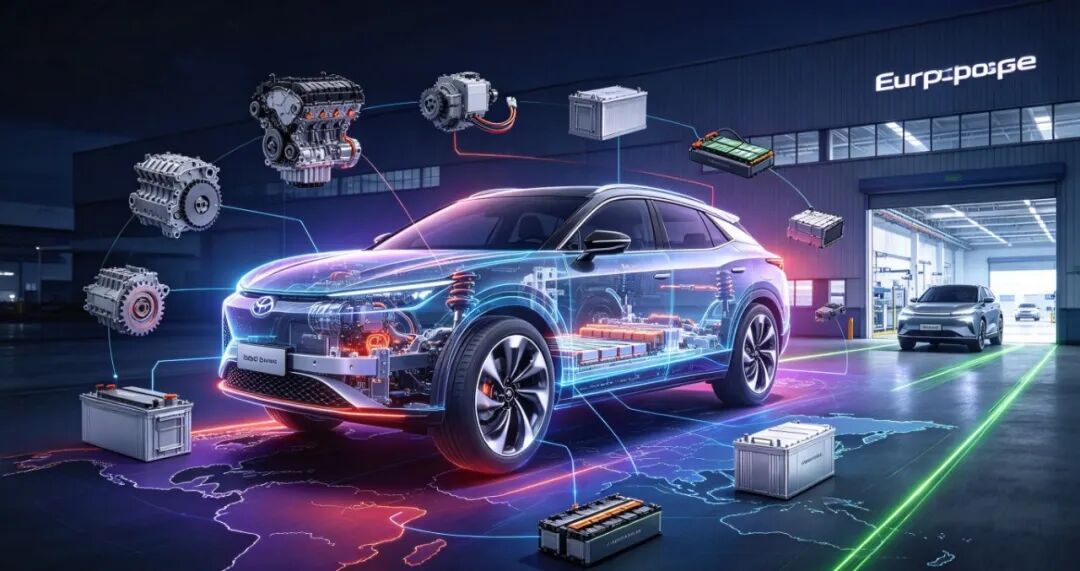
In the European market, look to Toyota for Japanese cars, and look to hybrids for Toyota. Hybrids account for 87% of Toyota's European sales.
Auto Commune believes that a few years ago, strong hybrids were a good thing, but in Europe in 2026, the situation is not so good.
The first problem is the trend.
We once judged that with advances in batteries and charging, China's auto market would enter the "pure electric era." That was once the model for the Chinese market, but now Europe is instead following China's trend. The growth driver of the European auto market is shifting from hybrids to pure electrics. In June 2026, European pure electric new car sales surged 51% year-on-year, and the combined share of pure electric and plug-in hybrids surpassed that of fuel vehicles for the first time.
Renault's CTO said in multiple interviews with Auto Commune that in the first quarter of 2026, Renault's new energy penetration rate in Europe rose from 20% to 50%, with pure electrics accounting for half of that.
The second problem is the IAA Act.
Japanese pure electric products in Europe—bZ4X and C-HR+—come from Japan, while Urban Cruiser comes from India. Yoshihiro Nakata himself admitted that in 2025 Toyota Europe imported vehicles worth 6.9 billion euros from Japan.
The IAA rules are very clear: to receive subsidies, 70% of the value of components other than batteries must come from Europe, and the complete vehicle must also be assembled in the EU. Japanese pure electric product lines are almost collectively out of the game.
Japan's Minister of Economy, Trade and Industry has repeatedly negotiated with the EU on behalf of Japan, and Toyota has also proposed a compromise, hoping to replace the hard threshold with a "co-manufacturing" standard. Brussels has not relented, and the reason is quite legitimate: the policy is not aimed at Japan, but supports the local industrial chain.
That said, the accounts will not change just because the reason is legitimate. Japanese cars are not being "targeted"; they are being filtered out by a rule that does not distinguish nationality and only recognizes geography, based on origin.
02 Inside and Outside the Wall, Against Expectations
The IAA is nominally a wall, but the most ironic thing is that the people it wants to block are already inside the wall.
BYD's Hungarian factory has entered production preparation, Chery is assembling vehicles in Spain using capacity from a former Nissan plant, SAIC has finalized plans to build a factory in Spain, and Leapmotor is advancing local production through a partner factory.
These moves did not start after the act was introduced, but the effect happens to make it difficult for the act to restrict Chinese auto brands. By the time the 70% threshold officially takes effect, BYD's and Chery's European origin status will instead be more "compliant" than the Japanese import status.
We do not need to insist that Chinese automakers are more "European" than Japanese ones. The real reason behind it is that the pace of Chinese automakers' decisions on electrification happened to coincide with the pace of European policy advancement.
Chinese automakers sell new energy vehicles in Europe. They have no historical burdens such as old production lines or internal combustion engine workers, so factories can simply follow the products.
The Japanese base in Europe is hybrids. The supply chain, capacity layout, and supplier relationships for hybrids have grown over decades and cannot be moved, nor should they be. But when policy links subsidies to the local content of pure electric vehicles, the good card of hybrids in Japanese hands instead becomes a problem under the IAA.
Nissan's decline illustrates the problem even more. Nissan once had the Leaf in Europe and had a first-mover advantage, but the update pace of its pure electric product line did not keep up with the turning point in the European market from "early adoption" to "scale."
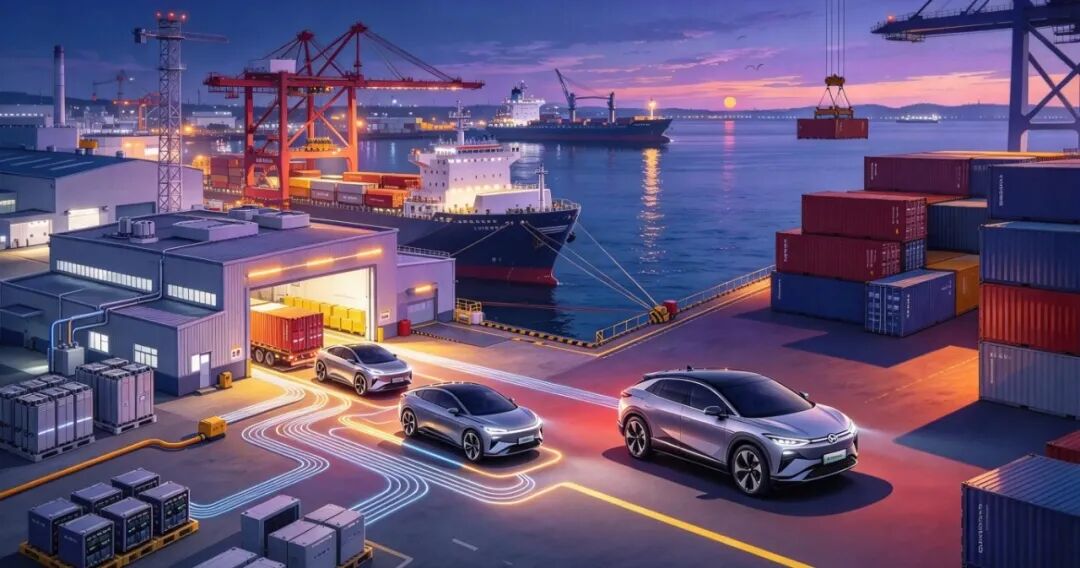
In the first nine months of 2026, registrations of the Nissan Ariya in Europe were only in the three digits, Toyota's bZ4X was only 771, and the C-HR+ had just exceeded 1,200.
These numbers are so small within the Japanese total of 1.18 million vehicles that they are almost invisible. But the European pure electric market is growing at 51% annually. Today's invisible share will become tomorrow's visible gap.
It is not that the Japanese have not reacted. The launch of the C-HR+ and bZ4X Touring more than doubled Toyota Europe's BEV sales in the first nine months, reaching 104,832 units, an increase of 136%. This is real progress.
But the direction of progress and the direction of policy incentives happen to be misaligned: the more you sell, the more you expose that your cars are shipped in from outside; if you want subsidies, you have to move more processes to Europe.
Moving pure electric capacity to Europe takes time, requires suppliers, and needs a new supply chain somewhat different from the hybrid system. Whether Europe will give that time is another matter.
03 The Ruthlessness of "Only Recognizing Origin"
There is a popular defense: Japanese brands have operated in Europe for so many years, employed so many people, and contributed so much tax revenue and so many engineering jobs, so the EU should not equate them with a pure importer in rule design.
This argument makes emotional sense, but it does not hold legally.
The local content clause of the IAA is essentially not a tariff or a quota, but a set of rules determining who is eligible for subsidies. It does not ask whether you have history in Europe; it only asks how much of your car's value is generated on European soil.
Toyota Europe has R&D, design, and engineering teams, but the core components and final assembly of pure electric models largely take place in Japan and India. The rule does not need to deny the Japanese "European identity"; it only needs to replace "identity" with "origin" at the subsidy threshold. After all that replacement, past history is reduced to a certificate of origin.
More noteworthy is that this set of rules may punish "globalized companies" more than "export companies."
Japanese brands are one of the groups with the highest degree of global supply chain integration. Their competitiveness comes precisely from arranging different links in different regions: engineering in Japan, plug-in hybrid capacity in Turkey, costs in India, and branding and channels in Europe.
Globalization was originally their advantage, but in a system that redistributes subsidies by origin, the advantage becomes a burden. You cannot enjoy the efficiency of the global division of labor on the one hand while asking for a set of rules that rewards only local production to make an exception for you on the other.
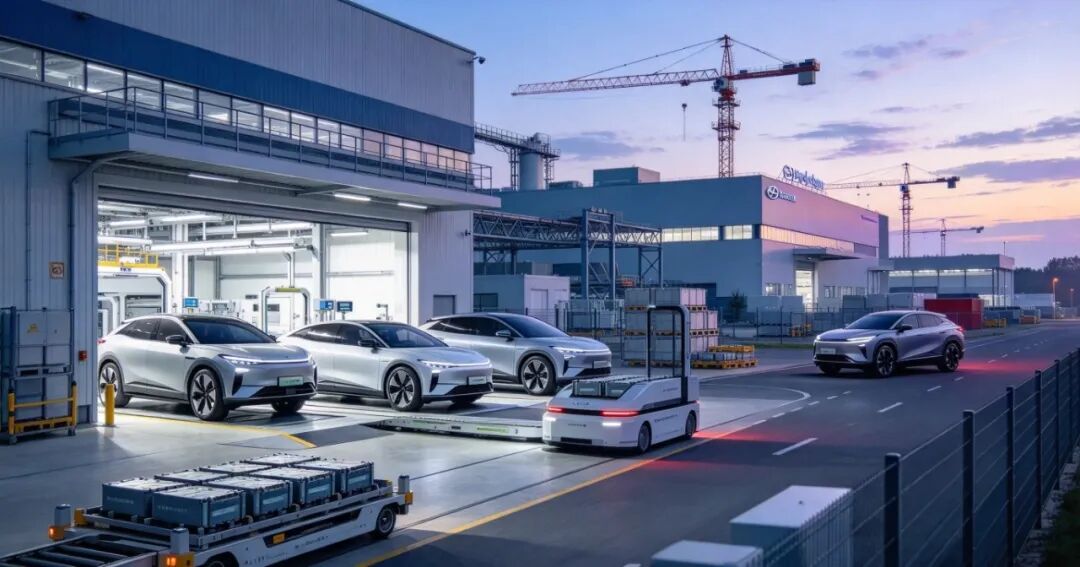
Philipp Seidel of Arthur D. Little pointed out a deeper risk: even if manufacturing and assembly remain in Europe, R&D, technology development, and engineering capabilities may continue to shift to China.
The IAA only stares at the percentage of components and cannot watch where technological capability is going. If Europe thinks that 70% local content can lock the future of the auto industry within the EU, then what it locks up may only be some seats, glass, and wiring harnesses, while the next round of iteration in electric drives, software, and battery chemistry can still happen elsewhere.
Back to Japanese cars. Their current situation is not "Japanese cars are doomed," and even less "Toyota has failed in Europe." Annual sales of 1.18 million vehicles, an 11.9% share, and Toyota's 87% hybrid proportion—these numbers show that the Japanese foundation in Europe has not loosened.
The real problem is that the policy environment and the Japanese product structure do not match. Europe wants localization of pure electrics, while the Japanese advantage lies in hybrids; Europe wants subsidies to flow to "made in Europe," while Japanese pure electrics happen to come from Japan.
Yoshihiro Nakata said, "Toyota is not a guest in Europe." The real weight of this statement lies not in whether Toyota should be treated as a guest, but in whether a rule that only recognizes origin has the ability to distinguish hosts from guests.
At least judging from the current draft, it cannot. It only counts percentages. And the Japanese pure electric product line currently has nothing to say in the face of percentages.
Before pressuring Chinese cars, Europe first let a group that treats Europe as home taste what it is like to be an "outsider."
After all, an attack without enough thought can turn at any time into a punch that lands off target, hurting friends before enemies and hurting oneself before others.
Responsible editor: Shi Jie Editor: He Zengrong

THE END
-
![]()
October New Energy Sales Review: Exports Nearly 1.5 Times Higher in a Single Month, But Plug-in Hybrids Are Losing Steam
-
![]()
China Auto Q3 Export Tracker: Exports Up 72%, Racing Ahead of Tax Rebate Cuts and Hybrid Quotas
-
![]()
Porsche in China: An Outsider in a Marginal Market?
-
![]()
The Four Major EV-Exclusive "Black Technologies" That Gas Cars Can Only Dream Of
-
![]()
Why Can't Autonomous Driving Get Around Traditional Automakers? Insights from the Waymo-Toyota Collaboration
-
![]()
BMW's Profits Are Heading Toward Zero in Fiscal Year 2026
-
![]()
SAIC Invests RMB 300 Million in New Intelligent Driving Joint Venture as Core Executive Yang Xiaodong Announces Resignation, Drawing Market Attention
-
![]()
Xeon Fusion's 8 Billion Yuan IPO Bid Set for This Week's Regulatory Review in ChiNext Sprint