Why Can't Autonomous Driving Get Around Traditional Automakers? Insights from the Waymo-Toyota Collaboration
 11/10 2026
 504
When autonomous driving reached a certain stage of development, a viewpoint emerged: the leadership of the automotive industry might shift from automakers to software companies.
Interestingly, however, as Robotaxi approaches scaled deployment, autonomous driving companies are finding themselves increasingly dependent on traditional automakers—quite the opposite of what was predicted.
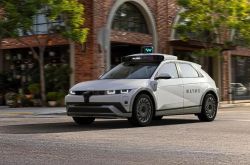
On October 30, Waymo and Toyota announced they would advance their autonomous driving collaboration. The two parties plan to launch testing and initial operations of an autonomous driving fleet based on the Toyota bZ4X in Japan starting in 2027.
Unlike the previous practice of retrofitting production vehicles, these vehicles will be produced directly at Toyota's Takaoka plant, where Waymo's autonomous driving hardware will also be integrated—all under the same roof.
Behind this development lies a question very much worth examining. Previously, the autonomous driving industry cared most about who could enable vehicles to achieve driverless operation.
But as Robotaxi begins to move from technical validation toward larger-scale deployment, the focus of competition shifts to who can truly turn autonomous driving capability into a product that can be continuously replicated. And that clearly does not depend on algorithms alone.
01 Why Can't Software Get Around the Vehicle?
The concept of software-defined vehicles was actually proposed quite early on. Under this concept, many people assumed that automakers would provide the hardware platform, technology companies would handle the software, and as software capabilities continued to improve, the importance of the vehicle itself would gradually diminish.
But the development of autonomous driving seems not to have followed this trajectory entirely. The performance of an autonomous driving system is difficult to discuss in isolation from a specific vehicle.
A vehicle's steering and braking characteristics affect control strategies; the body structure determines the installation space for sensors; and power supply and thermal management capabilities affect whether the computing platform can operate stably over the long term.
As a result, the same autonomous driving solution still needs to be re-adapted when transferred to different vehicle models.
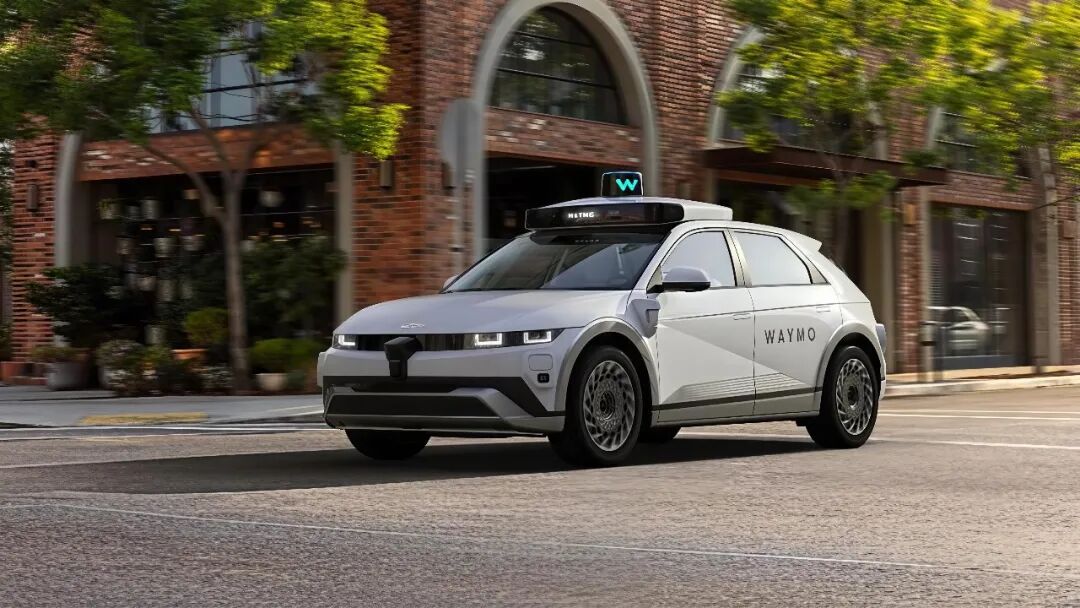
Image source: Internet
This relationship becomes even closer at the mass-production stage. Prototype vehicles can be quickly modified by adding sensors, computing units, and wiring harnesses, but this approach is difficult to replicate directly in large-scale production.
Where sensors are installed, how the computing platform dissipates heat, and how key actuation systems achieve safety redundancy—all of these need to be considered in advance during vehicle development. This is also why the more complex autonomous driving capabilities become, the higher the demands placed on the vehicle platform.
Software has not turned the vehicle into standardized hardware that can be swapped at will; instead, it has brought autonomous driving systems into the vehicle development process earlier than ever.
Waymo and Toyota's decision this time to complete base vehicle production and autonomous driving hardware integration at the same factory also shows that autonomous driving hardware is moving from post-production retrofitting further upstream into the automotive manufacturing process.
Although this does not require every autonomous driving company to participate in vehicle manufacturing itself, it indirectly confirms that the vehicle is no longer just a carrier for the autonomous driving system—it has itself become part of the autonomous driving product.
02 Scaling Is Difficult Not Just Because of Building More Vehicles
Wanting one vehicle to achieve driverless operation and wanting ten thousand vehicles to operate stably over the long term are two completely different propositions. In the technical validation stage, the core task of autonomous driving companies is to prove whether the system can drive a single vehicle well.
Even if a vehicle has problems, the engineering team can handle them one by one. But once the fleet scale expands, the nature of the problem changes.
If a sensor solution requires complex manual installation and debugging, costs will rapidly amplify as the number of vehicles increases; if the reliability of a certain hardware component proves insufficient, what is affected is no longer just one test vehicle, but possibly the operational efficiency of an entire batch of vehicles.
At this point, what autonomous driving companies face is no longer just a technical problem, but a product problem.
Technical validation pursues whether this vehicle can run; scaling pursues whether every vehicle can run with comparable quality and cost.
This distinction determines why the role of traditional automakers is more irreplaceable than ever.
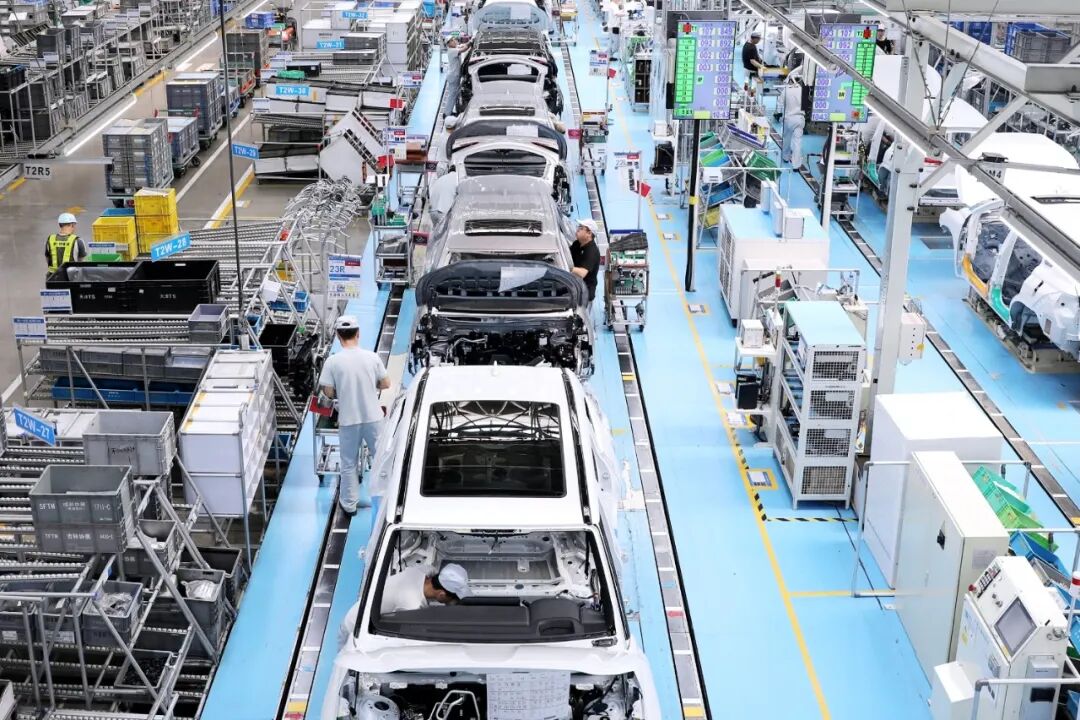
Image source: Internet
Vehicle development solves how to integrate complex systems into the product in advance; scale manufacturing solves how to ensure the consistency of a large number of vehicles; and the supply chain and quality system determine whether these vehicles can operate stably over the long term.
For Robotaxi, these capabilities will directly affect the business model. Robotaxi is not a service that is completed once a vehicle is sold, but a long-term operating service.
Vehicle reliability, maintenance efficiency, and downtime will ultimately become operating costs. Therefore, as autonomous driving enters the scaling phase, the competitive logic of the industry is also changing.
Algorithm capability determines whether the vehicle can drive, but product and manufacturing capability begin to determine whether this system can scale at a reasonable cost. This is perhaps also the most noteworthy aspect of the Waymo-Toyota collaboration.
The focus of the two sides' collaboration is no longer just to provide a vehicle model suitable for autonomous driving, but to try to incorporate the autonomous driving system directly into a mature manufacturing system.
03 Who Defines an Autonomous Driving Vehicle?
Whether it is the previously discussed Momenta controlling SAIC's intelligent driving joint venture, or today's discussion of the Waymo-Toyota collaboration, looking at these matters against the broader industrial background, it is not hard to find that the division of labor between autonomous driving companies and automakers is shifting upstream.
In the past, the relationship between automakers and autonomous driving companies could be simply understood as: automakers first develop a vehicle, and then autonomous driving companies install their systems on it.
This model suits technical validation and also suits early small-scale deployment. But when the goal becomes large-scale operation, many problems cannot wait until vehicle production is completed to be solved.
How sensors and computing platforms are integrated, how power supply and thermal management are designed, and how vehicle actuation systems meet autonomous driving requirements—all need to be considered in advance during product development.
As a result, what an autonomous driving vehicle ultimately looks like is no longer decided by automakers alone, nor is it merely a set of software provided by autonomous driving companies. Both sides are beginning to participate jointly in product definition.
This may be the change that will occur in the next stage of the autonomous driving industry.
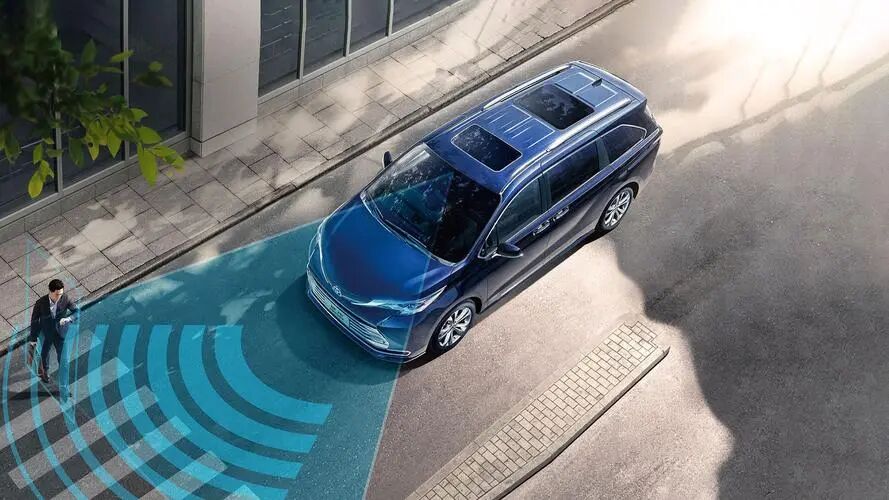
Image source: Internet
In the past, people debated whether software would redefine the vehicle and worried that traditional automakers would ultimately degenerate into hardware manufacturers. But now it seems that autonomous driving has not simply split the automotive industry into technology companies responsible for intelligence and automakers responsible for manufacturing.
The more autonomous driving technology moves toward scaling, the closer the relationship between software and the vehicle becomes—quite the contrary. Technology companies need to understand vehicles earlier, and automakers also need to understand autonomous driving earlier.
In the future, what is truly competitive may no longer be who alone possesses the strongest algorithms or the largest manufacturing scale, but who can earlier integrate software capabilities, vehicle platforms, and manufacturing systems into a product that can be repeatedly replicated.
Waymo and Toyota's new collaboration happens to provide a window for observing this change. Waymo has mature autonomous driving technology and real-world operating experience, while Toyota has vehicle development and large-scale manufacturing capabilities.
What the two sides now need to solve is no longer just getting autonomous driving technology onto vehicles, but how to bring this technology into a larger market.
Toyota and Waymo also stated that in the future they will continue to explore the application of autonomous driving technology in Toyota's personal passenger vehicles and study how to use data and technical experience generated from Waymo's real-world operations to improve road safety.
This also shows that the relationship between the two sides may not stop at vehicle supply for Robotaxi.
For Waymo, what Toyota provides is not just a vehicle, but a set of industrial capabilities for stably manufacturing complex products.
For Toyota, what Waymo provides is not just an autonomous driving system, but also technical and data experience accumulated from long-term real-world operations.
In the past, the industry cared more about whether autonomous driving would change the leadership of the automotive industry. Now, as autonomous driving truly moves toward scaling, it is difficult for anyone to define an autonomous driving vehicle alone.
#AutonomousDriving #Waymo #Toyota
-
![]()
October New Energy Sales Review: Exports Nearly 1.5 Times Higher in a Single Month, But Plug-in Hybrids Are Losing Steam
-
![]()
China Auto Q3 Export Tracker: Exports Up 72%, Racing Ahead of Tax Rebate Cuts and Hybrid Quotas
-
![]()
Porsche in China: An Outsider in a Marginal Market?
-
![]()
The Four Major EV-Exclusive "Black Technologies" That Gas Cars Can Only Dream Of
-
![]()
Why Can't Autonomous Driving Get Around Traditional Automakers? Insights from the Waymo-Toyota Collaboration
-
![]()
BMW's Profits Are Heading Toward Zero in Fiscal Year 2026
-
![]()
SAIC Invests RMB 300 Million in New Intelligent Driving Joint Venture as Core Executive Yang Xiaodong Announces Resignation, Drawing Market Attention
-
![]()
Xeon Fusion's 8 Billion Yuan IPO Bid Set for This Week's Regulatory Review in ChiNext Sprint