Porsche in China: An Outsider in a Marginal Market?
 11/10 2026
 528
Porsche is undergoing an extreme stress test — one that will determine whether it can rewrite the rules of survival.
"With Porsche's current structure, it cannot maintain sustainable competitiveness!"
On July 29, Porsche CEO Michael Leiters made this helpless admission at the half-year earnings call. At that point, Porsche could not find a single point that could reassure him.
Although the financial data at the time was described as "sales fell, profits still rose," the crisis was laid bare on the table.
In the first half of 2026, Porsche delivered 122,300 vehicles globally, down 16.5% year-on-year. Operating profit rose from just over 1 billion euros in the same period last year to 1.348 billion euros, an increase of 33.9%.
Yet in the crucial Chinese market, Porsche remains mired in losses. In the first half of 2026, Porsche delivered 14,500 vehicles in China, down 31.9% year-on-year. Its share fell from nearly one-third at its peak to about 12%, and dealer outlets contracted from 150 to 80.
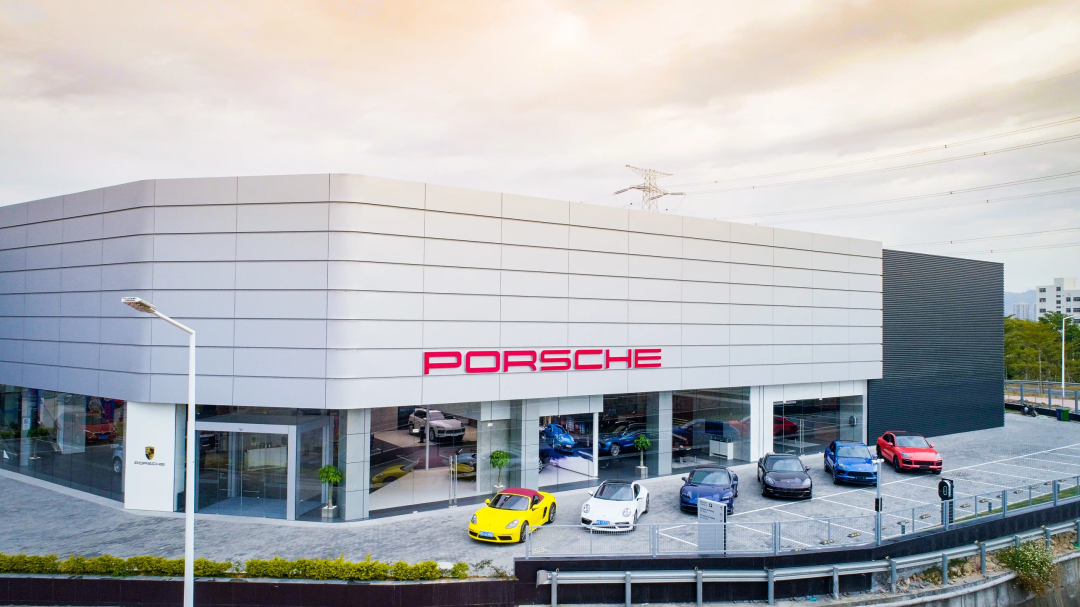
Sales declining, profits collapsing, the luxury money-printing machine stalling — for a time, all kinds of claims were piled on Porsche. "Porsche, once a luxury money-printing machine, is going through its darkest moment." How dark? So dark that three stores ran away in succession within three days.
"The cake has become smaller, and the number of people sitting at the table also needs to be reassessed."
Porsche China President and CEO Pan Lichi once explained the company's decision to drastically shrink its Chinese sales network this way. Because of the relentless sales decline, Porsche found itself an outsider at the table.
After that, Porsche launched a new round of adjustments.
In March, Porsche first announced a plan to cut 3,900 positions by 2029. By the time it released its medium- and long-term strategy in October, it had adjusted the layoff scale to about 9,000 people, with the goal of completing it around 2030, involving management positions, functional positions, and some R&D capacity optimization.
The optimization has had some effect.
Behind the 40-fold profit increase
On October 27, Porsche released its first three quarters' results.
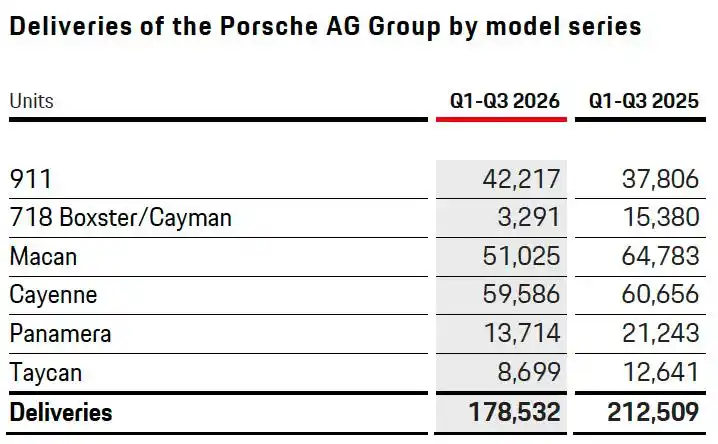
Global deliveries were 178,500 vehicles, down 16% year-on-year; revenue was 25.282 billion euros, down 5.9% year-on-year; operating profit, however, jumped from 40 million euros in the same period last year to 1.735 billion euros, and the operating return on sales recovered from 0.2% to 6.9%.
Profit could be described as having "increased 40-fold."
But Porsche knows what this was exchanged for. In the financial report, Porsche stated that "the substantial increase in profit is also attributable to the high base of strategic restructuring costs in the same period last year."
A year ago, Porsche's operating profit for the period was pressed close to zero. At that time, Porsche attributed the crisis to strategic adjustment costs, tariff pressure, weak demand, and intensifying competition. Among them, the "tuition" for strategic transformation reached 2.7 billion euros, becoming the main cause of the loss.
From 4 billion euros to 40 million euros — a 99% drop in profit. This figure shocked everyone in the industry at the time. "Profit avalanche" and similar terms all became labels attached to Porsche.
A year later, after adjustments, Porsche recovered some profit.
JPMorgan characterized these results as a "solid quarter," emphasizing that Porsche's pricing and product mix provided support, while strong cash flow highlighted financial resilience.
In Porsche's third-quarter financial report this year, there are two obvious pieces of information.
One is that, in addition to strategic correction costs falling to about 500 million euros, another force behind the profit rebound came from the asset side. Porsche completed the sale of its stakes in Bugatti Rimac and Rimac Group, recognizing a disposal gain of 593 million euros at the financial level, directly boosting pre-tax profit.
The other piece of information is the shift from a "contraction strategy centered on value over scale" to a "quality over quantity" approach, no longer obsessing over sales volume and pure electric vehicles, abandoning the aggressive target of more than 80% pure electric share by 2030, and instead shrinking scale, raising per-vehicle profit, and returning to the fuel and hybrid sports car areas it excels in.
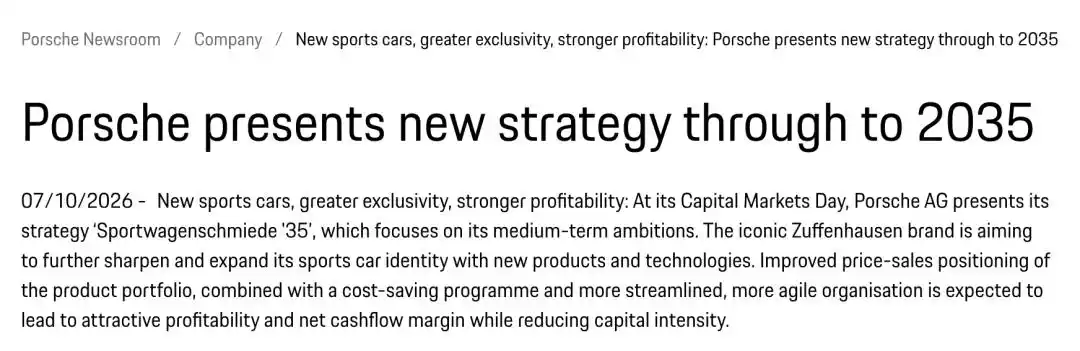
Porsche's 2035 strategy clearly states that the break-even point will be pressed below 200,000 vehicles, the 911 will not be launched as a pure EV, the mid-engine supercar will be positioned above the 911, about 9,000 positions will be cut, management positions will be reduced by about 40%, R&D spending will be lowered by about 20%, material costs per new model will be reduced by about 10%, and sales and distribution costs will be reduced by 20%.
Porsche has taken the initiative to remove "sales volume" from its core KPIs. Volume-driving models such as the Macan, Panamera, and 718 will either be discontinued in transition or have their inventories cleared, while the focus is on D-segment and E-segment high-profit models, and the exclusive customization business will be scaled up sixfold.
"We focus on value, brand appeal, and profitability. Selling more sports cars does not necessarily make Porsche stronger," said Oliver Blume, Chairman of the Executive Board of Porsche, candidly.
It can be said that Porsche has turned its operating logic into making money through scarcity and high value.
However, this playbook works in European and American markets. Globally, North America remains the largest market, with sales of 56,088 vehicles in the first three quarters, accounting for 31% of global sales, among which demand for the 911 remains solid.
Has China become a "marginal market"?
But in the Chinese market, it is not so effective.
"Porsche insists on 'developing whatever car makes money,' indulging in the core technologies of fuel vehicles and living off past achievements, while Chinese automakers are willing to invest in long-term strategy. This difference is ultimately reflected in the ebb and flow of market share," an industry insider said.
Therefore, to some extent, Porsche's strategic correction is also "treating the symptoms but not the root cause." Because irreversible electrification is a global megatrend, Porsche still has to face it.
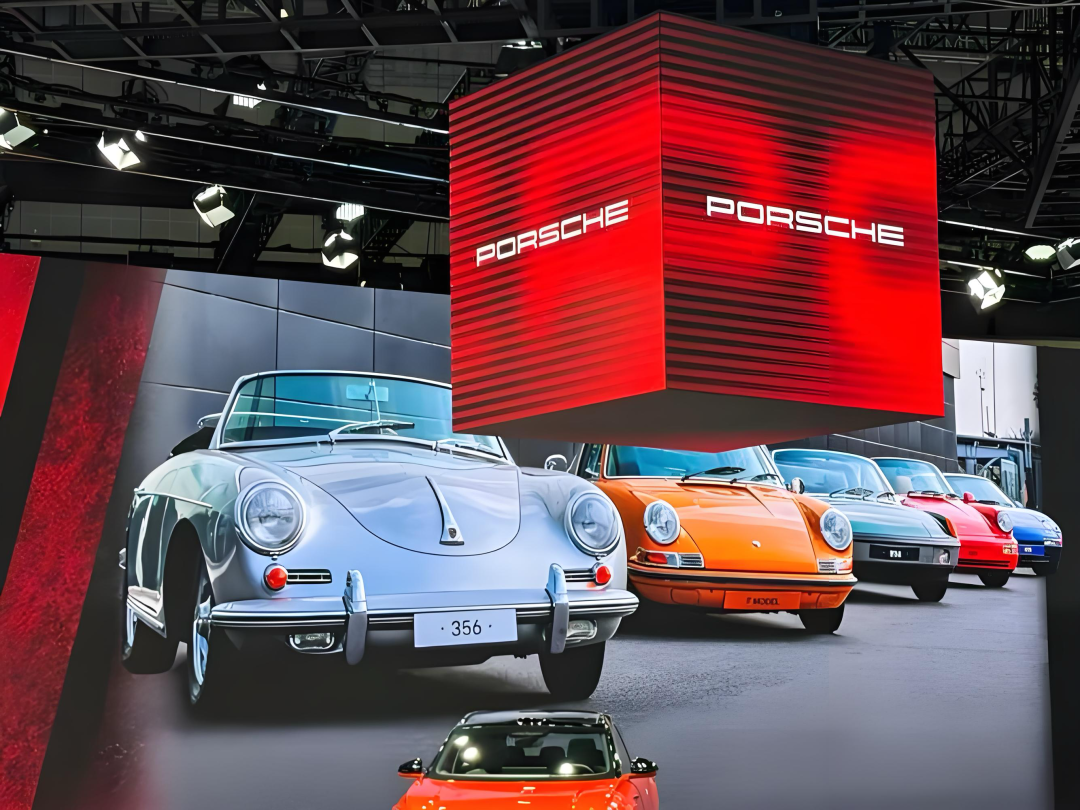
Although Porsche's third-quarter financial data have rebounded somewhat, it has not yet escaped the framework of "sustainability remains to be verified." In other words, the strategic correction is temporary, and Porsche still needs to find new rules of survival.
Porsche's predicament is not an isolated case, but an extreme stress test that traditional luxury brands are undergoing regarding the reset of the rules of survival. Difficult and long.
The testing ground is China.
According to the plan, Porsche clearly adheres to a "three-pronged" powertrain strategy, continues to invest in internal combustion engines and plug-in hybrids, and at the same time develops next-generation battery technology. By 2030, Porsche will launch at least one new product that defines the brand image every year.
"'Winning back China' is a comprehensive, long-term systematic project. We have formulated a clear roadmap and are firmly executing it," said Pan Lichi. The number of global sales regions has been merged from five to four, the China regional structure remains unchanged, and a comprehensive R&D center has been established in Shanghai to actively promote the implementation of a China-specific infotainment system.
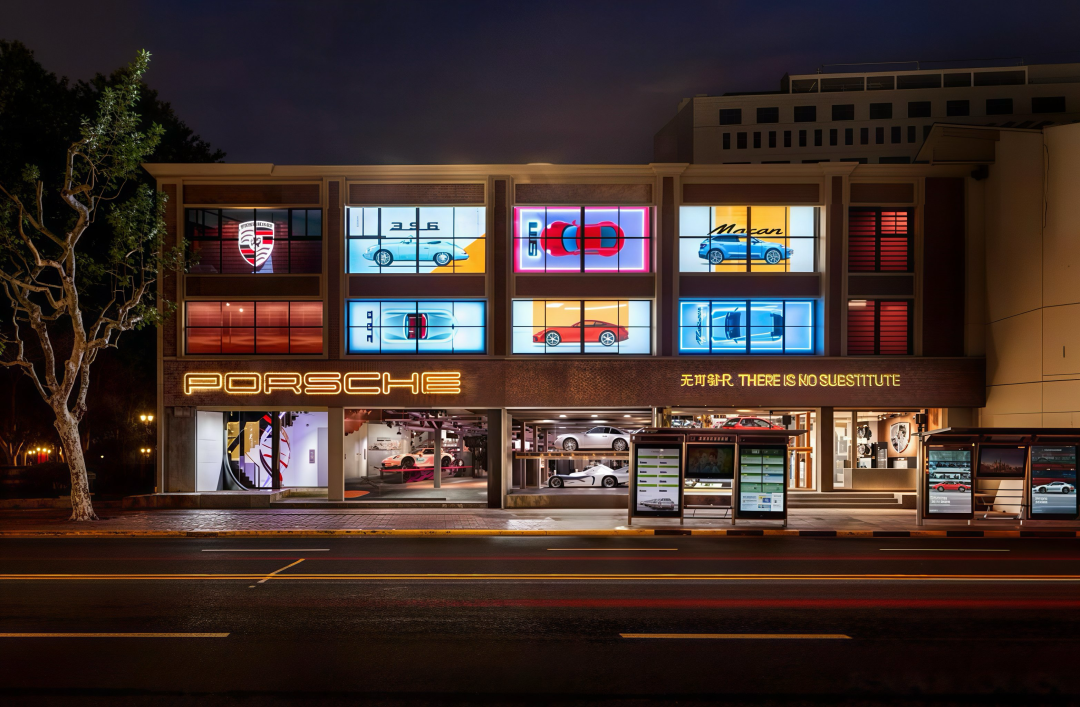
However, these words also reveal some uncertainty.
Data show that in 2025, Porsche's full-year sales in the Chinese market were 42,000 vehicles, down 26% year-on-year, the fourth consecutive year of decline in the Chinese market. In the first three quarters of this year, Porsche's sales in the Chinese market were only 21,493 vehicles, down 33% year-on-year, the market with the largest decline globally, accounting for 18% of total global sales.
The adjustments are also obvious. The pace of product iteration lags, the intelligent experience is insufficient, and the pricing system has been dismantled by competitors. Changing this will not happen overnight.
Therefore, in Porsche's planning, China's sales expectation has already been lowered to 10% of the global total, which means Porsche's business focus has shifted back to Europe and the United States.
In Porsche's global layout, China, once Porsche's largest single market in the world, has now also become a "marginal market." At the same time, Porsche is becoming an "outsider" in this "marginal market."
Note: Some images are from the internet. If there is any infringement, please contact us for deletion.
-END-
-
![]()
October New Energy Sales Review: Exports Nearly 1.5 Times Higher in a Single Month, But Plug-in Hybrids Are Losing Steam
-
![]()
China Auto Q3 Export Tracker: Exports Up 72%, Racing Ahead of Tax Rebate Cuts and Hybrid Quotas
-
![]()
Porsche in China: An Outsider in a Marginal Market?
-
![]()
The Four Major EV-Exclusive "Black Technologies" That Gas Cars Can Only Dream Of
-
![]()
Why Can't Autonomous Driving Get Around Traditional Automakers? Insights from the Waymo-Toyota Collaboration
-
![]()
BMW's Profits Are Heading Toward Zero in Fiscal Year 2026
-
![]()
SAIC Invests RMB 300 Million in New Intelligent Driving Joint Venture as Core Executive Yang Xiaodong Announces Resignation, Drawing Market Attention
-
![]()
Xeon Fusion's 8 Billion Yuan IPO Bid Set for This Week's Regulatory Review in ChiNext Sprint