Ruthless Chery: Yin Tongyue Sets His Sights on Britain's Century-Old Jaguar!
 11/12 2026
 414
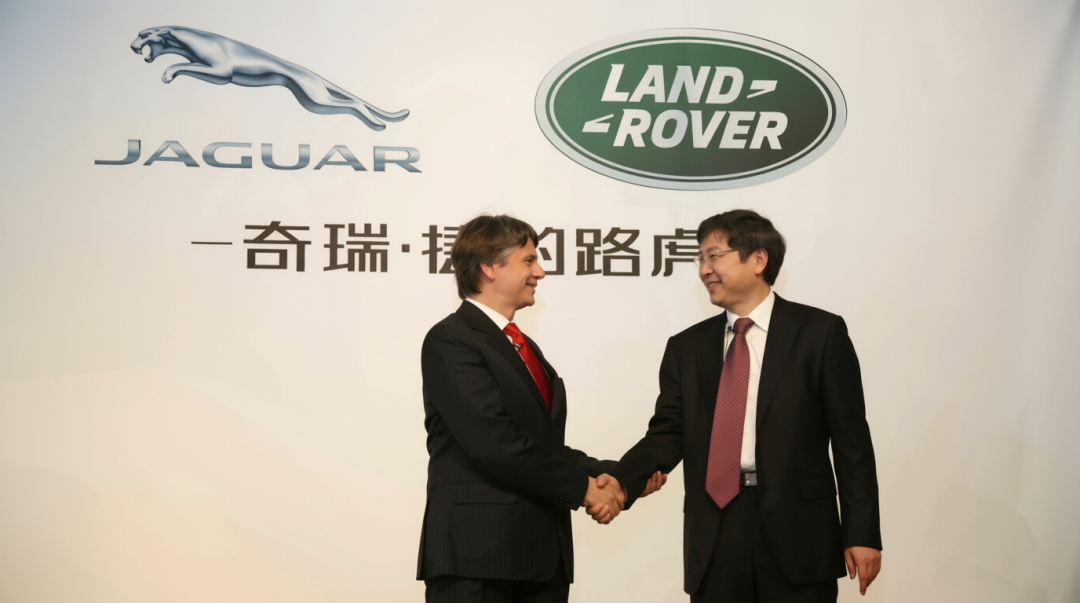
Image source: Weibo
A recent report by The Times of the UK has set the auto industry buzzing.
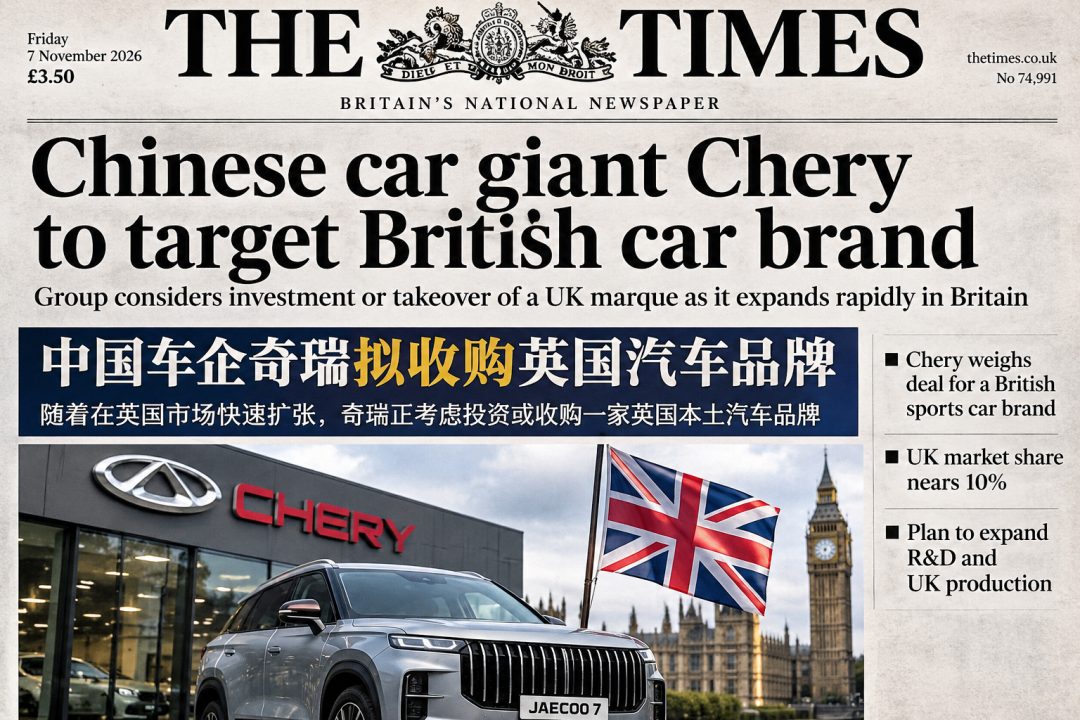 Image source: Weibo
On November 7, foreign media reported that Chery's helmsman Yin Tongyue is weighing a major deal: a plan to invest in—or even acquire—a longstanding British sports car brand, with the investment potentially reaching hundreds of millions, or even billions, of pounds. Once the news broke, all eyes immediately turned to Jaguar.
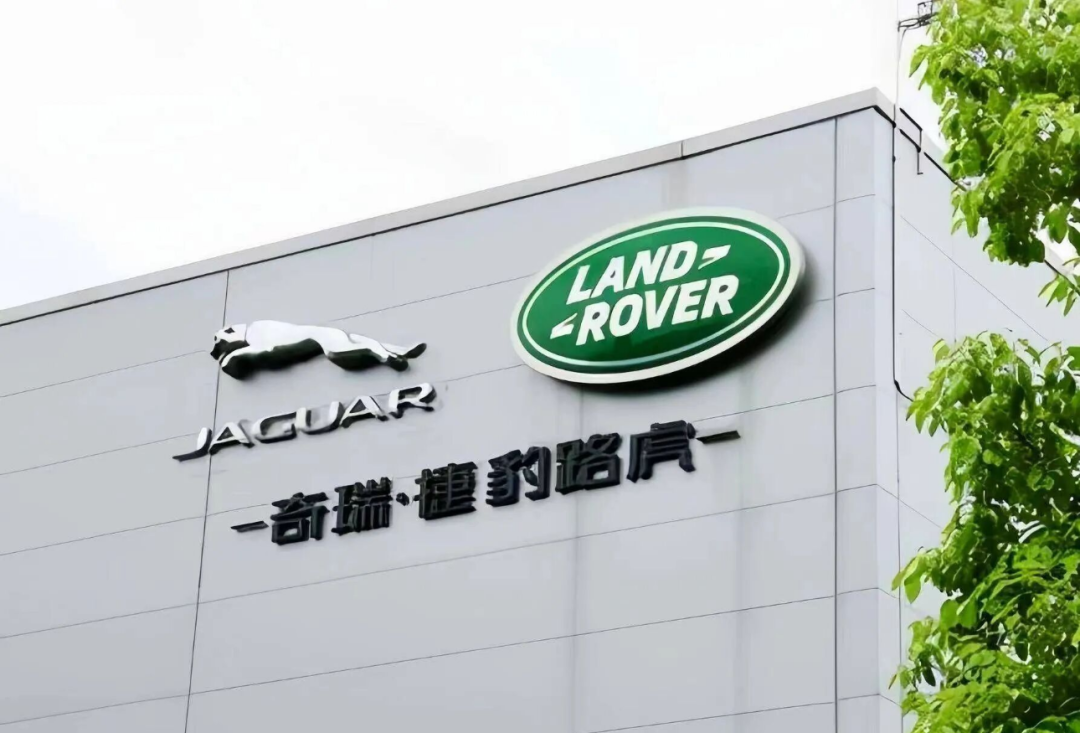 Image source: Weibo
To be clear from the outset: so far, neither Chery nor Tata has made an official announcement. These are only preliminary talks and explorations, and nothing has been finalized. Still, that hasn't stopped people from marveling at how much times have changed.
More than a decade ago, when Chery and Jaguar Land Rover formed a joint venture, Chery was the one humbly learning—squatting on the sidelines trying to figure out how to build a luxury brand, how to set up a supply chain, and how to serve high-end customers. Chery even has a model that sells remarkably well overseas, the JAECOO 7 (called Jiekui 7 in China), which has been hailed abroad as the "Temu Range Rover"—the "Pinduoduo version of Land Rover"—with a very similar product at an appealing price.
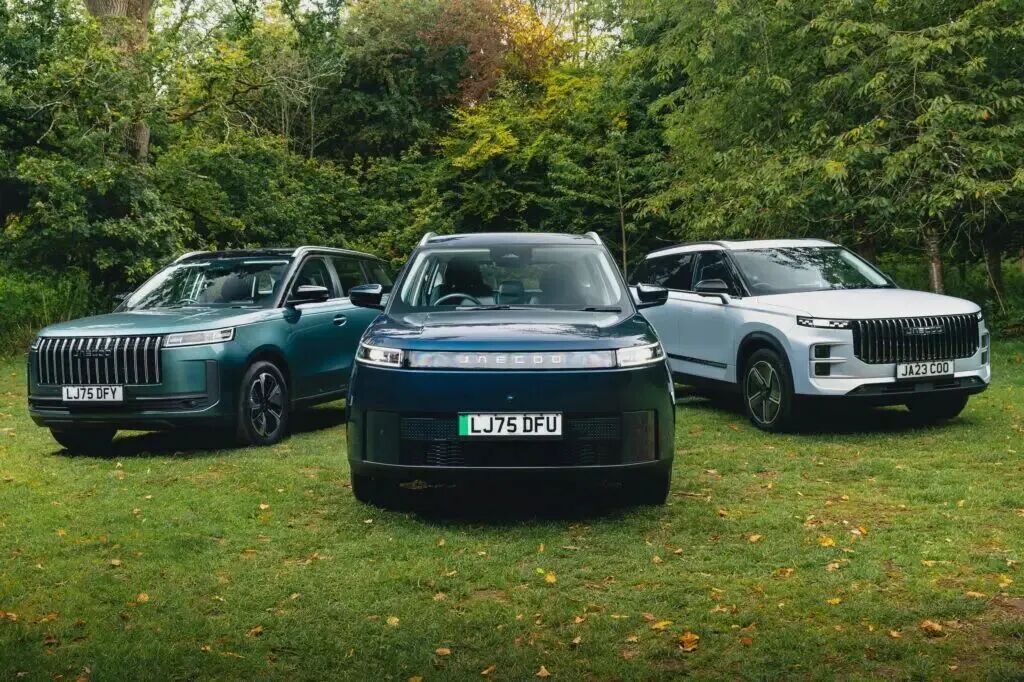 Image source: Weibo
Who could have imagined that the wheel of fortune would turn, and that Chery would now be sitting at the negotiating table, with a chance to bring this British luxury IP—one it once looked up to—into its pocket.
Yin Tongyue's plan had long been foreshadowed
This isn't something foreign media dreamed up out of thin air. Back in May this year, Yin Tongyue already told British media that he wanted to acquire a longstanding British sports car company and revive the old brand.
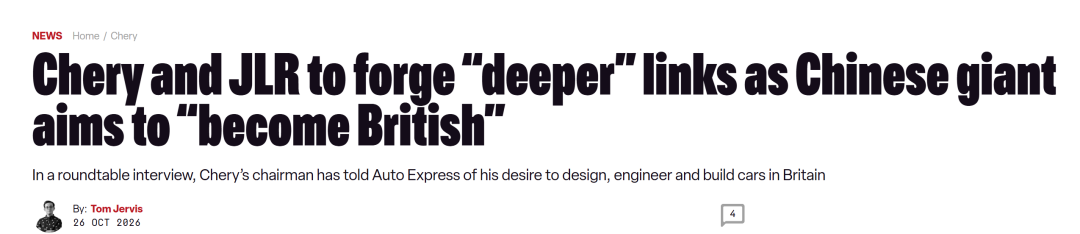
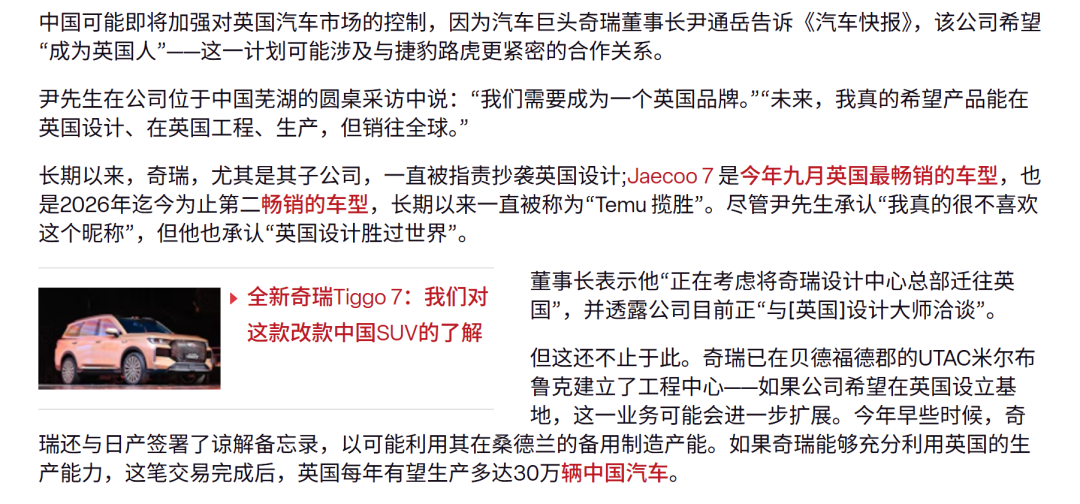 Image source: X social platform
In an October interview with Auto Express, he reiterated the idea and also outlined plans to move Chery's global design center to the UK, completing design, R&D, and manufacturing locally, with finished products sold worldwide.
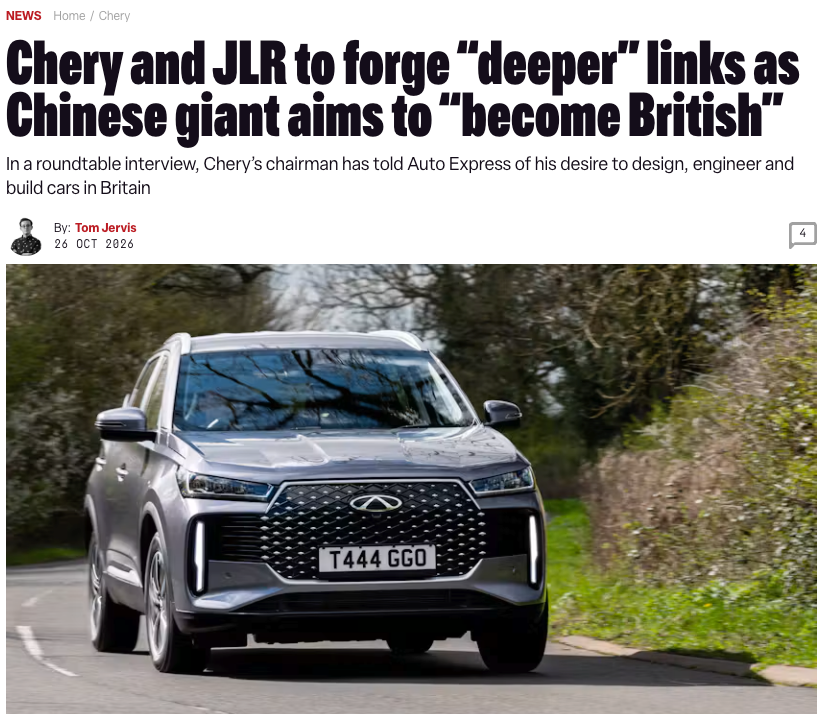 Image source: X social platform
In a nutshell, the key points are: a brand with British pedigree, a sports car foundation, and room to be revitalized.
As the news spread, car fans and industry insiders began going through the British brands still available for purchase one by one. The British auto industry was once glorious, but today most famous brands have long taken other surnames. Let's go through the candidates one by one; after comparison, it becomes clear why Jaguar is the one with the loudest support.
Jaguar | Highest probability, the most fitting target
Jaguar itself started out in sports cars, and the E-Type, even today, remains a legendary classic in automotive history. Its century-old luxury foundation is there, and its brand story is strong enough. It now belongs to India's Tata Group and has had a rather tormented time in recent years. It poured heavy money into betting on the JEA pure electric platform, determined to charge into the ultra-luxury track, but sales flopped, and it has long relied on Land Rover for a lifeline. There have long been rumors in the industry that Tata is considering bringing in external capital or even spinning off Jaguar.
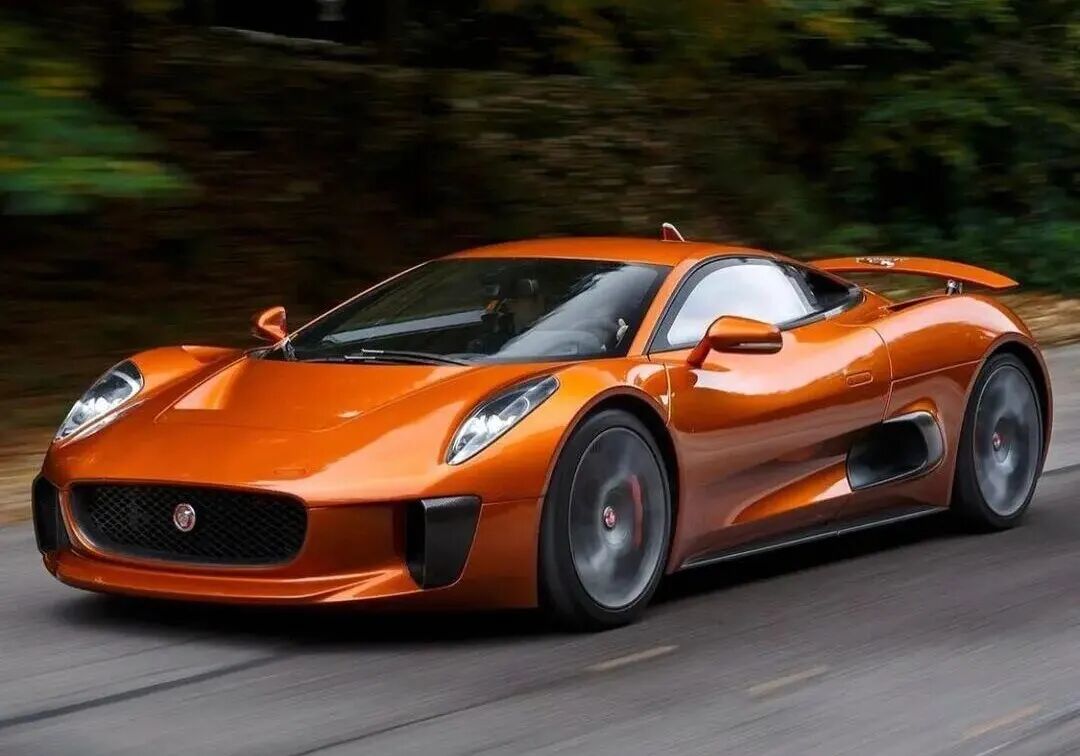
In addition, Chery has cooperated with Jaguar Land Rover for more than ten years, so Chery knows the other side's team, the local UK supply chain, and regulatory pitfalls inside out. Chery is now selling very well in the UK market, and if cooperation or acquisition is truly reached, the resistance to localized operations will be much smaller. The only uncertainty is that Tata has not clearly said it wants to sell; valuation, employee placement, and regulatory review are each a hard battle.
Aston Martin | Full of sentiment, but basically no chance
When it comes to sports car temperament, Aston Martin is impeccable, and it is also the first brand many car fans think of. But its equity has long been locked down.
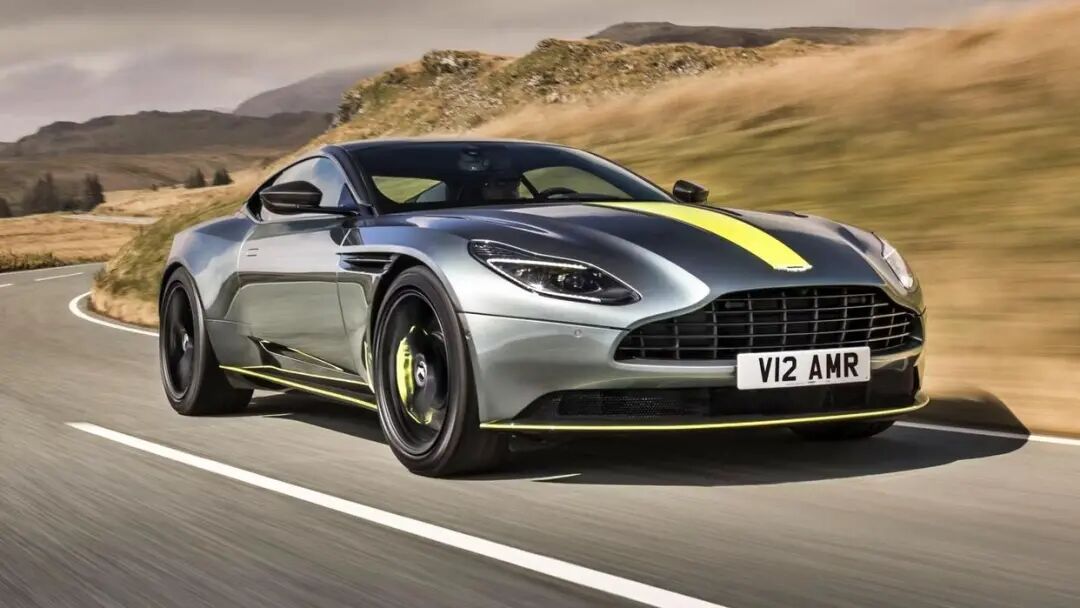
The Yew Tree consortium holds control, Saudi Arabia's sovereign fund is a major shareholder, Geely long ago took about 17% and a board seat, and Mercedes-Benz continuously supplies it with electrification technology. These major shareholders have no intention of selling control at all, so the realistic possibility of Chery taking it over entirely is extremely low.
Morgan | Authentic handmade sports cars, but too small to support the big picture
Morgan is one of the few independent handmade sports car makers in the UK, with a very authentic flavor. But it sells only a few hundred cars a year—small and beautiful, with no modern complete vehicle platform and weak global channels.
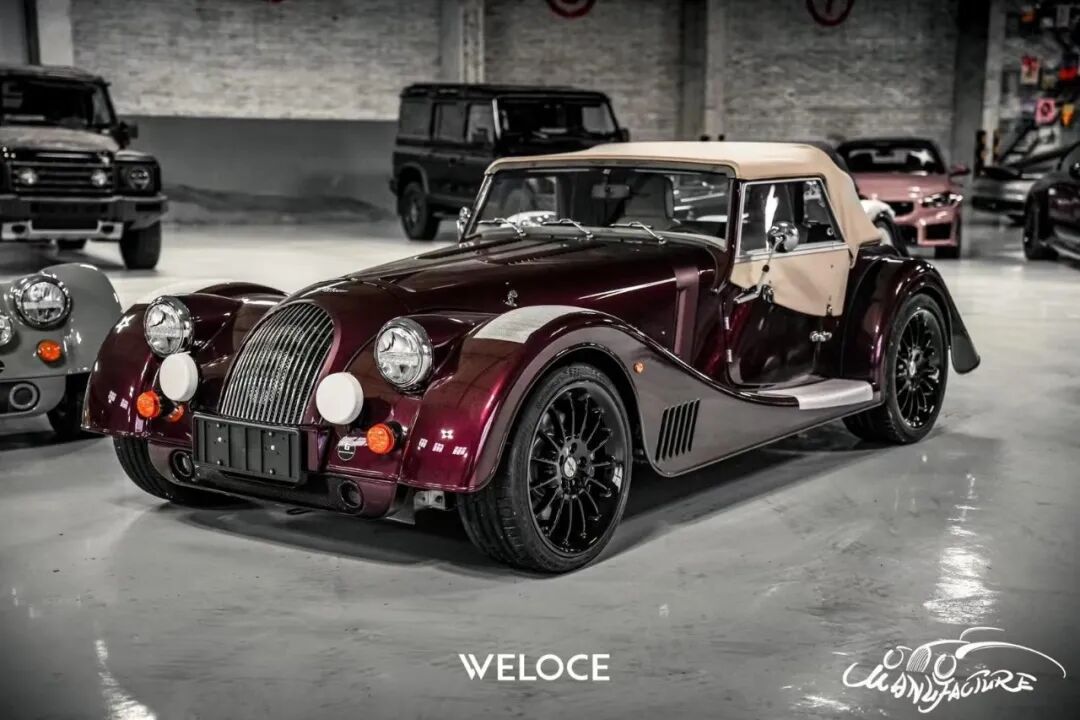
What Chery wants is to complete its luxury product line and build a high-end brand matrix; Morgan can only be a sentimental toy and cannot carry Chery's globalization ambitions.
Other major British brands: basically can be directly ruled out
Lotus belongs to Geely, MG belongs to SAIC, Bentley is Volkswagen's, Rolls-Royce and MINI are in BMW's hands, and McLaren was also taken over by UAE capital last year. The good cards were long ago divided up cleanly by the major automakers, and it is not Chery's turn at all.
After a round of comparison, Jaguar is the only option that simultaneously meets four conditions: sufficient sports car historical heritage, brand size matching Chery's goals, expectations that the seller may loosen, and Chery itself still having a cooperative foundation.
Jaguar's difficulties are clearly laid out on the table.
As a century-old British luxury brand, its sports car DNA is etched into its bones, but in recent years its transformation has stumbled repeatedly. After betting heavily on a brand-new pure electric platform and raising pricing and positioning, the market did not buy it, and sales remained persistently sluggish. The money burned cannot be recovered, and it can only rely on Land Rover's profits to support it, with pressure piling higher and higher and sale rumors repeating again and again.
As for Chery, it is long no longer the novice it once was.
Data from the UK Society of Motor Manufacturers and Traders is telling: one Chery model won the UK single-model sales championship for two consecutive months, selling 3,412 units in October and 42,885 units cumulatively this year, ranking second in the UK.
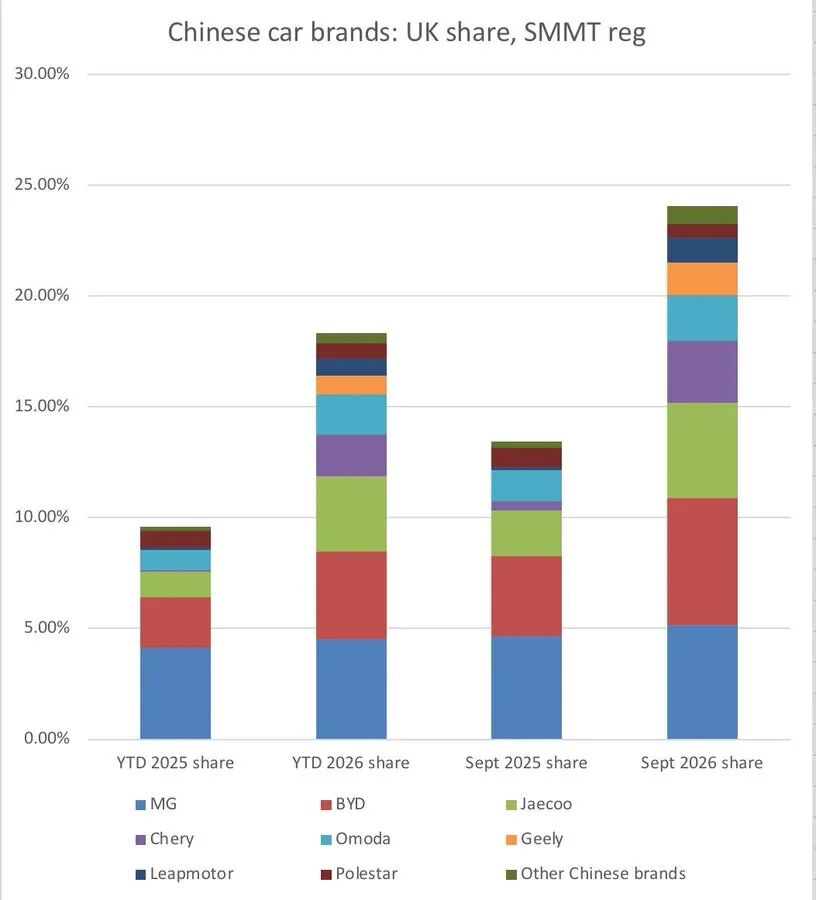
Image source: X social platform
All brands under Chery International registered 13,589 vehicles in the UK in October, with market share reaching 8.9%, once breaking through 9% in September.
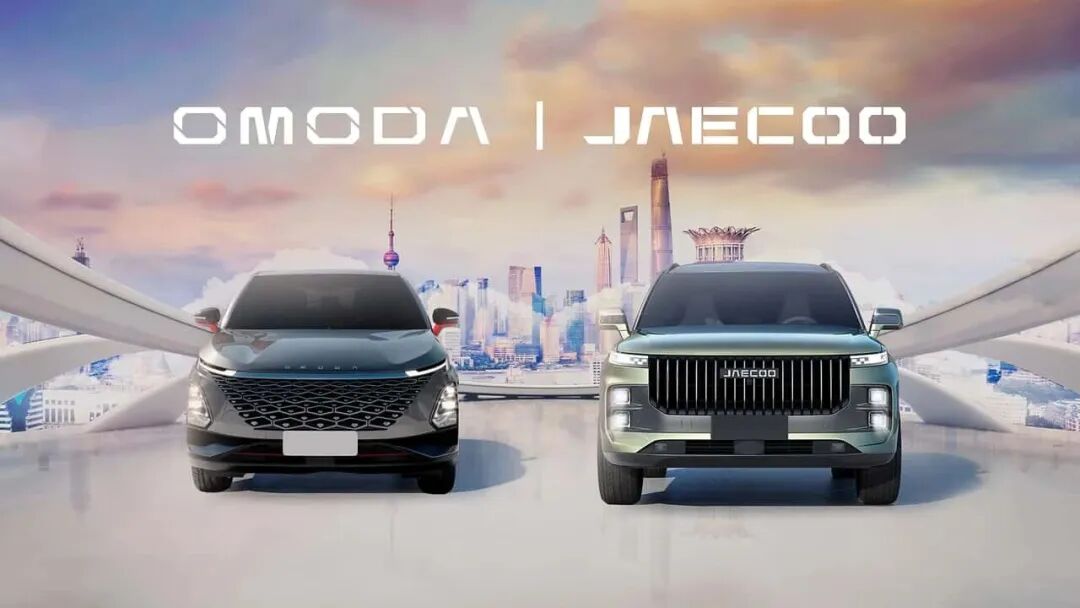 Image source: Weibo
In the picky European market, Chery has already gained a firm foothold. Overseas netizens very much like Chery's JAECOO 7, nicknamed the "Temu Range Rover." A British female owner, Bec, simply played along with the meme and called herself "Temu Range Rover Queen." She shot a short video showing that the refrigerated compartment in the armrest box could fit exactly two McFlurries, and the video went viral with hundreds of thousands of views.
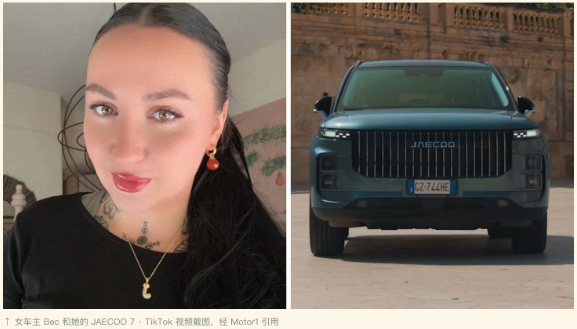
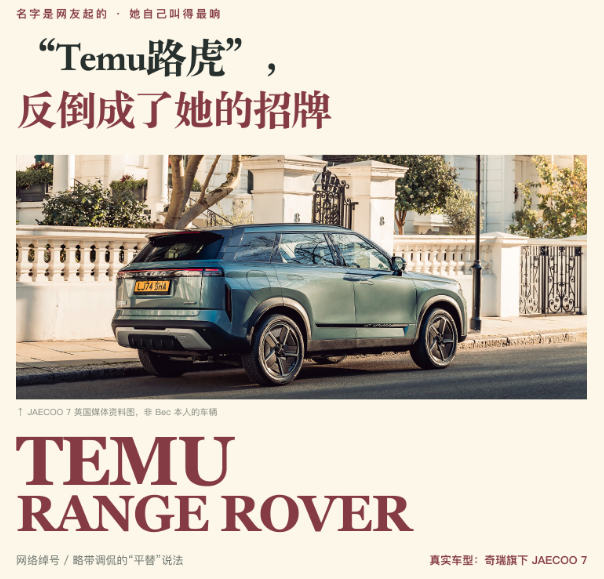 Image source: Xiaohongshu
This nickname was originally teasing, but the owner herself enjoys it. A small refrigerated compartment lets overseas consumers genuinely feel the ingenuity of Chinese cars. It is enough to prove that Chery already knows how to make products and capture users locally in the UK.
Acquisition is not buying a badge; it is completing the globalization puzzle
Even if the deal lands, Chery buying Jaguar is by no means simply spending big money to buy a car badge to prop up appearances.
Chery's mature three electric systems, smart cockpit, and intelligent driving technology can precisely transfuse blood into Jaguar, which is deeply mired in trouble; conversely, Jaguar's century-old luxury tone and sports car design DNA precisely fill the shortcomings in Chery's high-end luxury and sports car product lines. The two complement each other, and Chery's brand ladder directly rises a step.
Chery's layout in the UK had long been quietly paved. In August it officially announced the establishment of an R&D center in Millbrook, focusing on chassis, steering, and assisted driving; in June it signed a memorandum with Nissan to discuss leasing production lines at the Sunderland plant for contract manufacturing, with production possibly starting as early as 2027. Combined with local car manufacturing, it can both absorb idle UK capacity—UK car production in 2025 fell to the lowest in 73 years, with large amounts of production lines idle—and also avoid future European tariff risks in advance, completing a localized closed loop.
The favorable logic looks beautiful, but there are no shortage of variables.
Tata has so far not loosened its stance on selling Jaguar. Even if it is willing to sit down and talk, the acquisition price, which assets are packaged for sale, and how to place thousands of employees are all thorny bargaining points. UK local industrial regulation, labor policy, and old Jaguar fans' emotional attachment to the brand are all hurdles that cannot be bypassed. Chery internally will also repeatedly do the math, and in the end it may not be a wholly owned acquisition but a strategic cooperation.
Chinese automakers going global enter the era of brand operations
Looking at this matter within the larger trend of Chinese automakers going global, its significance long since goes far beyond a piece of acquisition rumor.
In earlier years, domestic automakers going global had a simple path: vehicle exports and overseas plant construction, competing on cost-effectiveness and delivery speed. Now it is different; the playing method of top players has upgraded: they no longer just sell cars, but go to revitalize overseas longstanding automotive IP and operate brands.
People often say Chinese cars are good at volume but lack luxury accumulation. If Chery truly revitalizes Jaguar, it would amount to blazing a new path: using China's new energy and intelligent technology to awaken a Western longstanding luxury brand.
Of course, coming back to it, rumors are ultimately just rumors, and no one dares guarantee whether it will ultimately succeed. It could fall through, or it could downgrade from acquisition to technology cooperation.
But whether or not the shoe drops, the signal is already clear enough.
Chinese automakers are no longer merely pursuers in the global auto market. Players represented by Chery have already sat down at the table and are actively participating in rewriting the landscape of global luxury cars. This step by Yin Tongyue is not a bet on one car or one regional market, but on Chery's position in the global high-end track over the next decade.
Once, British cars defined luxury; in the future, perhaps Chinese technology will redefine British luxury.
Interactive topic: Do you think Chery can smoothly take over Jaguar? If Jaguar is taken over by Chery, what kind of new car are you most looking forward to it launching? Welcome to chat in the comments section.
Disclaimer: This article is only a financial commentary on major companies and does not constitute any investment advice. The corporate data and regulatory events mentioned in the article all come from public information and are for reference only; specifics should be subject to official releases. Images are from the internet; if there is copyright, please contact for deletion.
-
![]()
Europe's Auto Market 2035: A Ceiling of 16.7 Million Units and a 15% Window for Chinese Brands
-
![]()
A7L Wagon "Heads North": FAW Audi May Welcome Its First Shooting Brake
-
![]()
Complete PPT Guide to CAAM Production and Sales Data: October Auto Output and Sales Rise Month-on-Month but Fall Year-on-Year; NEVs Post Steady Growth; Auto Exports Top 1 Million Units for Fifth Strai
-
![]()
Half-Price Zunjie: Can It Recreate the M9 Myth?
-
![]()
CoreWeave: A "Bullish" Report Card, Standing Firm Against "Wild" Stock Price—Can Nvidia's "Godson" Really Rise?
-
AI: The New Bond Between Supply and Demand
-
![]()
Auto Manufacturers No Longer Want to Be Just the Customer
-
![]()
Autonomous Driving Has No Clear Winner Yet