Half-Price Zunjie: Can It Recreate the M9 Myth?
 11/12 2026
 356
In less than a month, Huawei will have two sub-brands poised for launch.
One is the new consumer electronics brand "OSTA Xingmang," teased by Yu Chengdong, and the other is the long-rumored Zunjie automotive sub-brand.
At first glance, this looks like Huawei once again expanding its ecosystem footprint. But within the larger game of HarmonyOS Intelligent Mobility, the picture looks different. The Zunjie sub-brand is not targeting a niche market—it is aimed squarely at the 500,000-yuan-class luxury SUV segment, which is almost equivalent to stepping directly into the core territory of the AITO M9.
In the past, Huawei's "Five Realms" had a clear division of labor: Zunjie was responsible for reaching the top, while AITO, Xiangjie, Zhijie, and Shangjie each had their own price bands and target audiences. But now, Zunjie has begun to reach downward, and AITO may also expand into sedans and MPVs. The boundaries that were originally drawn are being slowly erased by each new car.
The emergence of a sub-brand appears on the surface to be just another brand name, but behind it may lie a re-deployment of the automotive business. Why doesn't Zunjie directly use the main brand to make SUVs? Is it actively striking downward, or is it being forced to turn around by the market environment?
A sub-brand making SUVs may be a choice made after weighing the options.
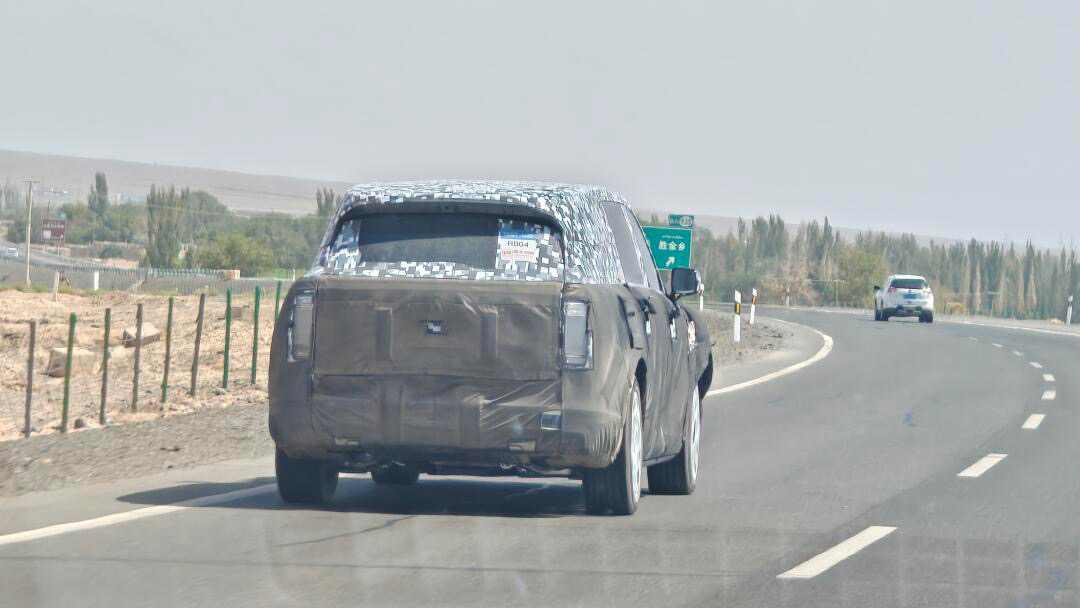
Regarding Zunjie's first SUV, rumors have never stopped. Not long ago, sources revealed that this highly anticipated Zunjie SUV is expected to make its official debut at the Guangzhou Auto Show in November this year. Tracing back to August this year, netizens spotted a camouflaged vehicle suspected to be the Zunjie SUV during road tests in Xinjiang.
After the pedal controversy, there were rumors in the industry that the Zunjie SUV project would be handed over to AITO to operate, but Zunjie quickly came forward to deny this. Shortly afterward, even more heavyweight news emerged—Zunjie would adopt a "sub-brand" strategy to build this all-new SUV.
If we sort out the timeline, we can discover the subtle logic: the Zunjie SUV project was actually established as early as the first half of 2025. At that time, as Zunjie's first million-yuan-class ultra-luxury sedan, the S800 had just been launched in May. As a million-yuan-class luxury car, the Zunjie S800 once exceeded 4,000 units in monthly sales at the end of last year—a figure that directly set a historical record for domestically produced ultra-luxury automobiles.
So here comes the question: since the S800 has already paved a path, why still create a "sub-brand" to make SUVs?
It is reasonable to speculate that when the Zunjie SUV project was first established, the consideration should have been to use the Zunjie main brand, positioned similarly to the S800 and likewise anchored at the million-yuan level.
But plans cannot keep up with changes. Over the past year, the ultra-luxury car market as a whole has shrunk, and the pie in the million-yuan-class market has become smaller and smaller. Rather than stubbornly defending the high end, it became Zunjie's choice after weighing the options to move downward, use a sub-brand to make SUVs, and enter the more mainstream market.
Another variable also contributed to this choice.
During this period, AITO, which ranks second only to Zunjie within HarmonyOS Intelligent Mobility, reached a new cooperation model with Huawei, and Seres gained more dominant power. As is well known, the AITO M9 is the most important car for AITO and even for the entire HarmonyOS Intelligent Mobility, accounting for half of sales.
The AITO M9 has already succeeded, and now that dominant power has been handed to Seres, Huawei will naturally have more energy and resources to build another luxury SUV. Looking across the Five Realms, the brand foundation Zunjie has built in the ultra-luxury market is obviously more suitable than the other three realms to undertake this luxury SUV project.
On one hand, the market environment has changed; on the other hand, resources have been freed up. A sub-brand making SUVs thus becomes a natural progression.
The boundaries among the Five Realms of HarmonyOS Intelligent Mobility are no longer clear.
The all-new sub-brand that Zunjie is about to launch is aimed directly at the 500,000-yuan-class SUV market. In this segment, JAC Motors has long been preparing by registering multiple similar trademarks such as "Dijing," "Dijing," and "Dijing." Various signs indicate that the new brand is ready to launch.
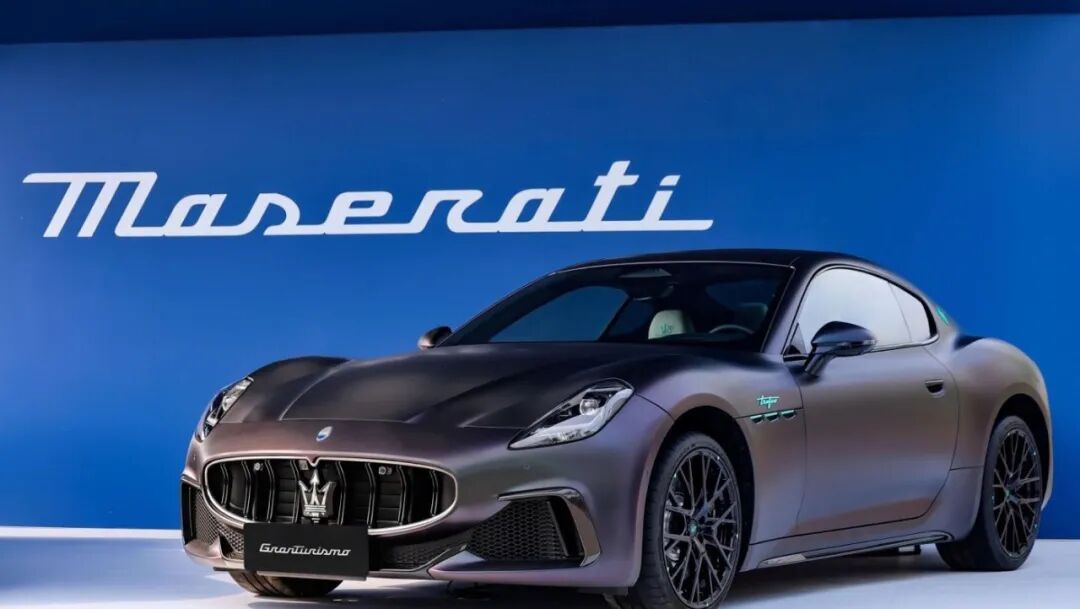
It is worth noting that this new brand points to two different strategic lines: one is Zunjie's 500,000-yuan-class SUV; the other is the Maserati project in cooperation between JAC, Huawei, and Stellantis. At present, the outside world speculates that the project's initial mid-to-large all-electric SUV and large all-electric GT may carry the Maserati badge abroad in the future, while domestically, whether they will be sold under the main entity of Zunjie's new sub-brand remains full of suspense.
What is certain is that once Zunjie's sub-brand is implemented, it will directly attack the heartland of the AITO M9. We need to connect this with the recent changes in the cooperation model between Huawei and Seres: Seres has gained more initiative, and in the future AITO's product planning will no longer be limited to the M-series SUVs, but can expand into multiple categories such as sedans and MPVs.
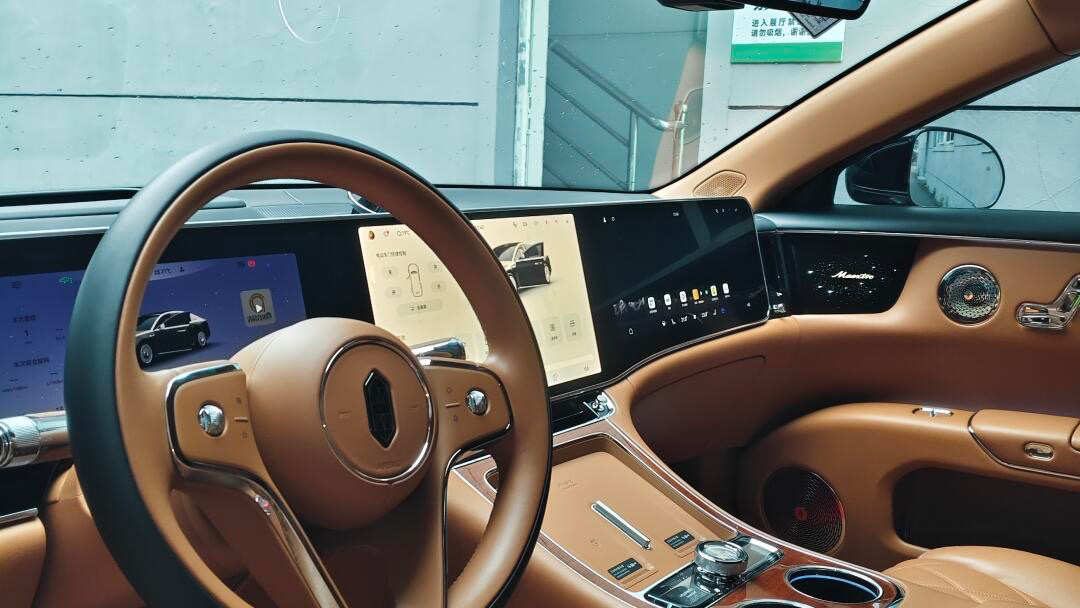
The chain reaction of this change is: Huawei's "Five Realms"—Zunjie, AITO, Xiangjie, Zhijie, and Shangjie—were originally clearly divided by price band, with distinct boundaries, but with the intensive launch of new models, such boundaries are inevitably disappearing.
When AITO starts making sedans, Zunjie starts making SUVs, and even various brands begin penetrating each other's heartlands, "clear brand differentiation" has become a thing of the past. Huawei's Five Realms are accelerating into a jungle-law model of "everyone eats based on their own ability." Consumers no longer judge models by brand names, but by whose product strength is stronger.
In addition to automotive sub-brands, Huawei will also launch a new consumer electronics brand. The all-new consumer electronics brand "OSTA Xingmang" teased by Yu Chengdong on social platforms will cover phones, tablets, watches, and even chips. Together with the upcoming Xiangjie V8 and Shangjie Z7T Xingye set, a massive "HarmonyOS ecosystem" is closing the loop.
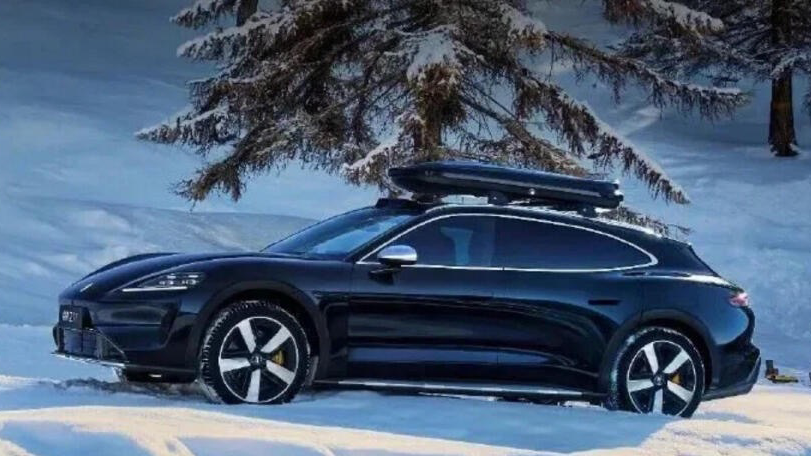
This inevitably makes one think: after breaking the constraints of traditional brand positioning and removing the barriers of the "Realms," will Huawei's automotive business stimulate stronger combat power through sufficient internal competition, thereby reducing internal friction in external competition? Or will an overly crowded track lead to infighting among its own forces and intensified internal friction?
If Zunjie's sub-brand is ultimately implemented, its most important significance is not "recreating an AITO M9," but testing whether Huawei's role should move toward leading or assisting.
-
![]()
Europe's Auto Market 2035: A Ceiling of 16.7 Million Units and a 15% Window for Chinese Brands
-
![]()
A7L Wagon "Heads North": FAW Audi May Welcome Its First Shooting Brake
-
![]()
Complete PPT Guide to CAAM Production and Sales Data: October Auto Output and Sales Rise Month-on-Month but Fall Year-on-Year; NEVs Post Steady Growth; Auto Exports Top 1 Million Units for Fifth Strai
-
![]()
Half-Price Zunjie: Can It Recreate the M9 Myth?
-
![]()
CoreWeave: A "Bullish" Report Card, Standing Firm Against "Wild" Stock Price—Can Nvidia's "Godson" Really Rise?
-
AI: The New Bond Between Supply and Demand
-
![]()
Auto Manufacturers No Longer Want to Be Just the Customer
-
![]()
Autonomous Driving Has No Clear Winner Yet