Auto Manufacturers No Longer Want to Be Just the Customer
 11/12 2026
 473
Introduction
The relationship between automakers and suppliers is changing.
I believe many people have heard that in the field of new energy vehicles, many automakers talk about ensuring delivery and securing supply. This year, some models confident of becoming hits, and some automakers that have already created hit models, have had quite a few disputes with power battery suppliers for various reasons.
This is the difference between the new energy era and the fuel vehicle era. In the automotive industry dominated by fuel vehicles over the past 100 years, core components such as engines and transmissions have already become stable in supply due to slow technology upgrades and iteration cycles, as well as automakers' in-house development.
But electric vehicles are different. First, the development time is short; second, technology iterates quickly; and components such as power batteries account for an excessively large proportion of the whole vehicle. Intelligent configurations such as smart cockpits and intelligent driving include both software and hardware as well as vehicle integration. Whether a new car can achieve volume immediately upon launch is constrained by multiple parties.
So you can see that many models with large order volumes often fail to keep up with delivery rhythms because of supply cuts in some components, and eventually hit models become cannon fodder. The essence of this problem is that many new energy automakers do not have absolute control over a model, so they fall into a passive position.
Several recent events in the automotive industry also reflect the prevalence of this problem. The most typical is that Li Auto and Xiaomi successively took stakes in Sunwoda Power, with the two capital increases totaling 4.35 billion yuan. Currently, Li Auto is the second-largest shareholder and Xiaomi the third-largest shareholder.
01 Binding Suppliers and Gaining a Say
What is the essence of this matter? It is that automakers want to regain the right to define battery cells, so that battery performance is customized around their own models' range and charging needs. Moreover, for automakers, this model is more asset-light than building their own factories and more controllable than pure procurement.
In the past few years, after a new model was approved, the procurement process for battery packs, intelligent driving chips, and core components almost always started with tender information, letting leading suppliers each provide proposals and quotes. Automakers repeatedly bargained among several candidate proposals and finally selected one or two with the best cost performance as primary and secondary suppliers.
This model worked quite smoothly during the industry's growth period when supply chain capacity was sufficient. Automakers held the say through orders, and suppliers were willing to give up part of their profits to maintain market share, with both sides getting what they needed. But as competition in the new energy vehicle market became white-hot, the drawbacks of this model began to surface.
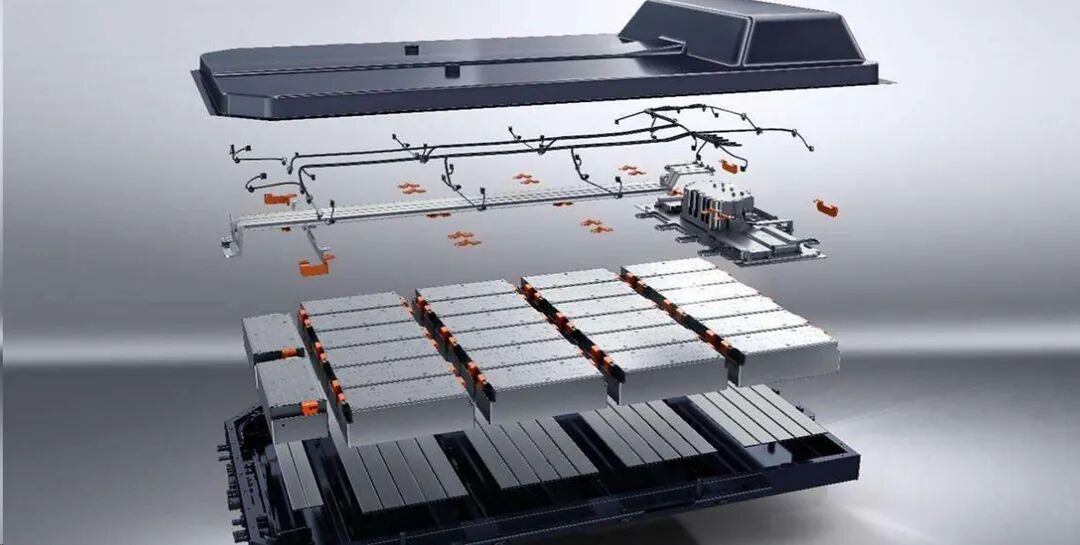
After popular models were launched, they encountered battery capacity bottlenecks, and delivery cycles were forced to lengthen. When upstream raw material prices rise, suppliers prioritize capacity for customers with higher profits. In the R&D scheduling of next-generation new battery cells, automakers without a say can only obtain generalized standard products and cannot secure the most cutting-edge technology at all.
It is against this background that directly using real money to take stakes in exchange for equity has become the choice of more and more automakers. For example, Li Auto leads the development of battery cell chemical systems, battery pack structures, and BMS underlying development, while Sunwoda is responsible for manufacturing implementation. More than 8,000 quality checkpoints are set up on Xiaomi's Dragon Armor battery production line, and Xiaomi quality experts are stationed at supplier factories.
It can also be seen that in the previous cooperation between automakers and battery manufacturers, the interests of both sides were not unified. The goal of battery manufacturers is to maximize capacity utilization and sell standardized battery cells to as many customers as possible to spread costs. But the goal of automakers is to create products differentiated from competitors, requiring exclusive battery cell specifications and customized production schedules.
In other words, a simple procurement agreement can hardly reconcile this contradiction, while after equity binding, the returns of both sides are directly tied to the market performance of the final product. This is why more and more automakers are willing to spend real money to take stakes in second-tier battery manufacturers rather than completely rely on a single leading supplier.
Of course, it should be noted that no leading automaker will hand over all its battery demand for the next 3 to 5 years to the battery manufacturer it has invested in. While taking stakes in second-tier manufacturers, they will still maintain close cooperation with another 2 to 3 mainstream suppliers.
While becoming the second-largest shareholder of Sunwoda, Li Auto still maintains a five-year strategic cooperation agreement with industry leader CATL. CATL is the same. It has established joint ventures with almost all mainstream automakers, including SAIC, GAC, FAW, Dongfeng, Geely, and Changan.
Therefore, in the current battery supply chain, there is no absolute Party A and Party B. Automakers take stakes in second-tier battery manufacturers to obtain customized battery cell definition rights, while maintaining stable scale supply with joint ventures of leading battery manufacturers, and at the same time retaining two to three external suppliers as backups. This diversifies the risk of a single supplier and also leaves room for different technology routes.
02 Party A and Party B Are on the Same Side
If the core logic of the changing relationships in the power battery field is to use capital to lock in capacity and technology routes, then the landscape of the intelligent driving track is much more complex. The former can be solved with money, while the latter also requires suppliers' massive data, continuously iterating algorithm models, and their own engineering capabilities to fully connect software and vehicle hardware.
This directly leads to the absence of a unified optimal solution across the industry. Automakers with different backgrounds have taken completely different paths according to their own resources. For example, some automakers go all in on full-stack in-house development, some deeply bind with leading suppliers, and some pursue dual lines of in-house development and cooperation.
Some new forces choose full-stack in-house intelligent driving development, with the core purpose of firmly holding key links such as intelligent driving algorithms, chips, and chassis control in their own hands in exchange for faster iteration speed, stronger active safety capabilities, and greater supply chain say. But this model has high thresholds and high investment and greatly tests the automaker's own capabilities.
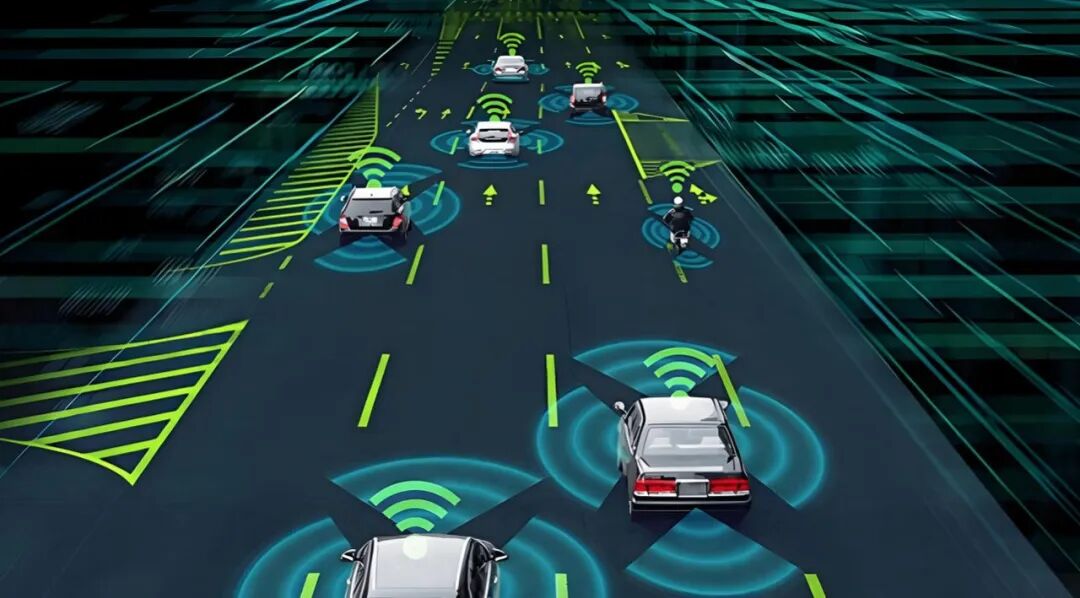
Therefore, strong binding with leading suppliers was very popular for a long period in the past, such as the relationships between many automakers and Huawei. Seres and Avatr took stakes in Yinwang, using capital to exchange for technological certainty and quickly make up for shortcomings in intelligent driving. Under the Harmony Intelligent Mobility model, Zunjie, Xiangjie, Zhijie, and Shangjie still maintain Huawei's full-process leadership.
And not long ago, SAIC and Momenta established a joint venture intelligent driving company. Momenta holds 51% and controls it, while the SAIC system holds 49% in total. The two sides have formed a mutually nested structure at the equity level. In addition, SAIC itself is Momenta's largest external shareholder, and Momenta in turn holds shares in IM Motors.
Under this model, there is a complex relationship between automakers and suppliers. But the only thing that makes matters simple is that it avoids the high investment threshold of full-stack in-house development while also solving the problem of supply-demand mismatch in the traditional procurement model. Moreover, both sides can directly align product requirements, and there will be no situation of who dominates whom.
Of course, more automakers choose to firmly grasp the top-level definition capability of intelligent driving, the leadership of the data closed loop, and the engineering integration capability at the vehicle level with their own core teams, while handing over some non-core algorithm modules and function development for specific scenarios to cooperative suppliers.
The current intelligent driving track is far from reaching its end, and no one can confidently say which model will be the final winner. But it is precisely this state of diverse coexistence that keeps China's entire intelligent driving industry sufficiently dynamic. The resulting speed of product evolution far exceeds the iteration rhythm of the traditional automotive industry in the past.
Looking back now, it can be found that the relationships between automakers and suppliers of power batteries and intelligent driving are all slowly changing. But the logic of the change is the same: automakers no longer place themselves in the position of integrators downstream of the industrial chain, but actively penetrate upstream into the core technology layer, turning players in different links into communities of shared interests.
The past loose procurement relationships maintained by price comparison and annual framework agreements can no longer adapt to the competitive rhythm of the intelligent vehicle era. Viewed within the upgrading path of China's manufacturing as a whole, this supply chain change in the automotive industry is, to a certain extent, an inevitable choice after the industry has reached a certain stage.
Responsible Editor: Shi Jie | Editor: He Zengrong

THE END
-
![]()
Europe's Auto Market 2035: A Ceiling of 16.7 Million Units and a 15% Window for Chinese Brands
-
![]()
A7L Wagon "Heads North": FAW Audi May Welcome Its First Shooting Brake
-
![]()
Complete PPT Guide to CAAM Production and Sales Data: October Auto Output and Sales Rise Month-on-Month but Fall Year-on-Year; NEVs Post Steady Growth; Auto Exports Top 1 Million Units for Fifth Strai
-
![]()
Half-Price Zunjie: Can It Recreate the M9 Myth?
-
![]()
CoreWeave: A "Bullish" Report Card, Standing Firm Against "Wild" Stock Price—Can Nvidia's "Godson" Really Rise?
-
AI: The New Bond Between Supply and Demand
-
![]()
Auto Manufacturers No Longer Want to Be Just the Customer
-
![]()
Autonomous Driving Has No Clear Winner Yet