Europe's Auto Market 2035: A Ceiling of 16.7 Million Units and a 15% Window for Chinese Brands
 11/12 2026
 346
French automotive consultancy Inovev forecasts that European passenger car and SUV sales will be 16.7 million units in 2035, basically flat compared with 16.9 million units in 2026. In the same forecast, the market share of Chinese manufacturers in Europe will rise from 7% in 2025 to 15% in 2035, corresponding to about 1.6 million Chinese-brand models produced in Europe (excluding Geely's Volvo).
With little change in the total and a doubling of Chinese brands' share, for Chinese automakers preparing to enter or already in Europe, the focus is not the overall market, but how this 15% share will be distributed, who can get it, and what cost must be paid.
▍Total Volume Peaks, a Replacement Battle With No Incremental Growth
Inovev's forecast points to a clear trend: there will be basically no new demand in the European market over the next decade. In a stock-competition environment, automakers will no longer compete only on launching new models and expanding into more sales countries; per-vehicle gross margin, channel operation efficiency, and brand positioning will be the core levers of competition.
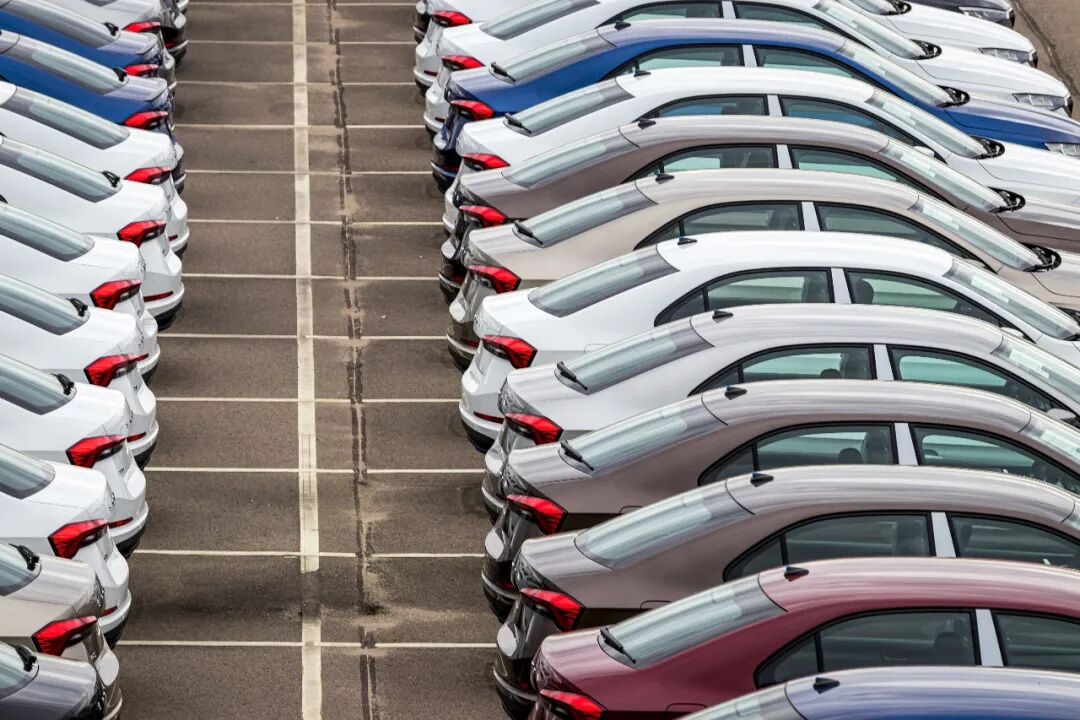
Europe's local automotive channel system is mature: dealer groups are strong, premium showroom locations are scarce, fleet customers account for a high proportion, and leasing and residual-value systems are complete. These links are major cost items for overseas expansion, and it is difficult to break through relying solely on price advantages. For Chinese brands, Europe is more like a mature system that has been operating for decades, more suitable for integrating into than for building a brand-new track from scratch.
▍Structural Contraction of European Automakers
European OEMs are undergoing a round of deep adjustment. Volkswagen has lowered its profit expectations, cut production capacity in Europe, and streamlined staffing; Mercedes-Benz and BMW have successively lowered profit forecasts; multi-brand group Stellantis is also evaluating iconic brands such as Maserati and Alfa Romeo, with the possibility of closure or sale.
The logic behind these adjustments is consistent: concentrate limited cash flow and prioritize investment in brands that can defend pricing power and in electrification transformation. The pressure does not come from a single competitor; it is essentially the contradiction brought by the mismatch between transformation investment costs and sales growth.
Professor Ferdinand Dudenhöffer, director of the Center Automotive Research in Germany, judges that many existing European local automakers have the opportunity to stand firm in the new industry landscape, similar to the evolution during the "Japanese revolution" phase of the auto industry; the truly severe challenge will be transmitted to parts suppliers. Taking Bosch as an example, as the balance of power in the battery supply chain shifts and in-vehicle intelligent-related modules continue to iterate, traditional tier-1 suppliers (Tier1) will face considerable pressure in subsequent development.
This judgment has different implications for vehicle and parts companies: on the vehicle side, the contraction of European production capacity brings opportunities for capacity cooperation and revitalizing idle capacity; on the parts side, pressure on traditional Tier1 means there is room for substitution by domestic supporting enterprises, while they also face stricter local procurement and market access requirements.
▍The Next Competition Will Be Among Chinese Brands
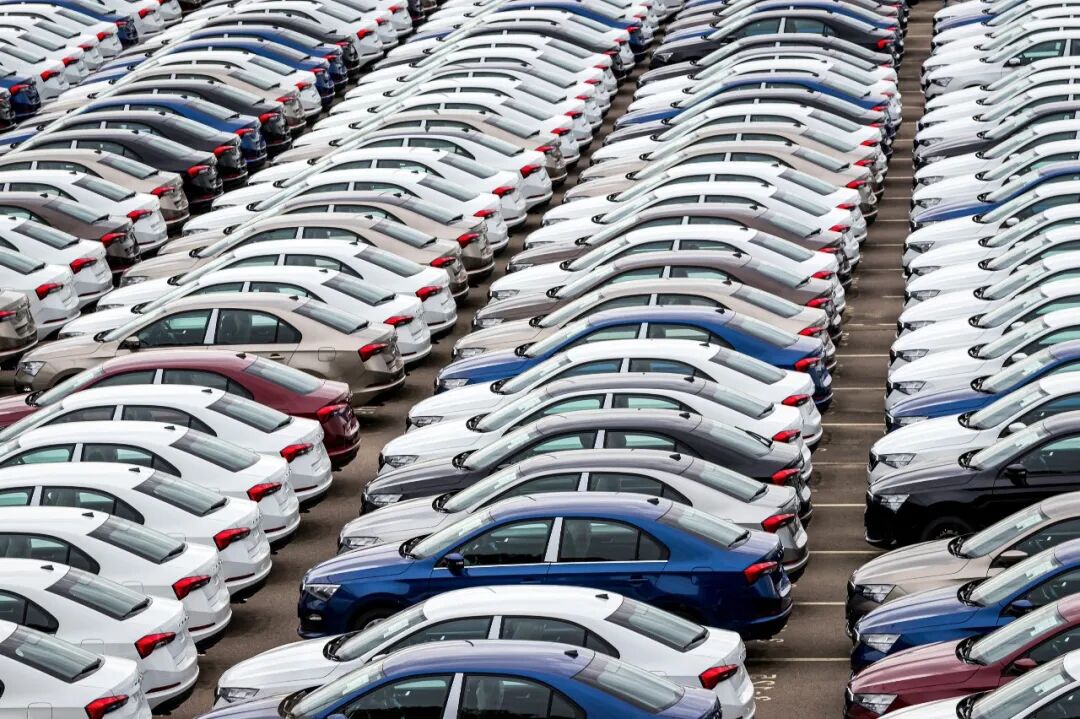
Inovev statistics show that there are currently about 50 Chinese brands, mainly BEV and PHEV models, all laying out in the European market. Zoran Matović, managing director of the automotive business and corporate division in Serbia, proposes that more and more Chinese brands will compete with one another for success in Europe. The next round of automotive competition in Europe may not necessarily be Chinese brands versus European local automakers, but may become a contest among Chinese brands. Dozens of Chinese brands are targeting Europe, competing not only for end consumers, but also for strong dealers, premium stores, experienced staff, fleet customers, and industrial capital.
Matović also mentions that mature European brands will not disappear en masse, but not all brands will maintain their current operating forms. High-end brands with strong brand value, stable customer groups, and pricing power have stronger risk resistance, while mainstream brands with thin profit margins will come under greater pressure.
Berlin automotive consultant Frank Schwope compares this round of Chinese brands going overseas to Japanese automakers entering overseas markets in the 1970s and Korean automakers in the 1990s, and points out two key differences: first, electrification and autonomous driving are bringing dual technological changes simultaneously, and Chinese automakers have advantages in technological accumulation in these two fields compared with many overseas manufacturers; second, the number of companies entering this time is larger, and the scope of impact is broader.
His judgment on the outcome is: not all Chinese brands going overseas can survive in the European market, and in the long run only 5 to 10 will likely remain. Among local European brands, Stellantis' Opel, Lancia, DS, and other brands face relatively high risks.
▍Technology Cooperation Is the Second Path for Overseas Expansion
Dudenhöffer believes that future automotive products will carry a large amount of technology from China, covering areas such as autonomous driving and smart cockpits. Based on this, European automakers need to choose a cooperation route. The cooperation models reached by Stellantis with Leapmotor and by Volkswagen with XPeng will likely be imitated by more European OEMs later. In the in-vehicle digitalization track, Nvidia will also face direct competition from domestic technology companies such as Huawei, CATL, Guoxuan High-tech, and Horizon Robotics.
The value of this path for domestic companies lies in the fact that going overseas is not limited to vehicle sales. Models such as "technology export + localized supporting" in tier-1 supporting, software, chips, batteries, and smart cockpits have smoother revenue curves and lower sensitivity to geopolitical policy; deep binding cooperation with European automakers can also create a certain buffer space in tariffs and industry rule games.
Layout 丨 Zheng Li
Source 丨 Forbes
Image Source 丨 Qianku.com
-
![]()
Europe's Auto Market 2035: A Ceiling of 16.7 Million Units and a 15% Window for Chinese Brands
-
![]()
A7L Wagon "Heads North": FAW Audi May Welcome Its First Shooting Brake
-
![]()
Complete PPT Guide to CAAM Production and Sales Data: October Auto Output and Sales Rise Month-on-Month but Fall Year-on-Year; NEVs Post Steady Growth; Auto Exports Top 1 Million Units for Fifth Strai
-
![]()
Half-Price Zunjie: Can It Recreate the M9 Myth?
-
![]()
CoreWeave: A "Bullish" Report Card, Standing Firm Against "Wild" Stock Price—Can Nvidia's "Godson" Really Rise?
-
AI: The New Bond Between Supply and Demand
-
![]()
Auto Manufacturers No Longer Want to Be Just the Customer
-
![]()
Autonomous Driving Has No Clear Winner Yet