A7L Wagon "Heads North": FAW Audi May Welcome Its First Shooting Brake
 11/12 2026
 327
Not long ago, an automotive blogger revealed on social media that the A7L wagon project previously advanced by SAIC Audi had not been canceled, and that the related transfer work had begun before Audi's "dual-brand, dual-partner" strategy was officially announced. According to the blogger, SAIC Audi's four-ring models will continue to be produced, but sales will most likely be taken over by FAW Audi.
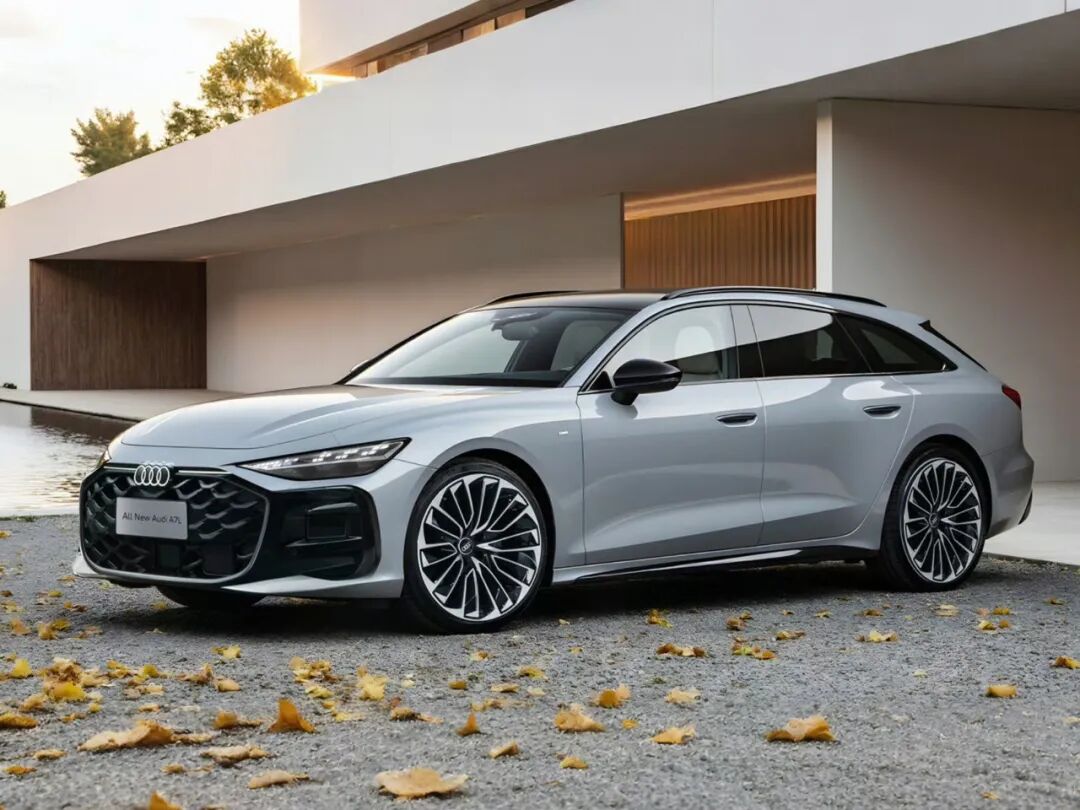
In response, "Qiche Badan" learned from internal channels at Audi China that the above information is basically accurate, and that the A7L wagon model will be handed to FAW Audi for production and sales in the future. As of now, the model name, powertrain configuration, and launch timing have not been publicly confirmed by Audi.
In fact, this rumor did not appear in isolation. Just one day before the news broke, Audi signed strategic agreements with China FAW and SAIC Motor respectively, formally establishing the "dual-brand, dual-partner" channel architecture. Under the new division of responsibilities, the four-ring brand's fuel vehicles and new energy vehicles will be uniformly operated by FAW, while the AUDI letter-mark brand will belong to SAIC. Which side a fuel wagon bearing the four-ring logo ultimately falls under—the agreement has already given a clear direction.
Dual-brand strategy clarifies model ownership
On October 26, Audi signed strategic agreements with China FAW and SAIC Motor respectively, effective the same day. According to the agreements, FAW will fully operate the four-ring brand, covering both fuel vehicles and intelligent luxury new energy vehicles, with a product matrix including the A6L e-tron, Q6L e-tron, as well as the all-new A5L and A6L. SAIC Audi will focus on the AUDI letter mark, concentrating on the new energy market and developing next-generation intelligent connected vehicles for Chinese consumers. According to public reports, the tripartite negotiations lasted nearly a year.
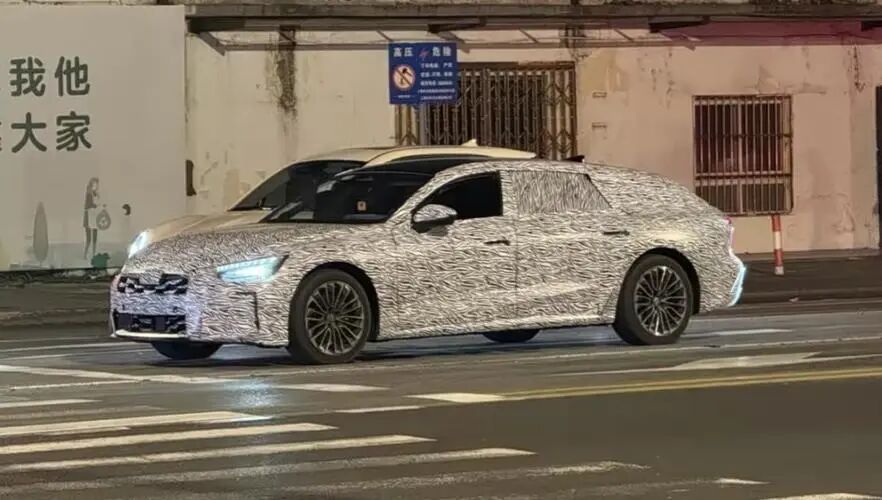
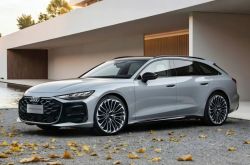
Related spy shots show that this wagon is a domestically lengthened version of the all-new overseas A6 Avant, built on Audi's PPC high-end fuel vehicle platform, featuring second-generation digital OLED inside the full-width taillights, and frameless doors are also expected to be retained. Public information also mentions that the PPC platform will become the basis for the final fuel versions of Audi A4, A6, A7 and other models between 2026 and 2028. From platform to badge, it is a four-ring fuel vehicle with complete pedigree. The four-ring mark belongs to FAW, and the fuel vehicle product line also belongs to FAW; the project moving north along with the strategy is consistent with the division established by the agreement.
The timing of the transfer's initiation also illustrates the point. The blogger's disclosure stated that the project had already begun transferring before the strategy was officially announced; it was more like a pre-arranged link in an overall package than a temporary adjustment after the announcement. The official agreement only published the brand division and channel direction without naming specific models, which is why the outside world felt the news came suddenly.
Executive-class wagon opens up a market segment
In terms of product positioning, this vehicle is also somewhat different from outside expectations. Previously, outside imagination of it mostly stayed at "an affordable domestically produced wagon," with attention on design and driving pleasure. The direction given by the disclosure is different: it may emphasize rear-seat luxury ride experience and be positioned as an executive-class wagon. This adjustment is directly related to the market environment in which wagons find themselves.
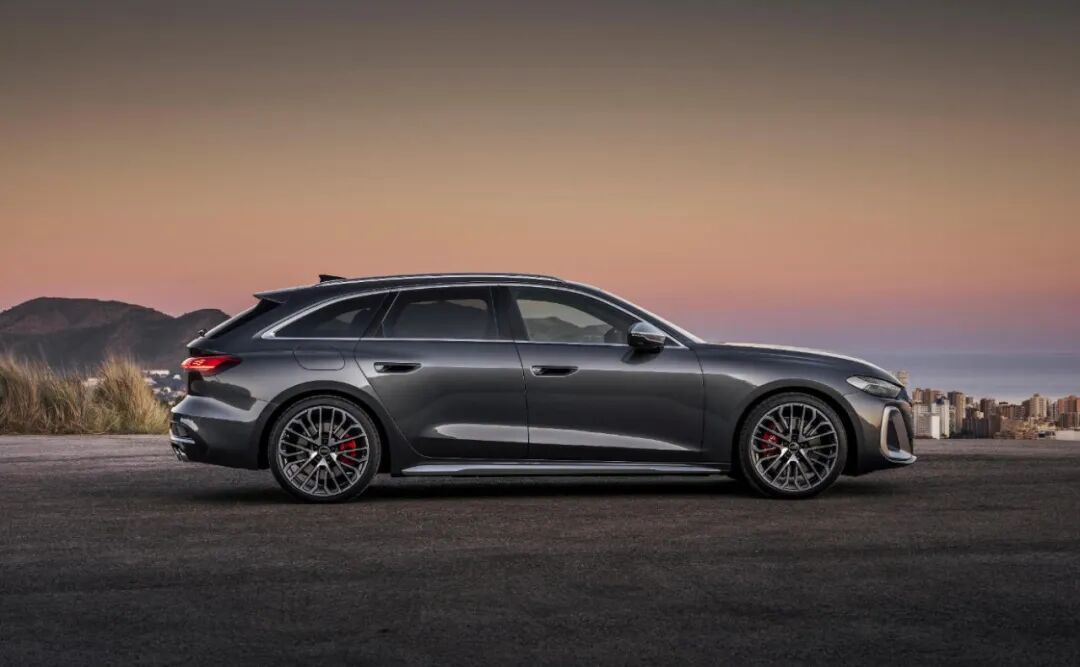
Wagons have always been a niche category in China. Public reports show that in 2025 the domestic wagon market had total sales of about 12,000 units, of which the Audi A6 Avant and A6 allroad together accounted for about 4,300 units, exceeding 35%. Going back another year, in 2024 Audi's A6 and A4 wagons sold 4,068 and 2,104 units in China respectively. Putting the two sets of data together, the segment's pie is not large, and Audi has long occupied a leading position in this category.
Audi's official website shows that the imported A6 Avant has a wheelbase of 2,928 mm, maximum output of 195 kW, and peak torque of 370 Nm; the 2024 45TFSI model has a guide price of 506,800 yuan. The new-generation model also introduces an enhanced mild hybrid system, adaptive air suspension, and all-wheel steering, so its product strength is not weak.
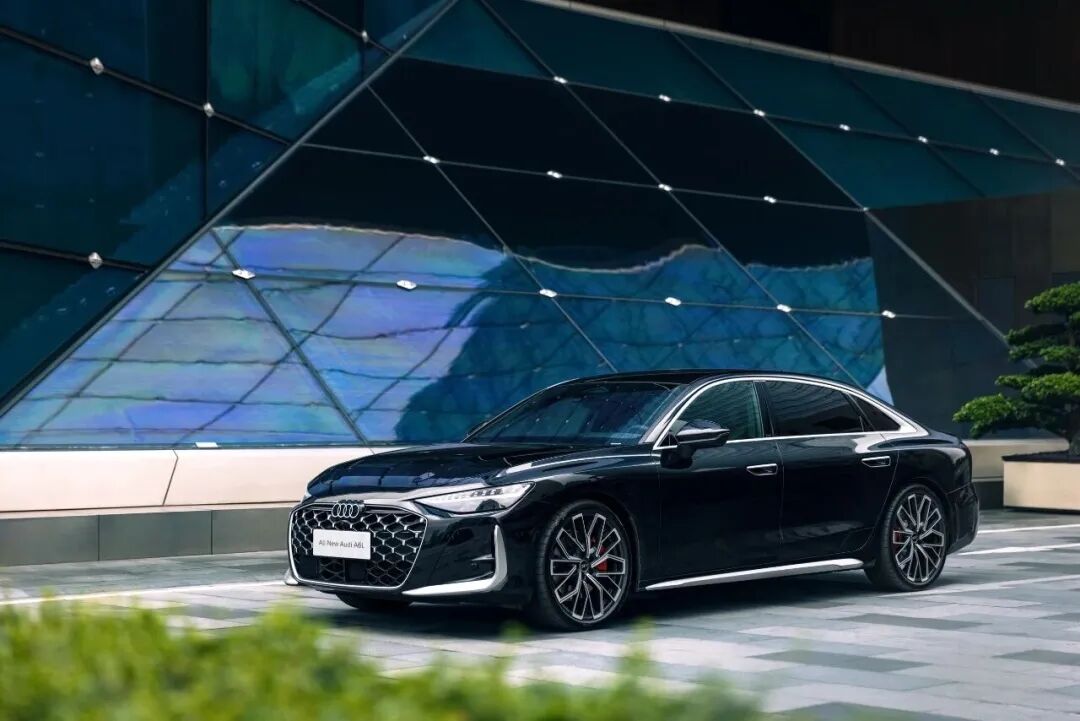
If the domestically lengthened version continues along the "affordable sporty" line of thinking, it will face limited market capacity and may easily create internal competition with imported models. By fully emphasizing rear-seat luxury and executive attributes, automakers can instead differentiate from imported cars and also reuse FAW Audi's years of long-wheelbase development experience accumulated on the A6L. Wagon users value character and driving control; whether an executive narrative can win over this group of veteran users will depend on the final product.
Mainstream executive car users still concentrate their choices on sedans and SUVs. Whether this executive-class wagon can find its own place between these two groups will be left to market performance after launch.
Smooth channel transition safeguards user rights
After the agreements were signed, the part that truly tests execution had only just begun. SAIC Audi was established in April 2021, and in just over a year it rolled out three models—the A7L, Q5 e-tron, and Q6—with A7L deliveries starting in January 2022. Official press releases disclosed that FAW Audi has cultivated the Chinese market for 38 years, with cumulative users exceeding 10 million. As the four-ring brand moves north as a whole, the agreement provides a clear arrangement for how existing models and users will transition. Before the end of 2027, SAIC Audi may still sell four-ring products normally, and after-sales service for both the four-ring brand and AUDI letter-mark models will remain stable.
The transition period of more than two years gives both channels and users a buffer. How the sales channel for the A7L wagon will specifically be implemented has not yet been publicly stated by officials. Both the blogger's disclosure and the original author's internal-channel account point in the direction of FAW Audi taking over; before an official announcement, this arrangement still needs to be based on official statements. Production qualifications, dealer interests, and user rights all require meticulous coordination—this is also the most painstaking part of large-scale channel adjustments.
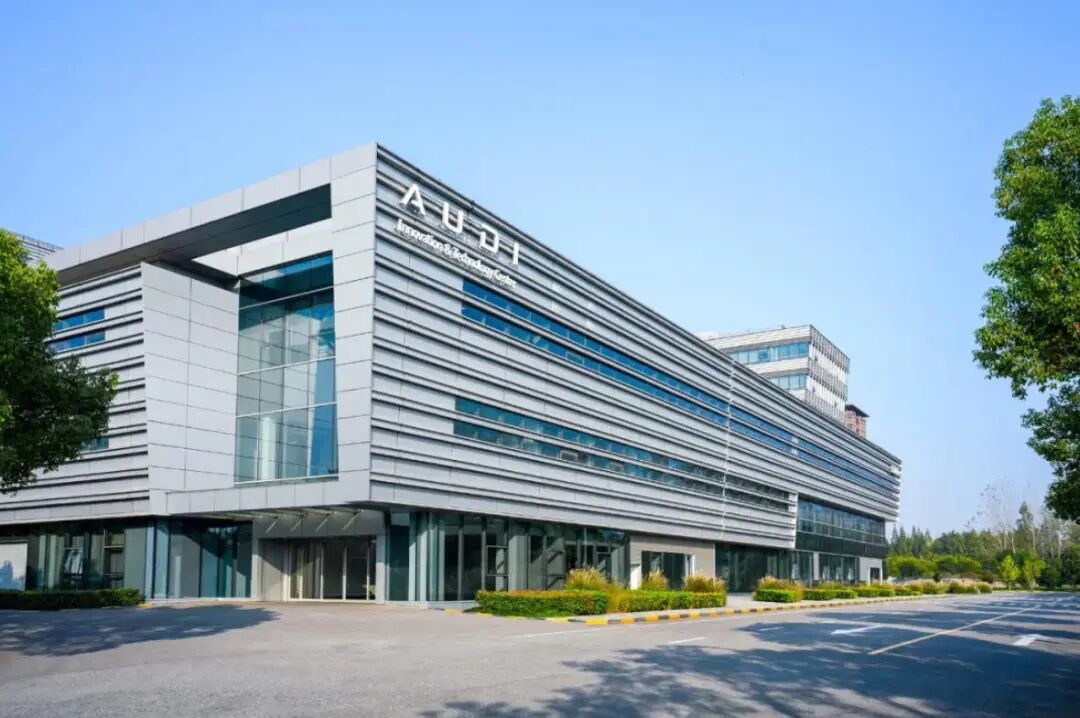
SAIC Audi's new business has also unfolded. On November 5, the Audi Innovation Technology Center, jointly established by Audi and SAIC, opened in Shanghai. This R&D entity of about 300 people specifically serves the AUDI brand, covering the complete chain from vehicle concept and electronic architecture to mass-production validation and OTA upgrades. Together with the E5 Sportback launched in 2025 and the E7X that went on sale in May this year, SAIC Audi's strategic focus has become clear.
At the same time, Audi's management structure in China is also being adjusted in parallel. According to an appointment announced by Audi on October 22, effective November 1, Jeff Zhang succeeded Luo Yinghan as President of Audi China, and Rolf Michl became Chief Operating Officer, with the two jointly forming the Audi China management board. Public reports show that Jeff Zhang previously participated in strategic projects at FAW Audi and also built the sales system at SAIC Audi—a résumé highly suited to the task of connecting Audi in the north and south. When the strategic agreement was released on October 26, then President of Audi China Luo Yinghan said that clearer strategic focus and differentiated positioning are laying a solid foundation for Audi's long-term sustainable development in China.
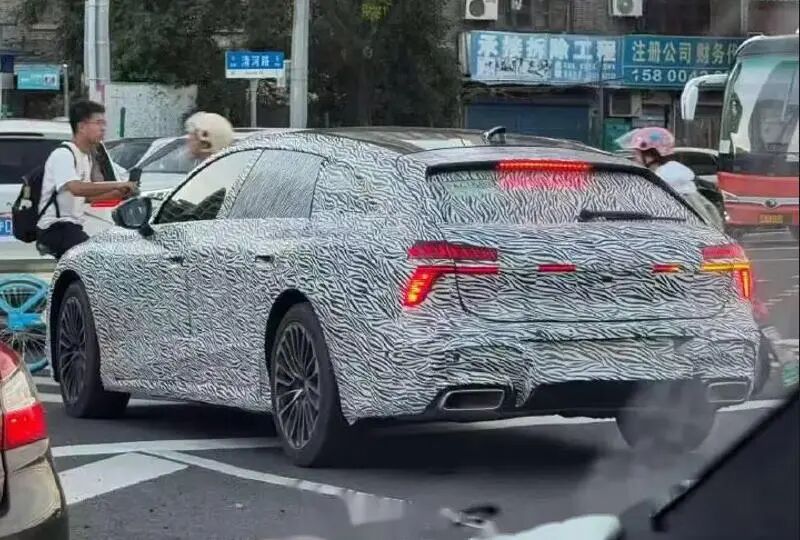
The A7L wagon heading north is essentially a natural reallocation of resources under the dual-brand strategy, rather than a simple matter of gains and losses. It is more like a touchstone testing whether this adjustment can smoothly hand a vehicle, a group of users, and a channel over to another system.
For consumers, which showroom the badge hangs in is not the most critical issue. Who delivers the car, who handles maintenance, and who is responsible when problems arise—the continuity of these service links is what users truly care about in the experience. The model name, powertrain, and channel arrangements still await Audi's subsequent official announcement. How good this car really is will naturally be judged by consumers once it is officially launched and placed in stores.
-
![]()
Europe's Auto Market 2035: A Ceiling of 16.7 Million Units and a 15% Window for Chinese Brands
-
![]()
A7L Wagon "Heads North": FAW Audi May Welcome Its First Shooting Brake
-
![]()
Complete PPT Guide to CAAM Production and Sales Data: October Auto Output and Sales Rise Month-on-Month but Fall Year-on-Year; NEVs Post Steady Growth; Auto Exports Top 1 Million Units for Fifth Strai
-
![]()
Half-Price Zunjie: Can It Recreate the M9 Myth?
-
![]()
CoreWeave: A "Bullish" Report Card, Standing Firm Against "Wild" Stock Price—Can Nvidia's "Godson" Really Rise?
-
AI: The New Bond Between Supply and Demand
-
![]()
Auto Manufacturers No Longer Want to Be Just the Customer
-
![]()
Autonomous Driving Has No Clear Winner Yet