Musk Marvels in Interview: Chinese Cars Have Completely Won Him Over
 11/12 2026
 360
Produced by / Electric New Species
Author / Jichuan
Just how well does the Tesla Model Y sell in China? In 2025, full-year retail sales hit 425,300 units, making it China's annual SUV sales champion and placing it third on the new energy passenger vehicle sales chart.
Yet even with such results, Musk still admits that succeeding in the Chinese market is no easy feat—because Chinese automakers are simply too strong.
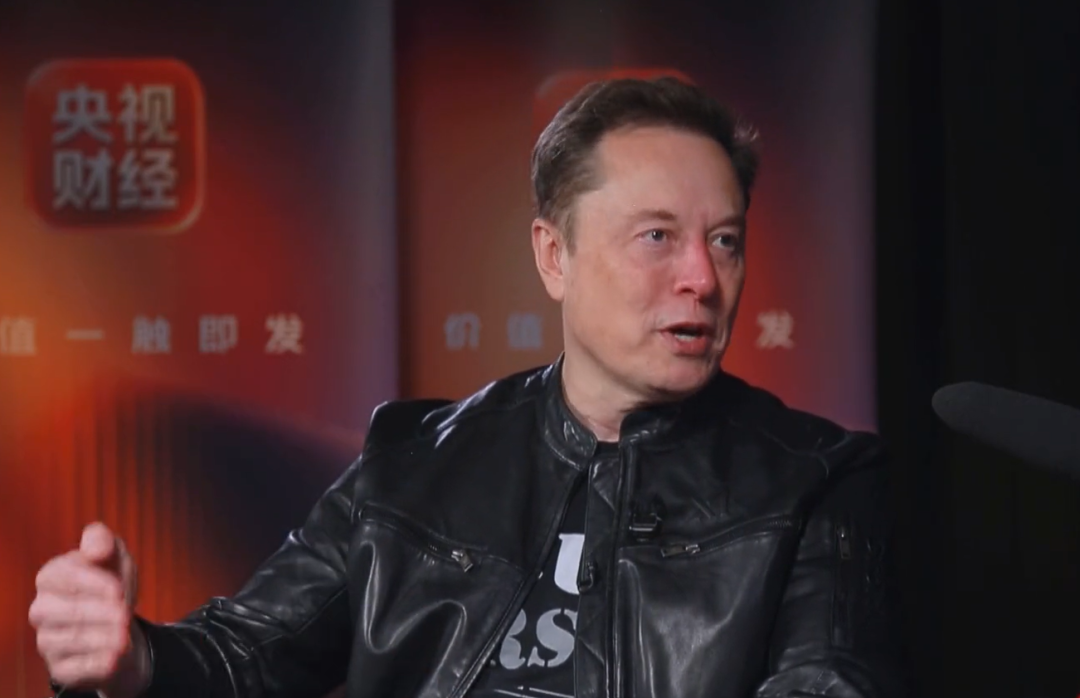
On November 6, in an interview with investor Ron Baron, Musk once again voiced his affection for China, calling the country amazing and saying that every visit is inspiring. He also made a point of emphasizing: "Chinese car companies are truly very impressive."
01. Made in China Has Become a Major Force in the Global Auto Industry
Musk's recognition of Made in China stems from years of firsthand experience in the Chinese market.
Since Tesla's Shanghai Gigafactory began production in 2019, it has become an important part of Tesla's global production system. But its growth would not have been possible without China's mature manufacturing base and complete automotive supply chain.
At present, the localization rate of parts at the Shanghai factory has reached 98%, with more than 400 Chinese tier-one suppliers, of which more than 60 have already entered Tesla's global supply chain.
The value brought by this supply chain is also reflected in product development. Take the Model Y L, for example: components such as seat armrests and leg rests were jointly developed by Tesla and Chinese suppliers. The model was launched in China first and subsequently entered the markets of Japan, South Korea, Australia, and the United States.
In September this year, Musk specially praised the Chinese team in an interview with CCTV. He said that the success of Tesla's Shanghai factory would not have been possible without Chinese employees. The Chinese team is capable, diligent, and trustworthy, and the Shanghai factory is a "treasure" for Tesla.
China's supply chain has already been deeply involved in Tesla's production and manufacturing and product development, and is moving into more markets along with Tesla's global business. Musk's recognition of Made in China has a solid industrial foundation.
02. Chinese Automakers Are Growing Stronger, and Musk Has Long Felt the Pressure
Over the years, Musk's evaluations of Chinese automakers have become increasingly high, and he has become more and more candid when talking about competition.
In 2021, at the World New Energy Vehicle Congress, he publicly stated that he greatly respects Chinese automakers and believes that Chinese car companies are the most competitive in the world. He particularly noted that Chinese companies perform excellently in software, and that software will profoundly affect vehicle design, manufacturing, and autonomous driving.
Two years later, Musk's statements became even more direct.
In 2023, at The New York Times DealBook Summit, he said that Chinese automotive companies are extremely competitive and that Tesla's strongest competitors are in China. He even said that in the future, the world's top ten automakers might be Tesla plus nine Chinese car companies.
By November this year, he once again praised Chinese automotive companies as "very excellent."
From respect to blunt talk about competition, and then to public praise, Musk's several statements reflect the rising weight of Chinese automakers in the global automotive industry.
This competitiveness comes from the Chinese automotive industry's years of sustained accumulation in electrification, intelligentization, and manufacturing systems. More and more Chinese companies have gained complete product development capabilities, supply chain organization capabilities, and the ability to respond quickly to the market, which has also led the global automotive industry to re-examine Chinese automobiles.
03. Chinese Automakers Deliver Solid Results and Gain a Firm Foothold in the Global Market
The growth speed and market scale of Chinese automakers are already written into one delivery report after another.
BYD's 19 millionth new energy vehicle officially rolled off the assembly line. It took only 124 days to go from 17 million to 19 million units. This speed demonstrates the strong large-scale manufacturing capability of China's new energy vehicle industry.
Leapmotor delivered 106,127 vehicles in October, with deliveries exceeding 100,000 units for four consecutive months, making it a representative of scaled growth among China's new forces.
Xiaomi Auto delivered 50,168 vehicles in October, with monthly deliveries once again exceeding 50,000 units. From cross-sector carmaking to entering the mainstream market, Xiaomi has proven its product appeal with actual results.
NIO's cumulative deliveries have exceeded 1.33 million units, and the all-new ES8 ranked first in cumulative retail sales among China's large SUVs and models priced around 400,000 yuan in the first ten months of this year. Cumulative deliveries of all HIMA models have also exceeded 1.6 million units, with multiple brands jointly expanding different market segments.
At the same time, Chinese automakers are also extending their reach overseas.
In October this year, China's passenger vehicle exports reached 928,000 units, a year-on-year increase of 68.2%. Among them, XPeng set a new monthly high in overseas market deliveries; Leapmotor, in cooperation with Stellantis, started production of the B10 at its Zaragoza plant in Spain, promoting localized manufacturing of Chinese auto brands in Europe.
Ford CEO Jim Farley has traveled to China multiple times for inspection and even shipped Chinese cars back to Detroit for teardown and research. He admitted that Chinese cars left a deep impression on him in terms of technology, cost, and quality.
Whether in products, technology, or manufacturing capabilities, Chinese automakers have delivered results that international peers cannot ignore.
Summary
Chinese Automakers Have Won Global Recognition Through Their Strength
Chinese automobiles have reached where they are today by opening markets with one product after another, withstanding tests with one technology after another, and gaining a firm foothold amid fierce competition one company at a time.
Musk's recognition is certainly valuable, but what carries more weight than a single compliment is the report card delivered by China's new energy vehicles themselves.
China's new energy vehicles have scale, technology, and products, as well as a group of companies that dare to invest and are good at innovation. Such Chinese automotive strength deserves even greater expectations.
-
![]()
Europe's Auto Market 2035: A Ceiling of 16.7 Million Units and a 15% Window for Chinese Brands
-
![]()
A7L Wagon "Heads North": FAW Audi May Welcome Its First Shooting Brake
-
![]()
Complete PPT Guide to CAAM Production and Sales Data: October Auto Output and Sales Rise Month-on-Month but Fall Year-on-Year; NEVs Post Steady Growth; Auto Exports Top 1 Million Units for Fifth Strai
-
![]()
Half-Price Zunjie: Can It Recreate the M9 Myth?
-
![]()
CoreWeave: A "Bullish" Report Card, Standing Firm Against "Wild" Stock Price—Can Nvidia's "Godson" Really Rise?
-
AI: The New Bond Between Supply and Demand
-
![]()
Auto Manufacturers No Longer Want to Be Just the Customer
-
![]()
Autonomous Driving Has No Clear Winner Yet