The Chinese-Style Turnaround of Overseas Automakers
 11/16 2026
 454
Data recently released by the China Passenger Car Association shows that in the first half of 2026, overseas automakers accounted for only about 28% of China's passenger vehicle market—a sharp reversal from 2020, when that figure still exceeded 60%. In just six years, overseas automakers have gone from market leaders to challengers, with sales deteriorating further. Public information shows that in the first half of 2026, Volkswagen Group's sales in the Chinese market fell to 970,000 vehicles, down nearly 26% year-on-year.
The three major Japanese automakers have posted year-on-year sales declines for multiple consecutive months since the start of 2026, with some brands recording monthly drops of nearly 50%. BBA is also struggling. In the first half of this year, Mercedes-Benz sold 210,200 vehicles in China, down 28.3% year-on-year—the largest decline among the three; BMW Group sold 262,000 vehicles in China in the first half, down 20.4% year-on-year; Audi Group delivered 233,000 vehicles in China in the first half, down 19% year-on-year.
By contrast, Chinese independent brands are growing rapidly. In the first half of this year, BYD sold a total of 1,808,500 vehicles, Geely sold 1,423,000, and Chery delivered 1,357,500. The three traditional independent leaders expanded steadily, posting solid gains in both new energy models and overseas markets. In addition, various new-force brands have also established a foothold in the high-end new energy market.
In the first half of this year, XPeng, Li Auto, and Xiaomi delivered 166,000, 193,500, and 185,100 vehicles respectively. Behind the shift in sales between domestic and foreign automakers is a significant change in domestic users' car-buying preferences. At present, intelligence and electrification have become core considerations for users when buying cars, and the market space for fuel vehicles that once sustained overseas brands is now continuously shrinking. Data from the China Passenger Car Association shows that in October, the retail penetration rate of domestic new energy passenger vehicles reached 67%, and the retail share of fuel vehicles fell below one-third for the first time.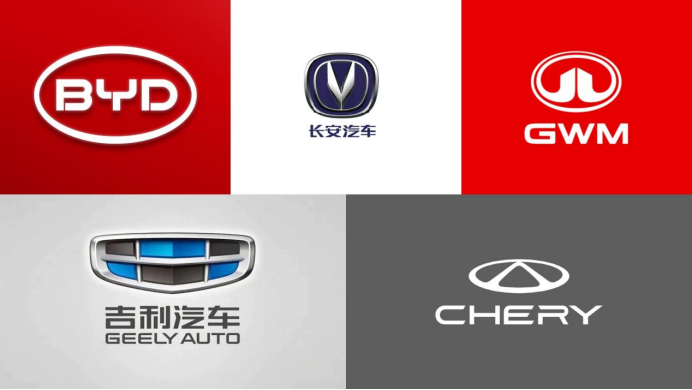
To cope with the impact, overseas automakers have focused their transformation investments on localized R&D and technological cooperation in China, trying to keep pace with domestic new energy and intelligent iteration. Among them, Volkswagen has teamed up with XPeng to jointly develop new models, with product definition and smart cockpits designed according to Chinese needs; Audi's new brand AUDI has set up its R&D center in China.
Toyota has implemented a "China chief engineer system," giving local teams greater product decision-making power. General Motors has even substantially delegated product definition rights, technology roadmap formulation rights, and mass-production decision-making rights to its local team. In addition, other overseas automakers such as Mercedes-Benz, Toyota, and Nissan are also continuously increasing their R&D investment in China, attempting to let technology developed in China feed back into the global market.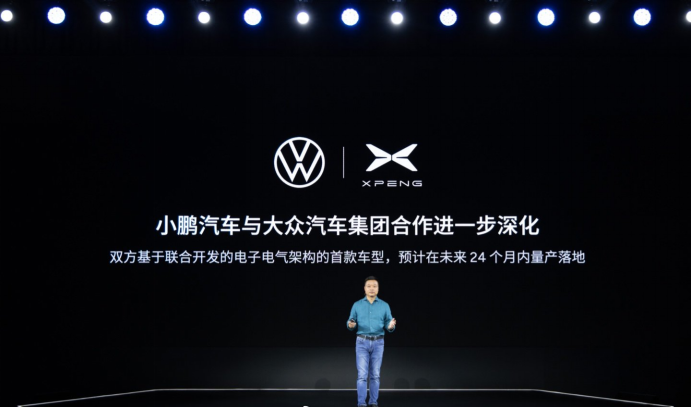
The reason overseas automakers are willing to delegate power to Chinese teams is not only their continued sales decline and the fact that the original overseas remote development model responds too slowly to match rapidly changing domestic consumer demand. More importantly, domestic automotive technology and the supply chain system have become very mature, and complete industrial chains have formed for vehicle platforms, batteries, motors, electronic controls, intelligent driving, and in-vehicle software. By leveraging local resources, overseas brands can greatly compress the R&D costs and cycles of their electric and intelligent transformation.
But localization does not equal genuine delegation of power, and not all overseas automakers are willing to hand core decision-making power to Chinese teams. In early November this year, Beijing Hyundai General Manager Li Fenggang announced his departure less than a year after taking office. Multiple media outlets pointed to differences between Chinese and South Korean shareholders over corporate governance and business objectives as the core reason for this personnel change. Although the brand appointed a local executive to push reforms, the Chinese and South Korean sides found it difficult to reach consensus on sales targets, cost control, and supply chain selection. The local manager nominally held management authority but actually lacked sufficient decision-making power, and localization reform was hindered.
The cost of this stalemate ultimately fell on sales. In 2023, Beijing Hyundai still had annual sales of 257,000 vehicles, but in 2024 they plunged to 184,000, then slightly recovered to 210,000 in 2025, and in the first half of 2026 only 94,700 vehicles remained, continuing to decline year-on-year. It should be noted that under the wave of new energy, localization has become an industry trend, and only by moving with the trend can there be opportunities; sticking to the old model will only lead to passivity. But overseas brands choosing to leverage mature domestic technology inevitably face controversy over the brand's technological identity. Insisting on self-development at headquarters also makes it difficult to catch up with the update speed of the domestic market.
Therefore, no matter which route is chosen, as long as product definition and core decision-making remain in the hands of overseas headquarters, localization will easily remain at the level of shallow adjustments and modifications. Delegating decision-making power to local teams may not immediately turn the situation around. But if power is always tightly held and never released, it will be difficult for overseas automakers to fundamentally change their passive position in the domestic market. (Images are from the internet and will be deleted if infringing.)
-
![]()
Behind Changan's Sale of a 10% Stake in Avatr: Reinforcing Its "Independent" Identity and Solving the AD Integration Challenge? | Mingjing Pro
-
Baidu Token Exchange Goes Live, Making "Reliability" Measurable
-
![]()
Mercedes-Benz Aims for 100% Localization in China—Why the Sudden Shift?
-
![]()
The Biggest Headache for a Silicon Valley CEO Isn't Jensen Huang...
-
![]()
When Selling Cars Stops Making Money, the Automotive Aftermarket Finally Ushers In Standardization
-
![]()
A Fearful Musk
-
![]()
Mercedes-Benz Goes Global, Begins "Tailoring" for China
-
![]()
The Chinese-Style Turnaround of Overseas Automakers