Behind Changan's Sale of a 10% Stake in Avatr: Reinforcing Its "Independent" Identity and Solving the AD Integration Challenge? | Mingjing Pro
 11/16 2026
 374
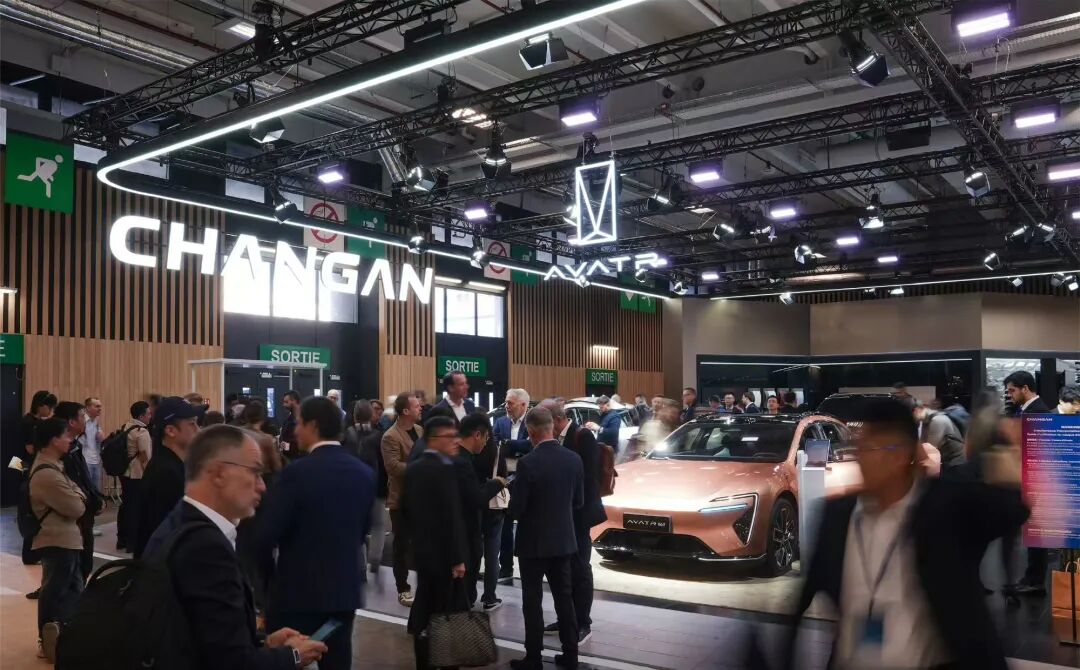
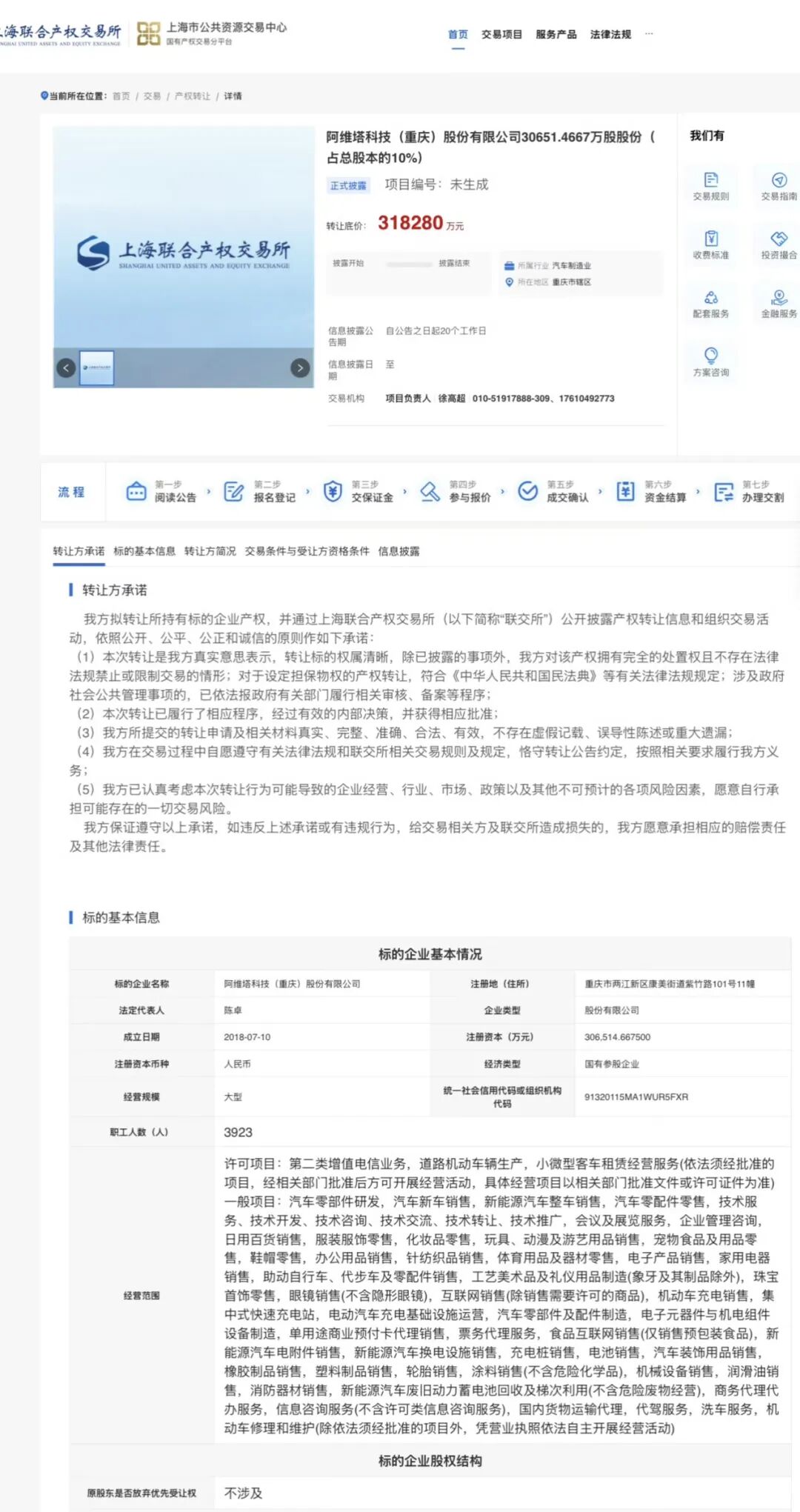
On November 13, Changan Automobile put a 10% stake in Avatr up for sale, setting off heated discussion across the industry. According to the exchange listing announcement, the floor price for the transferred equity is 3.1828 billion yuan, with the information disclosure period running until December 10. Roughly calculated on this base, Avatr's overall valuation comes to approximately 31.8 billion yuan—essentially on par with its post-investment valuation following the C round of financing. Once the transaction closes, Changan Automobile's shareholding will fall from 40.994% to approximately 31%, though it will remain the largest shareholder.
Some outside analysts see this as Changan "shedding a burden." First, Changan has been under performance pressure recently and needs to recoup funds. Second, Avatr has yet to achieve self-sustaining profitability and needs third-party capital injection. Financially, both points hold true—but the full picture is not quite so simple. Changan has maintained a strategic layout in Avatr for years, and this equity adjustment is not a simple act of giving up under profit pressure, but rather a corresponding adjustment made for Avatr's subsequent development.
Avatr's press release responds clearly on this point: "This time, Changan once again voluntarily cedes equity space, which will further advance the diversification of Avatr's equity structure, improve market-oriented operating mechanisms, enhance corporate market vitality, and demonstrate Changan Automobile's determination to firmly support Avatr's listing," Avatr stated. The core terms are: voluntarily ceding equity space, equity diversification, and improving market-oriented operating mechanisms. Simply put, this is not a passive action taken under financial pressure.
Changan's response is that it will continue to provide Avatr with full-chain support in core areas such as technology R&D, vehicle manufacturing, and the supply chain.
As for the newly introduced shareholders, they are not simply here to spend money—they are expected to bring resources. That is a much higher bar than the initial requirement of merely investing capital. Avatr also stated that as the brand enters a stage where premiumization and globalization proceed in parallel, its core demand has shifted from funding support to industrial resource synergy that matches its product lineup and overseas layout. The investor to be introduced this time will therefore focus on providing assistance in areas such as high-end brand channel development and overseas market expansion, driving the company to accelerate toward becoming a "global leader in new luxury smart electric vehicles."
In fact, since the brand's inception, Avatr's largest shareholder has always been Changan—but to promote Avatr's independent development, Changan has been continuously reducing its shareholding over the years. Data shows that in 2020, during Avatr's initial brand stage, Changan Automobile held 95.38%. Subsequently, Avatr successively introduced industrial and institutional shareholders such as CATL, the National Green Development Fund, BOCOM Investment, Chongqing Yufu, and Liangjiang Fund, with Changan's shareholding gradually dropping to 40.99%—thereby forming a relatively market-oriented equity structure.
This equity adjustment continues the previous approach and can be said to further strengthen Avatr's "independent" identity, which is conducive to advancing its IPO.
A year ago, on November 27, 2025, Avatr submitted its listing application to the Hong Kong Stock Exchange for the first time. But six months later, the first version of the prospectus automatically lapsed upon expiration on May 27, 2026. It then resubmitted the prospectus on June 30, with CITIC Securities and CICC as joint sponsors.
Since Changan previously held close to 50% of Avatr's shares, to the outside world this was almost a subsidiary of Changan—or even a brand division—which was unfavorable for Avatr, which needs to grow independently. After all, if a single industrial major shareholder carries too much weight, will it affect the listed company's ability to make its own decisions and its subsequent strategic development? This will become a question for investors.
Second, it indirectly responds to the matter of AD integration. AD integration refers to the integration of Avatr and Deepal. On September 29 this year, Changan Automobile responded to the media that it had established an AD Synergistic Development Department, with "AD" taken from the first letters of Avatr (AVATR) and Deepal (DEEPAL). The department focuses on resource sharing in the middle and back offices of the two brands. A personnel appointment document issued on September 28 shows that Deng Chenghao, chairman of Deepal Automobile, concurrently serves as general manager of the AD Synergistic Development Department, and Chen Zhuo concurrently serves as executive deputy general manager.
The integration of Deepal and Avatr within Changan has always left one biggest question: how to both ensure that Avatr can pass the audit for listing and achieve cost reduction and efficiency improvement?
Introducing third-party strategic shareholders to weaken the impression of being a "Changan sub-division," combined with a shared middle platform (the AD Synergy Department) featuring "independent front office and synergistic middle and back offices," therefore appears more reasonable. Of course, the question here is how the cost-sharing mechanism will be structured. According to available information, when Zeekr listed on the U.S. stock market, there was an internal system for spin-offs within the group, with related-party transactions, manufacturing OEM, and middle-platform services covered by long-term fair agreements signed in advance in the prospectus and subject to special review by independent directors.
Even so, when Zeekr and Lynk & Co later sought a deeper merger, Zeekr still chose privatization. From this, one can imagine the complexity of the procedures involved. According to Changan's plan, AD integration will be completed by the end of the year, so it should be said that Changan has already found a suitable path for Avatr, and this equity adjustment is very likely one step in the entire plan.
Behind this equity sale, then, is a major strategic adjustment by Changan for Avatr's subsequent development. In addition to the launch of AD integration, Avatr underwent a leadership adjustment this year. In September, Avatr's former president Chen Zhuo will be promoted to chairman, and Yong Jun, who was in charge of product R&D, will succeed as president. Avatr's current chairman Wang Hui had previously shifted his focus to Changan Automobile's overseas business. At present, the countdown is on for the expiration of the six-month validity period of the new round of the prospectus. Against this backdrop, the goal pointed to by Changan's actions is also very clear.
-
![]()
Behind Changan's Sale of a 10% Stake in Avatr: Reinforcing Its "Independent" Identity and Solving the AD Integration Challenge? | Mingjing Pro
-
Baidu Token Exchange Goes Live, Making "Reliability" Measurable
-
![]()
Mercedes-Benz Aims for 100% Localization in China—Why the Sudden Shift?
-
![]()
The Biggest Headache for a Silicon Valley CEO Isn't Jensen Huang...
-
![]()
When Selling Cars Stops Making Money, the Automotive Aftermarket Finally Ushers In Standardization
-
![]()
A Fearful Musk
-
![]()
Mercedes-Benz Goes Global, Begins "Tailoring" for China
-
![]()
The Chinese-Style Turnaround of Overseas Automakers