Mercedes-Benz Goes Global, Begins "Tailoring" for China
 11/16 2026
 457
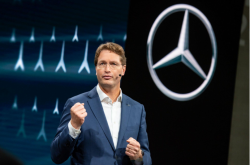
Recently, Mercedes-Benz CEO Ola Källenius, when discussing the Chinese market, stated that in the face of fierce price wars, Mercedes-Benz will not simply cut prices to boost sales; instead, it will choose to stabilize prices and maintain dealer profitability. Källenius admitted that sticking to this strategy means Mercedes-Benz must sacrifice some sales volume. However, judging from actual market performance, it is not easy for Mercedes-Benz to stabilize prices. In recent years, Mercedes-Benz sales in China have continued to decline. In 2025, Mercedes-Benz sales in China were about 551,900 units, down 19% year-on-year. By the first three quarters of 2026, the situation had still not improved, with sales of about 297,000 units, down 29% year-on-year—a further widening of the decline.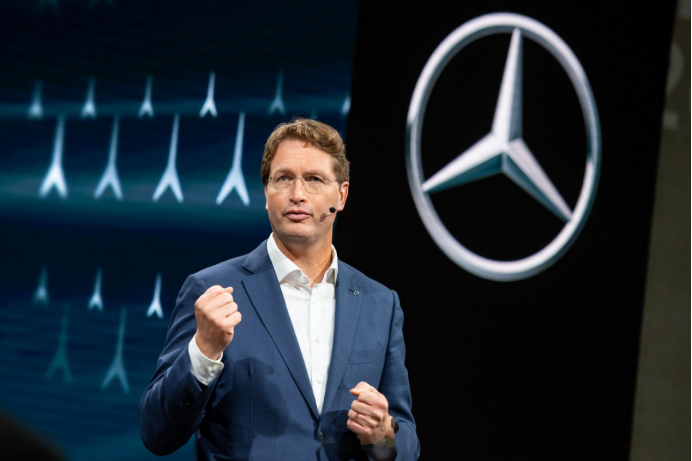
While sales are under pressure, prices in Mercedes-Benz's terminal market are also constantly loosening. In some regions, for example, the Mercedes-Benz GLB offers combined discounts of about 90,000 to 111,000 yuan when insurance, loans and trade-in conditions are combined; the GLC offers trade-in purchase discounts of about 90,000 to 105,000 yuan; and discounts for the E-Class reach 100,000 to 145,000 yuan. Evidently, although Mercedes-Benz officially chooses to stabilize prices, terminal discounts remain difficult to avoid in actual sales. More importantly, even if dealers attract consumers through price promotions, Mercedes-Benz sales in China have still not stopped falling. This also shows that the market pressure facing Mercedes-Benz is no longer just price competition.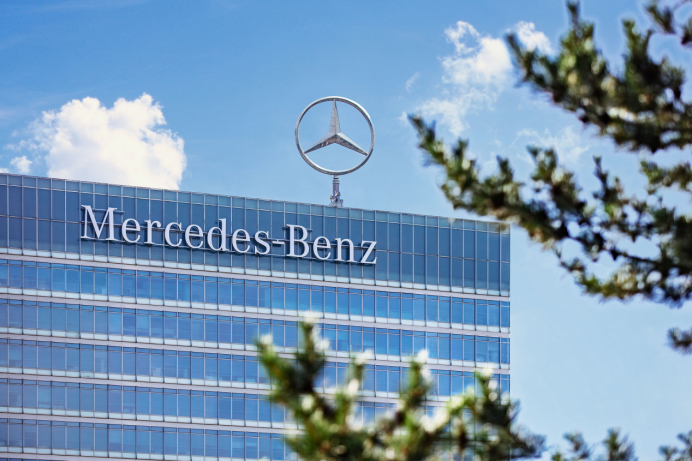
In recent years, Chinese brands such as AITO, Li Auto and NIO have continuously pushed into the mid-to-high-end market, upgrading space, equipment and intelligent experience, bringing considerable competitive pressure to traditional luxury brands such as Mercedes-Benz. At the same time, consumers' car-buying needs are also changing. In the past, engine performance, chassis tuning and brand influence were important selling points for luxury cars such as Mercedes-Benz. Today, with the development of intelligent and electrified vehicles in China, smart cockpits, driver assistance and electrification experience have also become important considerations for consumers when buying cars. The brand and mechanical performance advantages that Mercedes-Benz once prided itself on are no longer enough to cope with market changes.
In order to keep up with the pace of the Chinese market, Mercedes-Benz is also accelerating adjustments to its past product development and business strategies and speeding up the localization process. Not long ago, Mercedes-Benz proposed a "100% in China, for China" strategy, planning to further deepen localization from product R&D and technology application to parts procurement. After all, Chinese consumers' needs are changing faster, and the pace of model updates is also accelerating. Mercedes-Benz's old approach of first developing global models and then adapting them to the Chinese market can hardly adapt to the Chinese market anymore.
In terms of products, Källenius said that when Mercedes-Benz develops new cars in the future, it needs to take more account of Chinese consumers' preferences, especially in body size and space design, to closely match the needs of the Chinese market. According to the plan, the all-new all-electric E-Class sedan will become the first deeply localized model under this strategy, and is expected to be put into production in China in the second half of 2027. In addition, Mercedes-Benz plans to launch or update 40 models in the next three years to accelerate its product layout.
In addition, Mercedes-Benz is also accelerating intelligent upgrades. Källenius also revealed that Mercedes-Benz will rely on the open MB.OS platform to flexibly access the technical capabilities of partners such as NVIDIA. At the same time, Mercedes-Benz will deepen cooperation with Chinese companies such as Momenta and ByteDance to apply more local technologies to intelligent driving and smart cockpits. For new cars to be more competitive, in addition to products and technology, the supply chain also needs to keep up.
Mercedes-Benz plans to further increase the localization ratio of parts procurement and reduce dependence on overseas supply chains. Källenius believes that the past model of producing complete vehicles only in China while relying heavily on overseas parts and technology can hardly adapt to current market competition. In the future, Mercedes-Benz hopes to have more suppliers and production links rooted in China, using the local supply chain to reduce costs and increase efficiency.
From model development to technical cooperation and then to parts procurement, Mercedes-Benz's localization adjustment this time has already gone deep into multiple links. With China's R&D resources and mature supply chain, Mercedes-Benz hopes to shorten product development cycles, accelerate technology implementation, and at the same time make new cars adapt more quickly to the needs of Chinese consumers. However, it will still take some time for these adjustments to truly be reflected in products.
Källenius also admitted that this transformation may take three, four or even five years before results can be seen. As localization continues to deepen, Mercedes-Benz is expected to gradually make up for its shortcomings in intelligence and electrification. Coupled with its years of accumulated brand influence, manufacturing quality and chassis tuning, if Mercedes-Benz is given more time, this big ship still has opportunities in the Chinese market. (Images are from the internet and will be deleted if infringing)
-
![]()
Behind Changan's Sale of a 10% Stake in Avatr: Reinforcing Its "Independent" Identity and Solving the AD Integration Challenge? | Mingjing Pro
-
Baidu Token Exchange Goes Live, Making "Reliability" Measurable
-
![]()
Mercedes-Benz Aims for 100% Localization in China—Why the Sudden Shift?
-
![]()
The Biggest Headache for a Silicon Valley CEO Isn't Jensen Huang...
-
![]()
When Selling Cars Stops Making Money, the Automotive Aftermarket Finally Ushers In Standardization
-
![]()
A Fearful Musk
-
![]()
Mercedes-Benz Goes Global, Begins "Tailoring" for China
-
![]()
The Chinese-Style Turnaround of Overseas Automakers